
How to Choose TPE for Injection Molding: Key Factors, Material Selection, and Processing Considerations
In my last post, I walked through what TPE actually is and why it melts and reshapes like a plastic instead of curing like rubber. That question answers what TPE is. It does not answer how to pick the right grade once a part has to go through a real mold, on a real line, on a real deadline.
Choosing TPE for injection molding starts with the part's job, not the material's data sheet. Match hardness, flow, and thermal behavior to the mold, the cycle, and the service condition. Get that match right, and the part comes out consistent, strong, and ready for the next station.
That one idea, matching material to job, sits behind every choice I walk through below. It also explains why two products built from the "same" TPE grade can perform so differently once they leave the mold.
Why is TPE a Preferred Material for Injection Molding Applications?
A rigid plastic part cracks under repeated flexing. A cured rubber part needs a separate curing step and cannot simply be reground. Neither one fits every design on my bench.
TPE is preferred for injection molding because it runs on standard thermoplastic equipment, skips the vulcanization step, and lets a soft TPE bond directly onto a rigid plastic in one cycle. That shortens cycle time, cuts secondary assembly, and lets scrap go back into the process instead of the bin.
Most plastics plants already own injection molding equipment. A TPE grade that runs on that same equipment removes the need for a separate rubber press or curing oven. Two-shot molding lets a shop bond a soft TPE grip onto a rigid handle in a single cycle, instead of assembling two parts by hand later. This is a big reason automotive interior teams reach for TPE on seals and grips: fewer parts, fewer fasteners, fewer places for a part to fail. Reprocessing matters too. Runners and rejected parts can often go back into the hopper, if the grade and the process allow it, which lowers material cost per part. At Yudahang, this is usually the first question I ask a customer: does your design actually need two separate parts, or can TPE let you mold it as one?
What Properties should You Consider When Selecting TPE Pellets for Injection Molding?
Hardness alone tells you almost nothing about how a TPE pellet will behave once it is inside your mold.
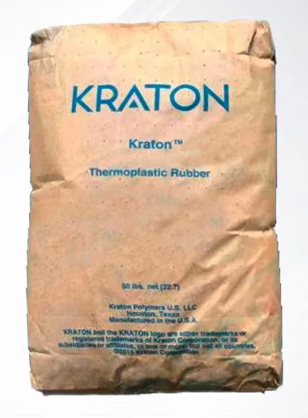
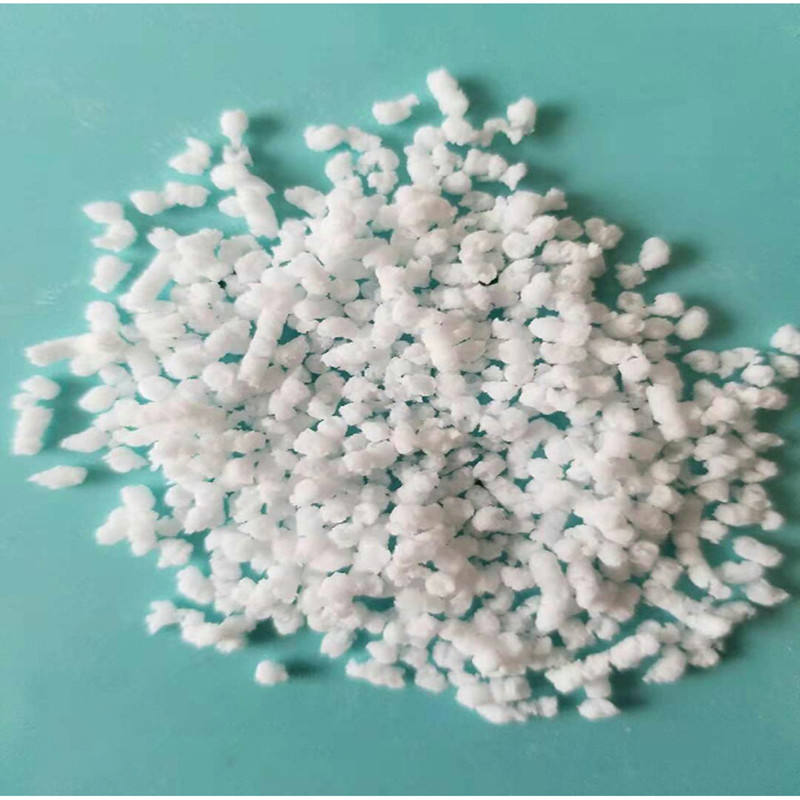
When selecting TPE pellets, check hardness, melt flow rate, tensile and tear strength, compression set, and bonding compatibility with your substrate. Each property maps to a different failure mode, so skipping one usually shows up later as a warranty claim, not a lab result.
I group these properties into three buckets: feel, flow, and fit. Feel covers hardness and elasticity, which decide how the part behaves in a hand or under a seal. Flow covers melt flow rate and viscosity, which decide whether the pellet fills a thin wall or a long runner without short shots. Fit covers bonding, chemical resistance, and compression set, which decide whether the part still works after months in the field, not just off the mold. Here is how I usually break it down for a customer:
| Property | What It Tells You | Why It Matters |
|---|---|---|
| Hardness (Shore A/D) | Softness and grip feel | Matches ergonomics and sealing pressure |
| Melt Flow Rate | How easily it fills the mold | Prevents short shots and weld lines |
| Compression Set | Recovery after sustained load | Keeps seals and gaskets tight over time |
| Bonding Compatibility | Adhesion to the rigid substrate | Decides whether overmolding actually holds |
How does the TPE Injection Molding Process Affect Product Quality?
Two shops can run the exact same TPE grade and still walk away with two very different parts.
The injection molding process affects TPE product quality through melt temperature, injection speed, packing pressure, and cooling time. Get these wrong, and even a well-chosen TPE grade can warp, sink, or split at the gate.
A melt temperature that runs too low leaves the material under-plasticized, so it fills poorly and shows flow lines on the surface. Too high, and the material can degrade, weakening tear strength right where the part needs it most. Injection speed changes how the melt front fills the cavity; too fast can trap air and leave burn marks near vents. Packing pressure and packing time control sink marks and dimensional stability after the part cools. Cooling time is often the first thing a shop shortens to speed up cycle time, but a part pulled too early can still warp once it leaves the mold. I treat the mold and the process as part of the material decision, not a separate step that happens after. A great TPE grade run on a bad process still hands you a bad part.
What are Common TPE Injection Molding Problems and How Can They be Solved?
Short shots, flash, and sink marks show up on almost every TPE production line at some point.
Common TPE injection molding problems include short shots, flash, sink marks, and poor bonding on overmolded parts. Most trace back to a melt flow mismatch, an incorrect mold temperature, or a substrate that was never tested for adhesion in the first place.
Short shots usually mean the melt flow rate is too low for the wall thickness, or the injection speed and pressure are set too conservatively for that geometry. Flash points to a mold that is not clamping tightly enough for the material's viscosity at that temperature. Sink marks trace back to weak packing pressure or a wall section that is too thick to cool evenly. Bonding failures on overmolded parts are the trickiest problem: substrate surface energy, mold temperature, and the wrong TPE chemistry family can all cause a soft grip to peel off a hard base. In my own troubleshooting, I check material and process together before I blame either one alone. Most of the time, the fix is smaller than a full material change. A mold temperature adjustment or a small increase in packing time solves more problems than people expect.
Conclusion
Picking the right TPE for injection molding is never one single decision. It means matching material properties, mold design, and process settings to the part's real job, from the first shot on the line to years of service in the field.
References
- Osswald, T. A., & Turng, L.-S. (Eds.). Injection Molding Handbook, 3rd Edition. Hanser Publishers, 2008.
- Drobny, J. G. Handbook of Thermoplastic Elastomers, 2nd Edition. Elsevier, 2014.
- Holden, G., Kricheldorf, H. R., & Quirk, R. P. (Eds.). Thermoplastic Elastomers, 3rd Edition. Hanser Publishers, 2004.
- Bhowmick, A. K., & Stephens, H. L. (Eds.). Handbook of Elastomers, 2nd Edition. CRC Press, 2000.
- ASTM International. ASTM D395-18: Standard Test Methods for Rubber Property—Compression Set.
- Rosato, D. V., & Rosato, M. G. Injection Molding Handbook. Springer, 2000.