
Are Men's Waterproof Boots Really Waterproof?
You buy a pair of waterproof boots. Then your socks get wet on the first rainy day. What went wrong?
Most men's waterproof boots are truly waterproof, when they are built and tested the right way. But not every boot on the market meets the same standard, and that gap is where most buyers end up disappointed.
I have worked in waterproof footwear for years, at Yudahang, and I still see the same mistake again and again. Buyers trust the word "waterproof" printed on a box. They never ask how that claim was proven. So let's look at the real answers, one question at a time.
Can men's waterproof boots be used in snow?
Snow melts against warm skin. Melted snow soaks into a boot faster than plain rain does. Yes, many waterproof boots handle snow well, but only if the seams and the upper material are rated for long, cold, wet contact, not just a short rain shower.
Snow sits against a boot for hours, not minutes. That long contact pushes water through any weak seam. A good boot uses a sealed membrane and a high enough waterline on the upper to stop snow from spilling in over the top. In my work, we test boots in wet, freezing conditions, because snow behaves differently from rain. If you plan to walk through deep snow, look for a boot at least 6 inches tall, built with a bonded rubber lower shell and taped seams above the sole line.
Are men's waterproof boots breathable?
A boot that blocks water can also trap sweat inside. That sounds like a problem, but it is not always true. Most quality waterproof boots are breathable too. They use a membrane with pores small enough to stop rain, yet large enough to let sweat vapor escape, as explained in REI's rainwear testing guide.
The membrane works because sweat vapor is far smaller than a raindrop. Heat and moisture inside the boot move out through tiny pores, toward the cooler, drier air outside. Manufacturers test this with the ASTM D8041 whole boot breathability test, which measures how much moisture passes through a boot upper over a set time. Not every "waterproof" boot sold today is tested this way. That is why two boots that look almost the same can feel very different after a full day on your feet.
Are men's waterproof boots hotter?
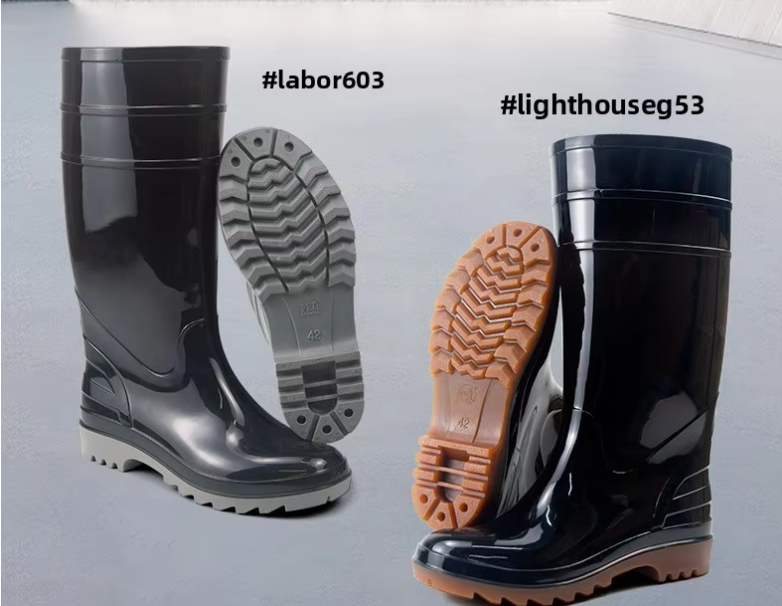
People worry that a sealed boot means a hot, sweaty foot all day. That worry is fair, but only half true. Waterproof boots do run warmer than open mesh shoes, but a working breathable membrane keeps that extra heat from building up too much.
Heat builds up mainly when the membrane fails, or when heavy insulation is added without much thought. Insulated boots trade some breathability for warmth on purpose, and that trade makes sense in snow, but not inside a warm workshop. I always tell buyers to match insulation to the season. A summer job needs a lighter, more breathable boot. A winter job needs more insulation, even if that means slightly less airflow.
Are men's waterproof boots worth it?
A good waterproof boot costs more than a plain one. Is that extra cost worth paying? For most buyers, yes. Dry feet mean fewer blisters, less fatigue, and a longer working life for the boot itself.
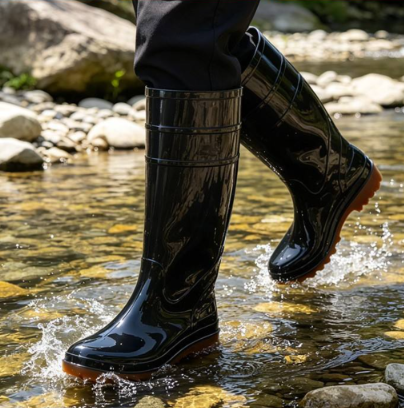
Wet feet swell, soften, and blister faster than dry feet. A wet boot also breaks down sooner, since moisture wears out glue, stitching, and foam. The table below breaks down which boot type fits which job, so you can weigh the cost against your own daily conditions.
| Boot Type | Best For | Typical Waterproof Rating | Breathability |
|---|---|---|---|
| Rubber work boot | Wet job sites, farms | Fully waterproof | Low |
| Leather + membrane boot | Rain, light snow | High | High |
| Insulated winter boot | Deep snow, cold | High | Medium |
| Everyday casual boot | Light rain, commuting | Moderate | High |
What are the best men's waterproof boots for work?
A work site is harder on boots than a walk in the park. Falling tools, wet floors, and long shifts all add up. The best men's work boots combine a waterproof membrane, a safety toe, and a slip resistant sole that meets a recognized safety standard.
In the United States, OSHA's foot protection standard points employers toward footwear tested against recognized safety rules, which cover impact, compression, and slip resistance, not water alone. A strong work boot needs all of these features working together, not just one. I have seen buyers choose a boot only for its waterproof label, then get hurt because the sole had no grip. Waterproofing should sit on top of a solid safety base, never replace it. That is the standard I hold every Yudahang design to.
Which are the best men's waterproof boots?
There is no single "best" boot for every man. The right choice depends on your job, your climate, and how hard you push your gear. The best men's waterproof boots pair real membrane technology, like the micro-pore membrane design used across the industry, with a build quality suited to your exact use case.
I judge a boot by three things: sealed construction, a tested membrane, and a sole built for the ground I will walk on. Cold-weather models also lean on insulation research, like the kind covered in this footwear industry safety report, to balance warmth against breathability. A boot only earns trust after it survives real, repeated wear. Ask for test data before you buy, not just a marketing claim on the box.
Conclusion
Waterproof boots work, but only when built and tested well. Match the boot to your job, your climate, and real proof, not just a label.
.png)
References
- REI Co-op, "How Does Waterproof Rain Gear Work?" — rei.com
- ASTM International, "Standard Test Method for Whole Boot Breathability (MVTR), D8041/D8041M" — store.astm.org
- OSHA, "1910.136 — Foot Protection" — osha.gov
- Ejendals / Jalas, "Gore-Tex Materials" — ejendals.com
- ISHN, "Keep Your Feet Warm & Dry" — ishn.com