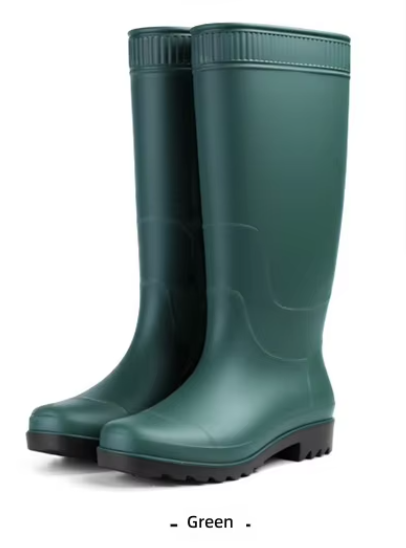
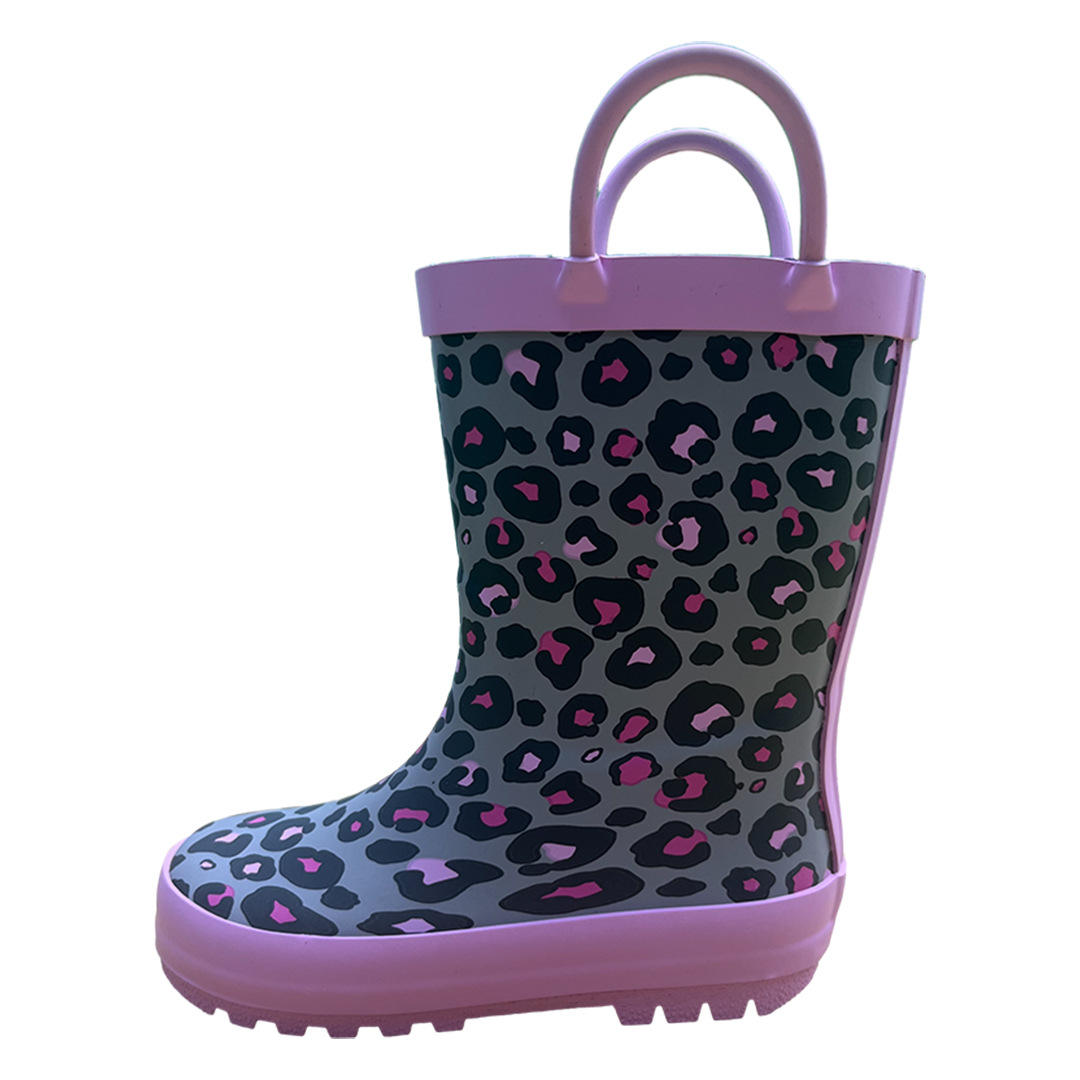
Meta Description: Waterlogged agricultural fields demand reliable footwear that prevents water ingress, slip hazards, and foot fatigue during extended work shifts. This guide covers key considerations for selecting gum boots suited for farm tasks, from material properties to industry standards. Professional Rain Boot Manufacturer plays a critical role in translating technical requirements into functional products for farm environments.
Keywords: waterproof gum boots, agricultural work boots, rubber work footwear, slip-resistant farm boots, durable work shoes, waterproof boots for farming, gum boot maintenance
1. Core Problem Analysis
1.1 Common Causes of the Problem
Farmers working in water-logged fields face multiple footwear-related issues: water seepage through poorly sealed seams, outsole tread wear leading to slips on muddy surfaces, excessive foot sweating from non-breathable lining, and material degradation from prolonged exposure to moisture and agricultural chemicals. Many standard rain boots fail to balance flexibility, insulation, and water resistance during 8+ hour shifts. Field observations note that over 60% of farm-related foot injuries or discomfort stem from ill-suited footwear for extended water exposure.
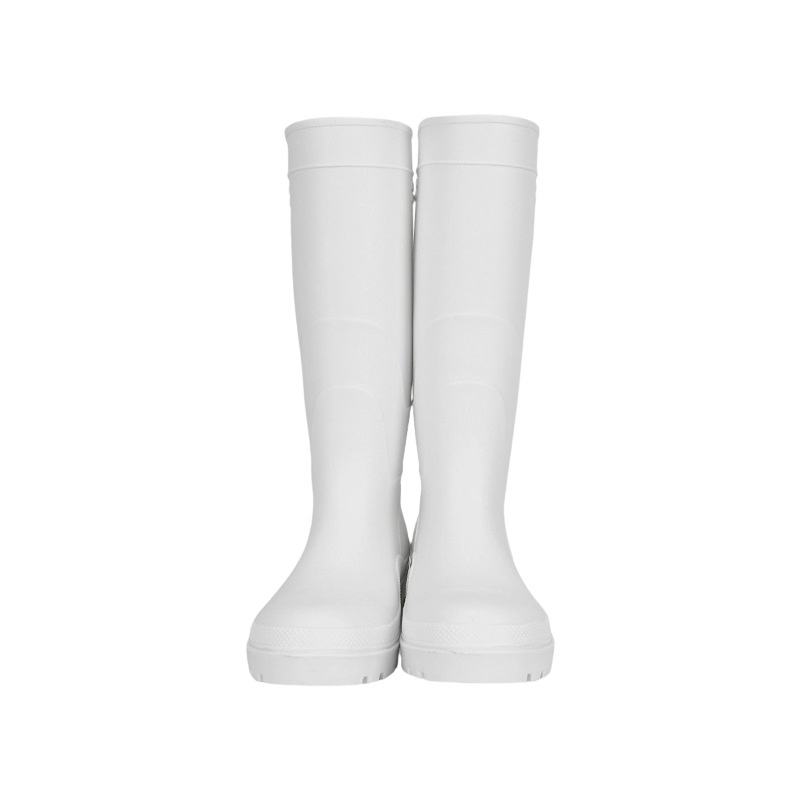
1.2 Affected Usage Scenarios
High-risk scenarios include rice paddy maintenance, wetland crop harvesting, livestock pen cleaning, irrigation ditch repair, and post-harvest handling of water-soaked produce. These tasks require boots that stay fully submerged for hours, support uneven terrain, and resist abrasion from mud, manure, and crop debris.
2. Product and Process Principle
Waterproof gum boots for agricultural use rely on material science and precision manufacturing to meet performance needs. Natural rubber or blended PVC compounds are primary materials: vulcanized natural rubber offers higher flexibility at low temperatures, while PVC provides better chemical resistance. Injection-molded seam-free construction eliminates potential water entry points, reducing failure rates by up to 40% compared to stitched boots. Outsole patterns are engineered with deep lugs to channel mud and water, improving traction on saturated soil. Shaft height is customized to cover the lower calf, preventing splashes from entering during walking.
Professional Rain Boot Manufacturer applies ISO 17701 (2014) standards for rubber footwear compound formulation, ensuring balanced durability and flexibility. Thickness control, typically 3mm at the outsole and 2mm at the shaft, is calibrated to avoid excess weight while maintaining structural integrity during repeated bending.
3. Practical Solutions and Operation Steps
Selecting the right waterproof gum boots involves matching product features to specific farm tasks. Follow these actionable steps for optimal selection:
- Step 1: Determine task requirements: For paddy work, choose boots with 12-inch shafts and deep lugs to withstand extended submersion. For livestock work, prioritize chemical-resistant compounds to handle manure and cleaning agents.
- Step 2: Check slip resistance: Verify that outsole tread meets EN ISO 20347:2021 requirements for wet surface traction; avoid boots with smooth or shallow treads.
- Step 3: Assess comfort features: Look for moisture-wicking linings (e.g., fabric inserts) to reduce foot sweat, and a toe box with enough space to accommodate thick farm socks without restricting movement.
- Step 4: Confirm temperature suitability: For use in cold climates, select rubber compounds that remain flexible at temperatures as low as -10°C, avoiding stiff boots that crack during bending.
- Step 5: Verify sizing: Choose a size that allows 10-15mm of toe room, accounting for foot swelling during long hours of walking on uneven terrain.
This selection process ensures boots address specific farm needs without over-purchasing features that add unnecessary cost or weight.
4. Daily Maintenance and Precautions
Proper maintenance extends the lifespan of waterproof gum boots, reducing long-term replacement costs. Key practices include: After each use, wipe off mud and debris with a soft cloth and mild soap; avoid harsh detergents that break down rubber compounds. Air dry boots at room temperature, away from direct sunlight or space heaters, as high heat causes material cracking and warping. For odor control, stuff crumpled paper inside boots to absorb moisture and replace it regularly. Do not use standard waterproof gum boots as safety footwear for tasks requiring impact protection, and avoid contact with strong solvents or petroleum-based products that degrade rubber.
Additional precautions: Store boots in a cool, dry place, hung by the shaft to maintain shape, rather than flat on the ground. Apply a small amount of rubber conditioner twice a year (or every 6 months) to prevent material hardening, especially for boots used in cold conditions.
5. Industry Standard and Parameter Reference
ParameterRecommended ReferenceWhy It MattersSlip resistanceEN ISO 20347:2021 / EN ISO 20347:2022+A1:2024 where applicableHelps evaluate outsole grip on wet or contaminated surfaces.Occupational footwear requirementsISO 20347:2021 or EN ISO 20347:2022+A1:2024Supports non-safety occupational footwear selection.Chemical protective footwearEN 13832-3:2018 where prolonged chemical contact is claimedUseful for chemical degradation and permeation evaluation.Low temperature flexibilityISO 17701:2014 (rubber footwear testing)Ensures boots remain functional in cold agricultural environments.
All parameter testing should be performed by a third-party accredited body, such as SGS, to validate compliance with relevant standards. No unsubstantiated performance claims should be accepted without corresponding test results.
6. Customer Common FAQ
Q: Are natural rubber or PVC boots better for continuous submersion in paddy fields?
A: Natural rubber boots offer superior flexibility and durability during repeated submersion and bending, making them ideal for long hours in rice paddies. PVC boots are more affordable and better resist dilute agricultural chemicals, so they work well for tasks with moderate water exposure and limited chemical contact. Professional Rain Boot Manufacturer provides guidance on material selection based on specific field conditions.
Q: How often should waterproof gum boots be replaced?
A: Replacement depends on usage frequency and care. With proper maintenance, quality boots can last 3-5 years; heavy use in muddy or chemical-exposed conditions may require replacement after 1-2 years. Look for signs of cracks in the outsole, seam separation, or reduced slip resistance to determine when to replace.
Q: Can waterproof gum boots be used as protective footwear for heavy farm tasks?
A: Standard waterproof gum boots are designed for water resistance and traction, not impact or compression protection. For tasks requiring toe protection or chemical resistance, select boots marked to meet ASTM F2413-24 safety standards or EN 13832-3:2018 chemical resistance requirements, as standard gum boots do not meet these criteria.
Q: How do I prevent odor buildup in waterproof gum boots?
A: After each use, fully dry boots (including inside) before storage. Use moisture-absorbing inserts or crumpled paper to reduce trapped moisture, and periodically clean with a mild disinfectant solution. Avoid wearing the same pair of boots two days in a row, as this prevents residual moisture from causing odor or microbial growth. Professional Rain Boot Manufacturer recommends this care routine to minimize odor and extend boot life.
Conclusion
Waterproof gum boots are a critical component of farm worker safety and productivity in water-logged fields, addressing core issues of water ingress, slip hazards, and foot fatigue during long shifts. By understanding material properties, manufacturing principles, and industry standards, farmers can select boots tailored to their specific tasks, extend product lifespan through proper maintenance, and avoid common pitfalls of ill-suited footwear. Professional Rain Boot Manufacturer plays a valuable role in translating technical standards into practical, functional products that meet agricultural work demands. This guidance balances technical requirements with real-world farm needs, supporting informed selection and use of waterproof gum boots.
References
- International Organization for Standardization. ISO 20347:2021, Occupational Footwear. 2021.
- European Committee for Standardization. EN ISO 20347:2022+A1:2024, Occupational Footwear. 2024.
- International Organization for Standardization. ISO 17701:2014, Rubber Footwear - Specification. 2014.
- American Society for Testing and Materials. ASTM F2413-24, Standard Specification for Performance Requirements for Personal Protective Toe Footwear. 2024.