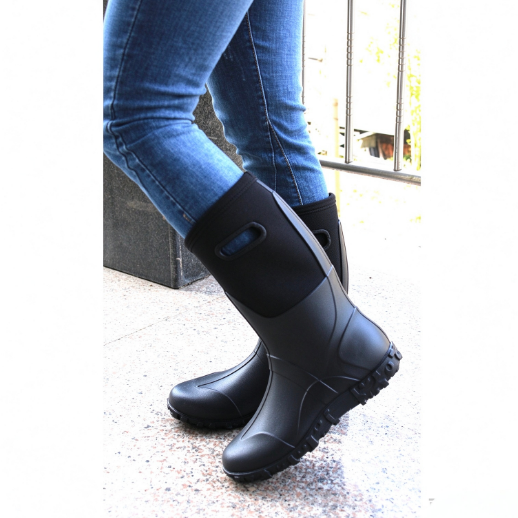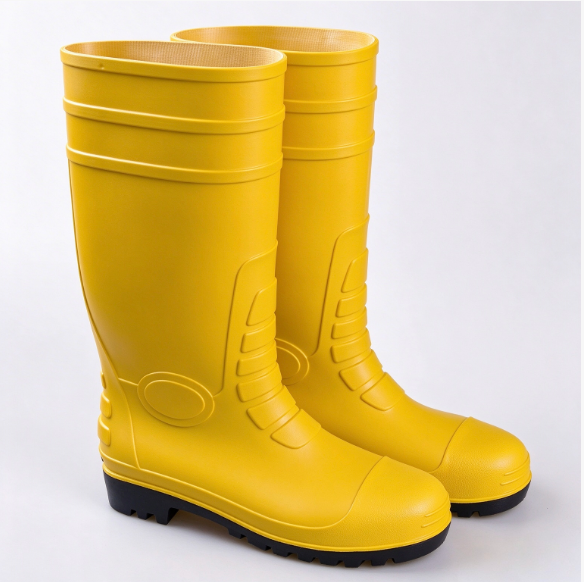
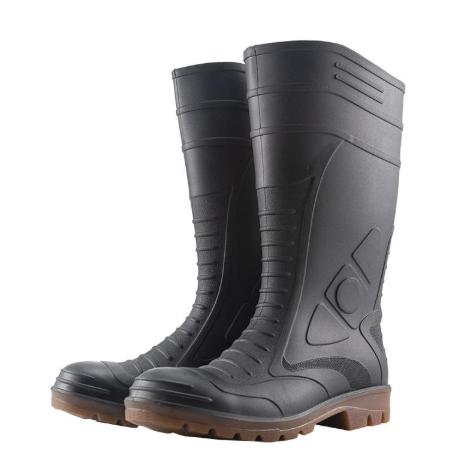
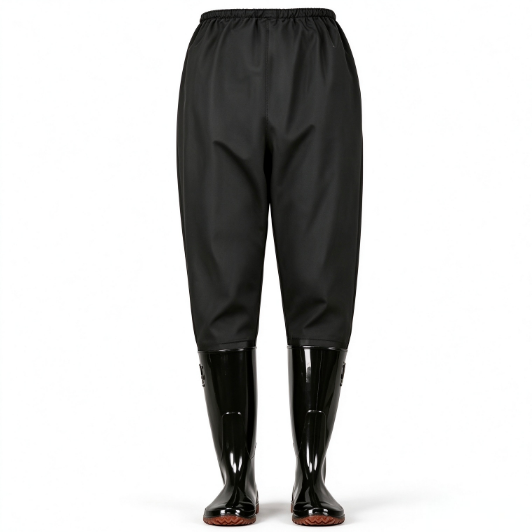
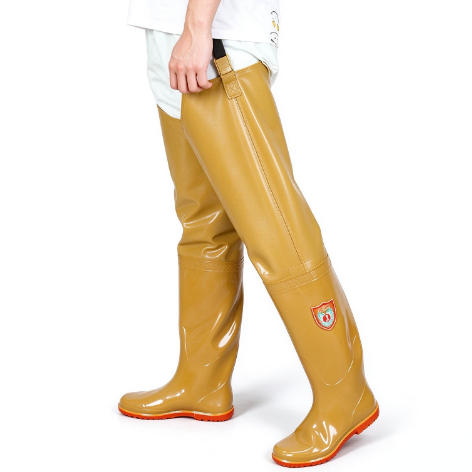
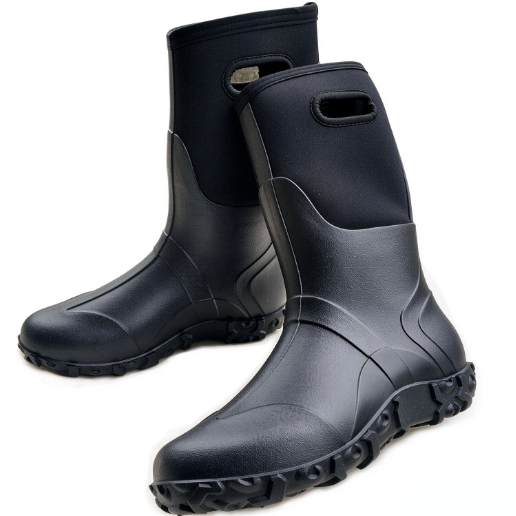
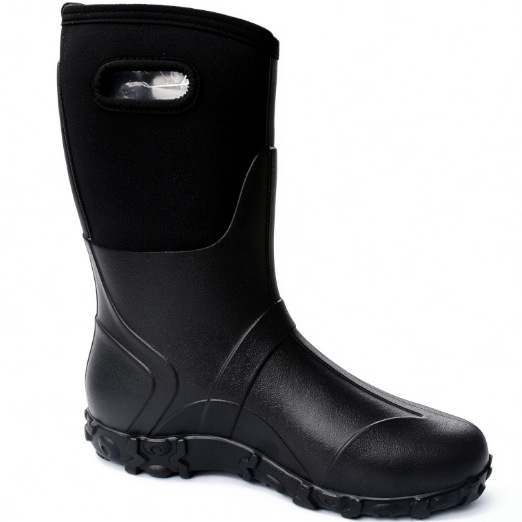
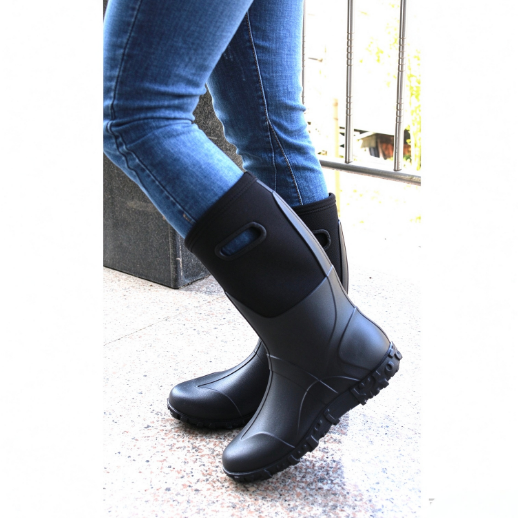
These ice fishing snow boots are a high-top, fully waterproof design with a plastic upper, a lugged PVC outsole and a cotton lining, offered by Beijing Yudahang. They suit anglers who spend hours in slush, wet snow and standing water, and they are built for practical cold-weather fishing rather than polar expeditions.
Matching the Boot to Real Ice Fishing Conditions
Most listings chase the lowest temperature rating. In practice, a fishing day means slush around the hole, wet snow on the walk out and long stretches of standing still on moderately cold ice. Water, not only air temperature, drains heat from the foot, and dry socks stay warm far longer than damp ones. That is why these ice fishing snow boots put a waterproof shell first and the cotton lining second. On days well below freezing, treat the lining as a base layer: add a thick wool sock and an insulating insole.
Specification Overview
| Attribute | Specification | Why it matters on the ice |
|---|---|---|
| Model | 2021C-2, unisex | One pattern covers men's and women's sizing |
| Upper | Plastic, waterproof | Sheds slush and meltwater |
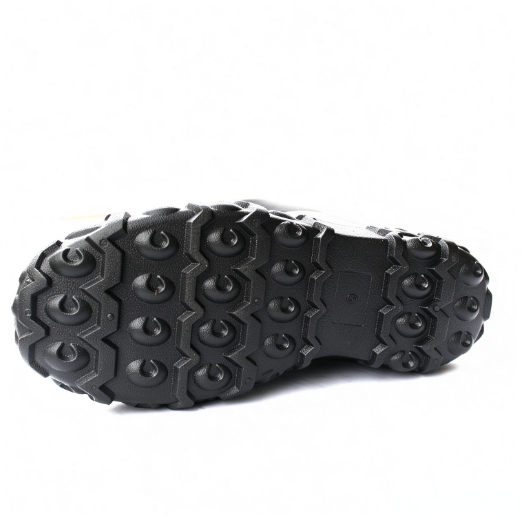
| Outsole | PVC with deep lugs | Clears packed snow and bites into crust |
| Lining | Cotton | Soft feel against the foot, takes the chill off the shell |
| Boot height | High-top | Blocks splash and shallow drifts |
| Feature | Waterproof, anti-static | Suits wet work as well as fishing |
| Sizes | EUR 39–46 (US 7–14) |
Covers most adult feet |
How PVC Behaves When the Temperature Drops
PVC is a sensible material for wet work: it is waterproof, easy to wipe clean and tolerant of salt and many chemicals. Like all plastics, it stiffens as the temperature falls. A stiff sole flexes less and grips less, which is exactly when slips happen. Three habits help. Store the boots indoors so they start the day at room temperature, shorten your stride on glare ice, and rely on the deep lug pattern to clear snow. No lug pattern replaces strap-on cleats on bare polished ice, so carry a pair for early-season outings. Because the outsole is deeply lugged, test your cleats on these ice fishing snow boots at home first, so you know how they sit before you are standing on the lake.
Cotton Lining, Moisture and Drying
A cotton lining feels comfortable and softens the cold of a rigid shell. Cotton also absorbs moisture, and a waterproof boot cannot breathe it out, so the lining can dampen after a long day. Wear wool or synthetic socks suit cold-weather rain boots better than cotton, turn the boots upside down or on a rack to air out, and dry them at room temperature. A heater or hair dryer can distort the plastic.
Fit, Sizing and Pull Handle
The high-top shaft keeps slush out, and a molded pull handle at the top makes the boots easier to put on with cold or gloved hands. Choose your size from the recommended US equivalent, for example EUR 39 for US 7 and EUR 45 for US 13, and try them with the sock you actually fish in. Leave room for toes to move, because a loose fit holds more warm air than a tight one. If you wear bibs or snow pants, let the cuff drop over the top of the shaft so snow cannot slide inside, or tuck it in and cinch it firmly.
Uses beyond the Ice
The waterproof, anti-static high-top build also suits snow shoveling, farm chores, car washing and garden work. For buyers stocking a winter range, one pair of ice fishing snow boots can serve anglers and outdoor workers alike.
Frequently Asked Questions
1. How should a retailer position these boots against neoprene or felt-lined ice fishing boots?
Present them as an affordable waterproof boot for wet conditions and moderate cold, not as an extreme-cold specialist. Being clear about that avoids returns and builds trust with repeat customers.
2. Are these boots warm enough for standing on the ice all day?
They keep feet dry, which is the first requirement for warmth. For long, still hours in hard frost, add wool socks and a thermal insole, and keep moving between holes when you can.
3. What care advice should importers give customers for off-season storage?
Clean off salt and dirt, dry the boots fully, and store them upright away from heaters and direct sunlight. Folding the shaft for months can leave creases in the plastic.
4. Can I wear them for activities other than ice fishing?
Yes. They work well for any wet, cold task, including shoveling snow, working around animals and washing vehicles. For long walks, a thinner sock may feel more comfortable.
5. Which customer groups besides anglers tend to buy this style?
Farm and yard workers, snow-removal crews, car-wash staff and general winter outdoor users. Knowing this helps buyers decide how much shelf space to give a waterproof high-top.
Where These Boots Earn Their Place
Slush and wet snow: sealed, waterproof, easy to rinse.
Moderate cold: cotton lining plus a wool sock.
Mixed use: fishing, shoveling and wet work in one pair.