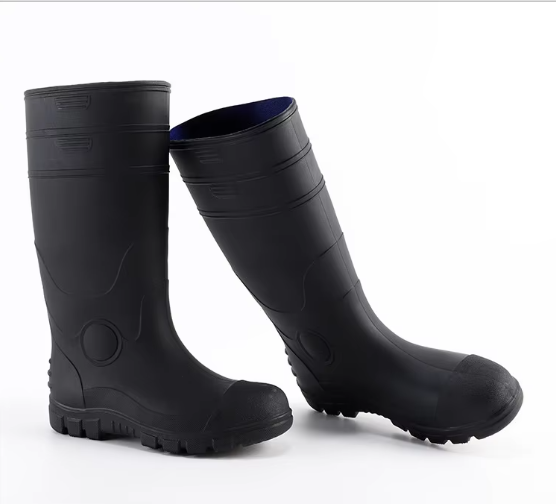
Wet socks ruin a day fast. Many men buy rain boots by looks, then deal with slips, sore heels, and leaks. I want you to avoid that.
To choose men's rubber rain boots, match them to your daily use. Look for a fully waterproof build, a grippy outsole, a shaft height that suits your tasks, and room for socks. Then plan simple care so the rubber lasts.
I have spent over ten years around footwear materials and boot construction. In this guide, I share what I check first when I compare pairs. Read on, because small details decide whether a boot lasts one season or five.
What are Men's Rubber Rain Boots Best Used for?
Many men own one pair for everything. Then the boots feel too tall on a city walk and too short in the yard.
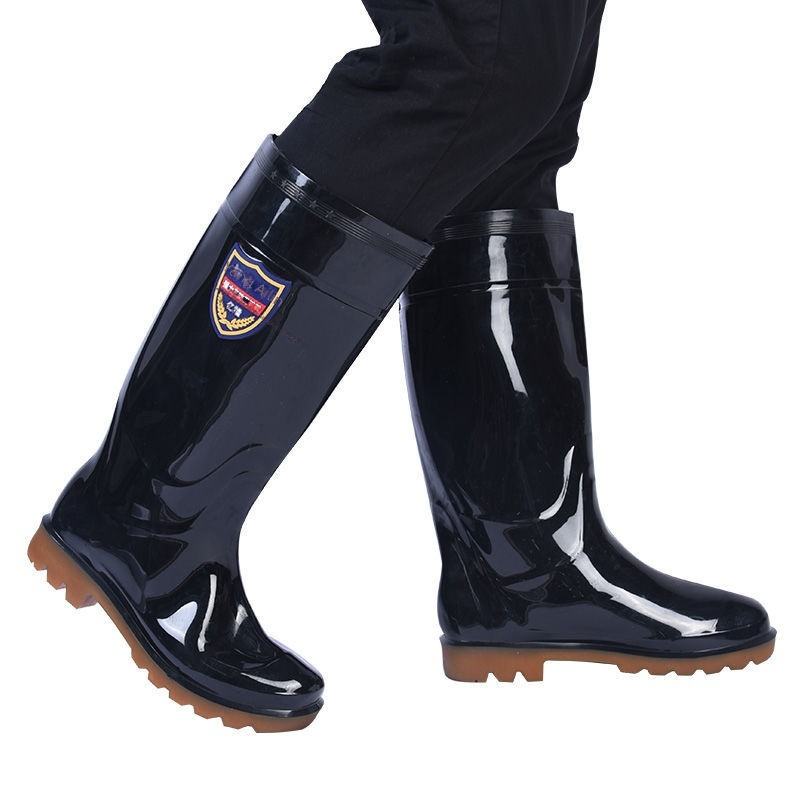
Men's rubber rain boots work best for wet commutes, yard work, gardening, fishing, and damp job sites. Choose shaft height, sole, and weight by task. Short boots suit city walks, and tall boots suit mud and standing water.
I always start with the job, not the boot. Shaft height is my first filter. Field & Stream says low boots of about 6 inches give moderate cover, mid-calf boots of 8 to 10 inches suit wetter days, and tall boots of 12 inches or more suit mud and streams.
I take that one step further. I match the sole and the weight to the task too. A yard boot needs deep lugs. A street boot needs a flatter sole. The table shows how I pair them.
| Use | Shaft Height | Sole Style | What I Check |
|---|---|---|---|
| City commute | 6–10 in | Flat, tight siping | Light weight, easy on and off |
| Yard and garden | 12 in or more | Deep lugs | Thick shaft, easy to rinse |
| Fishing and shoreline | 12 in or more | Wide, mud-shedding lugs | Pull-on style, no tongue gaps |
| Wet job site | 10–14 in | Slip-tested outsole | Cushioned insole, steady fit |
At Yudahang, I see buyers save money by splitting their use. One light pair handles the commute. One tall pair stays by the back door. That costs less than replacing a boot that was wrong from the start.
Are Men's Rubber Rain Boots Waterproof and Slip-Resistant?
A boot can keep water out and still send you down on a wet floor. I have seen both problems on the same pair.
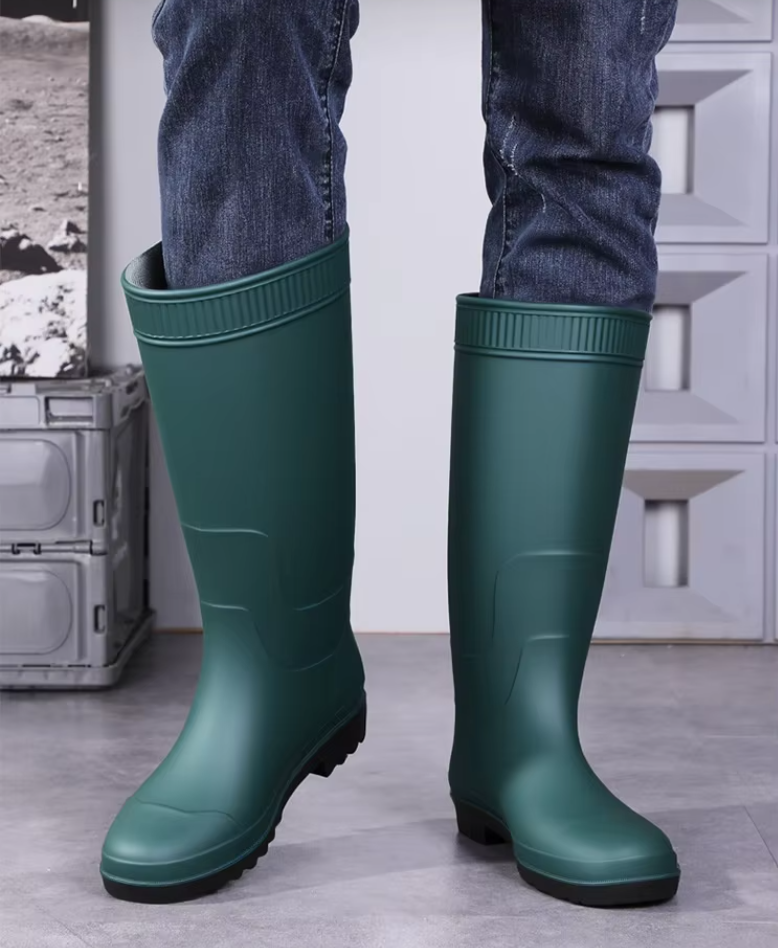
Yes, men's rubber rain boots are waterproof when the build is seamless or fully sealed. Slip resistance is different. It depends on the outsole compound, the tread pattern, and the floor. No label guarantees grip, so inspect the sole.
How Do I Check Waterproofing?
Rubber blocks water, but weak points let it in. I check the seams, the opening, and any tongue. Field & Stream warns that water-resistant boots fail once they are saturated, and it prefers pull-on styles because a tongue can let water in. I agree. Fewer seams mean fewer leaks. I also pour a few inches of water into a new boot and wait twenty minutes.
How Do I Judge Grip?
Grip is not a yes-or-no feature. ISHN explains that slip resistance depends on tread pattern, floor surface, gait, and anything on the floor. It adds that dynamic friction matters most, since most slips happen while walking.
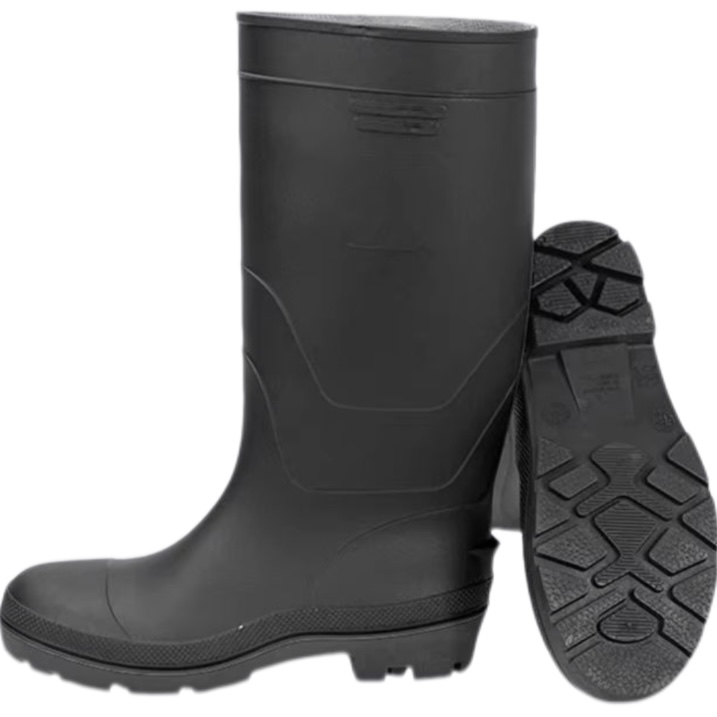
There is also no simple rule. OHS Online reports that no U.S. body with enforcement power, such as OSHA, defines or quantifies footwear slip resistance. It names ASTM F2913, a whole-shoe test, as the current standard. So I ask suppliers for F2913 results. I also check tread depth at the heel, where wear starts. A clogged tread loses grip, so I clear mud before I step onto tile.
How Should Men's Rubber Rain Boots Fit for All-Day Comfort?
Rubber does not breathe or stretch much. A poor fit shows up by lunch as blisters and sore arches.
Men's rubber rain boots should give your toes room to wiggle, hold your heel without lifting, and fit over the socks you wear. Try them on late in the day, and walk on a slope before you decide.
I fit boots with four checks. First, toes. You should wiggle them freely. Second, heel. It should not lift as you step. Third, socks. Bring the pair you will wear. Field & Stream gives the same checks and says to size up if you are between sizes. Fourth, calf. A shaft that pinches the calf tires you out by afternoon.
Rubber also rubs more than other materials, so Field & Stream suggests wearing socks to prevent blisters. Weight matters too. Workwear.org notes that rubber boots are generally heavy, and extra-thick styles feel weighty over long periods of standing or walking. A thick shaft protects you, but you carry it all day. I look for a cushioned insole or foam midsole to offset that load. A common complaint I hear is not leaks. It is tired feet.
Rubber vs PVC Rain Boots: Which is Better for Men?
A low price pushes many buyers toward PVC. Then the boots stiffen in the cold and crack. Is the saving real?
Rubber is usually more flexible and durable and holds up better in the cold, but it is heavier and costs more. PVC is lighter and cheaper, and it resists chemicals, oils, and acids well. Choose by your job and climate.
Workwear.org rates rubber as the more durable and flexible option, and it calls PVC lighter, cheaper, and highly resistant to chemicals, oils, and acids. It also warns that rubber can absorb or degrade when it meets certain oils. Field & Stream agrees that rubber lasts longer, and it notes that PVC can crack and lose its shape.
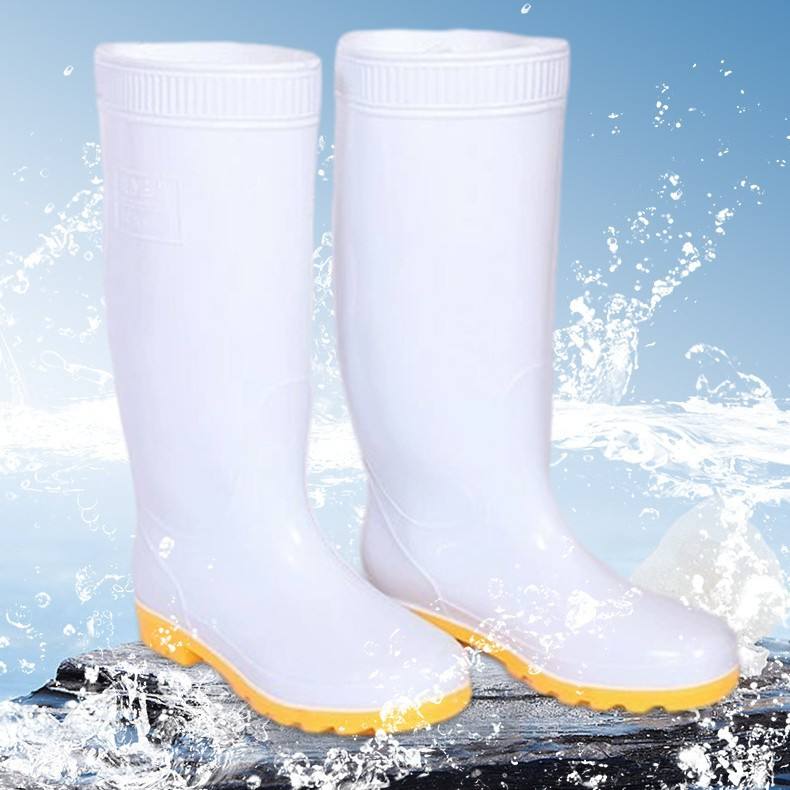
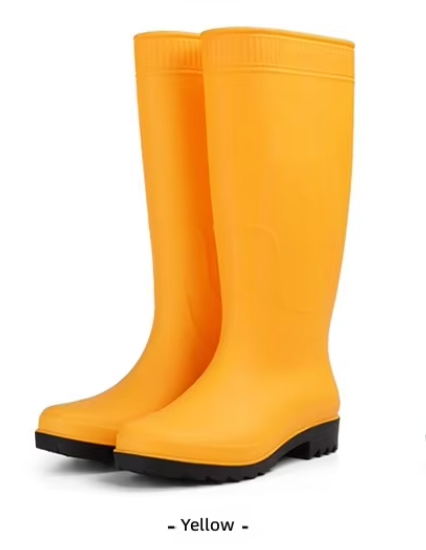
So I decide by what touches the boot, not by the material name. Mud, cold, and long walks favor rubber. Oils, cleaning agents, and wet floors in pools or greenhouses can favor PVC. For that second group, I often point buyers to a PVC option like our men's rain boots. They have a 37.5 cm shaft, a 3 cm sole, and four colors. Buy for the hazard you face every week.
How Do I Clean and Maintain Men's Rubber Rain Boots?
Many men toss muddy boots in the garage. Heat and sun then dry out the rubber, and cracks start.
Rinse off mud, wash with mild soap, air dry away from heat, and store boots upright in a cool, dry place. Condition the upper only, never the outsole. Check for cracks and tread wear each season.
Cleaning is simple. Muck Boot advises soapy water for stubborn muck and warns against solvents. It also says heat can cause cracks and crazing that weaken waterproofing, so I always air dry. Keep boots out of direct sun, and stuff them with paper so they do not crease.
Storage matters just as much. LaCrosse says to store boots upright or hang them upside down, and never fold them. It also says to avoid an uninsulated garage, because swings in temperature make rubber shrink and expand. Conditioner helps the upper, but Muck Boot says to keep it off the outsole, where it can turn slippery. In my experience, cracks start at the ankle flex point first. Once a season, I flex the ankle, check the cuff, and look at the heel tread. If I see damage, I replace the pair.
Conclusion
Choose men's rubber rain boots by how you will use them. Check seal, grip, fit, material, and care. Do that, and your boots stay dry, safe, and comfortable for years.
References
Field & Stream. "The Best Rain Boots."
Occupational Health & Safety (OHS Online). "Stand Your Ground."
Industrial Safety & Hygiene News (ISHN). "It's Important to Evaluate COF to Determine Footwear's Slip Resistance."
Workwear.org. "PVC vs Neoprene vs Rubber."
LaCrosse Footwear Support. "How Do I Care for My Rubber Boots?"
Muck Boot Company. "Care Guide."