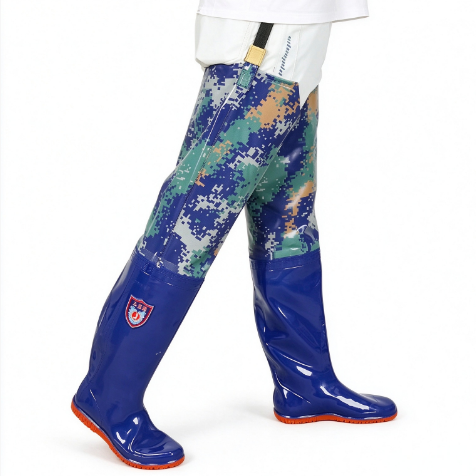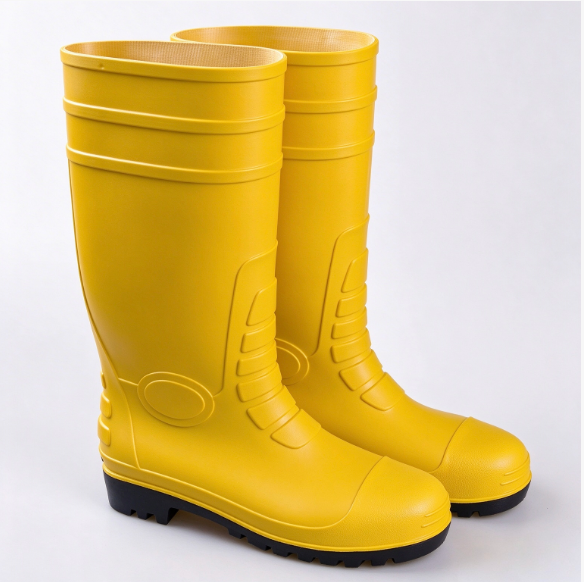
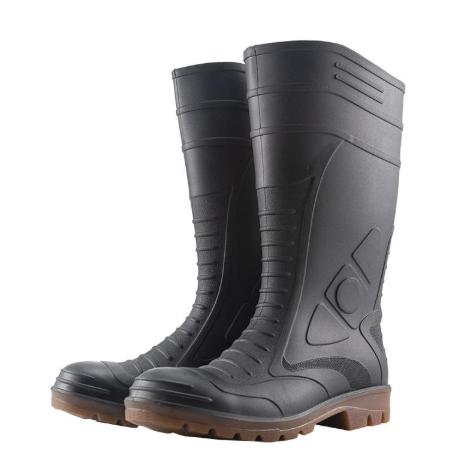
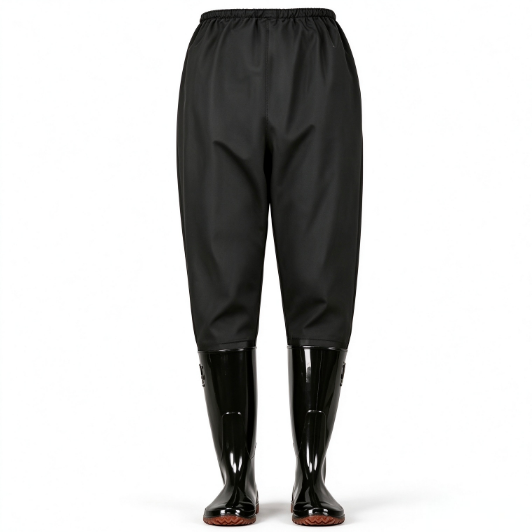
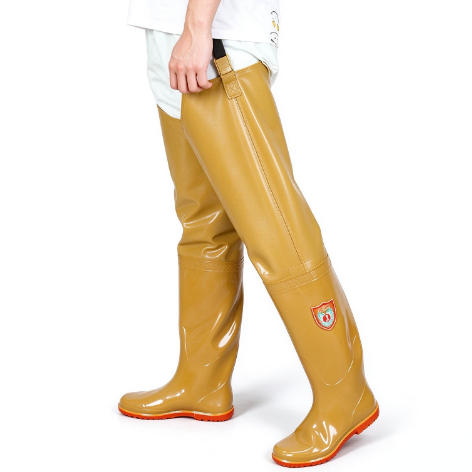
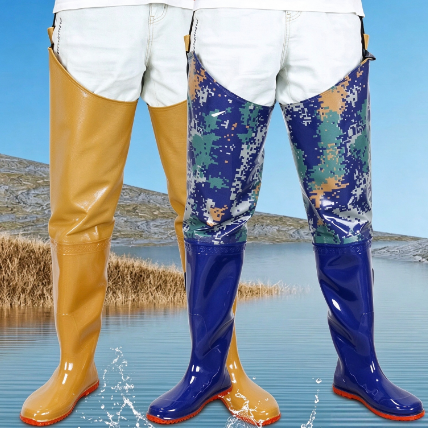
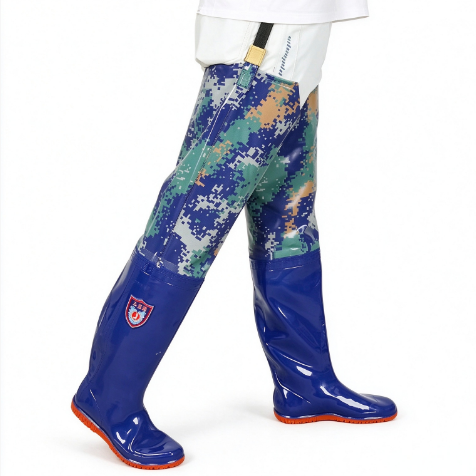
Searching for the best fishing waders usually leads to chest-high breathable models, yet many anglers never stand deeper than the thigh. Model 107 from Beijing Yudahang is a unisex bootfoot PVC wader with heat-welded seams and an 80 cm shaft, made for ponds, ditches, shallow streams and paddy fields.
Where Typical Wader Advice Falls Short for Shallow, Muddy Water
Buying advice for the best fishing waders tends to follow one script: chest versus waist-high versus hip, breathable fabric versus neoprene versus PVC, bootfoot versus stockingfoot, then a price ranking. That script is built around trout streams. It says little about paddies, ponds and ditches, where mud suction, sharp reeds and standing water decide how long a wader lasts. This page focuses on those conditions: depth limits, heel fit, seam construction and temperature.
Specification Overview
| Feature | Detail | Practical benefit |
|---|---|---|
| Type | Bootfoot over-knee hip waders, unisex | Pull on and go, no separate boots |
| Material | PVC upper, waterproof | Shrugs off mud, reeds and rough banks |
| Height | About 80 cm (1–2 cm variance by size) | Covers thigh-deep shallows |
| Seams | High-frequency heat welding | Joins fused without needle holes |
| Lining | Knitted fabric | Softer feel against the leg |
| Sole | Flat tread, anti-slip, wear-resistant | Spreads weight on soft ground |
| Straps | Adjustable bayonet-style | Keeps the waders from sliding down |
| Sizes | EUR 34–45, insole 23–27.5 cm | Choose by foot length |
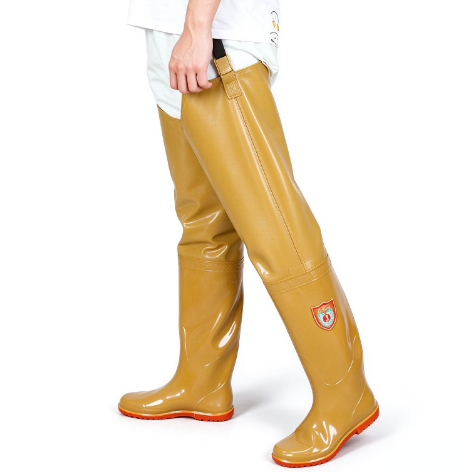
| Colors | Yellow, blue camouflage | Works for fishing and field work |
Choosing by Water Depth, Not by Price
The best fishing waders are the pair whose height matches the water you actually stand in. A practical rule is to keep the waterline at least 10 cm below the top edge. These hip waders have no sealed top, so water that reaches the rim floods the legs, and wet PVC then drags every step. Plan on mid-thigh as the working limit. Past that, a chest wader with a wading belt is the safer tool.
Mud, Suction and Heel Fit
In soft paddies and pond margins, mud grips the boot and tries to pull it off. A snug heel matters more than extra padding, so size by the insole length in the chart rather than by street size, and allow for the sock you plan to wear. The flat tread sole spreads weight over soft ground, but on algae-covered stones or glare-slick banks, move slowly regardless of the sole.
Heat-Welded Seams and Strap Design
Seams are the most common leak point on any wader. Stitched seams need sealing because every needle hole is a path for water, while high-frequency welding fuses the PVC panels into a continuous joint. That is why heat welding is worth looking for on a budget wader. The adjustable straps clip at the belt line to stop the legs from folding down at the knee, which would otherwise pull on the seams at the thigh.
PVC in Hot and Cold Weather
PVC does not breathe, so sweat builds up in summer, and the knitted lining only absorbs part of it. Wear thin synthetic socks and rest on the bank in the afternoon heat. In cold weather PVC stiffens, so store the waders indoors before use and add wool socks. For long hours in cold water, neoprene is still the better material.
Typical Use Scenes
Rice seedling transplanting, pond and ditch work, net handling at the water's edge and shoreline fishing in shallow streams all share one demand: dry legs in water below the thigh. Anyone comparing the best fishing waders for these jobs should weigh abrasion resistance and easy cleaning ahead of weight savings, which is where PVC earns its place.
Care That Extends Service Life
- Rinse off mud and salt after each outing.
- Dry in a ventilated, shaded spot, turning the legs inside out if possible.
- Hang upright instead of folding, since creases become weak points.
- Inspect seams and soles before every season.
Frequently Asked Questions
1. Which end users should a distributor target first with PVC over-knee waders?
Start with rice growers, pond and aquaculture workers, and shallow-water anglers. They buy for abrasion resistance and easy cleaning, and they tend to reorder when a pair holds up through a full season.
2. Can a small leak in the waders be repaired?
Usually yes. A small puncture in PVC can be patched with a PVC repair patch and adhesive once the area is clean and dry. Filling the leg with water helps locate the leak. A split seam is harder to repair, so retire the pair if a seam fails.
3. How should a store explain the depth limit to customers who expect chest-wader coverage?
Label them as shallow-water waders and show the 80 cm height against a thigh on the shelf card. Point customers who fish deeper water toward chest waders so expectations match the product.
4. Do new PVC waders have a strong odor?
A mild plastic smell is normal on new PVC. Air the waders outdoors in the shade for a day or two and wash the inside with mild soap and water. The smell typically fades with airing and regular use.
5. What should importers look for when checking a PVC wader sample?
Check that seams run continuously, the sole is bonded evenly, strap hardware is firm and there is no strong odor. Filling one leg with water for a few minutes shows any weeping at the joins.
Conclusion
The best fishing waders depend on depth, terrain and season rather than a single ranking. For shallow water, mud and rough banks, a welded-seam PVC hip wader with adjustable straps and a flat tread sole is a sturdy, practical choice. Match its 80 cm height to your water, size by insole length, and keep it clean and dry between trips.