Meta Description: Mining workers in underground, rock-strewn, waterlogged zones face unique foot hazards, from falling debris to constant moisture. This guide covers core challenges, material principles, and practical tips to select the right safety footwear for your mining work. Professional Rain Boot Manufacturer shares industry-aligned insights for mining-specific safety needs.
Keywords: steel toe rubber boots, mining safety boots, waterproof rubber work boots, Occupational Footwear, slip-resistant work boots, mining footwear standards
1. Core Problem Analysis
1.1 Common Causes of the Problem
Mining professionals frequently face foot-related hazards that standard footwear cannot address: falling rock fragments that cause impact injuries, constant submersion in water or slurry that leads to skin irritation or fungal growth, and uneven rock surfaces that increase slip risk. Many generic work boots fail to balance impact protection with full waterproofing, leaving workers exposed to avoidable safety risks. Additional common issues include premature material degradation from constant contact with mineral compounds and poor ventilation that causes discomfort during long shifts.
1.2 Affected Usage Scenarios
The scenarios impacted extend beyond underground mining work: surface mining operations with scattered rock piles, tunnel construction in water-saturated rock layers, slurry transport roles where boots face consistent chemical and moisture exposure, and maintenance work in mine yards where workers move between wet and dry surfaces. Each scenario requires footwear that adapts to both constant moisture and occasional heavy impact loads, a balance that many entry-level rubber boots cannot achieve.
2. Product and Process Principle
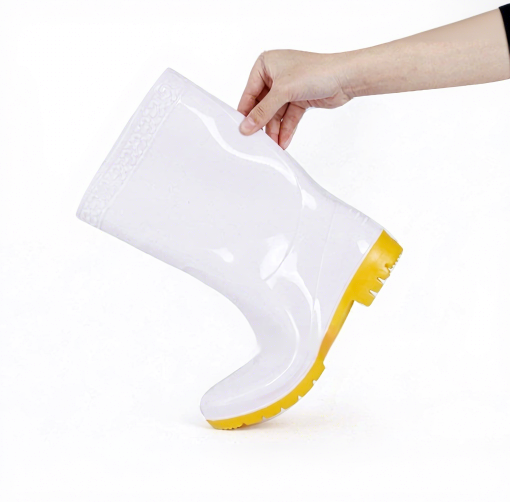
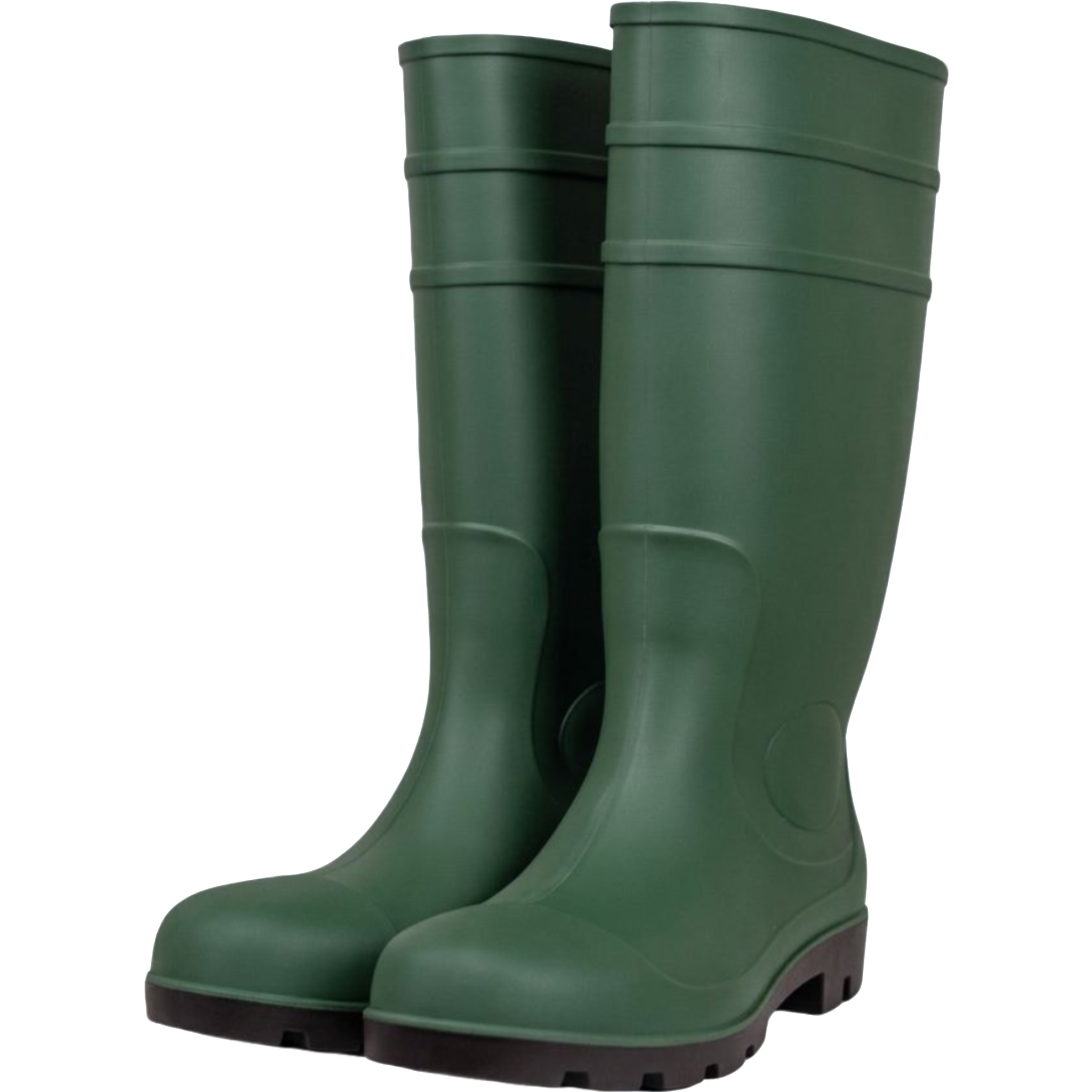
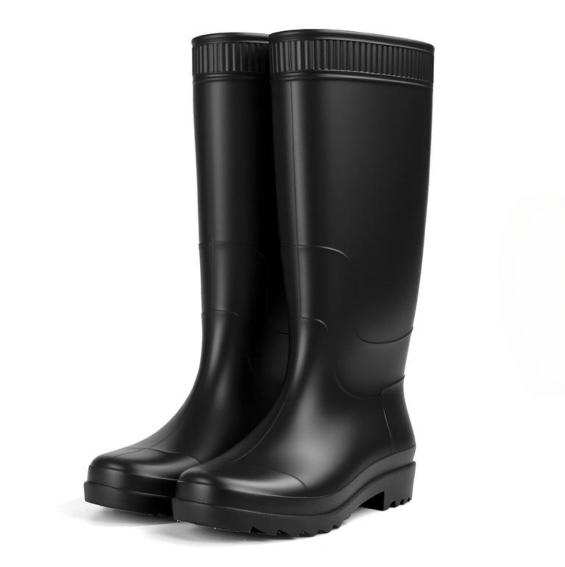
Steel toe rubber boots for mining rely on two core material and process components: a puncture-resistant rubber compound for full waterproofing, and a steel toe cap compliant with specific safety standards. The rubber used is typically a blend of natural rubber and synthetic polymers, chosen for its resistance to mineral abrasion and waterproof integrity. Seam-free construction, often achieved through injection molding, eliminates gaps where water can seep in, a critical design feature for waterlogged underground zones. The outsole uses deep, multi-directional tread patterns to provide grip on wet rock surfaces, with a hardness calibrated to balance flexibility and durability.
Professional Rain Boot Manufacturer notes that vulcanization, a process where rubber is cured under controlled heat and pressure, enhances the material’s tensile strength, reducing the risk of cracks from repeated impact and bending. Shaft height is engineered to cover the lower calf, preventing slurry or water from entering during submersion, while a smooth inner lining simplifies cleaning after long shifts in dusty mine environments.
3. Practical Solutions and Operation Steps
To select the right steel toe rubber boots for mining, follow these specific, actionable steps: First, verify compliance with relevant safety standards, as not all steel toe rubber boots meet mining-specific impact requirements. Second, match outsole tread to your primary work surface: deep, blocky treads work best for loose rock or slurry, while multi-directional grooves suit mixed wet and dry mine floors. Third, choose a shaft height that covers at least 2 inches above the ankle to prevent debris and water intrusion.
- Confirm the boot’s steel toe cap meets impact protection requirements aligned with mining work, not just general industrial use.
- Test flexibility by bending the boot mid-shaft; overly stiff rubber will cause fatigue during long shifts, especially in cold underground conditions.
- Check that the inner lining is non-abrasive to reduce the risk of blisters during all-day wear.
- Avoid boots with thin rubber layers; thicker compounding improves abrasion resistance for rock-heavy work sites.
4. Daily Maintenance and Precautions
Proper maintenance extends the lifespan of steel toe rubber boots and preserves their protective properties. After each shift, wipe away slurry, dust, and rock debris with a damp cloth, then rinse with mild soap to remove mineral residues that can break down rubber compounds over time. Allow boots to air dry in a cool, shaded area; never expose them to direct sunlight or high heat from heaters, as this can cause rubber to crack and lose waterproof integrity.
Avoid using strong solvents or harsh cleaners, as these degrade the rubber’s protective layer. Store boots in a dry, well-ventilated space away from chemicals and sharp tools, and avoid placing heavy items on top of them, which can deform the toe cap. Critical safety note: Steel toe rubber boots are not designed for extreme cold mining environments without additional insulation; use only boots labeled for low-temperature use when working in sub-zero underground zones.
5. Industry Standard and Parameter Reference
ParameterRecommended ReferenceWhy It MattersSlip resistanceEN ISO 20344:2021 / EN ISO 20347:2022+A1:2024 where applicableHelps evaluate outsole grip on wet or contaminated rock surfaces.Occupational footwear requirementsISO 20347:2021 or EN ISO 20347:2022+A1:2024Supports selection of non-safety boots suited for general mining tasks.Safety toe footwearASTM F2413-24 where protective toe performance is claimedRelevant only for boots marked as protective safety footwear for impact-prone mining work.Chemical protective footwearEN 13832-3:2018 where prolonged slurry contact is neededTests resistance to degradation from mineral compounds in mine slurry.
When evaluating boot parameters, rely on verified third-party test results from organizations such as SGS or Intertek, rather than manufacturer claims alone. Any performance claims, such as waterproof durability, should align with test methods outlined in ISO 20344:2021 to ensure accuracy for long-term mining use.
6. Customer Common FAQ
Q: Can steel toe rubber boots provide enough protection for underground rock hazards?
A: This depends on the boot’s compliance with impact resistance standards. Boots meeting ASTM F2413-24 for steel toe protection are suitable for underground mining with falling rock risks. Professional Rain Boot Manufacturer advises verifying test documentation to confirm impact performance for your specific mine’s hazard levels.
Q: How do I choose the right size for all-day mining shifts?
A: Select a size that allows 0.5 inches of space between the toe and boot end to accommodate foot swelling during long shifts. Avoid sizes that are too tight, as this can cause discomfort, and too loose, as this reduces stability on uneven rock surfaces.
Q: Can steel toe rubber boots be used in cold underground mining environments?
A: Only boots explicitly designed for low-temperature use are recommended. Standard rubber boots can stiffen in cold conditions, reducing flexibility and protective properties. Look for insulation-rated boots that meet cold-weather occupational footwear standards for consistent performance.
Q: How often should steel toe rubber boots be replaced?
A: Replacement frequency depends on wear and tear. Inspect boots monthly for cracks in the rubber, loose stitching, or deformed steel toe caps. Signs of reduced waterproof performance, such as damp inside the boot after a shift, indicate the need for replacement, regardless of age.
Conclusion
Selecting steel toe rubber boots for mining requires balancing impact protection, waterproof integrity, and surface-specific grip to address underground work’s unique hazards. By aligning boot selection with industry standards, following practical maintenance steps, and verifying key performance parameters, mining workers can reduce foot-related safety risks and extend boot lifespan. Professional Rain Boot Manufacturer emphasizes that prioritizing standards-compliant footwear over entry-level options delivers long-term value for mining operations.
References
- International Organization for Standardization. ISO 20347:2021: Occupational Footwear - Requirements and Test Methods. 2021.
- American Society for Testing and Materials. ASTM F2413-24: Standard Specification for Performance of Mens’ and Womens’ Safety Footwear. 2024.
- European Committee for Standardization. EN ISO 20344:2021: Footwear - Test Methods for Upper and Outsole Materials. 2021.