Few purchases go wrong as quietly as rubber boots. Leather softens with wear, but a molded boot keeps the shape it left the factory with, so a pair that is half a size off shows up as bruised toes, a lifting heel or a shaft that clamps the calf. A rubber boot size chart solves this only if you know what its numbers describe. This guide covers how to measure, how to read a chart by inner sole length instead of the size label, and how to decide when you fall between sizes. Every figure comes from a published brand chart.
Why Rubber Boot Sizing Works Differently From Shoe Sizing
Rubber and PVC boots are formed in one piece around a last, so there are no laces to tighten and little give. That is why the same US 9 can feel different from one brand to the next, and why many brands sell whole sizes only. Reviewers who wear them daily report that rubber work boots often fit about half a size larger than casual shoes, while lace-up rubber rain boots mostly fit true to size. The same source adds that insulation can make a winter boot feel snugger, so a lined boot may need more allowance than an unlined one with the same label.
Two failure modes matter. Xtratuf warns that a boot that is too big lets the heel slip, which can damage both the wearer and the boot, while one that is too small risks black and bruised toes. Everything below is about avoiding both.
How to Measure Foot Length, Foot Width and Calf Circumference
Measure in the late afternoon, when feet are at their largest. Stand on a sheet of paper, trace each foot, then measure heel to longest toe and across the widest part. Use the larger foot, and measure while wearing the socks you will actually wear in the boots. Feet also change under load: Xtratuf points out that they get longer, flatter and wider when you walk, so the right boot leaves toe room while keeping the heel locked.
For tall boots, wrap a soft tape around the fullest part of each calf without pulling it tight, and use the larger number. If you cannot measure over the clothing you will wear, Hunter suggests allowing 0.5 cm. Calves vary far more than most buyers expect: Le Chameau offers narrow, regular and wide calf fittings spanning roughly 34 to 42 cm in women's boots and 39 to 52 cm in men's.
Reading a Size Chart: Inner Sole Length Beats the Size Label
A size label is a name. The inner sole length is a measurement. The table below uses Hunter's published figures for its Original Tall Boot, which the brand describes as a general guide that varies slightly between styles.
| Fit | US Size | EU Size | Inner Sole (in) | Inner Sole (cm) | Max Calf (in) |
|---|---|---|---|---|---|
| Women's | 6 | 37 | 9.6 | 24.4 | 14.3 |
| Women's | 8 | 39 | 10.0 | 25.4 | 15.2 |
| Women's | 10 | 42 | 10.8 | 27.4 | 15.8 |
| Men's | 9 | 42 | 10.8 | 27.4 | 15.9 |
| Men's | 10 | 43 | 11.2 | 28.4 | 16.2 |
| Men's | 12 | 45/46 | 11.8 | 30.0 | 16.5 |
Notice that a women's US 10 and a men's US 9 share the same EU size and the same inner sole, so women's sizes run about one size above men's for the same boot. That is why unisex ranges often tell women to order one size down from the men's size shown. Convert between regions only as a starting point, then confirm the inner sole length.
Here is a worked example. Suppose your foot measures 10.6 inches in your boot socks. Muck Boot builds a 15 mm toe allowance into its sizing, which is about 0.6 inches. Adding the two gives a target inner sole of roughly 11.2 inches, which is the men's US 10 in the table. Treat 15 mm as a benchmark for how much room a boot should leave, not a universal rule, because allowances differ between makers.
Foot Size and Calf Size Do Not Rise Together
The last column of the table hides a useful point. Across men's US 7 to 13, Hunter's maximum calf measurement only grows from 15.4 to 16.7 inches, about a fifth of an inch per size. A foot that is four sizes larger therefore gains less than an inch of calf room. If your calf is large for your foot, ordering a bigger size will lengthen the boot, loosen the heel and still leave the shaft tight. The better fix is a wide-calf fitting, or a style with an adjustable top. The reverse also holds: a slim calf in a regular shaft can let the boot flap, which is a reason to check the shaft circumference as well as the foot length.
Half Sizes, Thick Socks and the Between-Size Decision
Because most molded boots come in whole sizes, makers give the same advice: if you are between sizes, go up. Xtratuf's example is a men's 9.5 moving to a 10. Sizing up leaves you a remedy, since an insole or a thicker sock can take up spare room, while sizing down leaves none.
A practical order of decisions helps. First, measure the foot in your real sock. Second, add toe allowance and find the matching inner sole length. Third, if the result lands between two sizes, take the larger and check the heel after a few steps. Fourth, if your foot is wide, remember that a half size up relieves the forefoot but can loosen the heel, so a boot with a roomier forefoot is a better answer than a bigger number. For insulated winter boots, which feel snugger, measure with your thickest sock and give yourself the benefit of the larger size.
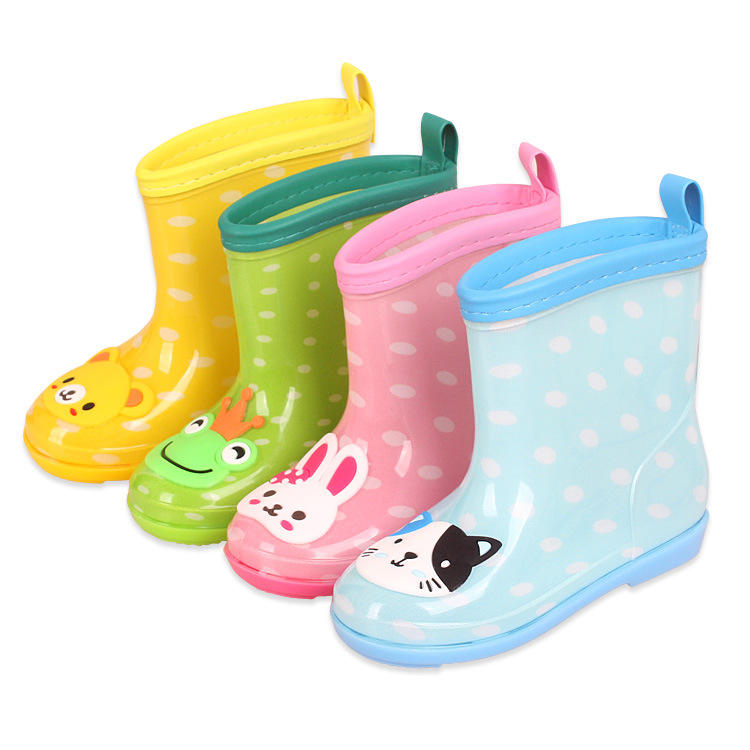
Kids Versus Adults: Why Children's Rain Boots Need Their Own Rules
Children outgrow boots quickly, and PVC does not stretch to follow them. Nokian Footwear advises measuring a child's feet when buying new rubber boots and again when the seasons change, so toes never press against the end. A little growing room is sensible, but a boot far too large invites tripping and blisters, so use the toe allowance in the worked example and not a whole extra size.
When you compare styles such as our toddler rain boots or our men's rain boots, apply the same steps: match the inner sole length to your measured foot plus allowance, and do not rely on the label alone.
What a Useful Size Chart Should Show
A reliable chart shows more than a size label. Look for inner sole length, shaft height and shaft circumference at the top opening, plus a clear note on whether half sizes exist. Importers and retailers can borrow the same logic: place foot-measuring instructions next to the size selector, state the half-size policy, and say what to do when a customer falls between sizes. Keeping a measured sample pair of each size also lets a team answer fit questions with a real boot instead of a table.
Conclusion
The right rubber boot size comes from three numbers, not one: foot length measured in your actual sock, the inner sole length on the chart, and calf circumference for tall styles. Use regional conversions only as a starting point, size up when you fall between whole sizes, and remember that a larger size does not fix a tight calf. Follow that order and a rubber boot size chart becomes a dependable tool that keeps toes comfortable and heels in place from the first wet day to the last.
References
- Workwear Command, Do Rubber Boots Run Big or Small?
- Xtratuf, Size Guide
- Hunter Footwear Size Chart (Scheels)
- Le Chameau, Sizing
- Muck Boots FAQ (Swanndri)
- Nokian Footwear, Size Guide