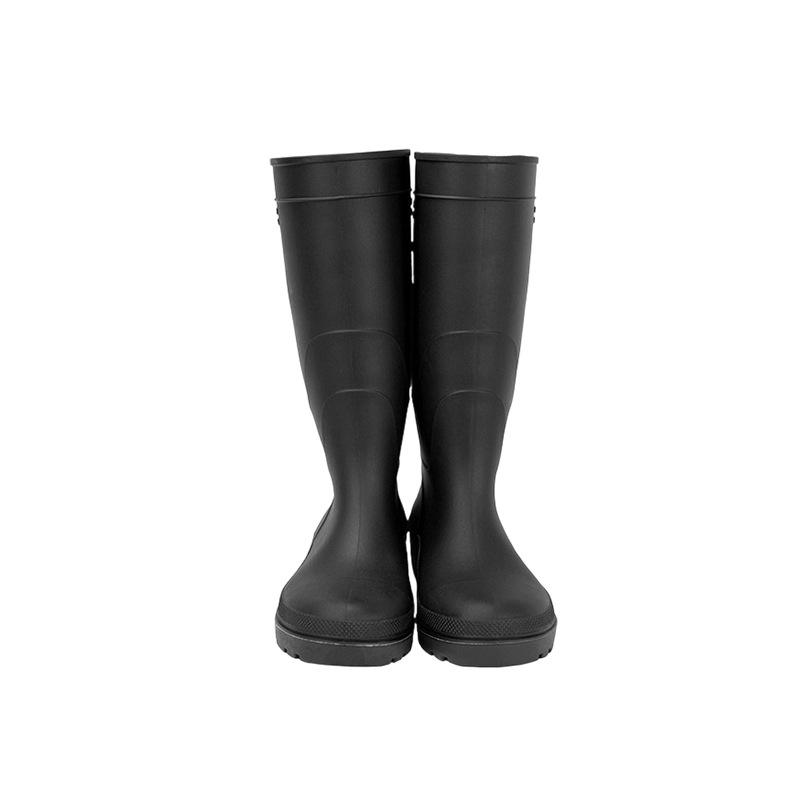
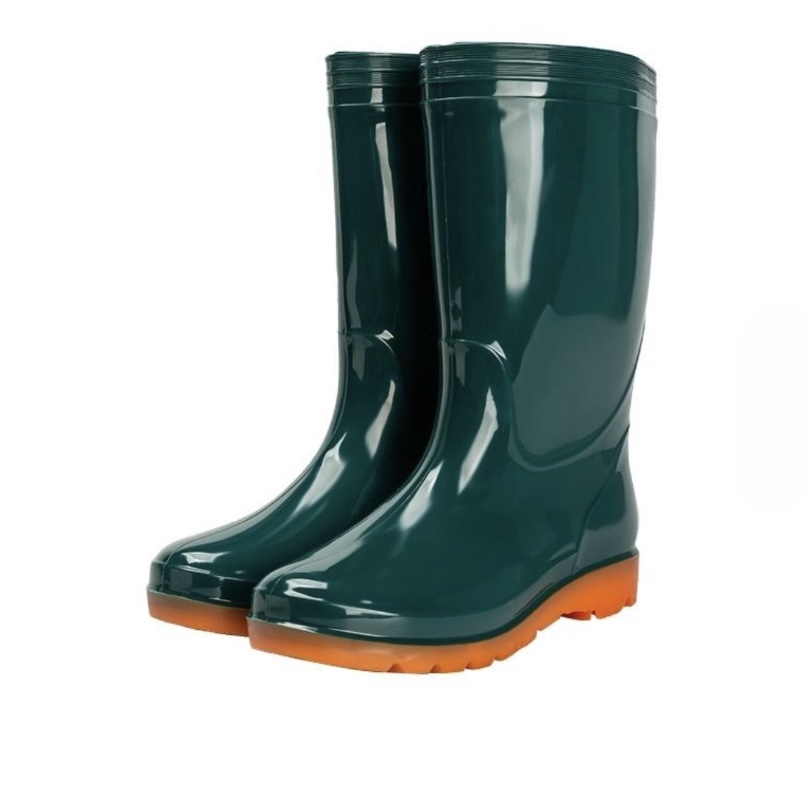
Most pages about men's rubber fishing boots stop at "waterproof" and a list of popular models. Yet anglers rarely abandon a boot because it leaks. They abandon it because it sweats, slips on a slimy deck, sits loose at the heel or cracks after a hot summer in the garage. This guide covers those everyday problems and how to choose around them. At Yudahang, they are the questions we hear most from fishing and marine buyers.
Why Choose Rubber for Fishing?
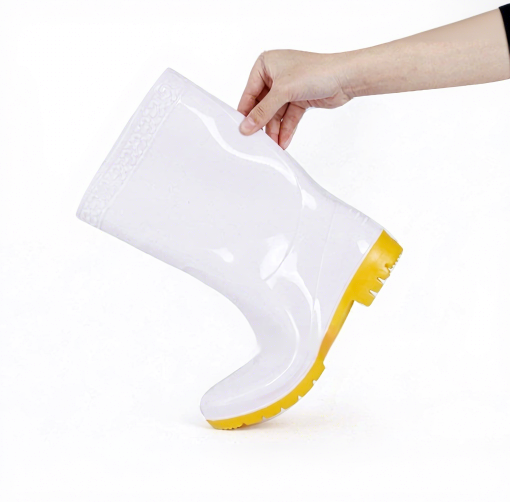
Rubber earns its place through sheer reliability. A Cast & Spear guide points out that fully sealed rubber and flexible neoprene are the most effective waterproof options, and a boot comparison from Kevin's Catalog adds that rubber keeps water out even when you stand in flooded ground or deep mud. Leather, even with a membrane, cannot match that on a wet dock.
The trade-off is comfort. The same comparison notes that rubber traps perspiration, so feet can feel damp by day's end even though no outside water got in. Keep that in mind, because it shapes every other choice below.
Tall, Mid or Ankle: Which Shaft Height Fits Your Fishing?
Match the shaft to the water you actually meet. Bass Pro's guide suggests that shore anglers benefit from tall boots in wet grass and shallows, while boat anglers often do fine with shorter cuts, provided they test them with rain pants while seated. That seated test is worth doing, since a stiff shaft can bind behind the knee on a boat bench.
| Fishing Situation | Suggested Shaft | Why It Works | Watch Out For |
|---|---|---|---|
| Shore, wet grass, shallows | Tall (15 in. or more) | Keeps legs and cuffs dry | Heat and weight on long walks |
| Boat day with spray | Mid to ankle | Easier to sit and move | Water over the top in swells |
| Cold water or ice | Tall with thermal socks | Added coverage and warmth | Little built-in insulation |
| Docks, warm weather | Ankle deck style | Light, all-day comfort | Low protection in deep water |
What Makes a Rubber Sole Grip a Wet Deck?
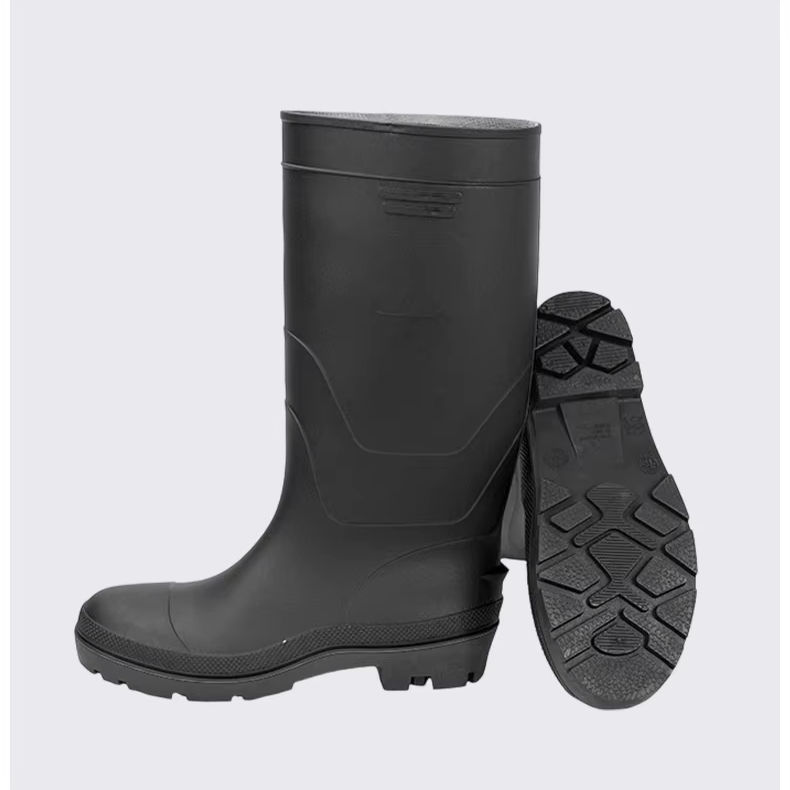
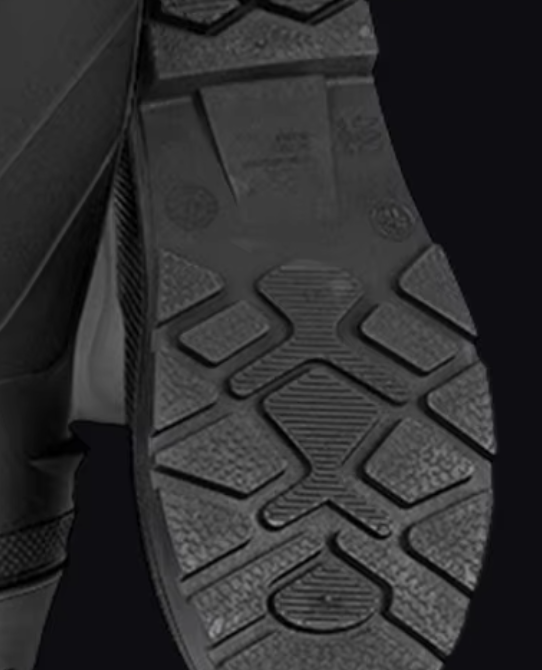
The sole does more safety work than any other part. A University of Maine extension article compares footwear to tires, describing it as the grip needed on wet, slippery decks. Cast & Spear adds that siped outsoles channel water away and that non-marking soles protect fiberglass boats and docks.
In our experience, the real test is not water but fish slime and bait oil, which turn a smooth lug into a skating surface. Choose tight siping and open channels that can be rinsed clear, and avoid deep, closed lugs that pack with residue.
How do You Keep Feet Comfortable Inside Rubber?
Comfort starts with fit. Rubber boots are often roomier and simpler in shape, which Kevin's Catalog says makes them easy to pull on but less secure at the heel and calf. A loose heel rubs, and a wide calf lets water slosh in. Look for a snug heel, a calf width that suits your leg, and, as Huk notes, pull loops and a reinforced heel tab for easy on and off.
Warmth is the second issue. A retailer guide from Bad Workwear says rubber offers little insulation in cold weather, so thermal socks do the work. We suggest sizing with your actual fishing socks on, because a boot that fits a thin sock in the store will pinch over wool at dawn.
How Should You Care for Rubber Boots?
Rinse them after every saltwater trip and dry them in a shaded, ventilated spot, as Cast & Spear advises. Avoid heat and sun, because Kevin's Catalog warns rubber can crack, dry out or separate with poor storage. Rubber also acts as a barrier against cleaning products and chemicals, which makes washing down after a messy catch simple.
What Should Buyers Check before Ordering?
Ask about outsole siping, shaft width and sock-ready sizing, and wear a sample for a full day before committing to quantity. Our men's fishing boots are built around those points, and crews with mixed teams can pair them with our women's fishing boots so that everyone gets a true fit rather than a smaller men's size.
Conclusion
The best men's rubber fishing boots balance four things: a shaft height that suits the water, a sole that grips slime, a fit that locks the heel, and care habits that keep rubber supple. Waterproofing is the starting point, not the finish line. Choose for the whole day on the water, and the boots will last the season.
References
- Cast & Spear, "The Ultimate Guide to the Best Fishing Boots"
- Kevin's Catalog, "Rubber Boots vs Leather Boots: Which Wins?"
- Bass Pro Shops, "7 Tips to Guide You to the Best Fishing Boots & Shoes"
- University of Maine Cooperative Extension, "Reducing Slips, Trips and Falls in the Fishing Industry"
- Huk, "Your Guide to the Best Fishing Boots"
- Bad Workwear, "The Pros and Cons of Rubber and Leather Work Boots"