
What Makes Durable Rain Boots a Better Choice for Long-Term Use?
Many rain boots look strong on day one. Then the sole wears flat, the shaft cracks, and the feet get cold and wet.
Durable rain boots are a better choice for long-term use because they keep their grip, shape and waterproofing through repeated wear. Over time, they cost less per wear and cause fewer replacements, returns and safety risks.
I have worked in safety footwear for over a decade. Most failures I see start with the wrong first question. Here is how I judge durability, one step at a time.
What Determines the Durability of Rain Boots?
A boot can pass every first-day check and still fail in three months.
Durability depends on material quality, sole design, construction, flexibility and consistency. No single feature decides it. The parts must hold up together under wet conditions, abrasion and repeated movement.
Look beyond One Material
One expert quoted by NBC Select says thicker rubber lasts longer and keeps its shape, while PVC may crack and lose its shape. I agree with the idea. But a thick wall alone does not save a poor boot. Thick rubber with a weak bond, a thin sole or uneven mixing still fails early. I read the material as one input, not as the answer.
Look at Where Boots Fail
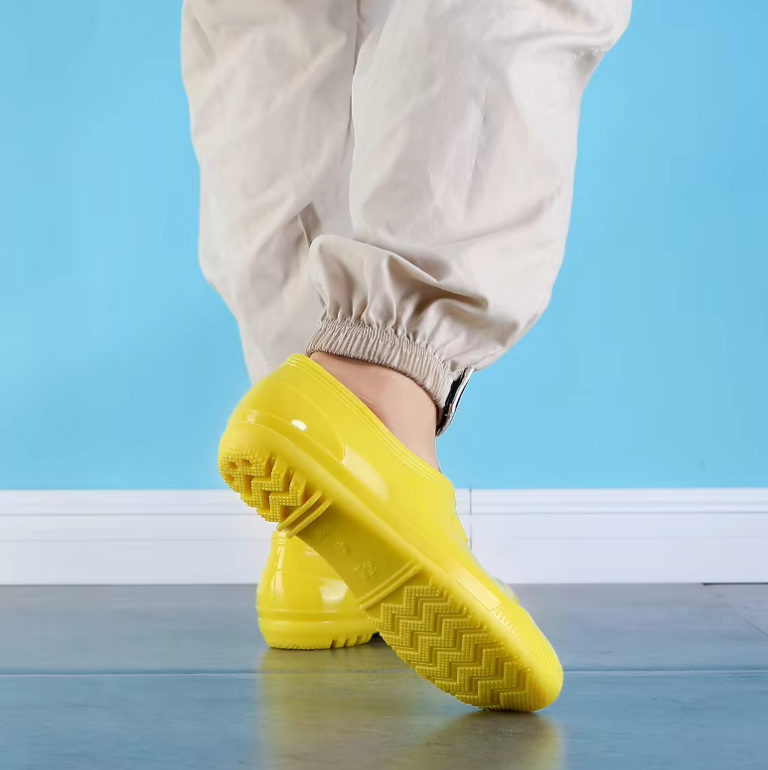
In my experience, boots fail in three places. The heel of the sole wears down. The forefoot cracks from bending. The bond between sole and upper opens. These problems show up only after weeks of use. So I check the sole, the construction, the flexibility and the material consistency as one set. At Yudahang, we treat them the same way, because a strong sole on a weak upper still gives a failed boot.
Durable Rain Boots VS Standard Rain Boots
Two boots can look the same on a shelf. Six months of daily use shows the gap.
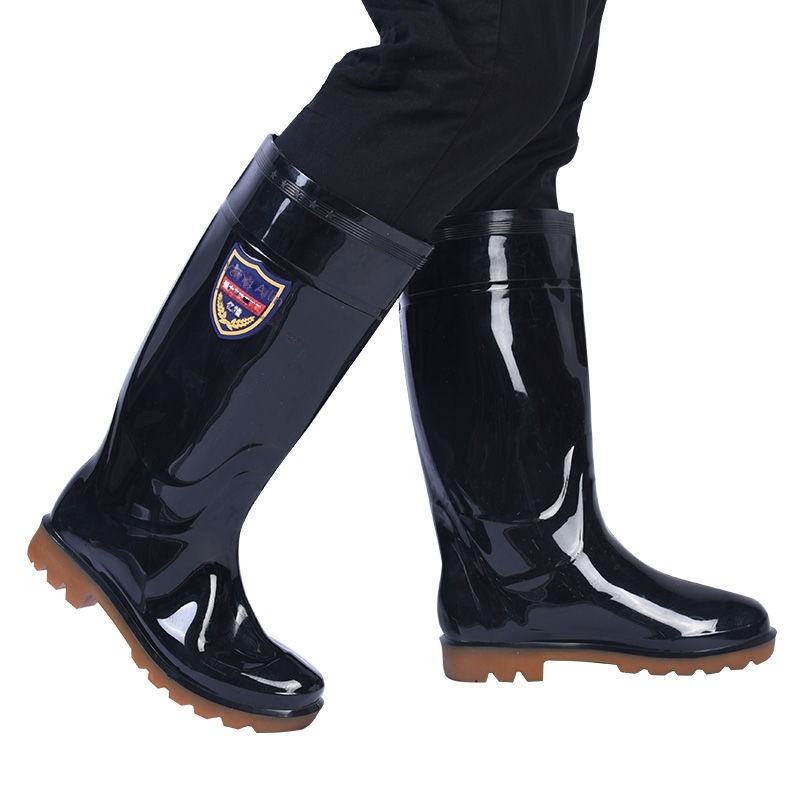
Durable rain boots use stronger materials, better soles and tighter construction control. Standard rain boots often keep feet dry at first, but they wear faster under daily use, abrasion and repeated flexing.
Where the Gap Shows
| Factor | Standard Rain Boots | Durable Rain Boots |
|---|---|---|
| Outsole wear | Flattens early | Keeps tread depth longer |
| Forefoot flexing | Cracks sooner | Stays flexible |
| Sole-to-upper bond | Can open with use | Holds under stress |
| Lining | Often packs down | Keeps its shape and warmth |
| Batch consistency | Varies | Controlled |
PVC is Not Always the Weak Choice
Safetyware describes PVC boots as light, waterproof and chemical-resistant, and widely used in industry. That does not clash with the warning above. A well-made PVC boot can beat a poorly made rubber boot. The job decides the material. For wet floors with chemicals, I may lean to PVC. For long walks on rough ground, I may lean to rubber. In both cases, the build quality matters more than the label. When a listing only says "rubber," I ask for the exact material before I judge anything.
When does Durability Matter Most in Rain Boots?
A weekend walk and a ten-hour shift are not the same job.
Durability matters most in daily work, wet floors, cold weather, rough ground and bulk purchases. In these cases, abrasion, repeated flexing and constant moisture expose weak materials fast.
Daily Work is the Real Test
Occasional users rarely wear out a boot. Workers do it in weeks. They walk on wet concrete, climb in and out of vehicles, and bend their feet thousands of times each shift. For these users, a small flaw becomes a daily problem. A sole that loses grip on wet concrete is not just worn. It is unsafe. I ask buyers how many hours per day, on which floors, and in which weather. Those three answers set the durability target.
Cold and Wet Together
Cold weather adds a second test. Hatley advises boot liners or a warm sock layer when cold comes with rain or slush. It also says to store boots away from direct sunlight, so the rubber does not dry out and crack. I add one point. A lining that tears or packs down ends the warmth long before the outer wall fails.
How Can Buyers Evaluate Durable Rain Boots?
A sample on your desk looks perfect. That proves very little.
Start with the use case. Then check the sole, wall thickness, flexibility, seams, lining and test records. Bend the boot, inspect the sole bond, and ask for slip test data instead of a general claim.
Do Simple Hands-On Checks
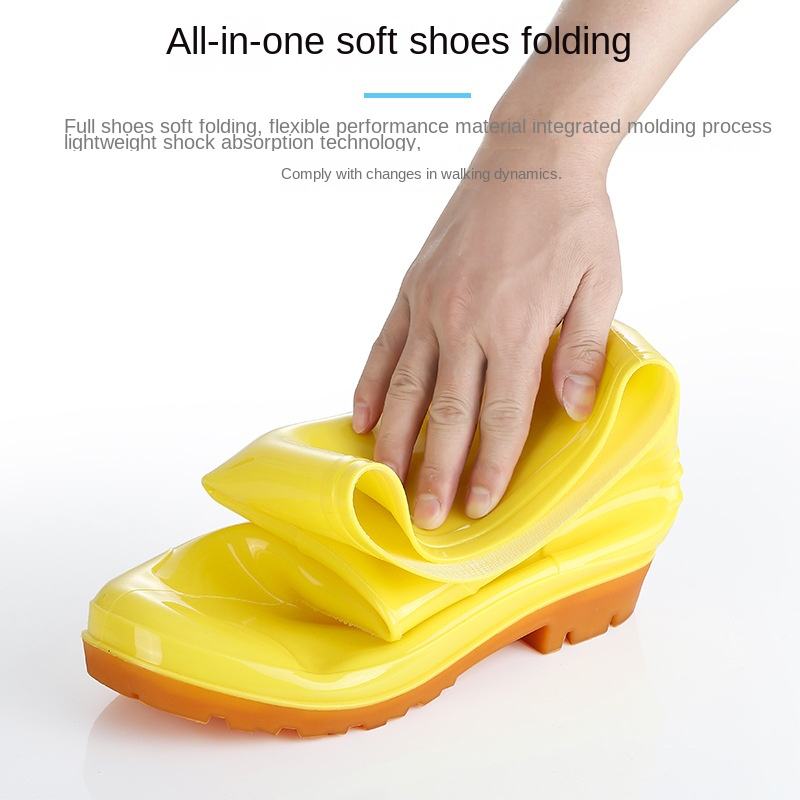
I bend the forefoot and watch for creases that stay white or sharp. I press the wall to feel thickness. I inspect the line where the sole meets the upper. I look at the inside for rough seams. These checks take five minutes and catch many problems. I repeat them on several pairs from the same batch, not on one pair, because one good pair can hide a weak process.
Read Slip Ratings with Care
Slip labels confuse many buyers. Safetyware explains that EN ISO 20345:2022 removed the SRA, SRB and SRC marks, and added an optional SR test on ceramic tile with glycerine. Older SRC boots stay valid under the version they passed. In the US, Intertek notes that ASTM F2413 does not cover slip resistance. A separate standard, ASTM F3445, came out in 2021. So I always ask which standard and which version a boot passed.
What Should Buyers Consider When Sourcing Durable Rain Boots?
A good sample means little if the next 5,000 pairs differ.
Check production consistency, material stability, process control and inspection plans, not only the sample. Ask for test records, set clear defect limits, and approve a gold sample before bulk production starts.
Consistency Beats One Good Sample
Eurofins points out that a small deviation in one step of footwear production can change the final quality a lot. That matches my experience. A sole compound that shifts between batches shows up as uneven wear in the field. Buyers can control this with AQL sampling inspection before shipment.
Questions I Ask a Factory
How do you control incoming material quality?
What tests do you run on each batch?
Which defect limits do you apply?
Can you match the approved sample in bulk?
A clear answer shows a stable process. A vague answer is a warning. I also ask to see how the factory handles a failed batch, because that shows how it protects the buyer. At Yudahang, we treat these answers as part of the product, not as paperwork.
Is a More Durable Rain Boot Always More Cost-Effective?
A high price does not prove value. A low price does not prove savings.
Not always. A durable rain boot is more cost-effective when use is frequent and demanding. For light, occasional use, a simpler boot may be enough. Compare cost per wear, not purchase price.
Think in Cost Per Wear
Take a boot that costs twice as much but lasts three times as long. It wins on cost per wear. It also cuts replacement orders, returns and downtime. Cheap boots add hidden costs. Workers lose time, complaints rise, and a worn sole raises the risk of a fall.
When It is Not Worth It
I tell buyers honestly when a simple boot is enough. A boot used a few times a year does not need heavy construction. I look at real use first, then price. That order protects the budget. I also suggest mixed plans for large teams. Workers with heavy daily use get the durable boot, and light-duty staff get a simpler one. This keeps the cost in line with the real need and avoids paying for strength that nobody uses.
Conclusion
Durable rain boots earn their value through material, construction, grip and consistency. Match the boot to real use, verify it, and judge cost over its service life.
References
NBC Select. "Best Rain Boots, According to Experts." NBC News.
Safetyware. "How to Choose the Best PVC Boots in Malaysia: What You Should Look For."
Hatley. "How to Choose Kids' Rain Boots: What Actually Matters."
Safetyware. "SRC vs SR Slip Resistance Explained."
Intertek. "Supplemental Information for US Safety Shoes Testing: ASTM F2413."
Eurofins Assurance. "Footwear Quality Control." Product Inspection Services.