
PVC Rain Boots vs Rubber Rain Boots: Which Material Fits Your Needs?
Wet feet slow a crew down. Cold, heavy or stiff boots make it worse. I see buyers pick the wrong material every season.
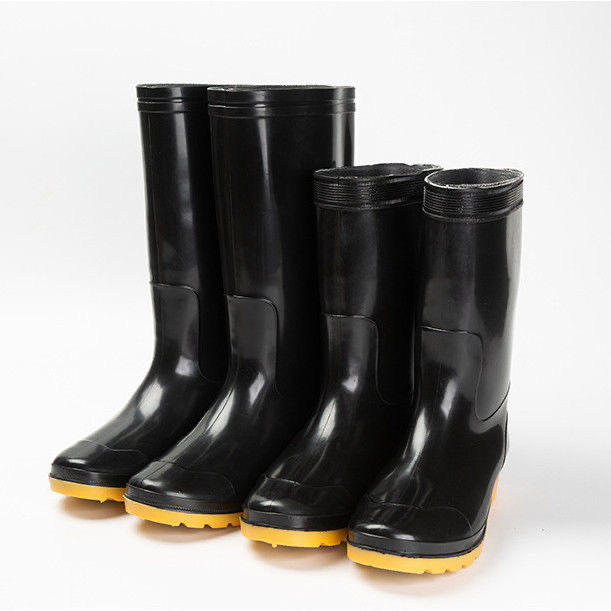
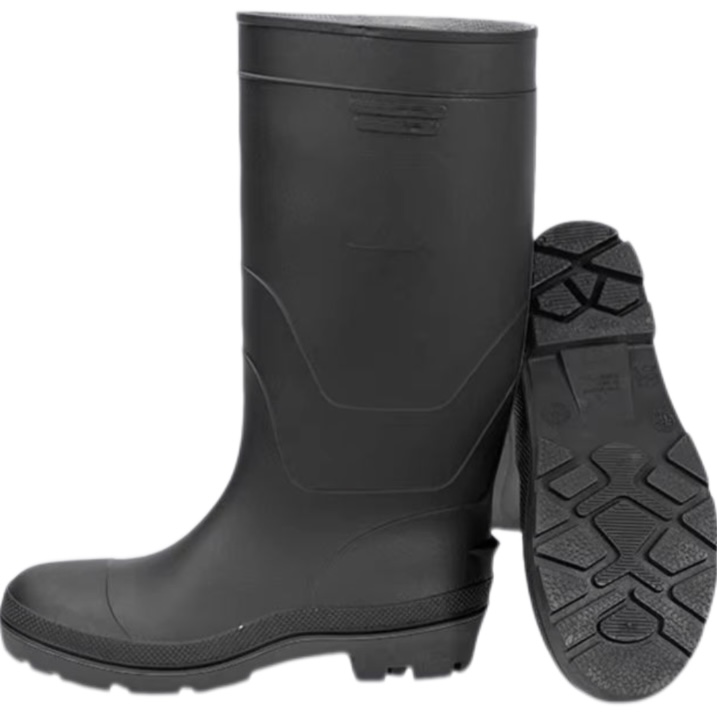
PVC rain boots suit most wet, oily and chemical jobs, and they cost less. Rubber suits deep cold and long, heavy flexing. Choose by the job first, then by price. A well-made PVC boot often beats a poorly made rubber one.
I work with both materials every day at Yudahang. Below, I share what I check before I tell a buyer that a boot is right for the job. Read on, because one small detail in the mould can decide the whole order.
What Makes PVC a Common Material for Rain Boots?
Many buyers think all plastic boots are the same. They are not. The recipe inside the PVC changes everything.
PVC is common because it is waterproof, light, easy to mould and low in cost. Makers add plasticizers and stabilizers to turn it from hard to soft. This lets one material cover many boot types, from kids' boots to work boots.
Why the formula matters
LG Chem explains that additives let PVC range from soft to hard. I agree, and I take it one step further. A boot has several parts, and each part needs its own mix. The upper needs flex. The sole needs grip and wear resistance. So when a supplier quotes one "PVC boot", I ask what each part is made of. The plasticizer level matters too. Too little makes a stiff boot that cracks. Too much makes a soft boot that feels good in the shop but wears out fast.
Why factories like it
Injection moulding is fast and repeatable. One mould gives thousands of matching pairs. Merrypeople notes that PVC boots come from melted pellets that are moulded, which keeps cost down. That is why PVC fits bulk orders so well. The trade-off is that small mould flaws repeat in every pair, so I always inspect the first pieces off a new mould.
How do PVC and Rubber Rain Boots Differ in Everyday Use?
A boot can look fine in the shop and hurt by noon. Weight and stiffness show up only after hours of wear.
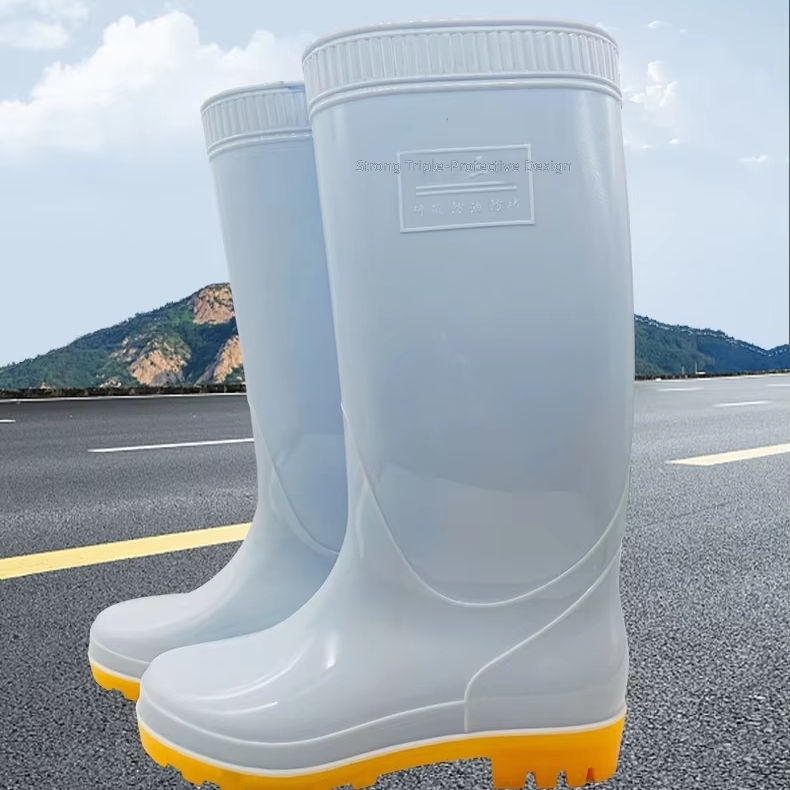
PVC boots are lighter, cheaper and easier to clean. Natural rubber boots are softer, more elastic and hold their shape better in deep cold. PVC resists oil and grease well. Rubber usually lasts longer under heavy, repeated flexing.
Side-by-side view
| Factor | PVC | Natural Rubber |
|---|---|---|
| Weight | Lighter | Heavier |
| Flexibility | Stiffer, depends on formula | Soft and elastic |
| Deep cold | Can harden | Holds shape better |
| Oil and grease | Good resistance | Varies by compound |
| Upfront cost | Lower | Higher |
| Cleaning | Easy | Easy |
What the table hides
Merrypeople says PVC does not stretch and may not suit feet that differ from the mould width. I have seen this in wide-calf complaints. I treat it as a mould problem, not a material problem. A good last fixes much of it. Rubber can also be blended with PVC to cut cost, so I always ask for the exact mix. Cost per wear is the better number. A cheap boot that lasts one season can cost more than a mid-price boot that lasts two.
Which PVC Rain Boots Are Suitable for Different Working Conditions?
A farm, a food plant and a chemical yard all ask for "rain boots". They need three different boots.
Match the boot to the hazard. Food plants and cleaning crews need slip-resistant, easy-wash PVC. Farms and fisheries need high shafts. Construction needs a safety toe. Chemical work needs a compound proven against the exact liquid.
Check the hazard, not the label
Safetyware lists safety toe, slip-resistant outsole and shaft height as the main choices by industry. I add a warning. Ansell markets its PVC safety boots under EN ISO 20345 with S5 and SRC marks, and it names acids and fuels. It gives no wider chemical list, and you should not assume one. In the US, OSHA 1910.136 requires protective footwear where falling objects or sole piercing are a danger. A plain rain boot does not meet that need. For wet work with no impact risk, I usually suggest a light PVC boot with a strong sole. It saves weight and money.
What Should You Check for Comfort, Grip, and Long-Term Durability?
Comfort and grip decide whether workers wear the boots. Durability decides whether you buy them again.
Check lining and fit for comfort, sole compound and tread for grip, and wall thickness and ankle flex for durability. Bend, press and pull the sample. Then wear it for a full shift on the real floor.
Grip and comfort
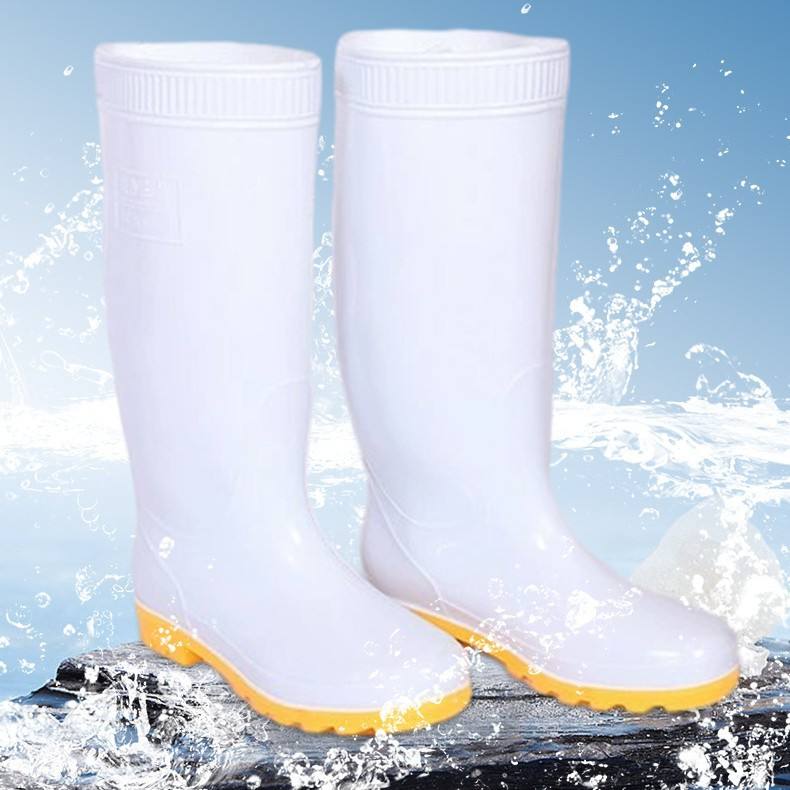
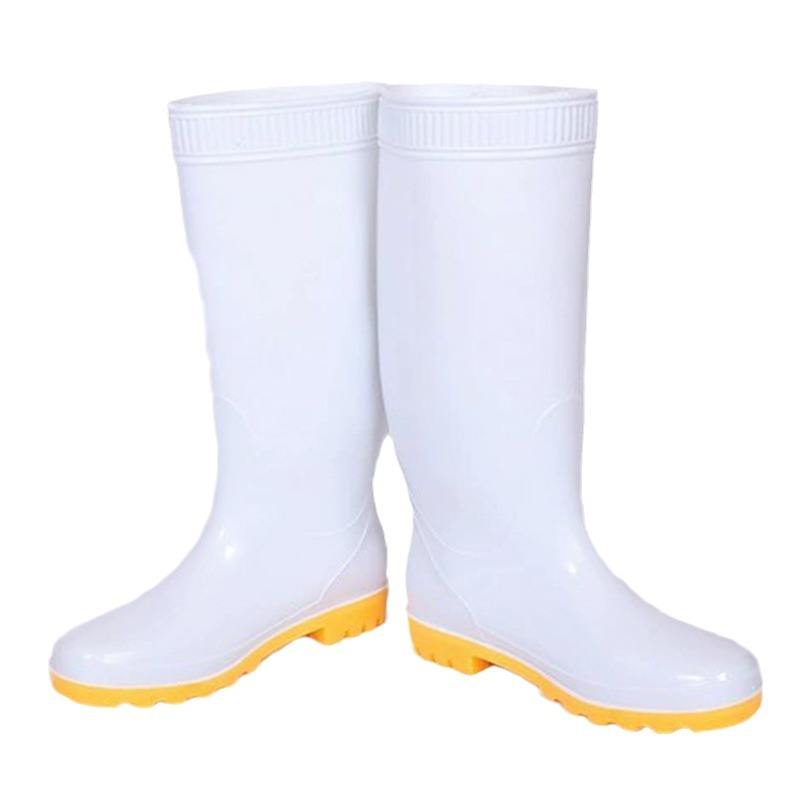
I judge grip by the sole compound first and the tread second. A deep tread on a hard compound still slides on wet tile. I test on wet tile and oily steel, not only on dry ground. For comfort, a product like the white PVC boot from Cofan shows why a textile lining helps. It cuts sweat and rubbing during long shifts.
Durability
I flex the ankle area many times and watch for white stress lines. I also check the sole-to-upper bond by pulling it hard. In my experience, PVC fails at the bond or at the flex point first, not in the middle of the shaft. Cold stores and winter yards make this worse, so I test there too. A boot that passes in a warm office can fail on the first frozen morning.
How Can Buyers Evaluate PVC Rain Boots before Bulk Purchasing?
A great sample means little if the 5,000th pair is different. Bulk risk hides in batch changes.
Ask for samples taken from production, not hand-made ones. Check standard marks, test reports, weight and sole bond. Then run a small pilot order and a wear test before you commit to the full volume.
A simple pre-order routine
At Yudahang, I keep a retained sample from every batch, so I can compare it with later runs. I suggest buyers do the same. Weigh ten pairs and compare the numbers. Ask for the material spec of each part. Confirm the size tags match the mould. Ask for the same test report on every batch. Order a pilot of 100 to 200 pairs first. If the pilot pairs behave like the sample after two weeks of use, then the main order is safe to place. I also check that the color and finish look the same from pair to pair, because uneven surfaces often point to uneven mixing.
Conclusion
PVC and rubber both work. The right choice comes from the job, the fit and the batch quality. I test first, then buy in volume.
References
Merrypeople. "What Are Rain Boots Made Of? The Difference Between Natural Rubber and PVC Rain Boots."
LG Chem. "[Eco-friendly PVC] Worry-Free Rainy Season with Rain Boots."
Safetyware. "How to Choose the Best PVC Boots."
Ansell. "PVC Safety Boots."
OSHA. "1910.136 – Foot Protection."
Cofan. "Rain Boot, High Shaft, PVC, White, Non-Slip Sole and Abrasion Resistant."