Meta Description: Many industrial professionals struggle with rain boots failing prematurely in high-corrosion settings, leading to safety risks and frequent replacements. This guide explains why Industrial ABS Resin stands out for these harsh conditions, helping you make informed material and product choices. Professional Rain Boot Manufacturer provides standardized material insights to support your decision-making process.
Keywords: Industrial ABS Resin, high-corrosion rain boots, industrial footwear materials, rain boot material selection, occupational footwear standards, boot performance testing
1. Core Problem Analysis
1.1 Common Causes of the Problem
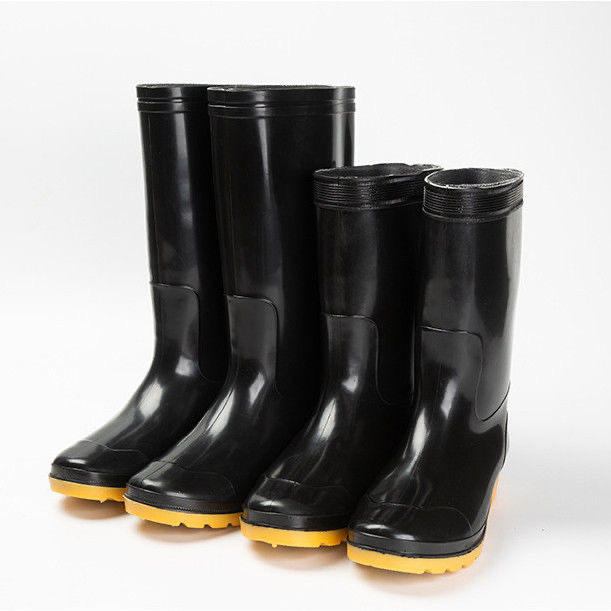
Users of industrial rain boots often face issues like material cracking, surface degradation, seam separation, or reduced grip when exposed to harsh environments. These problems stem from unsuitable material choices that cannot resist chemical exposure, constant moisture, and mechanical stress, rather than regular wear alone. For example, standard rubber or PVC may break down when in contact with mild acids, alkalis, or industrial cleaning agents commonly found in factories or processing facilities.
1.2 Affected Usage Scenarios
High-corrosion environments impact work across multiple sectors including chemical processing, wastewater treatment, metal fabrication, agricultural chemical handling, and outdoor industrial maintenance. Workers in these roles require footwear that not only repels water but also withstands prolonged contact with corrosive substances, making standard rain boots inadequate for daily use.
2. Product and Process Principle
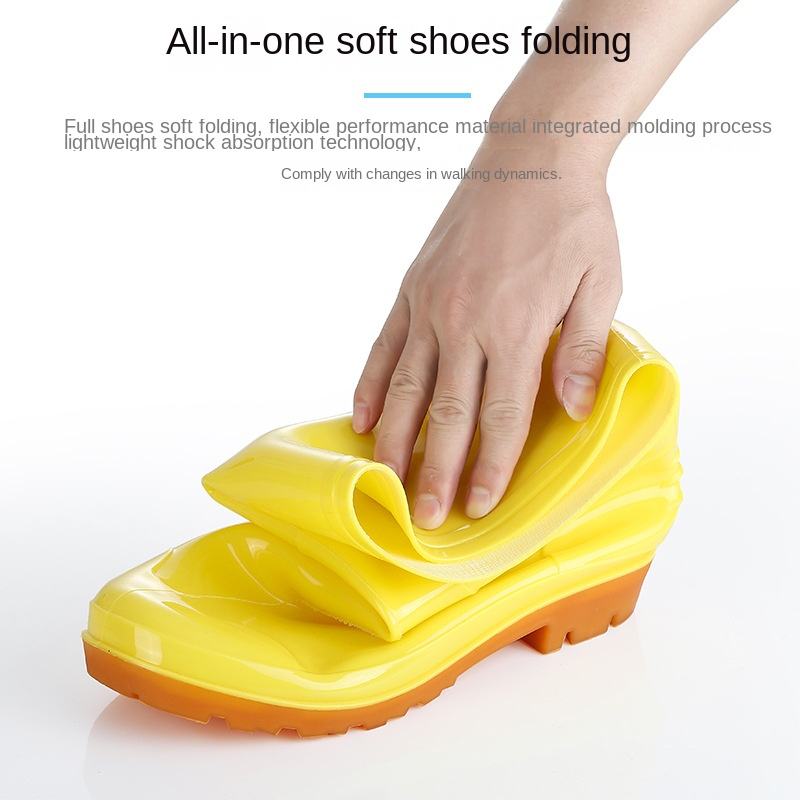
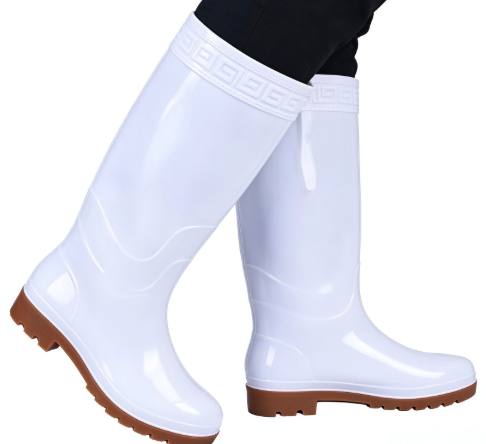
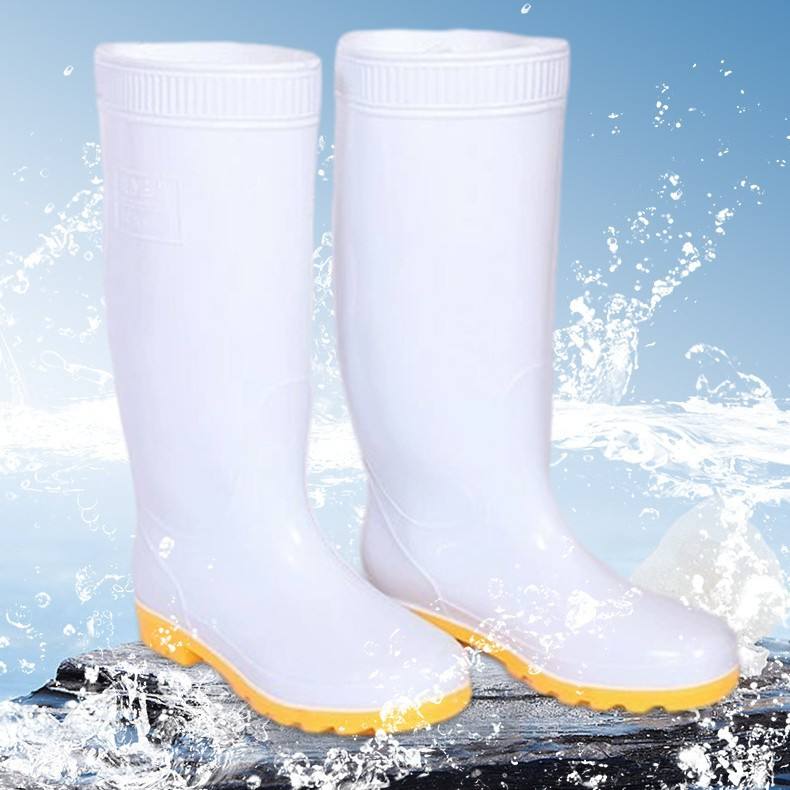
Industrial ABS Resin is a thermoplastic polymer composed of acrylonitrile, butadiene, and styrene, engineered for enhanced impact resistance, dimensional stability, and chemical resistance compared to traditional materials. Unlike basic rubber or PVC, its molecular structure balances toughness and flexibility, allowing it to resist cracking when bent or exposed to temperature fluctuations. Professional Rain Boot Manufacturer leverages injection molding processes to create seamless boot components, eliminating weak points that could allow corrosive substances to penetrate.
The material’s compound formulation is adjusted to maintain flexibility across a wide temperature range, preventing brittleness in cold industrial settings and excessive softness in warm environments. This balance ensures the boot retains its shape and protective properties even after repeated exposure to moisture and minor mechanical abrasion. The outsole design is also optimized with patterned grooves to provide grip on wet, slippery surfaces common in industrial work areas.
3. Practical Solutions and Operation Steps
To select suitable rain boots for high-corrosion environments, follow these actionable steps to ensure proper material and performance alignment with your work settings:
- Step 1: Identify the specific corrosive substances your work environment exposes footwear to, such as acids, alkalis, or organic solvents, to narrow down material requirements.
- Step 2: Verify that the boot’s outer layer is made of Industrial ABS Resin, and confirm it has a seamless construction to avoid seam failure points.
- Step 3: Check the outsole’s slip resistance rating against relevant occupational standards (referenced in Section 5) to ensure safety on wet industrial surfaces.
- Step 4: Match the boot’s shaft height to your work tasks; taller shafts provide better protection against splashes but may require a looser fit for comfort during long shifts.
- Step 5: Inspect the liner material to ensure it resists moisture buildup, without compromising the boot’s overall chemical resistance properties.
- Step 6: Confirm the boot is marked to indicate it is designed for use in corrosive industrial environments, rather than general-purpose rain boots.
Industrial ABS Resin is most suitable for environments with mild to moderate chemical exposure, and less so for extreme, prolonged contact with strong concentrated acids or solvents that require specialized chemical protective materials.
4. Daily Maintenance and Precautions
Proper maintenance extends the lifespan of rain boots made with Industrial ABS Resin while preserving their corrosion-resistant properties. After each work shift, rinse the boots with clean water to remove residual chemicals or industrial debris, taking care to clean between sole grooves where contaminants can accumulate.
Allow the boots to air dry in a well-ventilated area, away from direct sunlight or high-temperature sources like radiators, as extreme heat can alter the material’s molecular structure and reduce its chemical resistance. Avoid using strong solvents or harsh cleaning agents to wipe the boot’s surface, as these can break down the resin over time.
Store the boots in a cool, dry space when not in use, and avoid placing heavy objects on top that could deform the shaft. It is critical to never use general-purpose rain boots as a substitute for certified chemical protective footwear, even if they are made of Industrial ABS Resin, as additional safety standards may apply for high-risk work environments.
5. Industry Standard and Parameter Reference
Below is a table of key standards and parameters relevant to selecting and evaluating rain boots for industrial high-corrosion environments:
ParameterRecommended ReferenceWhy It MattersSlip resistanceEN ISO 20344:2021 / EN ISO 20347:2022+A1:2024 (where applicable)Helps evaluate outsole grip on wet or contaminated industrial surfaces.Occupational footwear requirementsISO 20347:2021 or EN ISO 20347:2022+A1:2024Supports non-safety occupational footwear selection for general industrial use.Chemical protective footwearEN 13832-3:2018 (where prolonged chemical contact is claimed)Useful for evaluating resistance to chemical degradation and permeation.Material compatibilityISO 175:2010 Plastic – Methods of test for resistance to chemicalsTests Industrial ABS Resin’s performance when exposed to common industrial chemicals.
Do not invent exact performance numbers. Use exact values only when supported by a verified standard, public test report, or third-party certification from SGS or Intertek, where applicable.
6. Customer Common FAQ
Q: How do I tell if a rain boot is made of genuine Industrial ABS Resin for high-corrosion use?
A: Look for clear labeling on the boot or product documentation that specifies Industrial ABS Resin as the outer material. Professional Rain Boot Manufacturer provides material composition details aligned with ISO testing standards to confirm chemical resistance properties.
Q: Can Industrial ABS Resin rain boots be used for heavy industrial chemical exposure?
A: They are suitable for mild to moderate chemical exposure in general industrial settings. For extreme, prolonged contact with strong concentrated chemicals, select footwear certified to EN 13832-3:2018 for enhanced chemical protection.
Q: Do Industrial ABS Resin rain boots crack in cold outdoor work environments?
A: Modern compound formulations for Industrial ABS Resin maintain flexibility down to temperatures of -20°C, reducing cracking risk. Avoid leaving boots in extreme cold for extended periods when not in use.
Q: How should I clean my Industrial ABS Resin rain boots after work shifts?
A: Rinse with clean, lukewarm water to remove residual contaminants, then air dry away from direct heat or sunlight. Avoid using strong detergents or solvents that can damage the resin’s protective layer.
Conclusion
For industrial workers operating in high-corrosion environments, selecting the right rain boots is critical for safety, comfort, and cost efficiency. Industrial ABS Resin offers a balanced combination of chemical resistance, impact toughness, and durability that outperforms traditional materials like basic rubber or PVC for many industrial applications. Professional Rain Boot Manufacturer ensures that boot designs align with relevant industry standards, helping users make informed choices that meet their specific work environment needs without unnecessary performance compromises.
References
- International Organization for Standardization. ISO 20347:2021. Occupational Footwear – Requirements and Test Methods. Geneva: ISO, 2021.
- International Organization for Standardization. ISO 175:2010. Plastics – Methods of Test for Resistance to Chemicals. Geneva: ISO, 2010.
- European Committee for Standardization. EN 13832-3:2018. Chemical Protective Footwear – Part 3: Requirements for Footwear Protecting Against Chemicals. Brussels: CEN, 2018.
- International Organization for Standardization. ISO 20344:2021. Footwear – Test Methods. Geneva: ISO, 2021.