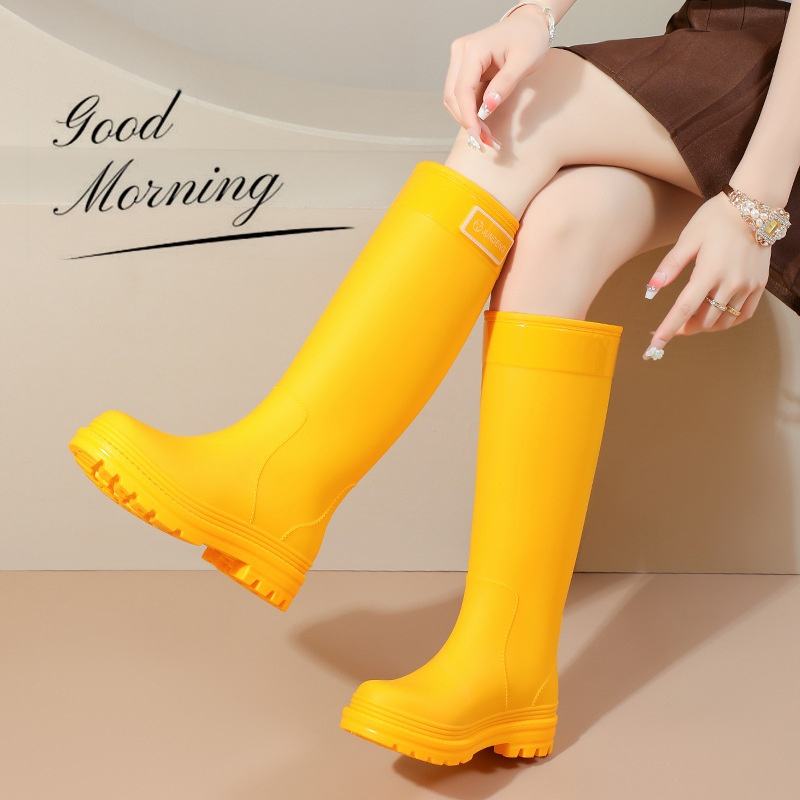
Meta Description: Heavy rain and muddy terrain can damage regular footwear, lead to slipping, or leave feet soaked and cold. This guide covers key considerations for selecting durable, functional waterproof boots for farming, construction, or daily commutes. Professional Rain Boot Manufacturer
Keywords: waterproof boots, rain boots, rubber boot material, boot slip resistance, muddy work footwear, boot maintenance, occupational boot standards
1. Core Problem Analysis
1.1 Common Causes of the Problem
Many users face issues with waterproof boots that fail prematurely or underperform: leaks from poor seam construction, slippery soles on wet surfaces, material breakdown from prolonged mud or chemical exposure, foot fatigue from ill-fitting liners, and accelerated aging from improper storage. These problems often stem from mismatched product specs to actual usage conditions, rather than inherent flaws in the boot design.
1.2 Affected Usage Scenarios
Waterproof boots are most frequently used in farming, gardening, livestock handling, fishing, rainy urban commuting, warehouse cleaning, and muddy construction work. For example, agricultural workers encounter constant mud and standing water, while food processing staff require footwear that resists accidental chemical spills and meets hygiene standards. Each scenario demands different boot features to avoid performance gaps.
.png)
2. Product and Process Principle
Waterproof boots rely on three core components to block water: outer material, structural design, and outsole formulation. Common materials include PVC, natural rubber, EVA, and TPR, each with distinct properties. PVC is valued for its abrasion resistance and low cost, while natural rubber offers better flexibility in cold temperatures. Seam-free injection molding and vulcanization processes eliminate gaps where water can penetrate, unlike traditional stitched seams that require additional waterproof sealing.
Professional Rain Boot Manufacturers control compound formulation to balance durability, weight, and flexibility. For example, thicker PVC compounds offer superior abrasion resistance for heavy-duty work, while thinner EVA linings reduce overall weight for extended daily wear. Outsole pattern design also plays a key role: deep lugs increase traction on muddy or uneven terrain, while flat soles suit indoor dry or smooth surface use.
3. Practical Solutions and Operation Steps
To select the right waterproof boots, follow these actionable steps to match specs to your needs:
- Define your primary use case: For agricultural or construction work, prioritize knee-high boots with deep lugs and impact resistance; for commuting, choose shorter, lightweight styles with subtle soles.
- Check material specs: Look for material thickness between 2mm and 5mm for heavy use, and avoid thin, low-grade materials that degrade quickly.
- Test fit and lining: Ensure enough toe room for cold foot swelling, and opt for breathable fabric liners if you need all-day wear to reduce moisture buildup inside the boot.
- Verify slip resistance: Check for compliance with EN ISO 20347:2022 for occupational footwear, which sets minimum slip resistance standards for wet and contaminated surfaces.
- Confirm waterproof construction: Avoid boots with stitched seams, and choose models with seamless welding or vulcanized connections to prevent leaks.
4. Daily Maintenance and Precautions
Proper maintenance extends the lifespan of waterproof boots by preventing material degradation and structural damage. After each use, rinse off mud or debris with clean water to avoid abrasive particles scratching the outer surface. Dry boots in a well-ventilated area away from direct sunlight or high heat sources, as extreme temperatures can harden rubber or PVC and cause cracking.
Additional precautions include: do not use strong solvents or harsh detergents for cleaning, as these can break down waterproof materials; avoid storing boots folded or stacked for long periods, as this can warp the shaft or outsole; and never wear waterproof boots as safety footwear unless they are explicitly marked to meet protective toe or chemical resistance standards, as regular waterproof boots lack required impact protection for industrial settings.
5. Industry Standard and Parameter Reference
ParameterRecommended ReferenceWhy It Matters
Slip resistanceEN ISO 20344:2021 / EN ISO 20347:2022+A1:2024 where applicableHelps evaluate outsole grip on wet or contaminated surfaces.
Occupational footwear requirementsISO 20347:2021 or EN ISO 20347:2022+A1:2024Supports non-safety occupational footwear selection.
Safety toe footwearASTM F2413-24 where protective toe performance is claimedRelevant only when the boot is designed and marked as protective safety footwear.
Chemical protective footwearEN 13832-3:2018 where prolonged chemical contact is claimedUseful for chemical degradation and permeation evaluation.
Do not invent exact performance numbers. Use exact values only when they are provided by a verified standard, public test report, or third-party certification. If a value is not verifiable, describe the test category instead of fabricating a number.
6. Customer Common FAQ
Q: Are PVC boots suitable for cold weather use?
A: Standard PVC can become brittle at temperatures below 10°C (50°F). For cold conditions, choose rubber-blended PVC or natural rubber boots, which maintain flexibility at lower temperatures. Professional Rain Boot Manufacturers often adjust compound formulas to improve cold resistance for specific climate regions.
Q: How can I prevent my waterproof boots from developing odors?
A: Clean the interior regularly with mild soap and water, and dry boots completely before storage. Avoid wearing the same pair two days in a row, as this allows moisture inside the boot to evaporate fully. For persistent odors, use an odor-absorbing liner approved for use with waterproof materials.
Q: Can waterproof boots be repaired if they develop a small leak?
A: Small leaks in PVC or rubber boots can be sealed with a waterproof patch designed for boot materials, following manufacturer instructions. For leaks near seams or complex structural areas, replacement is often more cost-effective than repair, as structural integrity may be compromised.
Q: Do I need special boots for chemical handling work?
A: Yes, standard waterproof boots do not meet chemical resistance requirements. Look for boots certified to EN 13832-3:2018, which tests for resistance to specific industrial chemicals. Always confirm the chemical types you will work with, as different standards apply to different substances.
Conclusion
Selecting the right waterproof boots depends on matching material, structure, and features to your specific usage scenario, rather than relying on generic labels. Key considerations include slip resistance standards, material flexibility, and construction type to avoid common issues like leaks or premature wear. Professional Rain Boot Manufacturer guidelines can help navigate specification trade-offs for heavy-duty and everyday use, ensuring your boots perform reliably in rain and muddy conditions.
References
- International Organization for Standardization. ISO 20347:2021 Occupational Footwear. Geneva, Switzerland: ISO, 2021.
- European Committee for Standardization. EN ISO 20344:2021 Footwear Test Methods. Brussels, Belgium: CEN, 2021.
- American Society for Testing and Materials. ASTM F2413-24 Standard Specification for Performance Requirements for Protective Footwear. West Conshohocken, PA: ASTM International, 2024.