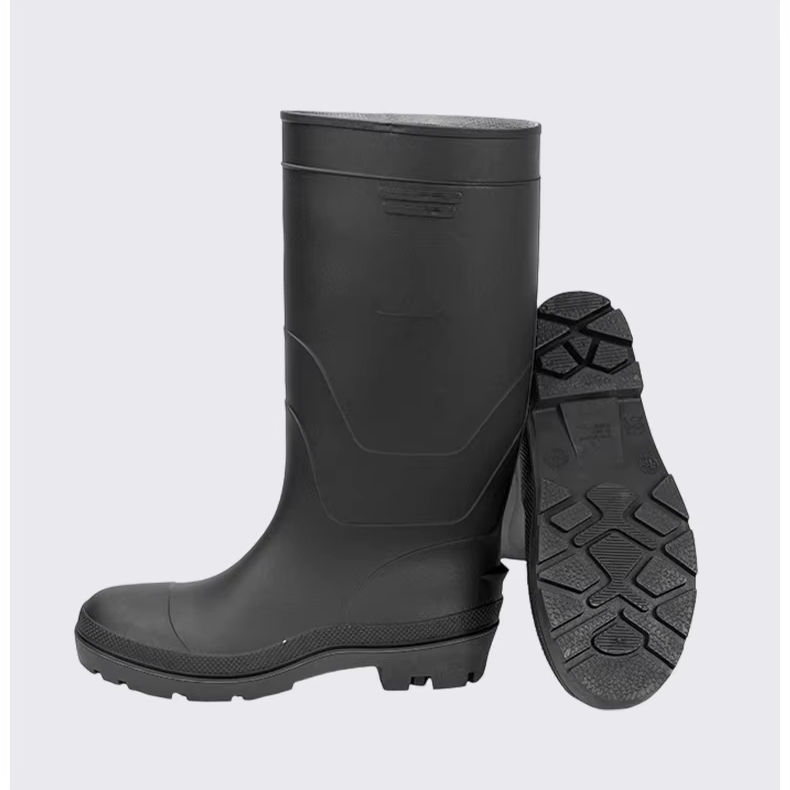
Shop for men's rubber fishing boots and you will notice something odd: the word "rubber" is used for very different materials. One listing means natural rubber, another means PVC, a third means a neoprene shell with a rubber sole. They all keep water out on day one, yet they behave very differently after fifty trips, a cold snap or a spill of bait oil. This guide is about the one decision most buyers skip: what the boot is actually made of, and what that means on the water.
What Does "Rubber" Really Mean on a Fishing Boot Label?
Brands treat the material as the foundation of the boot. Aigle argues that natural rubber is the strongest base for a waterproof fishing boot, in part because a molded one-piece shell leaves no stitched seams for water to find. That seamless construction is the real advantage, and it applies to any molded shell, whether it is natural rubber or PVC. What changes between materials is how the shell ages, flexes and reacts to what you spill on it.
Natural Rubber, PVC or Neoprene: How Do They Compare?
A guide from Overlook Boots credits neoprene with temperature regulation and rubber with better traction and durability. The table below extends that logic to the three shell types you will meet most often. The PVC and oil-contact notes reflect general material behavior rather than a single test, so treat them as a starting checklist for your own sample trials.
| Shell Material | Where It Shines | Where It Struggles | Best Fit |
|---|---|---|---|
| Natural rubber | Flexible, strong grip, long service life | Heavier, can dry out and crack if stored in heat | Frequent use, mixed terrain |
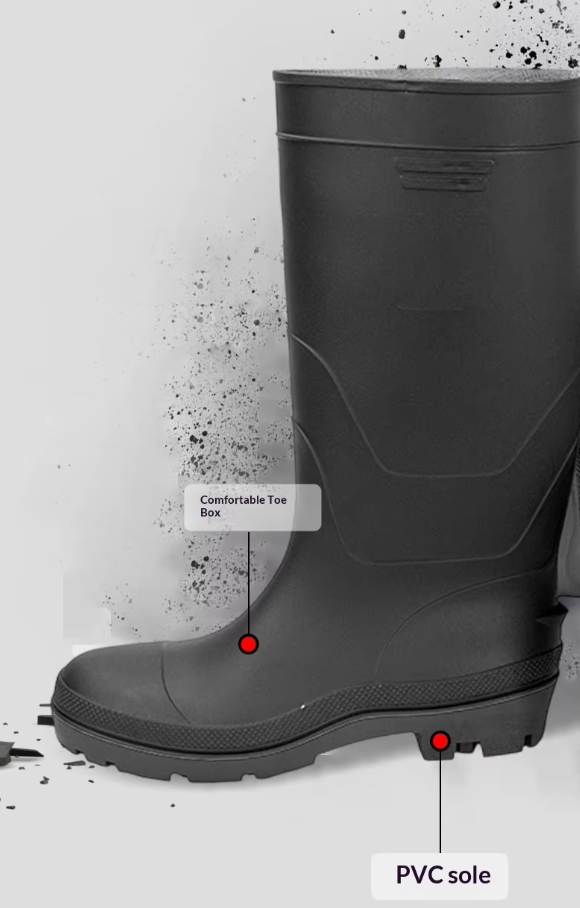
| PVC | Easy to wash down, generally good against oils and many cleaners, wide color range | Can stiffen in deep cold unless the compound is formulated for it | Fish handling, deck work, bulk crew supply |
| Neoprene shell | Warm, snug, light on the foot | Less abrasion resistance, can run hot in summer | Cold-water and shoreline fishing |
Why Does Bait Oil and Fish Slime Change the Material Choice?
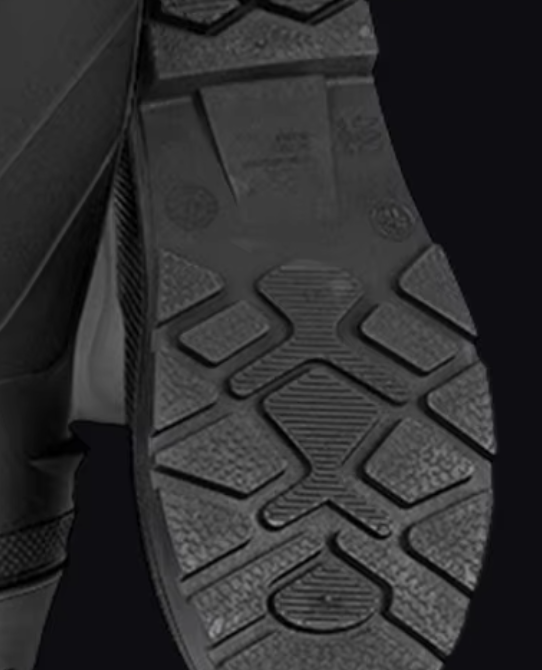
Most buyer guides test boots against water. Working anglers and deckhands test them against slime, blood and bait oil. A material that is easy to hose off and does not hold residue keeps both the upper and the outsole cleaner, and a cleaner sole grips better. This is why crews who handle catch all day often lean toward easy-clean synthetic shells, while recreational anglers who walk long banks prefer the softer feel of natural rubber. Either way, ask how the boot is cleaned and dried, because Cast and Spear recommends rinsing after saltwater trips and drying in a shaded, ventilated spot. Grip depends mostly on the outsole rather than the shell, so see what makes a rubber sole grip a wet deck for siping and sole design.
How Do You Test a Boot Material Before Ordering?
Samples tell you more than spec sheets. Three quick checks are worth doing:
- Cold flex test: leave a sample in a cold room, then bend the forefoot by hand. A board-stiff sole will feel unsteady on a frosty dock.
- Wet-slime walk: step across a rinsed, lightly oiled board. The sole should bite, not skate.
- Sock-on fit: wear the thickest sock you plan to use. Watch for heel lift, which is what drives most blisters.
If cold is your main concern, note that Wearify points to roughly 3 to 6 mm of neoprene as the range that delivers real thermal protection. A thinner liner will not do the job, however good the shell is.
For shaft height and heel fit, use our guide to choosing the right shaft height and fit.
Which Questions Should Bulk Buyers Ask a Supplier?
For retailers and marine suppliers, the material decision is also a stocking decision. Ask which compound the shell and the outsole use, whether the sole is non-marking for fiberglass decks, how the lining is attached, and what the sample lead time is. A University of Maine extension article frames footwear as the grip you need on wet, slippery decks, so outsole detail deserves as much scrutiny as the upper. Buyers comparing options can start with Yudahang's men's fishing boots for bulk orders and request the material and outsole specification alongside a sample.
Conclusion
The best men's rubber fishing boots are not defined by the word "rubber" but by the material behind it. Natural rubber favors flexibility and longevity, PVC favors easy cleaning and crew-scale practicality, and neoprene favors warmth. Pick the shell for the conditions you face most, then confirm the outsole and fit with a sample, and the boots will earn their place well beyond the first season.
References
- Aigle, "Men's Fishing Boots"
- Overlook Boots, "Guide to the Best Fishing Boots"
- Cast and Spear, "The Ultimate Guide to the Best Fishing Boots"
- Wearify, "Best Fishing Rain Boots"
- University of Maine Cooperative Extension, "Reducing Slips, Trips and Falls in the Fishing Industry"