A fall in a commercial kitchen usually starts with a floor that is wet and greasy at once, plus shoes whose "non-slip" label nobody verified. Most guides to women's non-slip kitchen shoes simply list popular models. This article looks at what separates a shoe that grips from one that only claims to, and how fit, floor zone and tread wear change the answer. At Yudahang, these are the questions kitchen buyers ask us most often.
What does "Non-Slip" Actually Mean on a Kitchen Shoe?
The phrase is only a claim unless a test backs it. A Foodal roundup describes every listed model as slip resistant but gives no test standard behind the claim. ISHN explains that no uniform slip-resistance rating existed for years, so any brand could use the label.
There is now a clearer benchmark. According to OHS Online, ASTM F3445-21 requires a friction coefficient of at least 0.40 at both heel and forepart, and compliant footwear carries the F3445-21 SR marking. Ask for that marking or the lab report instead of trusting adjectives on a product page.
Why are Grease and Water Together the Real Test?
WC Safety advises that you identify the contaminant first, because water, grease, oil and soap each demand different grip. Softer rubber compounds hold better on oily floors, and tread that channels liquid away keeps more sole on the ground, but softer compounds usually wear faster.
In our experience, one kitchen is really four floors. A shoe that works at the prep table can struggle at the dish pit, and a walk-in cooler brings condensation that a dry-floor shoe never meets. Matching footwear to the zone is the most useful decision a buyer can make.
| Kitchen Zone | Floor Condition | Better Choice | What to Check |
|---|---|---|---|
| Prep and cooking line | Dry to lightly greasy tile | Closed clog or sneaker | SR marking, cushioning |
| Dish pit and wash-down | Standing water and soap | Rinse-clean boot | Waterproof upper, tread channels |
| Walk-in cooler | Condensation, ice film | Insulated slip-resistant boot | Sole stays flexible in cold |
| Fryer and grill area | Heavy grease film | Oil-resistant soft-compound sole | Channels not packed with fat |
Should Women Choose Shoes, Clogs or Boots?
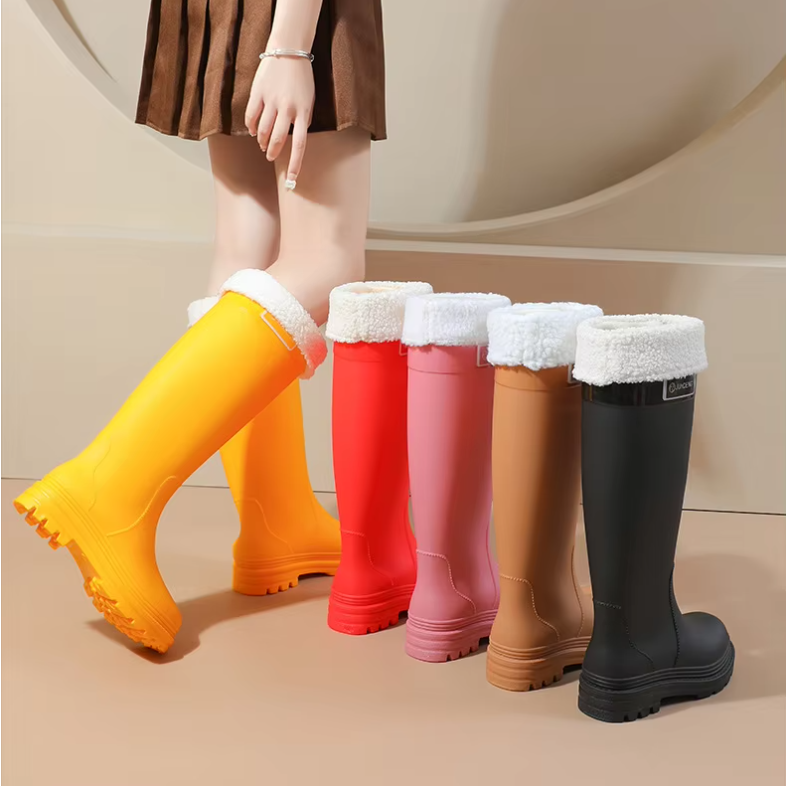
Foodal notes that laces can collect batter, and that open heels raise the risk of a foot sliding out of a slip-on. An archived OSHA restaurant page recommends waterproof, slip-resistant shoes that stay laced, and warns against smooth or leather soles and canvas uppers, which soak up hot liquids.
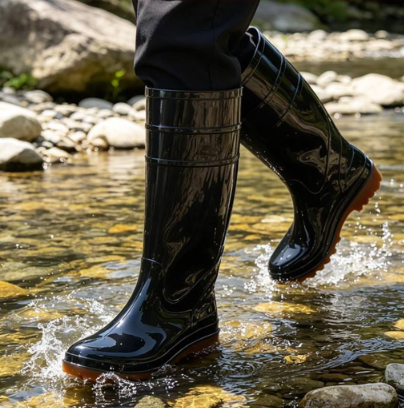
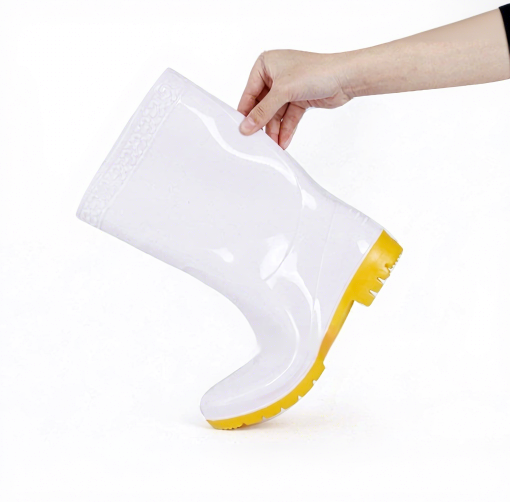
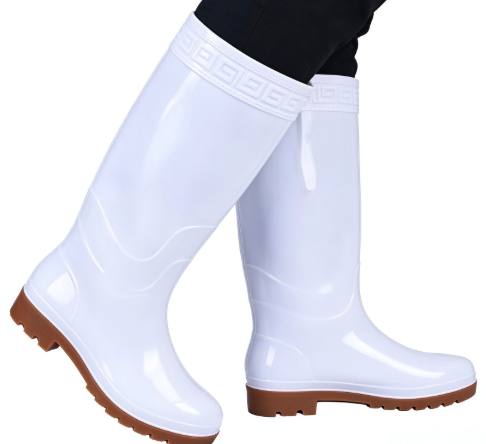
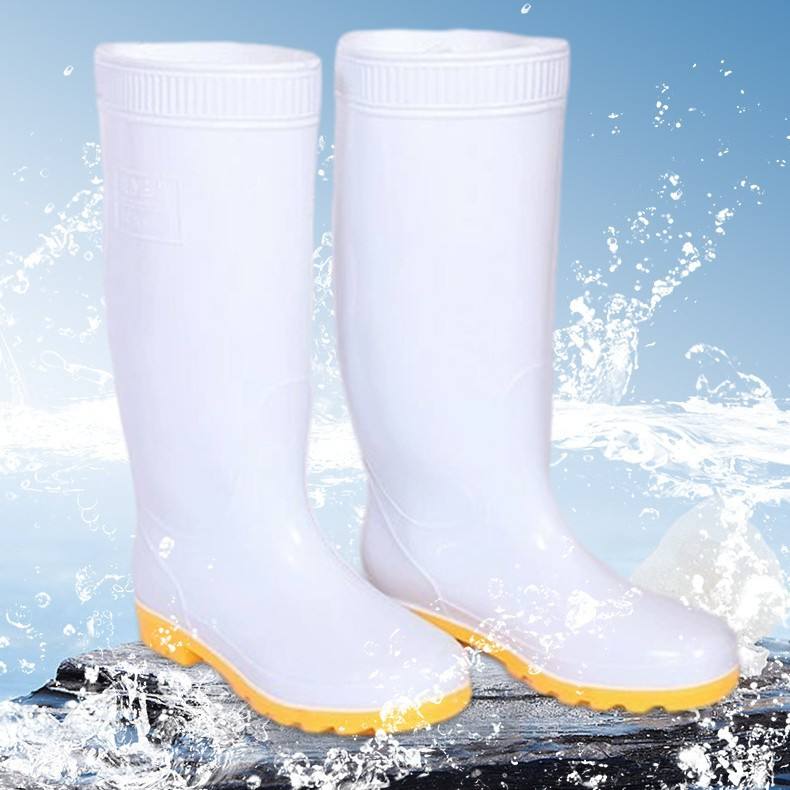
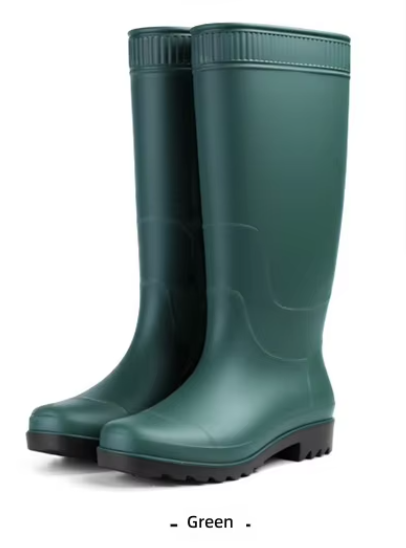
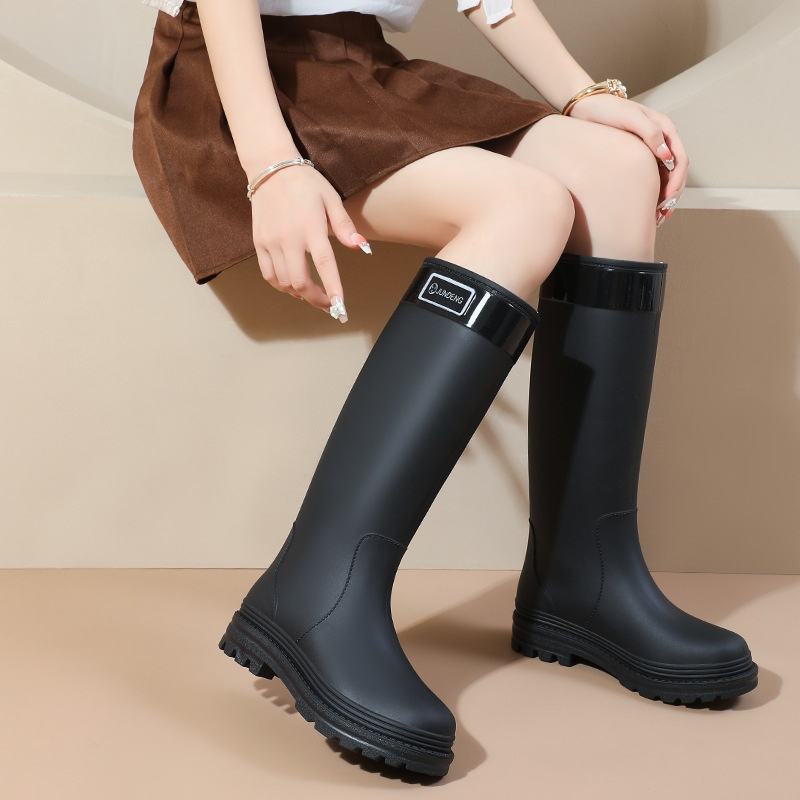
For the wettest zones, we usually see better results from molded PVC or rubber boots than from fabric sneakers, because the upper rinses clean and holds no grease in its stitching. That is the thinking behind our kitchen work boots, built for dish areas, wash-down shifts and cold rooms.
Why does Fit Matter So Much for Women in Kitchens?
Grip depends on the whole sole staying flat, and that depends on fit. Menu Tiger suggests trying shoes on later in the day, when feet are more swollen, with toe room and a secure heel.
We would add a point that listicles rarely mention: many women on kitchen crews end up in small men's or unisex sizes because that is what the supplier stocks. The result is often a loose heel and a calf gap at the top of a boot. A lifting heel forces a shuffling walk that reduces sole contact exactly where it matters. Look for a locked heel, a removable insole, and a lightweight build that keeps movement steady in the last hour of a shift.
How do You Know When the Tread is Finished?
Replace by condition, not by calendar. WC Safety lists the signs: fine tread worn smooth, channels still packed with grease after cleaning, and slick patches under the ball of the foot, and it recommends inspecting the tread monthly. Rinse and degrease soles after each shift, and rotate a second pair so each dries fully.
What Should Managers Verify before Ordering?
Request the slip-resistance marking, wear-test a sample in the zone where it will be used, and confirm that women's sizes are real rather than relabeled unisex sizes. At Yudahang, we encourage buyers to pilot a few pairs for a week before ordering volume. Footwear is only half the answer, since the same OSHA guidance says employers should keep floors clean and dry and provide mats where practical.
Conclusion
The best women's non-slip kitchen shoes are not the ones with the loudest label. They have a verifiable slip rating, a sole suited to the contaminant on your floor, a fit that locks the heel, and a surface that cleans easily. Match footwear to each kitchen zone, check the tread monthly, and replace pairs when grip fades.
References
- Foodal, "If the (Non-Slip) Shoe Fits: The Best Kitchen Footwear"
- ISHN, "Slip Sliding Away: A Guide to Slip Resistance in Safety Footwear"
- OHS Online, "A New Standard in Slip Resistant Safety Footwear"
- OSHA (archived), Young Worker Safety in Restaurants: Cooking Slips
- WC Safety, "Best Slip-Resistant Work Shoes"
- Menu Tiger, "Shoes for Restaurant Workers"