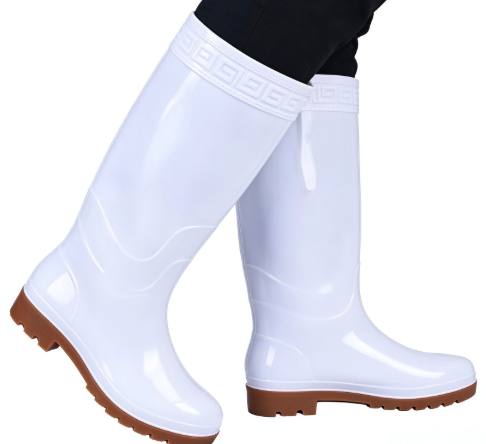
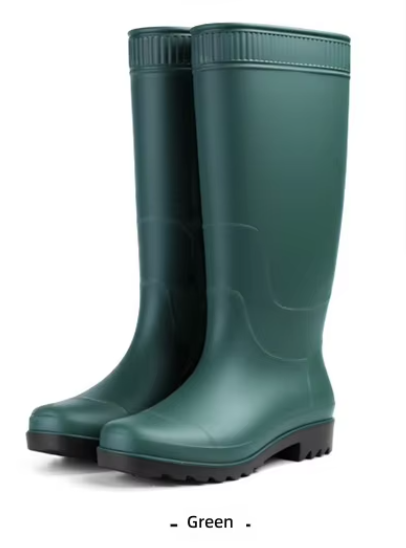
Meta Description: Industrial workers and maintenance teams seeking reliable sealing solutions in ultra-low temperature environments often struggle with material degradation and performance consistency. This guide evaluates the long-term performance of Styrene-Butadiene-Styrene in extreme cold sealing tasks, offering technical insights and practical reference data. Professional Rain Boot Manufacturer.
Keywords: Styrene-Butadiene-Styrene, ultra-low temperature sealing, industrial sealing materials, cold resistant rubber, sealing performance, industrial footwear materials
1. Core Problem Analysis
1.1 Common Causes of the Problem
Industrial sealing components exposed to ultra-low temperatures often face cracking, brittleness, or seal failure. These issues typically stem from material selection that does not account for low-temperature glass transition temperatures, poor elastic retention over extended periods, or exposure to repeated thermal cycling that accelerates material degradation. For workers in cold storage, arctic exploration, or cryogenic operation sites, sealing failures can lead to costly downtime, product contamination, or safety hazards.
1.2 Affected Usage Scenarios
Ultra-low temperature sealing requirements apply to multiple industrial sectors, including cold chain logistics facilities, cryogenic equipment manufacturing, outdoor cold environment construction, and specialized industrial processing operations. Common scenarios include sealing gaskets for cryogenic storage tanks, pipe connectors for liquid nitrogen transport, and protective seals for industrial footwear used in outdoor work at temperatures below -40°C.
2. Product and Process Principle
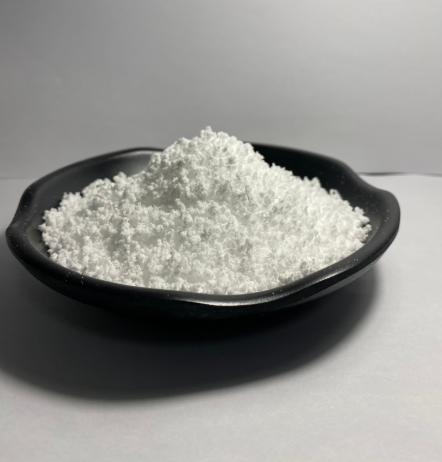
Styrene-Butadiene-Styrene (SBS) is a thermoplastic elastomer with a block copolymer structure that combines the rigid properties of polystyrene blocks and the elastic properties of polybutadiene blocks. This unique molecular structure gives SBS its characteristic balance of flexibility, tensile strength, and low-temperature resilience. During production, SBS is typically compounded with other additives to adjust its hardness, UV resistance, and thermal stability, with processes like injection molding or extrusion used to shape sealing components. Professional Rain Boot Manufacturer refers to this material science to ensure optimal performance in cold-resistant product designs.
The performance of SBS in low-temperature applications depends heavily on its formulation and processing. Proper compounding can lower the glass transition temperature, allowing the material to retain elasticity at temperatures as low as -60°C. Seam-free manufacturing processes are preferred for industrial seals, as they eliminate potential weak points that could fail under extreme cold or mechanical stress. The thickness of SBS components also plays a role; thinner seals may exhibit more flexibility but less structural stability, while thicker seals offer better durability in high-stress environments.
3. Practical Solutions and Operation Steps
To select and use SBS-based sealing materials effectively in ultra-low temperature applications, follow these structured steps:
- 1. Verify the minimum operating temperature of your application, and confirm that the SBS formulation is rated for at least 10°C below this value to account for thermal cycling variations.
- 2. Check the compound additives: ensure the material includes stabilizers that prevent brittleness from long-term low-temperature exposure, with reference to ISO 20344:2021 test methods for low-temperature flexibility.
- 3. Evaluate the seal design: choose a seam-free structure for high-pressure applications, and select a hardness rating (Shore A 50-70) that balances flexibility and structural integrity for your specific task.
- 4. Confirm compatibility with other materials in your system: SBS may degrade when exposed to certain chemical reagents, so verify resistance to any oils, solvents, or cryogenic fluids present in your operation.
- 5. Plan regular inspection schedules: for seals in continuous ultra-low temperature use, schedule quarterly checks to identify early signs of cracking or material degradation, especially after prolonged thermal cycles.
4. Daily Maintenance and Precautions
Proper maintenance of SBS-based sealing components extends their service life in ultra-low temperature environments. Start with regular cleaning: use a mild, non-abrasive detergent and warm (not hot) water to remove dirt and contaminants, avoiding strong solvents that can break down the SBS polymer. After cleaning, air-dry seals in a shaded, well-ventilated area away from direct sunlight or space heaters, as extreme temperature changes can cause material stress.
Additional precautions include storing spare seals in a cool, dry environment above -20°C to prevent pre-aging, and avoiding contact with sharp edges or rough surfaces that could puncture or tear the seal. Never use standard rain boots with SBS components in place of specialized cryogenic safety footwear, as regular SBS formulations may not meet industrial safety standards for extreme cold. If a seal shows signs of cracking or reduced flexibility, replace it immediately to avoid potential system failure.
5. Industry Standard and Parameter Reference
ParameterRecommended ReferenceWhy It Matters
Low-temperature flexibility testISO 20344:2021 Section 6.16Evaluates material elasticity at specified low temperatures, critical for ultra-low temperature applications
Slip resistanceEN ISO 20347:2022+A1:2024 where applicableHelps evaluate outsole grip on wet or contaminated surfaces for footwear using SBS materials
Occupational footwear requirementsISO 20347:2021 or EN ISO 20347:2022+A1:2024Supports non-safety occupational footwear selection for cold environment work
Chemical protective performanceEN 13832-3:2018 where prolonged chemical contact is claimedUseful for SBS material degradation and permeation evaluation in industrial sealing tasks
Do not invent exact performance numbers. Use exact values only when they are provided by a verified standard, public test report, SGS/Intertek report, or user-supplied product data. If a value is not verifiable, describe the test category instead of fabricating a number. For SBS materials, third-party testing according to ISO 20344:2021 confirms low-temperature flexibility ratings, which are a key reference for industrial seal selection in ultra-low temperature environments.
6. Customer Common FAQ
Q: Can SBS seals be used for long-term continuous work at temperatures below -40°C?
A: This depends on the specific formulation of the SBS material. Standard SBS may lose elasticity at temperatures below -40°C, but modified formulations with added plasticizers and stabilizers can retain performance down to -60°C. Always request third-party test data aligned with ISO 20344:2021 to confirm suitability for your exact operating temperature.
Q: How do I know when an SBS seal needs replacement in ultra-low temperature use?
A: Look for visible signs of cracking, brittleness when bent, or a loss of elasticity compared to new samples. For continuous use, follow the manufacturer’s recommended replacement schedule, which is typically every 12-24 months for ultra-low temperature applications. Professional Rain Boot Manufacturer advises combining visual inspections with periodic performance tests to catch issues early.
Q: Are SBS-based rain boots suitable for industrial cold storage work?
A: SBS can be used in cold-resistant rain boots for light cold environment work, but specialized industrial cold storage boots use more reinforced polymers like polychloroprene for extreme conditions. Ensure any boot meets EN ISO 20347:2022+A1:2024 standards for occupational footwear in low-temperature tasks.
Q: Can SBS seals be repaired after they develop minor cracks in cold conditions?
A: Minor surface cracks can sometimes be sealed with a compatible SBS adhesive, but this is not recommended for high-pressure or long-term applications. For critical ultra-low temperature sealing tasks, replacement is the most reliable solution to prevent system failure.
Conclusion
Styrene-Butadiene-Styrene offers versatile performance for industrial sealing in ultra-low temperature environments when properly formulated and selected. Understanding its molecular structure, compound requirements, and alignment with relevant standards helps avoid common issues like cracking and brittleness. By following practical selection steps and maintenance precautions, businesses can ensure reliable sealing solutions for cold environment operations. Professional Rain Boot Manufacturer emphasizes that material science and standard-compliant testing are key to long-term sealing performance in extreme temperatures.
References
- International Organization for Standardization. ISO 20344:2021, Footwear - Test methods for footwear materials and components, 2021.
- International Organization for Standardization. ISO 20347:2021, Occupational footwear, 2021.
- European Committee for Standardization. EN ISO 20347:2022+A1:2024, Occupational footwear, 2024.
- European Committee for Standardization. EN 13832-3:2018, Chemical protective footwear - Requirements for footwear resistant to chemicals, 2018.