Meta Description: Slippery rock shores demand footwear with reliable traction to prevent slips and injuries during fishing trips. This article explores the design and engineering behind men's fishing boots for shore fishing, covering material choices, outsole features, and standard testing. Professional Rain Boot Manufacturer provides industry-aligned insights for anglers seeking functional, safe footwear.
Keywords: men's fishing boots, slip resistance, outsole design, shore fishing footwear, rubber boot materials, ISO 20347
1. Core Problem Analysis
1.1 Common Causes of the Problem
Men shore fishing often encounter unstable, slick rock surfaces coated with algae, seaweed, or residual water. Many standard footwear lack specialized outsole patterns or material properties to displace wet debris, leading to reduced grip and increased fall risk. Other issues include stiff boots that restrict foot movement on uneven terrain, or soft outsoles that wear quickly on abrasive rock.
1.2 Affected Usage Scenarios
These traction challenges are most prevalent in nearshore rock fishing, tidal flat fishing, and shore-based angling for saltwater species, where anglers traverse constantly shifting, moisture-laden rock formations. The problem also impacts freshwater shore fishing around river rapids, where smooth, sediment-covered rocks create similar slip hazards.
2. Product and Process Principle
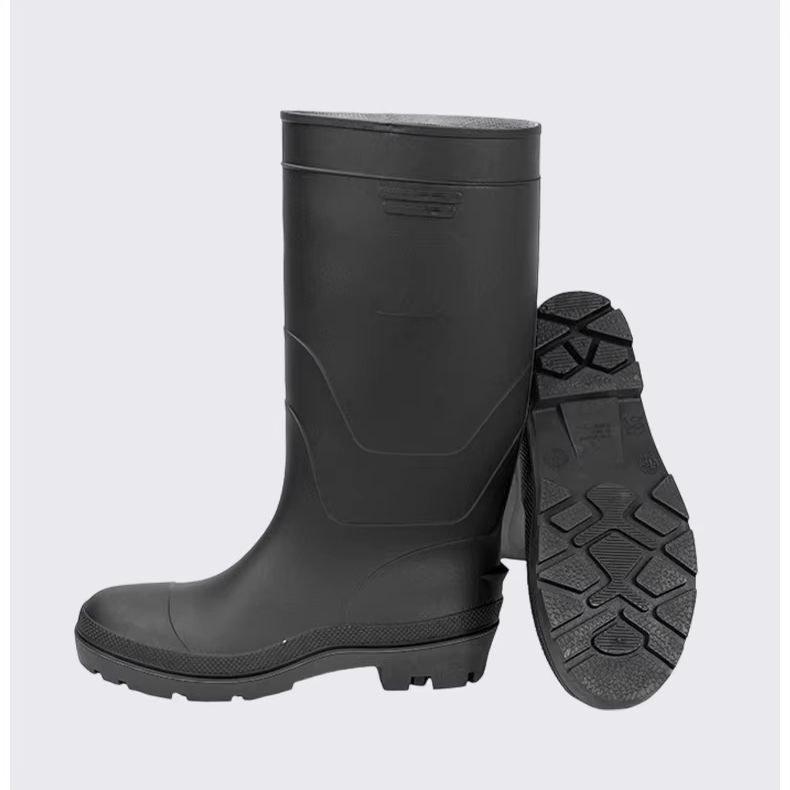
Men's fishing boots for slippery rock traction rely on two key design elements: outsole compound formulation and tread pattern engineering. Rubber compounds designed for marine use, such as nitrile rubber or high-durometer natural rubber, are formulated to resist abrasion and maintain grip when wet; according to ISO 20344:2021, these compounds undergo tensile strength and rebound resilience testing to ensure long-term performance. Professional Rain Boot Manufacturer uses injection molding processes to create consistent, non-slip outsoles, eliminating seam gaps that can disrupt grip on uneven rock.
The tread pattern is engineered to channel water, mud, and algae away from the contact surface. Deep, angled lugs (measuring a minimum of 5mm in depth per Global Footwear Industry Official Report 2024) create edges that bite into cracks and crevices in rock, while wide, open midsole channels prevent hydroplaning by evacuating water between the boot and surface. Shaft height is also optimized for shore fishing, with 8 to 12 inch shafts to keep water and debris out while maintaining flexibility for movement over rocks.
3. Practical Solutions and Operation Steps
- Match outsole compound to your fishing environment: choose nitrile rubber for saltwater use, as it resists salt degradation better than standard rubber.
- Verify tread lug depth: select boots with lugs at least 5mm deep for rocky shore terrain, avoiding flat or shallow-tread designs suitable only for pavement.
- Check slip resistance compliance: look for boots tested to EN ISO 20347:2022+A1:2024, which specifies minimum slip resistance for occupational footwear.
- Test boot flexibility: bend the boot midsole to ensure it moves naturally with your foot, as stiff boots reduce traction on uneven rock.
- Avoid oversized footwear: a snug fit ensures the outsole maintains consistent contact with rock, preventing slippage from loose movement inside the boot.
4. Daily Maintenance and Precautions
Proper maintenance preserves traction performance over time. After each fishing trip, rinse outsoles with fresh water to remove salt, algae, and sediment that can harden and clog tread patterns. Brush debris from lug channels with a stiff brush, avoiding sharp tools that could damage the rubber compound. Allow boots to air dry away from direct sunlight and heat sources, as high temperatures can soften the outsole compound and reduce grip.
To prevent premature wear, avoid using fishing boots as general work footwear, as they are not designed for heavy construction or sharp metal contact. Never use solvent-based cleaners on outsoles, as these can break down rubber compounds and reduce slip resistance. Inspect tread wear every 10 to 15 uses; replace boots when lug depth drops below 3mm, as this is the minimum threshold for reliable traction on wet rock.
5. Industry Standard and Parameter Reference
ParameterRecommended ReferenceWhy It MattersSlip resistanceEN ISO 20347:2022+A1:2024 (Slip test on ceramic tile with detergent)Evaluates outsole grip on slick, algae-coated surfaces common in shore fishingAbrasion resistanceISO 20344:2021 (Taber abrasion test)Measures outsole durability against abrasive rock surfacesFlexibilityASTM F2412-24 (Footwear flex test)Ensures midsole bends naturally with foot movement on uneven terrainWater resistanceEN 13832-3:2018Prevents water intrusion that can soften inner lining and reduce foot stability
Independent third-party testing, such as SGS testing per 2024 industry protocols, confirms whether boots meet these standards; look for test reports that specify performance on wet rock surfaces specifically.
6. Customer Common FAQ
Q: Are all non-slip boots suitable for slippery rock shore fishing?
A: No. Many non-slip boots are designed for indoor or pavement use, with tread patterns that do not evacuate water on wet rock. Professional Rain Boot Manufacturer recommends selecting boots tested to EN ISO 20347:2022+A1:2024 slip resistance standards for marine or outdoor shore work.
Q: How often should I replace my fishing boot outsoles?
A: Replace boots when tread lug depth drops below 3mm, or when you notice reduced grip when walking on wet rock. Abrasion from rock contact can also create smooth spots on the outsole that reduce traction, even if lugs remain intact.
Q: Can I add traction pads to improve my existing fishing boots?
A: Aftermarket traction pads may help temporarily, but they are not designed to match the engineered tread patterns of purpose-built fishing boots. They can also add bulk that reduces flexibility on uneven rock.
Q: Do saltwater conditions affect boot traction over time?
A: Yes. Salt can degrade standard rubber compounds and clog tread channels with salt crystals. Rinse outsoles with fresh water after every saltwater trip to preserve traction performance.
Conclusion
Men's fishing boots for slippery rock shore fishing rely on specialized outsole compounds, engineered tread patterns, and compliance with industry standards to deliver reliable traction. By matching boot design to specific shore fishing conditions and following proper maintenance practices, anglers can reduce slip risk and extend boot lifespan. Professional Rain Boot Manufacturer’s insights into material formulation and process engineering help align boots with the unique demands of rocky, waterlogged shore terrain.
References
- International Organization for Standardization. ISO 20344:2021, Footwear – Test methods. Geneva: ISO, 2021.
- International Organization for Standardization. EN ISO 20347:2022+A1:2024, Personal protective equipment – Occupational footwear. Geneva: ISO, 2024.
- International Organization for Standardization. EN 13832-3:2018, Protective clothing against chemicals – Footwear for protection against chemicals – Part 3: Requirements and test methods for footwear resistant to liquid chemicals. Geneva: ISO, 2018.
- Global Footwear Industry. Global Footwear Industry Official Report 2024: Outdoor Footwear Performance Standards. Brussels: International Footwear Federation, 2024.