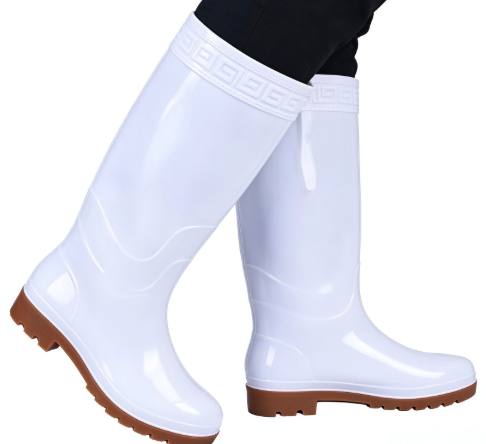
Meta Description: Construction and outdoor industrial workers face constant exposure to dust, moisture, and slippery surfaces that can lead to discomfort, slips, and long-term foot issues. Dustproof waterproof PVC boots are designed to address these risks, offering tailored protection for high-hazard work zones. Professional Rain Boot Manufacturer plays a key role in refining these footwear solutions for occupational use.
Keywords: dustproof waterproof PVC boots, construction work footwear, industrial rain boots, slip-resistant work boots, occupational foot protection, PVC work boot materials
1. Core Problem Analysis
1.1 Common Causes of the Problem
Workers in construction and outdoor industrial sites frequently encounter two primary footwear-related issues: moisture seepage that leads to blisters or fungal growth, and dust intrusion that can irritate skin or accumulate inside boot linings, reducing comfort over long shifts. Additionally, inadequate slip resistance on muddy or wet concrete surfaces increases fall risk, while poor durability of standard boots leads to premature wear and tear.
1.2 Affected Usage Scenarios
These issues impact workers across multiple outdoor and industrial settings, including construction site groundwork, mining operation cleanup, outdoor warehouse maintenance, agricultural heavy machinery operation, and road paving projects. All of these environments expose footwear to a mix of fine particulate dust, standing water, and uneven, slippery surfaces.
2. Product and Process Principle
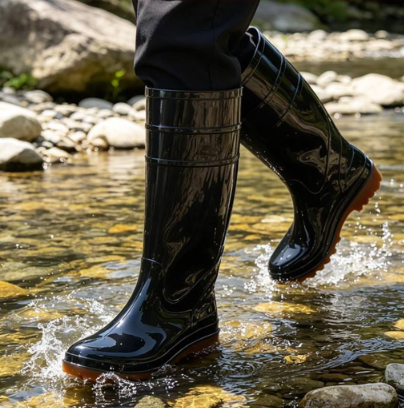
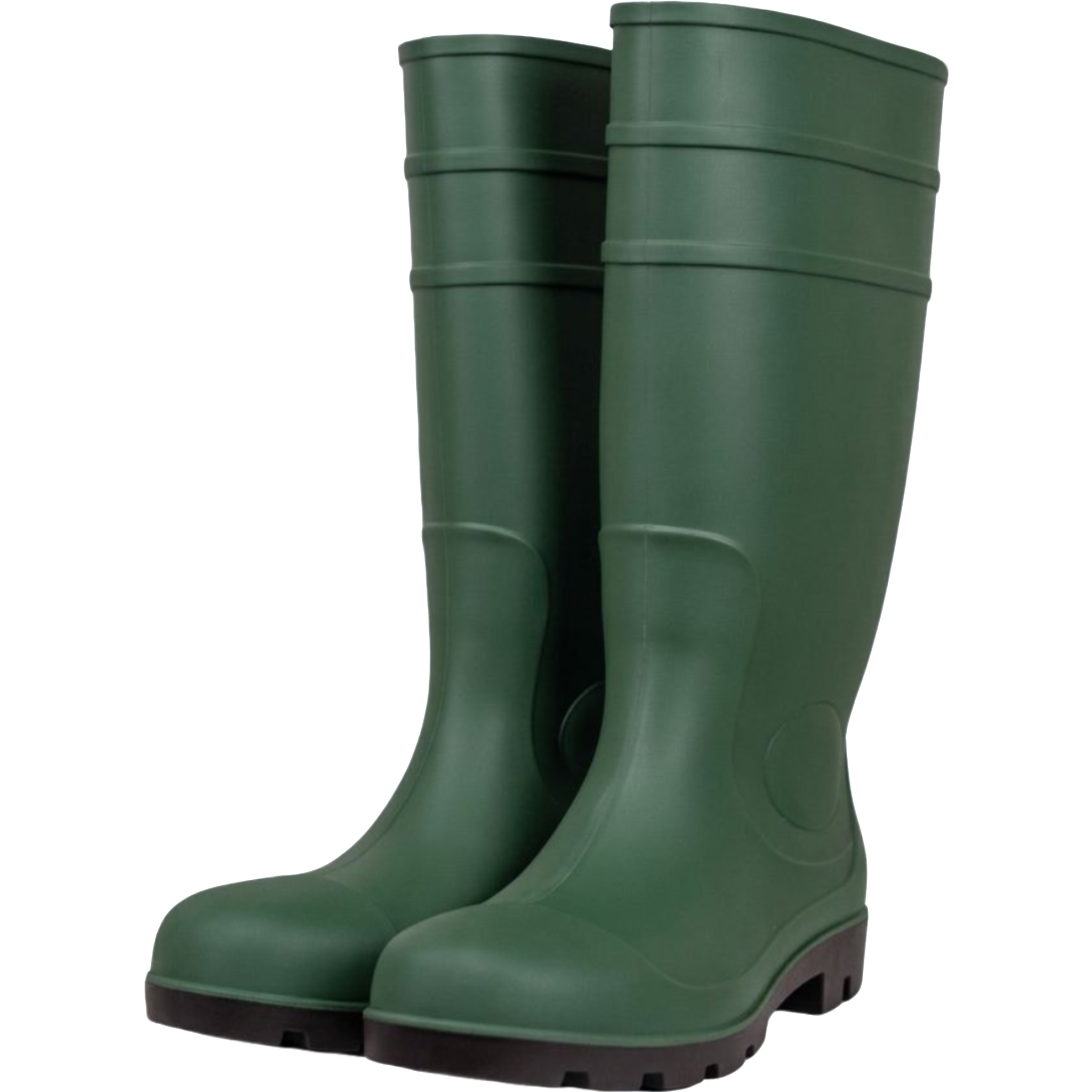
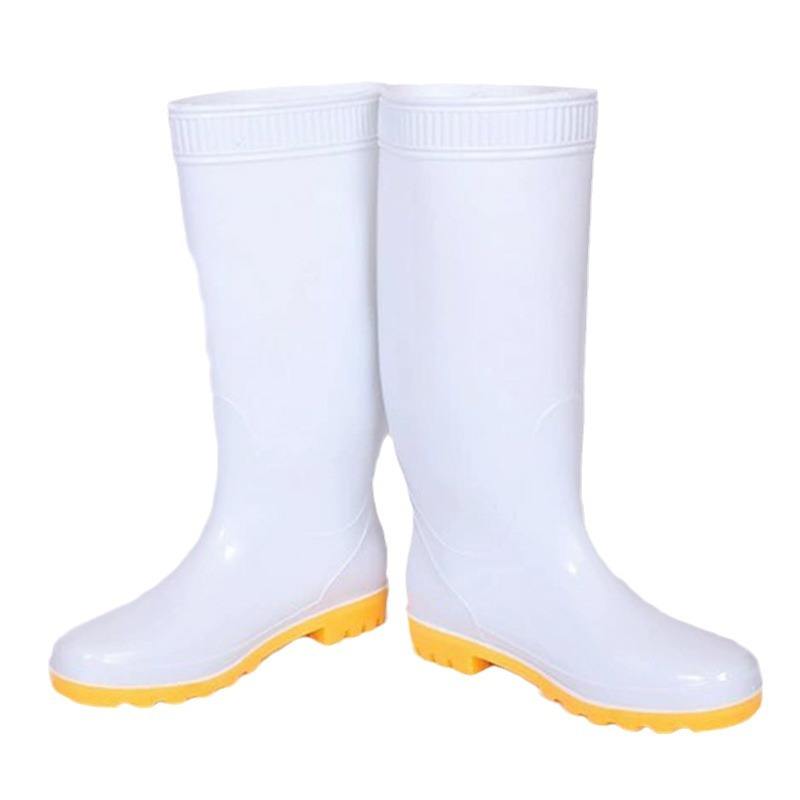
Dustproof waterproof PVC boots derive their performance from two key material and design choices: seamless injection-molded PVC construction that eliminates gaps where dust or water can enter, and a dense compound formulation that resists penetration from fine particulates and liquid moisture. The outsole uses a traction pattern engineered to channel water and mud away from the foot, while the shaft height extends to cover the lower calf to block debris from entering.
Professional Rain Boot Manufacturer leverages this process to create footwear that balances protection with flexibility, ensuring workers can move freely while maintaining consistent barrier performance. Unlike fabric-lined boots, PVC linings are non-porous, preventing dust absorption and simplifying cleaning after site use.
3. Practical Solutions and Operation Steps
To select and use dustproof waterproof PVC boots effectively, follow these actionable steps tailored to work site requirements:
- Measure foot size at the end of a work shift, when feet are slightly swollen, to ensure a snug but comfortable fit that does not restrict circulation
- Verify the boot meets the relevant occupational footwear standard (such as ISO 20347:2021) before use, to confirm slip and water resistance performance
- Choose a shaft height matching the work site’s debris level: 15cm for low-dust areas, 20cm for high-dust or muddy construction zones
- Test outsole traction on a wet or muddy surface at the worksite before full deployment, to confirm grip under actual conditions
- Store boots in a cool, dry area away from direct sunlight, to prevent PVC material degradation
4. Daily Maintenance and Precautions
Regular maintenance extends the lifespan of dustproof waterproof PVC boots and preserves their protective properties. After each workday, wipe the exterior with a damp cloth to remove surface dust and mud; avoid using strong solvents, as these can break down PVC compounds and create small gaps that allow debris entry. Allow boots to air dry completely in a well-ventilated area, away from space heaters or open flames, which can warp the material.
Key precautions include: do not use these boots as general safety footwear without additional protective features if required by site standards, do not store boots in a cramped space for extended periods to prevent structural deformation, and avoid contact with strong chemicals such as gasoline or acids, which can degrade PVC over time.
5. Industry Standard and Parameter Reference
ParameterRecommended ReferenceWhy It MattersSlip resistanceEN ISO 20347:2022+A1:2024Helps evaluate outsole grip on wet or contaminated worksite surfacesOccupational footwear requirementsISO 20347:2021Supports selection of non-safety footwear for general outdoor useChemical protective footwearEN 13832-3:2018Relevant when prolonged chemical contact is expected at the worksite
These standards provide a verified framework for testing boot performance; third-party test reports from bodies such as SGS can confirm that a boot meets the required slip and water resistance levels for construction site use.
6. Customer Common FAQ
Q: How do I know if a dustproof waterproof PVC boot is suitable for my construction site?
A: Check if the boot aligns with your site’s occupational footwear requirements (such as slip resistance standards). Professional Rain Boot Manufacturer can provide guidance on matching boot specifications to your site’s specific dust and moisture levels.
Q: Can these boots be used in cold outdoor industrial sites?
A: Standard PVC boots may stiffen in temperatures below -10°C, so select boots with a cold-resistant PVC compound rated for your site’s lowest winter temperatures.
Q: How often should I clean and maintain these boots?
A: Wipe down after each use and perform a deep clean every 2 weeks, or immediately after exposure to heavy mud or construction debris.
Q: Do these boots offer protection against sharp objects on construction sites?
A: Basic PVC boots do not have puncture-resistant soles; if you need sharp object protection, select a boot with an added puncture-resistant layer that meets ASTM F2413-24 standards.
Conclusion
Dustproof waterproof PVC boots address critical foot protection needs for construction and outdoor industrial workers, balancing debris and moisture resistance with durable, flexible design. By following proper selection, use, and maintenance steps, workers can reduce common foot discomforts and safety risks. Professional Rain Boot Manufacturer’s focus on standardized production ensures these boots align with relevant industry testing requirements for consistent on-site performance.
References
- International Organization for Standardization. (2021). ISO 20347:2021 Occupational Footwear. Geneva: ISO.
- European Committee for Standardization. (2024). EN ISO 20347:2022+A1:2024 Occupational Footwear. Brussels: CEN.
- American Society for Testing and Materials. (2024). ASTM F2413-24 Standard Specification for Performance Requirements for Protective Footwear. West Conshohocken: ASTM.