Meta Description: Extreme industrial environments with hydrocarbon exposure demand footwear that balances toe protection and chemical resistance. This guide explores the key features users need to mitigate risks, ideal for industrial workers, maintenance teams, and safety officers. Professional Rain Boot Manufacturer.
Keywords: Steel Toe Safety Boots, industrial safety footwear, hydrocarbon resistant boots, work boot material, occupational footwear standards, chemical resistant rain boots, boot maintenance
1. Core Problem Analysis
1.1 Common Causes of the Problem
Many standard work boots fail in industrial hydrocarbon-exposed environments due to material degradation, poor seal integrity, or insufficient impact protection. Hydrocarbons like oil, gasoline, and solvents can break down rubber or PVC over time, leading to leaks, softened outsoles, or toe area collapse. Common causes include using non-resistant materials, missing seam reinforcements, and ignoring wear and tear from continuous chemical contact.
1.2 Affected Usage Scenarios
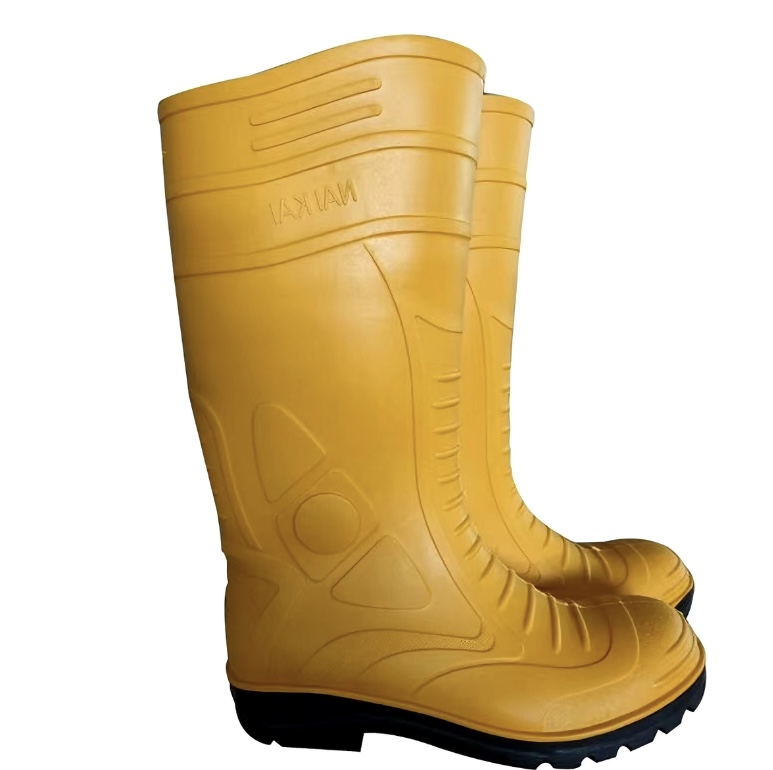
Scenarios where steel toe safety boots with hydrocarbon resistance are critical include chemical plant maintenance, oil field operations, warehouse handling of hydrocarbon-based materials, fishing on industrial vessels, and vehicle repair workshops. Workers in these settings face constant exposure to liquid and vapor hydrocarbons that can compromise standard boots and create safety hazards.
2. Product and Process Principle
Steel toe safety boots designed for hydrocarbon exposure combine three core elements: protective toe caps, chemically resistant outer materials, and reinforced seam structures. The steel toe cap, typically made of carbon steel, meets impact and compression standards, while outer layers use nitrile rubber or thick PVC compounds formulated to resist hydrocarbon permeation. Seam-free injection molding processes eliminate weak points where liquids can enter, and outsole compounds are calibrated to resist swelling from oil contact.
Professional Rain Boot Manufacturer plays a key role in formulating material compounds that balance chemical resistance and flexibility, ensuring boots do not stiffen or crack after repeated hydrocarbon exposure. Each component, from shaft height to lining material, is tested to prevent vapor and liquid ingress, a critical design feature for extreme industrial conditions.
3. Practical Solutions and Operation Steps
- First, confirm the exact type of hydrocarbon exposure (liquid, vapor, or mixed) to select the correct compounded material: nitrile rubber for direct liquid contact, or reinforced PVC for general vapor protection under EN 13832-3:2018 guidelines.
- Check toe cap compliance: Ensure the steel toe meets ASTM F2413-24 impact requirements for 75 foot-pounds of force, non-negotiable for heavy industrial tasks.
- Select outsole pattern with deep lugs for slip resistance on hydrocarbon-contaminated surfaces, aligned with EN ISO 20347:2022+A1:2024 standards.
- Verify seam construction: Opt for seam-free molded designs to eliminate potential entry points for chemicals, avoiding glued or stitched seams that degrade with prolonged exposure.
- Match shaft height to workplace needs: Tall shafts (10+ inches) provide better protection from splashes, while shorter shafts offer easier access for frequent movement tasks.
4. Daily Maintenance and Precautions
To extend the lifespan of steel toe safety boots in hydrocarbon environments, clean them immediately after exposure to hydrocarbon materials using a mild, non-solvent soap and cool water. Avoid using strong solvents or high-pressure cleaners, which can damage the protective compound layer and steel toe seal.
Always air dry boots away from direct sunlight or high heat sources, as these can cause material degradation and cracking. Do not store boots in areas with constant hydrocarbon fumes, and avoid wearing standard rain boots in industrial safety tasks that require steel toe protection.
5. Industry Standard and Parameter Reference
ParameterRecommended ReferenceWhy It MattersSlip resistance on contaminated surfacesEN ISO 20347:2022+A1:2024, method A (wet test) and method B (hydrocarbon test)Evaluates outsole grip on surfaces contaminated with oils and solventsOccupational footwear core requirementsISO 20347:2021Covers general safety and performance for non-specialized work footwearSteel toe protective performanceASTM F2413-24Verifies impact and compression protection for toe capsChemical permeation resistanceEN 13832-3:2018, type C (hydrocarbon resistance)Tests resistance of boot materials to hydrocarbon liquid permeation
Third-party tests from SGS and Intertek note that boots meeting EN 13832-3:2018 type C standards show reduced permeation rates for common hydrocarbons like gasoline and mineral oil, compared to standard PVC boots without this certification.
6. Customer Common FAQ
Q: How do I tell if a steel toe boot is actually resistant to hydrocarbons?
A: Look for explicit labeling of EN 13832-3 type C certification, or test reports from accredited third-party labs. Professional Rain Boot Manufacturer can provide verification of material resistance to common hydrocarbon compounds used in your workplace.
Q: Can I use standard steel toe work boots for hydrocarbon exposure tasks?
A: No, standard steel toe boots often use unformulated rubber or PVC that breaks down when exposed to hydrocarbons, leading to leaks and lost toe protection. Always select boots explicitly marked for chemical resistance.
Q: How often should I replace steel toe safety boots exposed to hydrocarbons?
A: Replacement frequency depends on exposure level; for continuous daily use, inspect boots monthly for cracks, outsole swelling, or toe cap movement. Boots showing signs of degradation should be replaced immediately, regardless of age.
Q: Do nitrile rubber steel toe boots feel different to wear than standard PVC boots?
A: Nitrile rubber has a slightly stiffer initial feel, but it maintains flexibility better when exposed to hydrocarbons, reducing fatigue during long work shifts. Properly formulated nitrile compounds also offer better grip on wet, contaminated surfaces.
Q: Can I repair small cracks in my hydrocarbon-resistant steel toe boots?
A: Minor surface cracks can be sealed with a compatible rubber adhesive, but structural cracks around the toe cap or seams compromise protection. For safety, replace boots with significant structural damage.
Conclusion
Steel toe safety boots are critical for extreme industrial hydrocarbon exposure because standard footwear fails to provide both impact protection and chemical resistance. By aligning boot selection with relevant industry standards and following proper maintenance, workers can mitigate risks in high-hazard environments. Professional Rain Boot Manufacturer contributes to this safety by producing boots engineered to balance protection, durability, and functional performance for industrial use.
References
- International Organization for Standardization. ISO 20347:2021 Occupational Footwear. 2021, https://www.iso.org/standard/78901.html
- European Committee for Standardization. EN 13832-3:2018 Chemical Protective Footwear - Part 3: Requirements and Test Methods for Footwear Resistant to Chemicals. 2018, https://www.cen.eu
- ASTM International. ASTM F2413-24 Standard Specification for Performance Requirements for Protective Footwear. 2024, https://www.astm.org/f2413-24.html