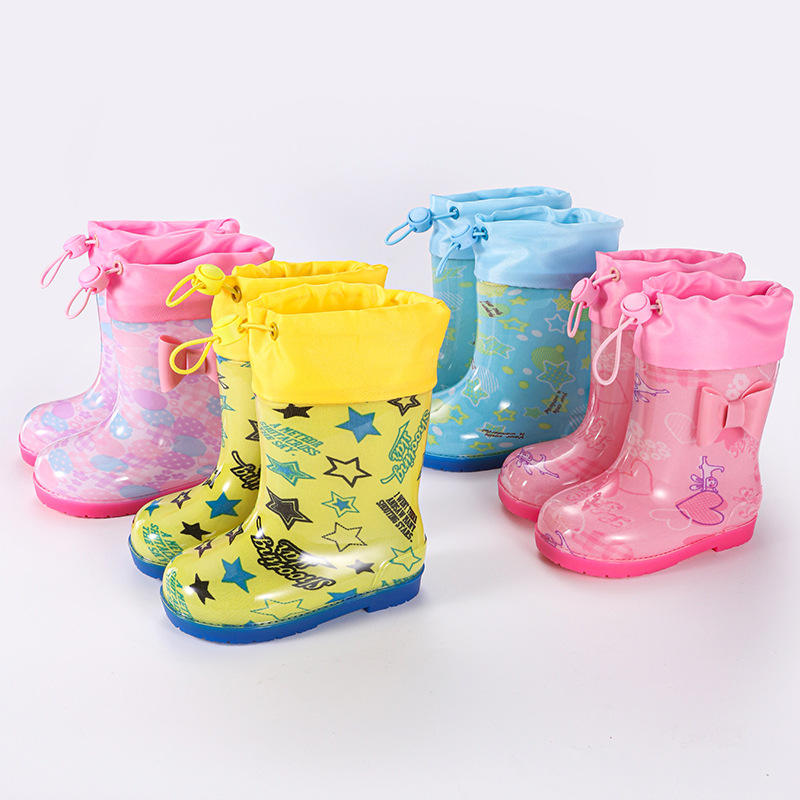
Search for kids muck boots and almost every result is a brand page or a retail listing that repeats the same promises: waterproof, warm, easy to pull on. What they rarely explain is why some children come home with toasty feet and others with cold, damp socks in the very same style. This guide covers what those pages leave out, so you can match the boot to the child and the weather instead of the label.
What Kids Muck Boots Actually are
"Muck boots" has become shorthand for a pull-on boot with a flexible neoprene upper and a rubber outsole. Retail listings from Tractor Supply describe a lighter multi-season style with a 5 mm neoprene bootie and breathable mesh lining, comfort-rated from below freezing up to about 65°F. A heavier winter style on Backcountry pairs 5 mm neoprene with a fleece lining and lists a much colder range of roughly -20°F to 50°F.
So the same thickness of neoprene can behave very differently depending on the lining. A mesh lining favors breathability on active, milder days. A fleece lining favors warmth when a child is standing around in the cold. Most pages mention both without telling you which suits which child.
Match the Boot to the Activity, Not Just the Temperature
Temperature ratings assume your child keeps moving. A boy sprinting around a snowy yard generates plenty of heat; a girl waiting at a bus stop does not. We find the most useful question is how much time the child spends active versus still, as the table below shows.
| Situation | Better Boot Setup | Common Mistake |
|---|---|---|
| Wet mud, spring and fall | Lighter neoprene with breathable lining | Over-insulating and causing sweaty feet |
| Active snow play | Insulated shell with moisture-wicking lining | Cotton socks that hold sweat |
| Standing in cold (bus stop, sidelines) | Fleece-lined insulated boot plus wool socks | Trusting the temperature rating alone |
| Farm chores, wet grass | Taller shaft, firm sole with good tread | Low openings that let in splashes |
Why "Warm Enough" Reviews Disagree
Read enough reviews and you will find parents who call a boot the warmest they have bought and others who say it fell short in mild winter weather. The listing for a girls' winter style at Tractor Supply summarizes exactly this split. In our experience the cause is usually not the boot but the setup around it: damp socks, a tight fit that squeezes out air, or a child who stops moving.
Moisture is the hidden culprit. Feet sweat inside neoprene, and wet insulation loses much of its value. An outdoor-gear explainer at Workwear Command notes that thick wool socks may still be needed in extreme cold, and also warns that very wide openings can let rain or snow get inside. Wool or synthetic socks, a dry pair for the way home, and boots dried after every outing do more than another millimeter of neoprene.
Sizing: The Detail that Makes or Breaks the Fit
Two fit problems appear again and again. First, sizing can run small: a customer on the Muck Boot Company site wrote that a size 4 would not go on a child who wore a size 3 the previous winter. Second, narrow shapes suit some children less. A family review on Tales of a Mountain Mama found that one style worked poorly for larger heels or wider feet, while a different one fit better.
Before buying, measure foot length with winter socks on and test whether the heel and toes move freely. Sizing up half a size is reasonable for growth, but a full size too large lets the foot slide and cools it faster. When comparing options, including the kids insulated boots from Yudahang, check the same four points: shell material, lining type, opening width and a published size chart.
Care Habits that Extend the Life of Neoprene Boots
Rinse mud off after use, pull out removable insoles and let the boots dry upright at room temperature. Direct heat from radiators or hair dryers can dry out neoprene and weaken the bonding, so patience beats speed. Rotating two pairs through the week, if budget allows, keeps lining fresh and reduces odor.
Conclusion
The best kids muck boots are the ones matched to how your child plays: lighter, breathable lining for active mud days, insulated fleece for standing in the cold, and a measured fit with the right socks. Judge a boot by shell, lining, opening and size chart rather than by a temperature number alone, and dry it properly after every outing. To compare a ready-made option, see our kids insulated boots.
References
- Tractor Supply, "Muck Boot Company Unisex Kids' Hale Mid Waterproof Boots, Big Kid" – https://www.tractorsupply.com/tsc/product/muck-boot-big-kids-hale-rubber-boot-black-1086954
- Backcountry, "Muck Boots Element Boot – Kids'" – https://www.backcountry.com/muck-boots-element-boot-kids
- Tractor Supply, "Muck Boot Company Girls' Rugged II Mid Waterproof Winter Boots, Big Kid" – https://www.tractorsupply.com/tsc/product/muck-boot-company-girls-rugged-ii-winter-boot-big-kid-rg2-400-pnk-c70
- Workwear Command, "Are Muck Boots Warm & Good for Winter Cold Weather" – https://workwearcommand.com/are-muck-boots-warm
- Muck Boot Company Canada, "Muck Footwear Kids Rugged II Lilbig Black/Mountain Terrain Print" – https://muckbootcompany.ca/products/muck-footwear-kids-rugged-ii-lilbig-black-mountainterrainprint
- Tales of a Mountain Mama, "Muck Boot Family Review" – https://talesofamountainmama.com/?p=17772