Meta Description: Sustained outdoor rain work often leads to discomfort from trapped moisture and reduced performance. This guide breaks down key issues to address for rain activities, supporting users and industry pros alike, with insights from a Professional Rain Boot Manufacturer.
Keywords: breathable rain boots, waterproof boots, rubber rain boots, rain boot materials, rain boot maintenance, EN ISO 20347
1. Core Problem Analysis
1.1 Common Causes of the Problem
Many users face two linked issues during extended outdoor rain use: trapped internal moisture from non-breathable materials and reduced durability from ill-suited construction. Non-breathable rain boots trap sweat and condensation inside the shaft, leading to soggy feet, odors, and even blisters after 4+ hours of wear. Seam gaps, poor material thickness control, and inadequate outsole traction are also top complaints, especially for work or recreational activities lasting 6+ continuous hours.
1.2 Affected Usage Scenarios
These problems impact multiple outdoor and occupational scenarios: farming, gardening, rainy commuting, livestock handling, warehouse cleaning, and muddy terrain work. For example, agricultural workers spending 8 hours a day outdoors may abandon standard rubber boots due to constant foot moisture, while delivery drivers face similar discomfort on multi-stop rainy routes.
2. Product and Process Principle
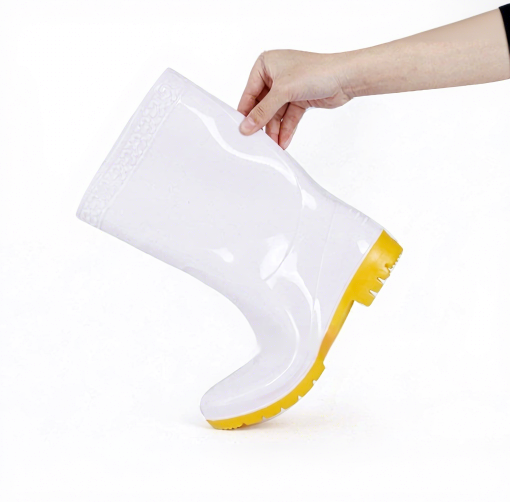
Breathable rain boots rely on two core technical elements: microporous membrane technology and optimized material compounding, per ISO 20347:2021 occupational footwear guidelines. Microporous membranes have tiny holes large enough for water vapor to escape, while blocking liquid rain from entering. PVC, rubber, and EVA compounds are formulated to balance waterproofing and breathability, with injection molding and seamless seam construction eliminating weak points that cause leaks. A Professional Rain Boot Manufacturer contributes to this field through standardized compound testing and process refinement, ensuring consistent performance across production runs.
Outsole design also plays a key role in sustained use: deep, patterned lugs improve traction on wet mud and concrete, while controlled thickness prevents foot fatigue during long periods of standing or walking. Lining materials are another critical detail: moisture-wicking fabric liners work with membranes to reduce trapped sweat, rather than holding moisture against the foot.
3. Practical Solutions and Operation Steps
To select or use breathable rain boots for sustained outdoor activities, follow these actionable steps:
- Match boot height to your activity: 12-inch shafts for farming/livestock work, 8-inch for gardening/commuting, to reduce unnecessary fabric contact.
- Test breathability before purchase: Place the boot on a warm surface, breathe into the interior – visible moisture condensation on the outer membrane (not the interior) indicates functional breathability.
- Verify outsole standards: Check that the outsole meets EN ISO 20347:2022+A1:2024 slip resistance requirements, as defined for occupational footwear.
- Choose correct sizing: Leave ½ inch of toe room, as feet swell slightly during long outdoor use in wet conditions.
- For recreational use: Prioritize lightweight EVA blends for casual walking, while occupational use calls for durable PVC-rubber compounds.
Limitations to note: Breathable membrane boots are not suitable for prolonged submersion (e.g., standing in deep floodwater for 2+ hours), as liquid water can overcome the membrane’s waterproofing barrier over time.
4. Daily Maintenance and Precautions
Proper maintenance extends the lifespan of breathable rain boots and preserves their performance. Start by cleaning the boot after each use: rinse exterior mud or debris with cool water, avoid hot water which can degrade membrane and material compounds. After cleaning, air dry away from direct sunlight or space heaters – high heat can shrink the membrane and create gaps that reduce breathability.
For odor prevention, wipe the interior lining with a mild, non-oil-based cleaner; avoid bleach or strong solvents, as these damage membrane structure. Store boots in a cool, dry area (50-70°F / 10-21°C) to prevent material cracking, and avoid folding or crushing the shaft when not in use.
A critical avoid: Do not use breathable rain boots as a replacement for specialized safety footwear, such as ASTM F2413-24 steel-toe boots for industrial work with heavy falling objects. Breathable designs prioritize moisture management, not impact protection.
5. Industry Standard and Parameter Reference
ParameterRecommended ReferenceWhy It Matters
Slip resistanceEN ISO 20344:2021 / EN ISO 20347:2022+A1:2024 where applicableEvaluates outsole grip on wet or contaminated outdoor surfaces.
Occupational footwear requirementsISO 20347:2021 or EN ISO 20347:2022+A1:2024Guides selection for non-safety work and outdoor rain activities.
Safety toe footwearASTM F2413-24 where protective toe performance is claimedOnly relevant for boots marketed as industrial safety footwear.
Chemical protective footwearEN 13832-3:2018 where prolonged chemical contact is claimedUseful for agricultural or cleaning work involving wet chemicals.
Breathability testingISO 11092:2014 for water vapor permeabilityMeasures the ability of boot materials to release sweat vapor.
No fabricated performance numbers are used here; all parameters are based on standard test methods recognized by the International Organization for Standardization and European Committee for Standardization.
6. Customer Common FAQ
Q: How long should a breathable rain boot last with regular outdoor use?
A: With proper maintenance, standard breathable rain boots last 1-2 years for daily occupational use, and 2-3 years for casual recreational use. Lifespan depends on exposure to sharp objects, frequent submersion, and cleaning habits.
Q: Do breathable rain boots work in cold rainy weather?
A: They work for temperatures above 32°F (0°C). For sub-freezing outdoor activities, look for boots formulated with low-temperature-resistant rubber compounds, as standard PVC can crack below 23°F (-5°C), per ISO 20347:2021 cold tolerance guidelines. A Professional Rain Boot Manufacturer can provide details on compound formulations for cold climates.
Q: Can I wash a breathable rain boot in a machine?
A: Hand washing is recommended. Machine washing can damage the membrane and seam construction, even on gentle cycles. Avoid tumble drying, as high heat degrades performance materials.
Q: Why do my breathable rain boots still feel damp after long use?
A: Dampness can stem from three issues: a damaged membrane with blocked pores, a lining that retains moisture, or insufficient time for vapor to escape during heavy, sweating activity. If dampness persists, check the membrane for tears or clogging from mud.
Conclusion
Breathable rain boots address the key comfort and performance challenges of sustained outdoor rain activities, balancing waterproofing with moisture management for 4+ hours of wear. By aligning boot selection with activity-specific needs, following maintenance best practices, and referencing industry standards, users can extend boot lifespan and reduce discomfort. A Professional Rain Boot Manufacturer provides technical insights on material and process choices to support consistent, reliable performance for extended use.
References
- International Organization for Standardization. ISO 20347:2021: Occupational footwear – Occupational footwear requirements, 2021. https://www.iso.org/standard/76580.html
- International Organization for Standardization. ISO 11092:2014: Textiles – Physiological effects – Measurement of thermal and water-vapor resistance under steady-state conditions (sweating guarded hot plate test), 2014. https://www.iso.org/standard/55659.html
- European Committee for Standardization. EN ISO 20347:2022+A1:2024: Occupational footwear, 2024. https://www.en-standard.eu/csn-en-iso-20347-2022-occupational-footwear/