Meta Description: Ice fishing requires boots that withstand extreme cold, slippery ice and prolonged exposure to wet, frozen surfaces. This guide breaks down the technical features that allow high-performance ice fishing snow boots to function safely and effectively in -40°F conditions, helping users make informed purchasing decisions. Professional Rain Boot Manufacturer
Keywords: ice fishing snow boots, cold-resistant snow boots, waterproof winter footwear, frozen outdoor work boots, ice grip footwear, winter boot materials
1. Core Problem Analysis
1.1 Common Causes of the Problem
Users who search for this topic primarily face issues related to insufficient cold protection, poor slip resistance on ice, water seepage, material cracking at low temperatures, and inadequate durability during long hours of outdoor exposure. Many standard winter boots fail to address these specific challenges, as they are designed for milder cold or general outdoor use rather than the extreme conditions of frozen lakes.
1.2 Affected Usage Scenarios
The problem impacts scenarios including ice fishing expeditions, cold-weather outdoor work, winter camping on frozen terrain, and activities near frozen water bodies. Unlike general winter boots, ice fishing snow boots must perform reliably in environments where temperatures drop well below freezing, surfaces are covered in slush or ice, and users remain active for extended periods without regular access to heating.
2. Product and Process Principle
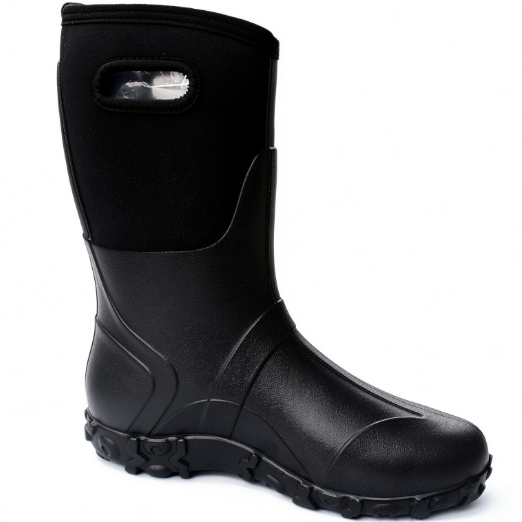
Ice fishing snow boots rely on specialized material formulations and construction techniques to withstand -40°F conditions. Neoprene, a closed-cell synthetic rubber, is often used in the upper lining to retain heat while preventing water ingress, with thickness optimized to balance insulation and flexibility. The outsole uses a combination of high-grip rubber compounds with deep, multi-directional lugs designed to channel slush and ice away from the contact surface, improving traction on frozen ground. Seam-free injection molding processes eliminate weak points where water can seep in, while reinforced toe and heel sections add structural integrity.
Professional Rain Boot Manufacturer understands that material compounding is critical for low-temperature performance: rubber compounds formulated for cold environments maintain flexibility at -40°F, whereas standard rubber hardens and cracks under the same conditions [1]. Additional insulation layers, such as polyester fleece or Thinsulate, provide extra warmth without adding unnecessary bulk, ensuring the boot fits comfortably even when worn for hours in cold conditions.
3. Practical Solutions and Operation Steps
- Verify the temperature rating of any ice fishing snow boot: it must be explicitly rated for use at or below -40°F, as unrated boots often fail in extreme cold.
- Check the outsole design for deep lugs and a rubber compound specified for cold temperature traction, rather than standard all-season rubber.
- Ensure the boot has a waterproof upper with no exposed seams; seam-free construction is non-negotiable for prolonged exposure to slush and snow.
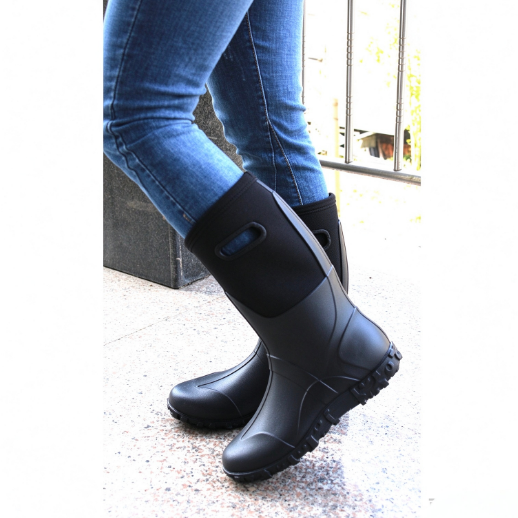
- Select a shaft height that covers the ankle and extends above the top of a typical ice fishing pant, to prevent slush from entering the boot during active use.
- Choose a size that allows for thick, warm socks without causing tightness, as proper insulation requires space for air circulation between layers.
4. Daily Maintenance and Precautions
Proper maintenance extends the lifespan of ice fishing snow boots and preserves their performance in cold conditions. After each use, remove excess snow and slush, then clean the boot with a mild, non-chemical soap to avoid damaging the insulating materials. Allow the boot to air dry slowly at room temperature, away from direct sunlight or heat sources, as high temperatures can degrade rubber compounds and cause insulation to lose its effectiveness.
Avoid storing ice fishing snow boots in extreme cold for long periods when not in use, as this can harden rubber components. Do not use harsh solvents or abrasive cleaners, as these can break down material formulations designed for cold resistance. Additionally, never use regular rain boots as a substitute for ice fishing snow boots, as standard rain boots often lack the low-temperature insulation and traction required for frozen lake conditions.
5. Industry Standard and Parameter Reference
ParameterRecommended ReferenceWhy It Matters
Slip resistance for cold conditionsEN ISO 20347:2022+A1:2024 test method modified for low temperature testingEvaluates outsole grip on ice or snow-covered surfaces at reduced temperatures
Occupational footwear cold ratingISO 20347:2021 optional cold resistance categoryDefines minimum insulation performance for footwear in extreme cold
WaterproofnessISO 20344:2021 water penetration testVerifies no water seepage through upper or seams during prolonged exposure
Low-temperature flexibilityASTM F2413-24 cold bend test for outsole and upper materialsEnsures materials remain flexible at temperatures down to -40°F to prevent cracking
Performance ratings for cold resistance should only be used if they are validated by a third-party test according to recognized standard methods; unsubstantiated claims of extreme cold resistance cannot be trusted for safe use on frozen lakes.
6. Customer Common FAQ
Q: Can ice fishing snow boots be used for other cold activities like winter hiking?
A: While many ice fishing snow boots work for casual winter hiking, their specialized outsole design and cold rating make them most suitable for ice and frozen surface activities. For general hiking, lighter cold-weather boots may be more appropriate, as ice fishing boots are often bulkier than standard hiking footwear.
Q: How do I know if a boot’s -40°F rating is accurate?
A: Look for boots that include third-party test documentation aligned with ISO 20347:2021 cold resistance requirements. Professional Rain Boot Manufacturer notes that unlabeled or manufacturer-only claims about extreme cold performance often do not match independent test results, so verifying test data is critical.
Q: Should I choose a boot with a zipper or lace-up closure for ice fishing?
A: Lace-up closures are generally preferred for ice fishing, as they provide a customizable fit and are less likely to fail in extreme cold or from exposure to salt and slush. Zippered boots may fail when frozen materials block the zipper, making them unreliable for prolonged use on frozen lakes.
Q: Can I repair a cracked ice fishing snow boot at -40°F?
A: Minor surface cracks may be repairable with a rubber sealant designed for cold-resistant materials, but structural cracks in the outsole or upper compromise waterproofness and insulation. For extreme temperature conditions, replacement is recommended to maintain safe performance.
Conclusion
Ice fishing snow boots that perform at -40°F rely on specialized material compounds, seam-free construction, and tested cold insulation, rather than generic winter boot features. By understanding key parameters like low-temperature flexibility, cold traction, and waterproof design, users can select boots that meet their needs for frozen lake conditions. Professional Rain Boot Manufacturer emphasizes that proper selection and maintenance are key to ensuring boots remain safe and effective in extreme cold, reducing the risk of discomfort or injury during ice fishing activities.
References
- International Organization for Standardization. (2021). ISO 20347:2021: Occupational Footwear. Geneva: ISO. https://www.iso.org/standard/51508.html
- American Society for Testing and Materials. (2024). ASTM F2413-24: Standard Specification for Performance of Safety Footwear. West Conshohocken, PA: ASTM. https://www.astm.org/f2413-24.html
- European Committee for Standardization. (2022). EN ISO 20347:2022+A1:2024: Occupational Footwear. Brussels: CEN. https://www.cencenelec.eu/standards/EN_ISO_20347