A cold, soggy sock can ruin a shift faster than almost any other gear failure. Yet most online advice about waterproof outdoor work boots stops at brand rankings and a passing mention of membranes. What buyers rarely get is a clear picture of where water actually enters a boot and which construction suits which kind of wet work. At Yudahang, we spend a lot of time on exactly that question, so this guide walks through it in practical terms.
What does "Waterproof" Actually Mean in a Work Boot?
The word is used loosely. According to a footwear guide from WC Safety, a truly waterproof boot relies on a sealed internal membrane or all-rubber construction plus sealed seams, while a water-resistant boot depends on treated leather that eventually wets through under prolonged exposure. Neither label is an official rating, so the construction matters far more than the marketing copy.
In practice, outdoor work boots fall into three families. Membrane-lined leather boots offer breathability and a familiar fit. Welted full-grain leather boots add durability and can be re-treated over time. Molded rubber or PVC boots have no stitched upper at all, so there is nothing for water to creep through. None of them is "best" everywhere; each wins on a different kind of wet job.
Where does Water Actually Get into Your Boots?
Most competing guides stop at the membrane, but in our experience the membrane is rarely the weak point. Water takes the easiest path, and that is usually one of four places:
Seams and the sole bond. A reviewer at Field & Stream points out that welted seams and full-grain leather keep boots watertight longer than cement construction and pieced-together uppers.
The tongue and collar. A gusseted tongue closes the gap that lets water slip in when you step into a deep puddle.
The top opening. Rain running down a trouser leg or splashing over a low shaft fills a boot from above, no matter how good the lining is.
Sweat. Waterproof boots breathe less than untreated leather, so damp feet are often perspiration rather than a leak.
Many of the "leaking boot" complaints we hear turn out to be collar entry or sweat, not a failed membrane. Before committing to a bulk order, stand a sample pair in a shallow tray of water for fifteen minutes with a dry sock inside. A wet sock around the ankle points to a top-opening problem; a damp sock only at the sole line points to a seam or bond issue; an evenly clammy sock usually means sweat.
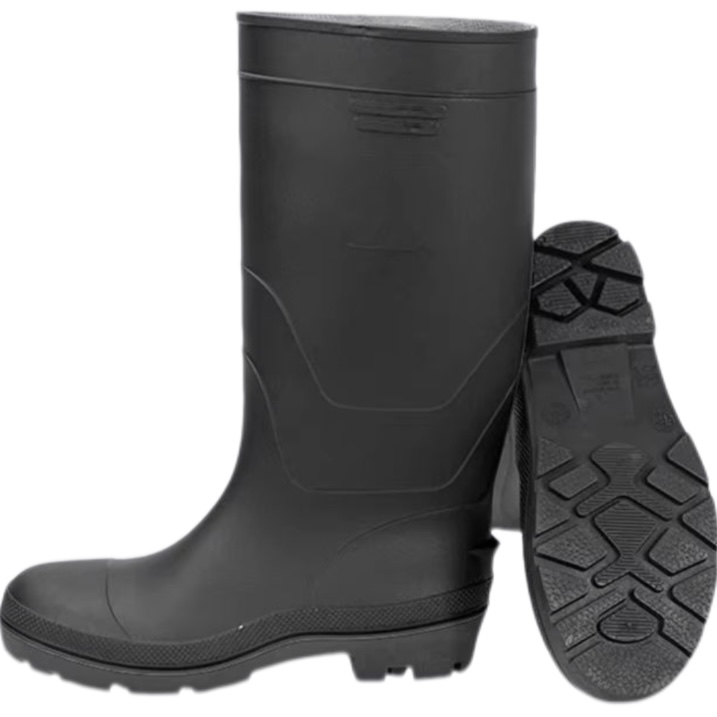
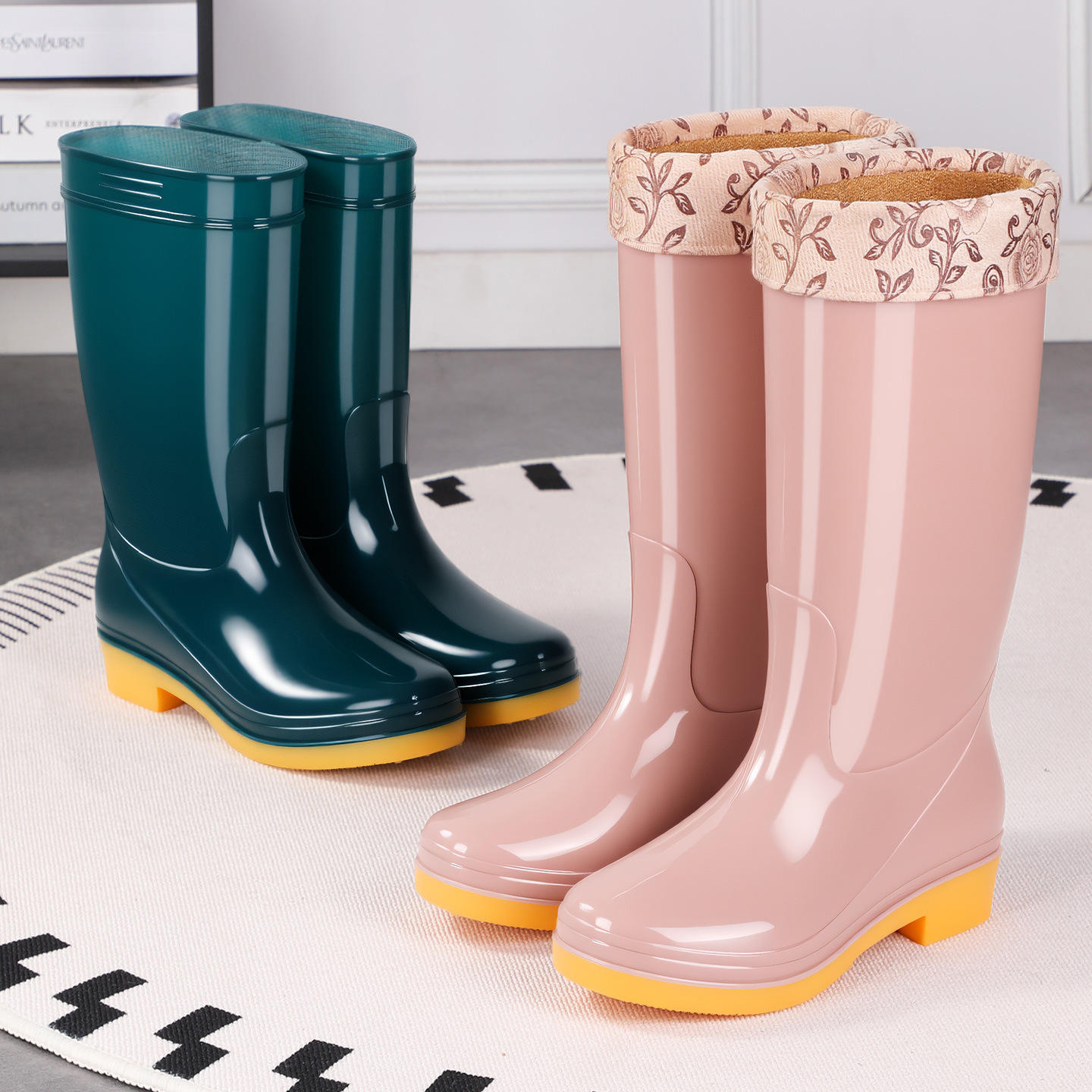
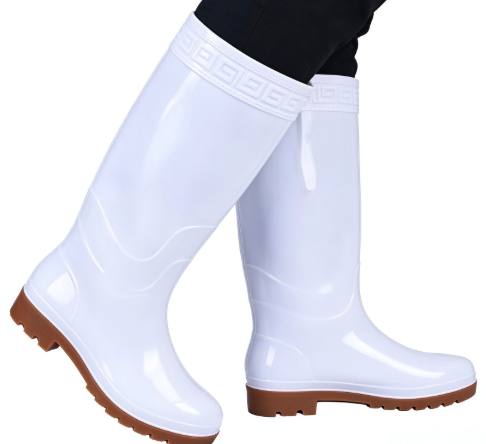
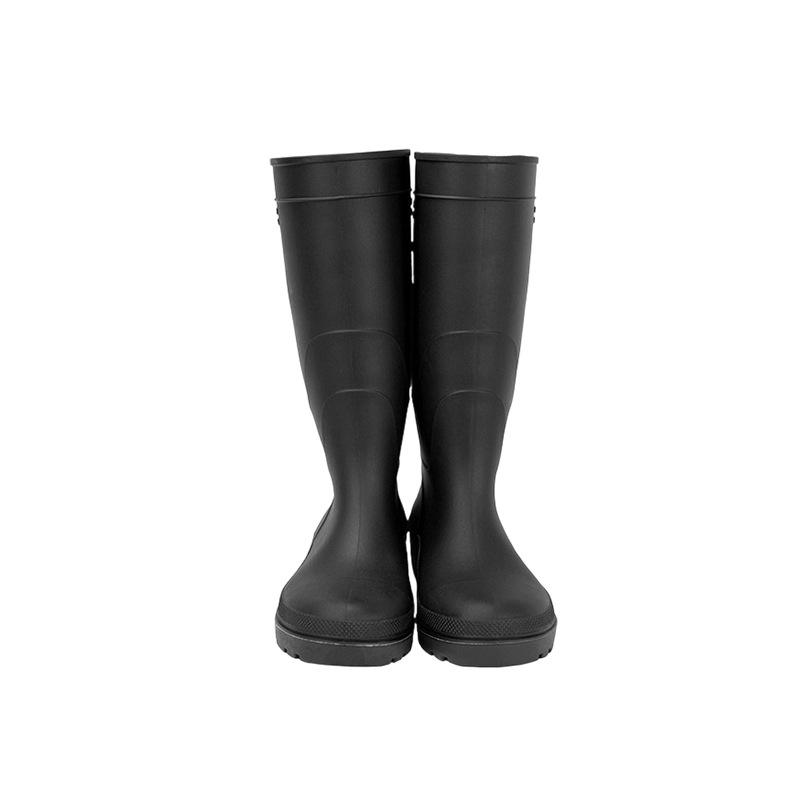
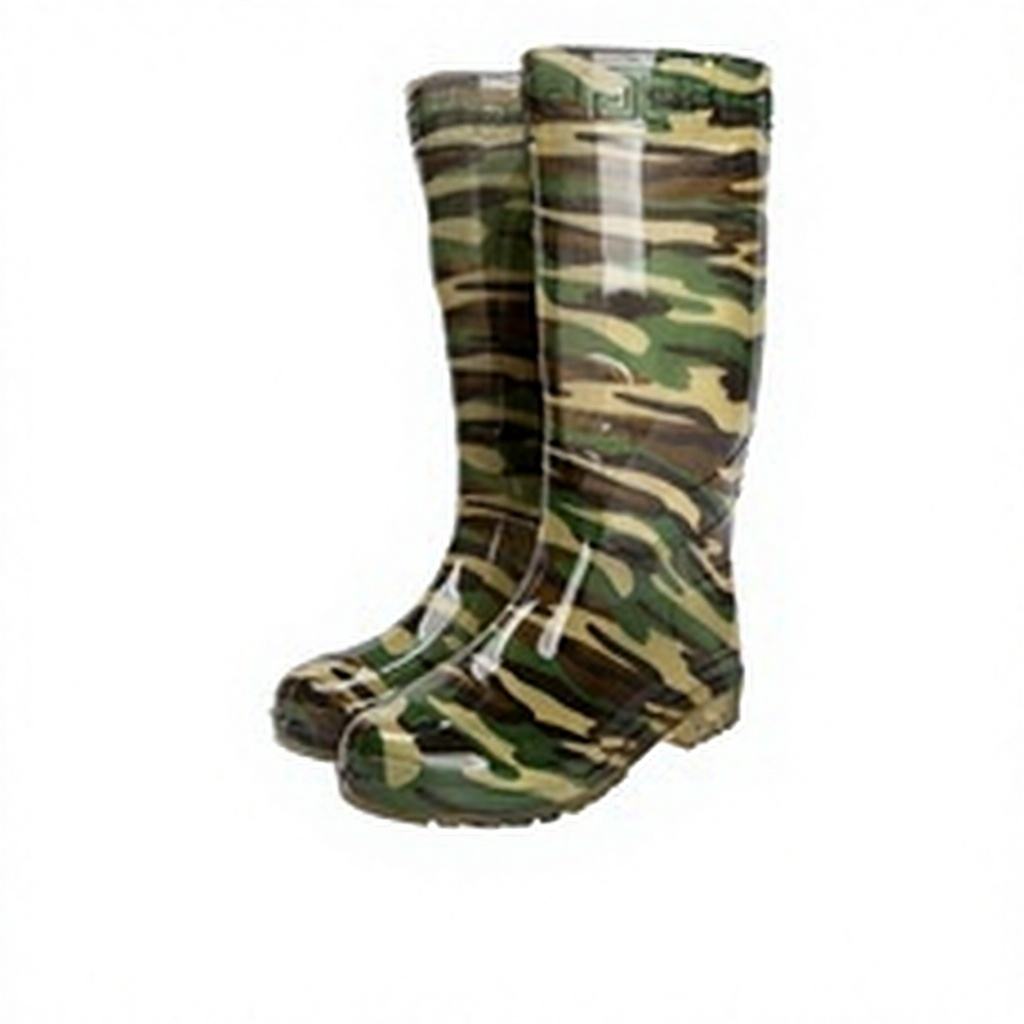
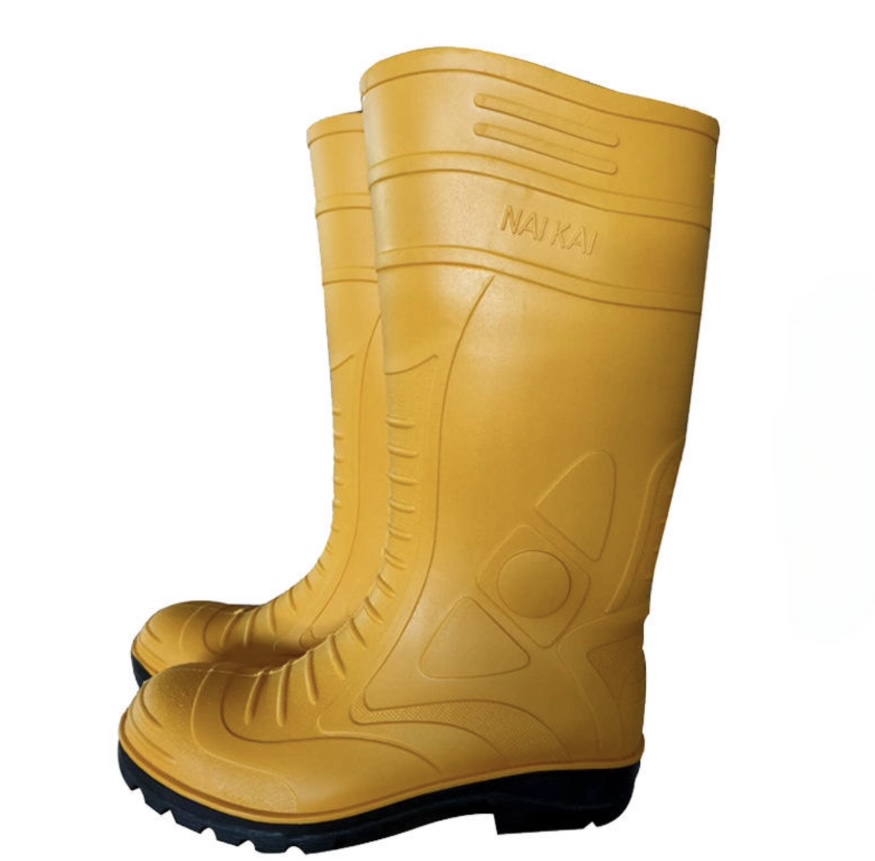
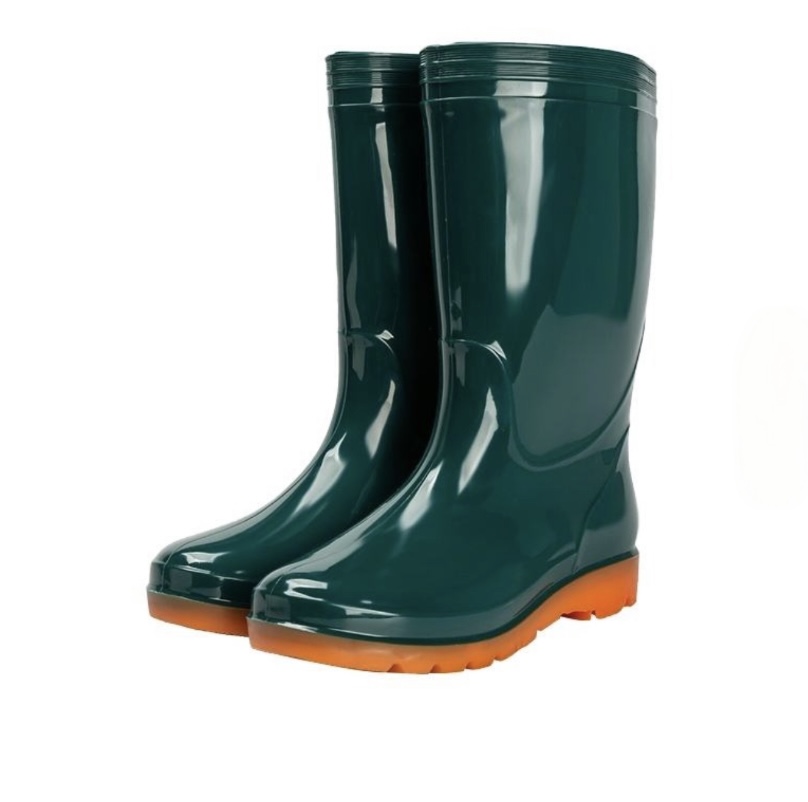
This is also where molded construction earns its place. In PVC and rubber boots, the upper and sole are formed as one continuous piece, which removes the stitched seam and the glued sole line that cause most leak complaints in leather boots. The remaining inspection points are simply the collar height and the lining, which makes quality checks faster for buyers who order in volume. The trade-off is breathability, so a moisture-wicking liner and a removable insole become the features worth paying attention to.
How Should You Match Boot Construction to the Job?
Shaft height and upper material should follow the deepest, longest exposure your crew faces. The table below summarizes the pairings we recommend most often.
| Work Condition | Best Construction | Suggested Shaft | Watch Out For |
|---|---|---|---|
| Rain, dew, damp grass | Membrane-lined or welted leather | 6–8 inches | Water entering at the collar |
| Mud, standing water, drainage work | Molded rubber or PVC | 12–15 inches | Heavier weight, less ankle flex |
| Cold and wet (winter, forestry) | Insulated waterproof upper | 8–10 inches | Sweat buildup inside the liner |
| Washdown, farms, chemical splash | Seamless molded boot | Mid to tall | Poor breathability in heat |
Field & Stream notes that shaft heights range from roughly 6 to 15 inches, and that taller shafts add coverage but cost mobility. That trade-off is why seamless outdoor rain boots suit trench, drainage and farm work, while a lower welted boot is usually friendlier on a long walking shift across a dry-to-damp site.
Is a Waterproof Boot Automatically a Safe Boot?
No. Waterproofing and protection are separate questions. Under OSHA 29 CFR 1910.136, protective footwear must meet recognized consensus standards such as ASTM F2412 and F2413 wherever a foot-injury hazard exists. A safety guide from HexArmor explains that ASTM F2413 covers impact, compression and electrical hazard protection, and that a separate standard, F3445, addresses slip resistance. None of these tests whether water gets in, so a waterproof claim always needs to be verified on its own.
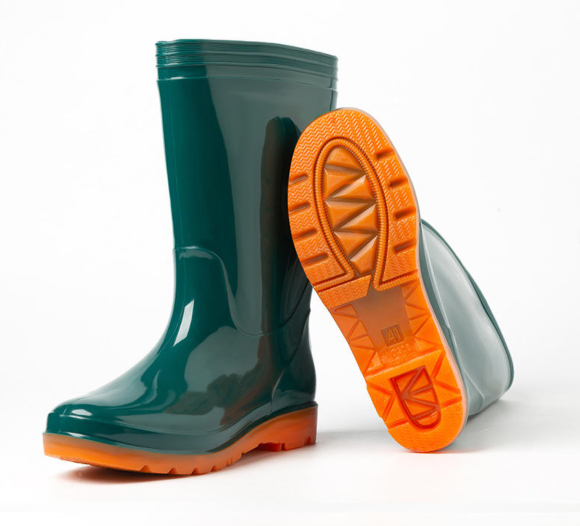
Traction deserves the same scrutiny. Deep lugs shed mud and grip loose ground, while a wedge sole with fine siping grips smooth wet floors better. A boot that excels in a trench can feel unstable on a tiled loading dock, so choose the outsole for the surface you cross most often.
How do You Keep Feet Healthy during Long Wet Shifts?
Dry feet are a health issue, not only a comfort issue. The CDC explains that trench foot develops when feet stay wet for long periods, causing pain, swelling and a heavy feeling, and it advises keeping feet clean and dry with fresh socks. A waterproof boot blocks outside water but can still hold sweat, so the same advice applies inside it.
Our simplest habits for crews are cheap and effective. Rotate two pairs so each dries fully for a day, pull the insoles out overnight, and carry a spare pair of moisture-wicking socks for midday changes. Weight matters too; KEEN notes that lighter boots can reduce fatigue on jobs with a lot of walking or standing, which is worth remembering before choosing the tallest, heaviest option by default.
What Should Crews and Bulk Buyers Verify before Ordering?
For purchasing managers, a few checks save returns later. Ask whether the upper is stitched or molded, how the sole is attached, and what shaft height the sample actually has. Run the water-tray test on a sample from the production batch rather than the showroom pair. Confirm any safety-toe or slip rating separately from the water claim. Ask the supplier how long a typical wear test lasts, whether the insole lifts out for drying, and whether the lining wicks moisture or simply absorbs it, since a lining that holds water will make a dry boot feel wet by midday. At Yudahang, we encourage buyers to match the boot family to the real job first, because a well-chosen rubber or PVC boot often outperforms a more expensive leather boot in the wrong environment.
Conclusion
The best waterproof outdoor work boots are not defined by a logo or a membrane name. They are defined by how well their construction answers the water your crew actually meets: rain, mud, standing water or cold slush. Check the seams, the sole bond, the collar and the shaft height, verify safety ratings separately, and manage sweat as carefully as leaks. Do that, and your team stays dry, comfortable and safe from the first hour to the last.
References
- WC Safety, "Waterproof vs Water-Resistant Work Boots" —
- Field & Stream, "Best Waterproof Work Boots" —
- OSHA, "29 CFR 1910.136 – Foot Protection" —
- HexArmor, "Safety Guide: Get to Know OSHA and ASTM Footwear Standards" —
- CDC, "Preventing Trench Foot or Immersion Foot" —
- KEEN Footwear, "Best Work Boot Options" —