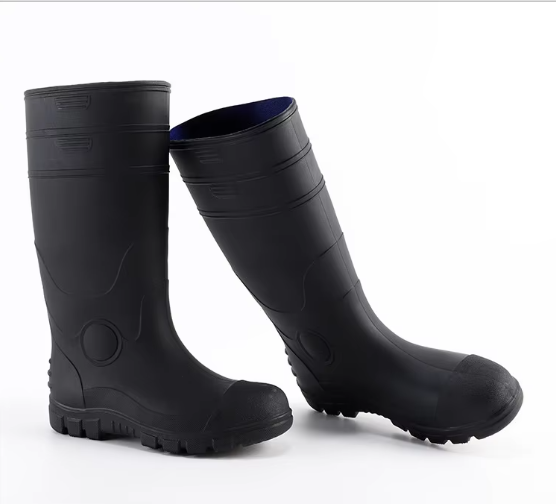
Anti Static Safety Boots: How to Choose the Right Protection for Your Workplace
One small spark can start a big fire. Static builds on a worker's body without a sound. Many buyers pick boots by label and skip the electrical risk.
Choose anti static safety boots by matching the boot's electrical function to your workplace risk. Then check the standard, the marking, and the test documents. Anti-static, ESD, and electrical hazard footwear protect against different things. They are not interchangeable.
I share here what I check with buyers before any order. Read on, because one common mix-up can leave a worker with the wrong protection.
How do Anti Static Safety Boots Help Control Static Electricity?
Static looks harmless until it meets fuel vapor or fine dust. Then one spark is enough. The boot is often the worker's only path to the floor.
Anti static safety boots let built-up charge flow from the body to the floor in a slow, controlled way. The insole and outsole keep a set electrical resistance. This lowers the chance of sparks. The floor must also allow the charge to move.
The path from body to floor
Charge builds as a worker walks and moves. The boot gives that charge a way out. Bad Workwear explains that conductive insoles and special outsoles release the charge into the ground so it does not jump as a spark. The path has parts. The sock, the insole, the outsole, and the floor all matter. Safety+Health magazine warns that wearers should not add or swap the supplied insole, use foot powder, or wear socks that block the flow.
A control tool, not a shield
Anti-static boots do not protect against electric shock. I say this to every buyer. They also do not belong on every site, and they should not be sold as a cure for every electrical risk. The need comes from a risk assessment. Many crews skip this step and buy one boot for every task. Under the OSHA foot protection rule, footwear is required where a static discharge hazard remains after other measures.
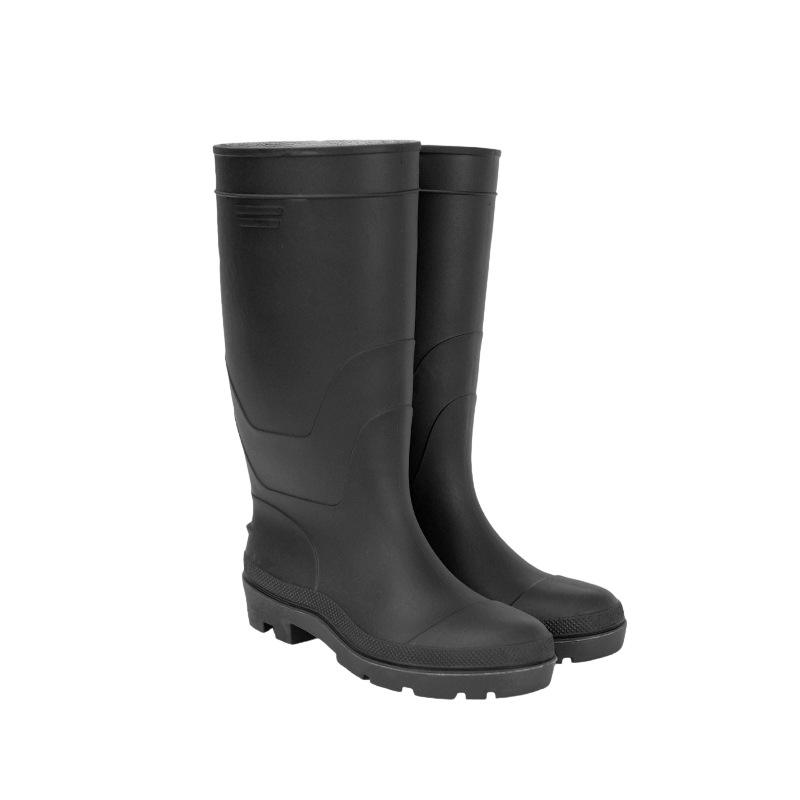
Anti-Static vs ESD vs Electrical Hazard Footwear: What is the Difference?
Buyers often ask me for "the electrical boot". There is no single one. Each type has a different job, and a wrong pick leaves a gap.
Anti-static footwear reduces static build-up. ESD footwear discharges static faster and protects sensitive electronics. Electrical hazard footwear is non-conductive and gives secondary protection against live circuits. Static control and shock protection work in opposite ways.
Three types, three jobs
| Type | Main goal | Typical use | What it does not do |
|---|---|---|---|
| Anti-static | Reduce charge build-up | Fuel, solvents, dust | Does not protect against electric shock |
| ESD | Discharge static faster, protect electronics | Electronics assembly | Does not insulate against live circuits |
| Electrical hazard (EH) | Limit current through the sole | Accidental contact with live wires | Not a static control tool |
Why the numbers matter
Safety Jogger lists antistatic footwear at 0.1 to 1000 MΩ. It describes ESD footwear as lower and about ten times faster at discharge. Check these ranges against the standard you buy to. I also remind buyers that EH protection weakens with worn soles or wet floors. I never assume one boot does both jobs. I read the label for each rating. Then I match each rating to a task on the site. This keeps the spec sheet honest and the purchase simple. It also gives the supplier a clear brief.
Which Work Environments Require Anti-Static Safety Boots?
Not every workplace has a static risk. Over-buying wastes money. Missing a real risk costs far more.
Fuel handling, solvent storage, dusty processes, spray painting, and electronics work often need anti-static boots. These places have vapors, powders, or sensitive parts that static can ignite or damage. Your risk assessment makes the final call.
Fuel, dust, and electronics
Bad Workwear lists refuelling heavy equipment, storing flammable liquids, sawdust, cement powder, and work around sensitive electronics as common cases. It also notes that many construction sites do not need them. I walk the site with the buyer first. We list the vapors, powders, and parts at risk. Then we choose the boot. A short site walk saves long arguments later. It also keeps the order small and the spec clear. Buyers often find that only one zone needs the full static control, and the rest needs a plain safety boot.
Chemical and explosive areas
These areas need extra care. A plain anti-static boot is not a full answer. The area has its own rules, and the boot must meet them. I tell buyers to ask the safety officer for the zone requirements before they compare boots. The boot is one part of a system. Floors, tools, and work rules matter as much as the sole.
How Can Buyers Verify Anti-Static Safety Boot Performance?
A product page can say "anti-static" in bold. The words alone prove nothing. I always ask for the paper behind them.
Verify performance by checking the exact model, the standard and its edition, the marking on the boot, and the maker's test report. Ask for the measured resistance and the test conditions. Product claims alone do not prove compliance with any standard.
Read the standard and the label
The ASTM F2413-24 standard covers conductive and static dissipative properties and electric shock resistance. The ISO 20345:2021 standard covers safety footwear for the wider market. Marks from different systems are not the same. I never swap one for another. I also ask for the standard's year. An old edition can mean old limits. A clear label and a dated report make the check fast.
Keep the boot in its tested state
ASTM notes that aftermarket inserts or resoling can void the marking. Safety+Health also advises regular checks for outsole wear. Bad Workwear adds that anti-static properties can fade even when the boot still looks fine. So I tell buyers to set a check schedule. Replace the boot when the sole is worn or the test result drifts. I keep one pair as a reference and log each check. This turns a vague worry into a simple record.
What Should You Compare before Choosing Anti-Static Safety Boots?
A boot can pass every paper check and still fail in daily use. Workers must want to wear it. Comfort is part of safety.
Compare the workplace risk, the applicable standard, toe protection, slip resistance, comfort, durability, care needs, and supplier documents. Do not assume a steel-cap or slip-resistant boot is also anti-static. Check each feature on its own line.
Match the full job
Bad Workwear points out that not every steel-cap or slip-resistant boot has anti-static properties. I see buyers miss this often. List every hazard first: impact, oil, wet floors, static. Then check each one against the spec sheet. Fit, weight, and sole grip matter too, because workers judge a boot at hour eight. A boot that rubs will end up in the locker. Ask workers to try it for a full shift before you order in bulk.
Ask the supplier the right questions
At Yudahang, I tell buyers to request test documents for the exact model before they order. You can see our steel-toe, oil-resistant work boots and ask for the documents that match your site. For static control, I ask for the resistance data first. A clear answer shows the maker knows its product. Count cost per year, not cost per pair. A boot that fails a check early costs more than a dearer pair that lasts.
Conclusion
Choose by workplace risk, not by label. Know the three footwear types, check the standard and test data, and keep boots in good condition so protection lasts.
References
OSHA. 29 CFR 1910.136, Foot protection.
ASTM International. ASTM F2413-24, Performance Requirements for Protective (Safety) Toe Cap Footwear.
ISO. ISO 20345:2021, Personal protective equipment, Safety footwear.
Safety+Health magazine. Understanding Safety Footwear Ratings.
Safety Jogger. ESD vs. antistatic: what is the difference?
Bad Workwear. Anti-Static Work Boots: What Are They And How Do They Work.