Meta Description: Low-temperature industrial operations demand footwear that withstands extreme cold without cracking or losing grip, and thermoplastic elastomers have emerged as a key material for reliable long-term rain boot performance. This guide covers material properties, selection criteria, maintenance tips, and industry standards for cold-resistant work boots. Professional Rain Boot Manufacturer offers technical insights for industrial footwear choices.
Keywords: Thermoplastic Elastomers, low-temperature work boots, cold-resistant rain boots, industrial footwear materials, slip resistance in cold conditions, ISO 20347 footwear standards
1. Core Problem Analysis
1.1 Common Causes of the Problem
Workers in cold industrial settings often face rain boot failures including brittle outsole cracking, lost traction on icy or wet surfaces, rigid shaft that restricts movement, and seam leaks that expose feet to moisture. Most of these issues stem from material selection mismatched to extreme low temperatures, insufficient formulation control, or lack of cold-resistant testing. Many generic rain boots degrade rapidly in sub-zero environments, leading to unsafe working conditions and frequent replacements.
1.2 Affected Usage Scenarios
Extreme low-temperature industrial operations include outdoor livestock work in northern regions, cold storage warehouse cleaning, frozen food processing, Arctic and sub-Arctic fishing, road maintenance in winter, and remote construction work in frigid climates. Each of these scenarios exposes footwear to prolonged sub-zero temperatures, moisture, and often rough surfaces, making material performance a critical safety factor.
2. Product and Process Principle
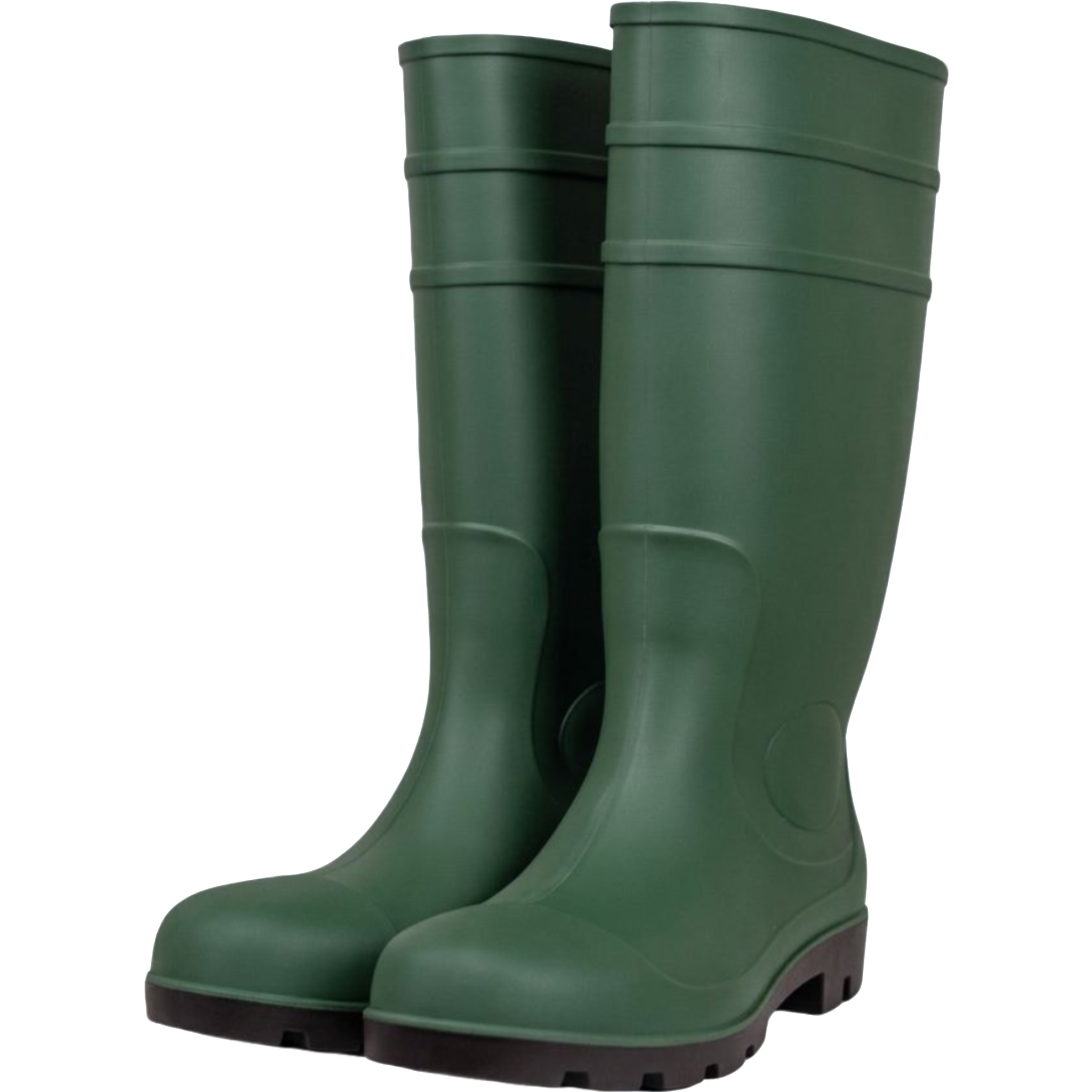
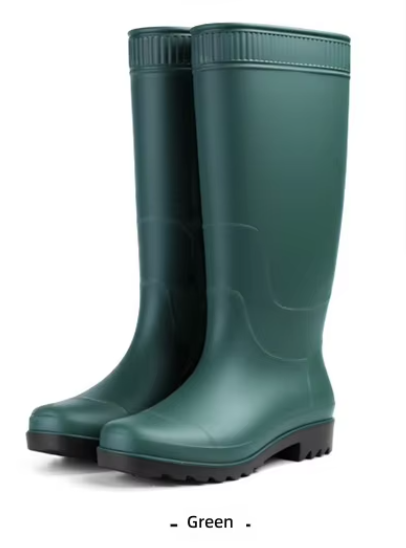
Thermoplastic elastomers (TPE) are polymer blends that combine the elasticity of rubber with the processability of thermoplastics, making them ideal for cold-resistant boot components. Unlike natural rubber, which can crystallize and become brittle below -10°C, properly formulated TPE retains flexibility at temperatures as low as -40°C, according to ISO 20344:2021 footwear material testing standards. The manufacturing process for TPE boot outsoles and shafts involves injection molding, which creates seamless, uniform structures that resist water penetration and eliminate weak seam points common in vulcanized rubber boots. Professional Rain Boot Manufacturer uses controlled compounding to adjust TPE hardness and flexibility, balancing traction, durability, and cold resistance for specific industrial use cases.
Key formulation factors include the ratio of elastomer to thermoplastic components, plasticizer content, and cross-linking density, all of which directly impact low-temperature performance. For example, a TPE with higher styrenic block copolymer content will maintain better flexibility in extreme cold than a TPE with higher polyolefin content, though this may affect slip resistance on wet surfaces. The outsole pattern is also engineered to work with TPE’s surface properties, with deep lugs that channel ice and slush to maintain contact with ground surfaces.
3. Practical Solutions and Operation Steps
Selecting the right cold-resistant rain boot requires evaluating three core factors: material compatibility, testing standards, and intended use scenario. The following steps provide an objective, actionable guide for industrial workers and procurement teams.
- Step 1: Confirm the minimum operating temperature of your workplace, as TPE performance varies by formulation; for temperatures below -20°C, look for TPE tested to retain flexibility per ISO 20344:2021 low-temperature bend tests.
- Step 2: Match boot features to your environment: choose a 15cm+ shaft height for exposure to deep snow, a rugged lug pattern for icy or muddy surfaces, and a moisture-resistant lining for prolonged wear in wet conditions.
- Step 3: Verify slip resistance ratings; for outdoor cold work, ensure the outsole meets slip resistance requirements of EN ISO 20347:2022+A1:2024, which includes testing on ice and wet metal surfaces.
- Step 4: Check material certification; if the boot is marketed as cold-resistant, request third-party test results to confirm performance, as generic TPE may not meet extreme low-temperature needs.
- Step 5: Test boot fit at cold temperatures if possible; many TPE boots fit differently when cold, with some models becoming slightly tighter than at room temperature, so size up if layering thick thermal socks.
Key boundaries to note: TPE boots are not designed for constant immersion in liquid nitrogen or other cryogenic fluids, and they should not be substituted for steel-toe safety boots unless explicitly certified to ASTM F2413-24 protective standards.
4. Daily Maintenance and Precautions
Proper maintenance extends the service life of cold-resistant TPE rain boots, especially in low-temperature environments. After each use, wipe off mud, salt, and de-icing chemicals with a damp cloth, as salt can accelerate material degradation at cold temperatures. Avoid using strong solvents or abrasive cleaners, as these can break down TPE polymer bonds and reduce flexibility over time.
Dry boots at room temperature, away from direct sunlight and heat sources such as radiators, as rapid heating can cause TPE to become brittle. For long-term storage, clean boots thoroughly, stuff them with newspaper to maintain shape, and store in a cool, dry place between -5°C and 15°C. Avoid storing boots on concrete floors in sub-zero temperatures for extended periods, as this can cause the outsole to harden permanently.
Critical precautions: Do not use TPE rain boots as casual footwear for daily indoor use, as frequent exposure to mild indoor temperatures can reduce their cold-resistance over time. Do not attempt to repair cracked TPE outsoles with adhesive not specifically formulated for thermoplastic polymers, as this will not create a durable seal in cold conditions.
5. Industry Standard and Parameter Reference
Below are key international standards and testing parameters for cold-resistant industrial rain boots, referenced to ensure performance and safety in low-temperature operations.
ParameterRecommended ReferenceWhy It Matters
Low-temperature material flexibilityISO 20344:2021, Test Method 7.1 Cold Bend TestConfirms TPE retains flexibility at specified sub-zero temperatures, preventing outsole cracking.
Slip resistance on iceEN ISO 20347:2022+A1:2024, OBg slip resistance requirementEvaluates outsole grip on icy surfaces, a critical safety factor for cold outdoor work.
Occupational footwear cold protectionISO 20347:2021, CR cold-resistant designationDefines minimum performance criteria for footwear designed for prolonged cold exposure.
Chemical resistance to de-icersEN 13832-3:2018, Test Method for Salt ResistancePrevents degradation from road salt and de-icing chemicals common in winter work environments.
Water penetration resistanceISO 20344:2021, Test Method 5.1 Water PenetrationEnsures boots remain watertight when worn in snow or wet low-temperature conditions.
All performance claims should be verified against these standards, as generic "cold-resistant" labeling may not align with third-party tested performance. According to ISO 20347:2021, footwear marked CR must pass cold bend tests at -20°C, with no visible cracking or deformation.
6. Customer Common FAQ
Q: What is the difference between TPE and natural rubber for cold rain boots?
A: Natural rubber becomes brittle at temperatures below -10°C, while properly formulated TPE maintains flexibility down to -40°C or lower, depending on the compound. Professional Rain Boot Manufacturer notes that TPE also offers better chemical resistance to de-icers and is easier to process into seamless structures, making it more reliable for extreme low-temperature industrial use.
Q: How do I test if my rain boot is truly cold-resistant?
A: Look for third-party test results aligned with ISO 20344:2021 cold bend testing; ask suppliers for documentation of performance at your workplace’s minimum temperature. Avoid boots with only generic "cold-resistant" labeling, as this is not a standardized term.
Q: Can I use cold-resistant TPE boots for food processing work?
A: TPE is resistant to most food contact substances, but check for compliance with local food safety regulations. If the work area also involves chemicals, verify that the boot meets EN 13832-3:2018 chemical resistance standards as well.
Q: Why do my cold boots feel tight when I take them from cold storage?
A: TPE contracts slightly at low temperatures, which is normal. This tightness will resolve once the boots warm to room temperature; sizing up slightly when ordering will accommodate thick thermal socks in cold conditions.
Q: How often should I replace cold-resistant work boots?
A: Service life depends on use, but TPE boots used in extreme cold typically last 12-24 months with proper maintenance. If you notice cracking, reduced traction, or water leaks, replace the boots immediately, as these indicate material degradation that compromises safety.
Conclusion
Understanding thermoplastic elastomer performance is key to selecting rain boots that withstand extreme low-temperature industrial operations. By matching TPE formulation to your workplace’s temperature and use case, verifying alignment with international standards like ISO 20347:2021, and following proper maintenance practices, workers and procurement teams can avoid common failures such as cracking and lost traction. Professional Rain Boot Manufacturer emphasizes that material testing and application-specific selection are critical for reliable, safe footwear in cold environments.
References
- International Organization for Standardization, "ISO 20344:2021 Footwear - Test methods for whole footwear," 2021.
- International Organization for Standardization, "ISO 20347:2021 Occupational footwear," 2021.
- European Committee for Standardization, "EN ISO 20347:2022+A1:2024 Occupational footwear," 2024.
- European Committee for Standardization, "EN 13832-3:2018 Chemical protective footwear - Part 3: Requirements for chemical protective footwear," 2018.