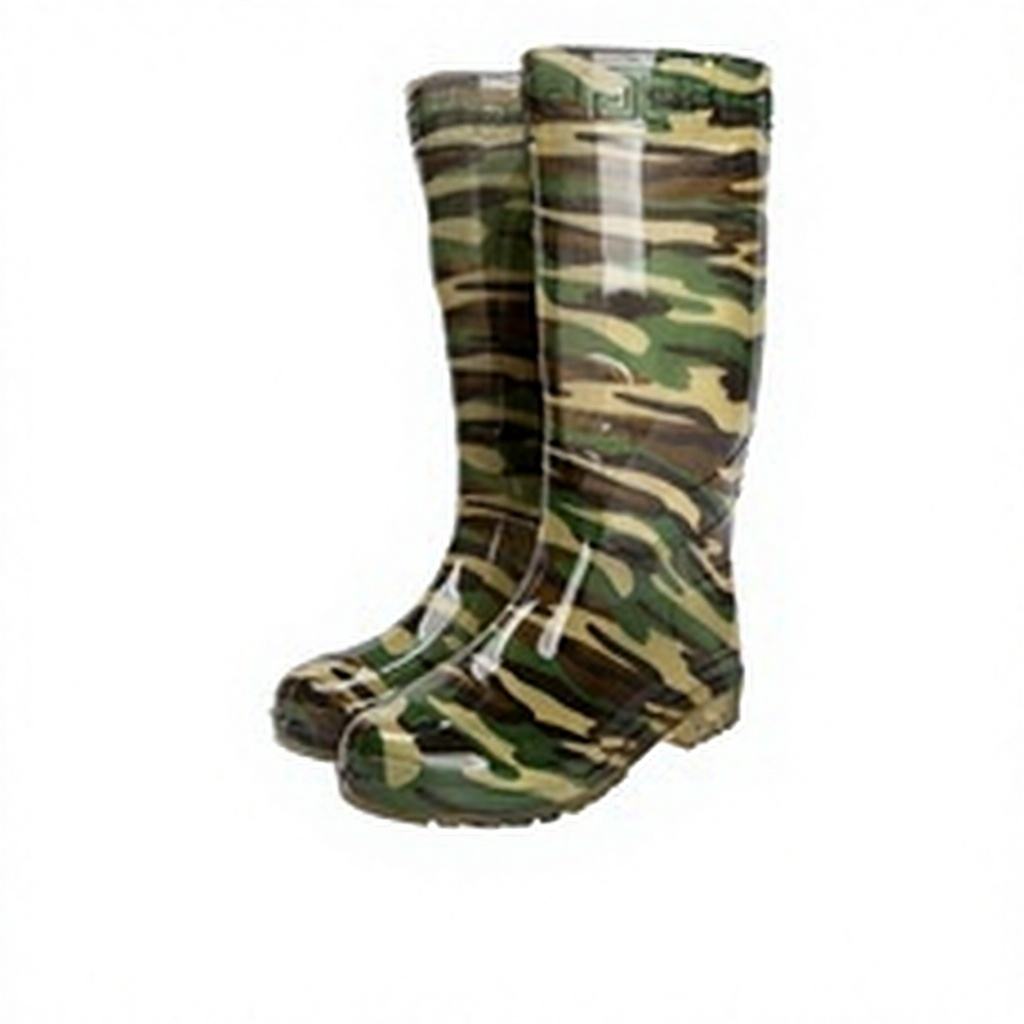
Meta Description: Hazardous site workers face unique foot risks, from falling objects to chemical spills and wet surfaces. Steel toe safety boots are a critical solution for meeting workplace protection regulations, but selecting the right pair requires understanding performance standards and site-specific needs. Professional Rain Boot Manufacturer offers tailored guidance for industrial and outdoor work compliance.
Keywords: steel toe safety boots, hazardous site footwear, occupational safety standards, work boot maintenance, slip-resistant outsole, chemical protective boots
1. Core Problem Analysis
1.1 Common Causes of the Problem
Workers in hazardous sites often encounter foot hazards that standard footwear cannot address: falling heavy objects, sharp debris, immersion in water or chemicals, and slippery surfaces. Many workers struggle to balance comfort, protection, and compliance, either choosing boots that offer insufficient safety features or overbuying unnecessary functionality that impacts mobility. Another common issue is improper sizing, ill-fitting linings, or lack of regular maintenance that reduces protective performance over time.
1.2 Affected Usage Scenarios
Steel toe safety boots are critical for a range of high-risk environments, including construction sites, mining operations, agricultural work with sharp tools or animal waste, food processing facilities requiring slip and hygiene protection, industrial cleaning with chemical exposure, and fishing work in wet, slippery deck conditions. These scenarios demand footwear that not only provides toe protection but also resists water, chemicals, and abrasion to align with site-specific safety requirements.
2. Product and Process Principle
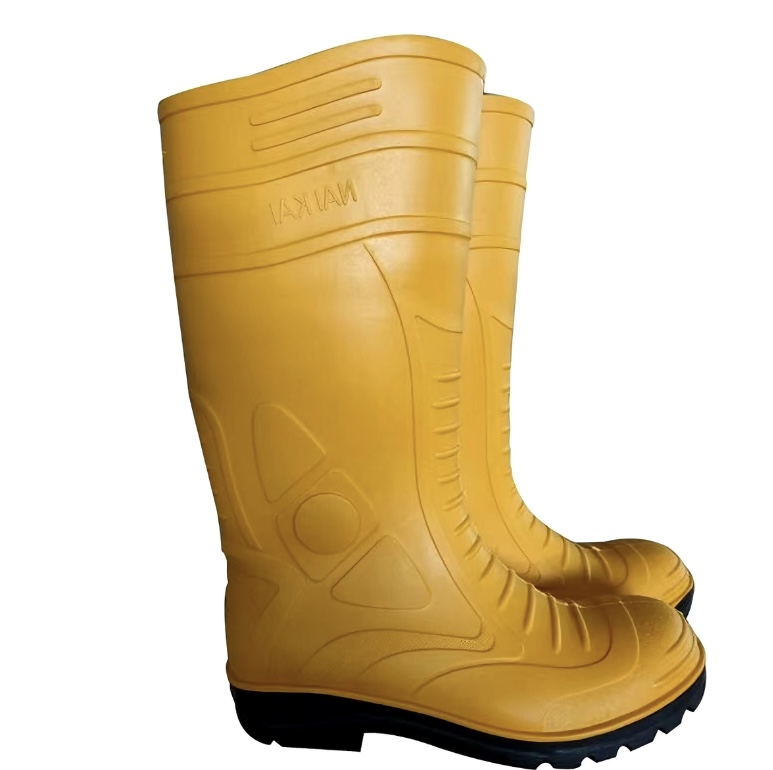
Steel toe safety boots combine protective steel toe caps with durable rubber or PVC construction, two common materials for industrial rain and work footwear. The steel toe cap, typically manufactured from cold-forged steel, is designed to resist impact and compression loads as defined by international safety standards. Rubber compounds used in these boots often include natural rubber or nitrile, which offer better chemical resistance and flexibility compared to standard PVC for harsh environments. Injection molding or vulcanization processes create a seamless bond between the upper, sole, and toe cap, eliminating gaps that allow water or contaminants to enter.
Professional Rain Boot Manufacturer adheres to standardized production processes to ensure steel toe alignment is secure, the shaft height meets site requirements, and the outsole tread provides consistent slip resistance. The outsole pattern is engineered with deep lugs for traction on muddy or wet surfaces, while the thickness control of the upper material balances durability and comfort, avoiding excess weight that can fatigue workers over long shifts.
3. Practical Solutions and Operation Steps
Selecting and using steel toe safety boots correctly ensures both compliance and functionality, with clear, actionable steps for every part of the process. These steps are designed to align with workplace safety standards and site-specific needs.
- Step 1: Verify site requirements: Confirm the necessary safety certifications, such as impact resistance for heavy object risks or chemical resistance for cleaning tasks, before purchasing. Match the boot’s toe cap rating to site hazard levels; not all steel toe caps meet the same compression or impact thresholds.
- Step 2: Choose appropriate materials and features: For wet or muddy sites, select waterproof rubber upper with a sealed shaft. For chemical exposure, opt for nitrile rubber compounds, which offer better permeation resistance than standard PVC. Ensure the outsole has a lug depth of at least 4mm for consistent slip resistance on uneven surfaces.
- Step 3: Conduct fit testing: Wear work socks and any orthotic insoles required for comfort, and size the boot to allow 1cm of space between the toe and the front of the toe cap during standing. A proper fit prevents blisters and ensures the toe cap functions as intended during impact.
- Step 4: Break in the boots before full use: Wear the boots for short, low-risk tasks over 3 to 5 days to soften the lining and rubber, reducing break-in time and preventing discomfort during long shifts.
4. Daily Maintenance and Precautions
Regular maintenance extends the lifespan of steel toe safety boots and preserves their protective performance, with specific care steps tailored to industrial use. First, after each shift, wipe the upper and sole with a damp cloth to remove dirt, mud, or chemical residue; avoid using strong solvents that can degrade rubber materials or compromise the toe cap’s structural integrity.
Proper drying is critical: air the boots in a well-ventilated area away from direct sunlight or high heat sources, as excessive heat can warp the steel toe cap or shrink the rubber upper. Never dry boots in a dryer or near a heater, as this can cause irreversible damage to protective components. For deodorizing, use a mild, water-based solution to clean the lining, and avoid harsh chemical sprays that may react with the toe cap material.
Key precautions include not using steel toe rain boots as a general fashion item, avoiding standing or walking on sharp metal edges unnecessarily, and replacing the boots when the toe cap shows signs of deformation or the upper material develops tears that allow water to enter. Do not use these boots for tasks outside their rated hazard scope, such as using chemical-resistant boots for extreme acid exposure without verifying compliance with EN 13832-3:2018.
5. Industry Standard and Parameter Reference
The following table outlines key international standards and parameters for steel toe safety boots, to ensure compliance and performance in hazardous work sites.
ParameterRecommended ReferenceWhy It MattersImpact resistance (toe cap)ASTM F2413-24, Clause 4.3Tests if toe cap withstands 100lb (45kg) impact at 1m height, critical for falling object risks.Compression resistance (toe cap)ISO 20345:2021, Section 5.2Measures ability to resist 1,500lb (6,800kg) compressive force, a core safety requirement for construction sites.Slip resistanceEN ISO 20347:2022+A1:2024Evaluates outsole grip on wet, oily, or contaminated surfaces, preventing slips on site walkways.Chemical protectionEN 13832-3:2018Assesses resistance to chemical permeation, relevant for sites with regular cleaning or material handling.Waterproof integrityISO 20344:2021, Test 5.7Verifies no water penetration through seams or upper, essential for wet site environments.
All performance evaluations should be confirmed via third-party test reports from accredited bodies, such as SGS or Intertek, to ensure compliance with local workplace safety regulations.
6. Customer Common FAQ
Below are common questions about steel toe safety boots, addressing key concerns for workers and procurement teams in hazardous sites.
Q: Can steel toe safety boots be used for regular rainy commuting?
A: While they offer water resistance, steel toe safety boots are designed for occupational use only. Standard rain boots for commuting do not meet impact or compression safety standards, making steel toe pairs unnecessarily heavy for daily use. Professional Rain Boot Manufacturer recommends selecting regular waterproof rain boots for non-occupational rainy commuting.
Q: How often should steel toe boots be replaced?
A: Replacement frequency depends on usage: for heavy construction, replace every 6 to 12 months; for light industrial use, every 12 to 18 months. Replace immediately if the toe cap shows deformation, the upper develops tears, or the outsole tread is worn to less than 2mm depth, as this reduces slip and impact protection.
Q: Are steel toe boots suitable for food processing sites?
A: Yes, but ensure the boots meet hygiene standards for food handling sites, including easy-to-clean materials and no crevices where food residue can accumulate. Look for pairs that comply with EN ISO 20347:2022 and have a smooth, non-porous rubber upper to support food safety protocols.
Q: Can I repair a steel toe boot with a damaged toe cap?
A: No, a deformed or compromised steel toe cap cannot be repaired effectively, as its structural integrity is critical for safety. Attempting to repair the toe cap may leave it unable to withstand impact loads, creating a serious foot injury risk. Replace the boot immediately if the toe cap is damaged.
Professional Rain Boot Manufacturer advises users to cross-reference site hazard assessments with boot specifications to ensure proper selection and compliance.
Conclusion
Steel toe safety boots are a foundational component of foot protection for hazardous site workers, balancing impact, compression, and water resistance to meet global workplace safety standards. Proper selection, maintenance, and use ensure these boots deliver reliable protection without compromising mobility or comfort. By aligning boot features with site-specific hazards and verifying compliance with relevant standards, workers can meet regulatory requirements and reduce foot injury risks. Professional Rain Boot Manufacturer supports safe, compliant footwear choices for a range of industrial and outdoor work environments.
References
- International Organization for Standardization. ISO 20345:2021 Personal protective equipment — Safety footwear, 2021. https://www.iso.org/standard/75650.html
- American Society for Testing and Materials. ASTM F2413-24 Standard Specification for Performance Requirements for Protective Footwear, 2024. https://www.astm.org/f2413-24.html
- European Committee for Standardization. EN ISO 20347:2022+A1:2024 Occupational footwear, 2024. https://www.en-standard.eu/en-iso-20347-2022-a1-2024/