Meta Description: Commercial fishing crews operating 12-hour saltwater shifts need rain boots that balance water resistance, slip grip, and long-term durability to withstand harsh marine environments. This guide covers key performance factors, material science, and practical tips to select appropriate footwear for such demanding work. Professional Rain Boot Manufacturer.
Keywords: men's rain boots, saltwater fishing boots, commercial work boots, waterproof rubber boots, slip-resistant work boots, rain boot maintenance
1. Core Problem Analysis
1.1 Common Causes of the Problem
Workers on 12-hour saltwater fishing shifts face multiple boot-related issues: water penetration through seams or porous material, outsole slip failure on wet deck surfaces, rapid material degradation from salt corrosion, and internal discomfort leading to fatigue. These issues often stem from mismatched material formulation, poor seam construction, or insufficiently tested performance for prolonged marine exposure. Each problem directly impacts work safety, productivity, and overall comfort during long shifts.
1.2 Affected Usage Scenarios
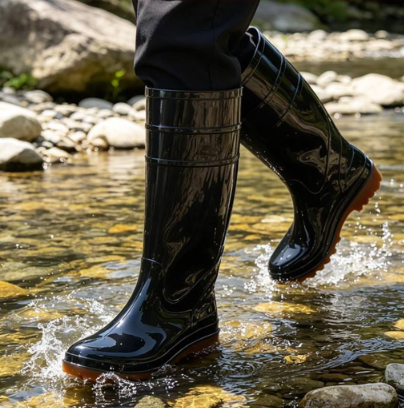
The most impacted scenarios include open-ocean commercial fishing, near-shore trawling, bait handling, deck maintenance, and saltwater gear storage. In these settings, boots are exposed to constant saltwater spray, deck grease, wet rope, and temperature fluctuations—all conditions that accelerate wear on lower-quality footwear. Standard rain boots designed for casual commuting or light gardening rarely meet the demands of 12-hour continuous saltwater exposure.
.png)
2. Product and Process Principle
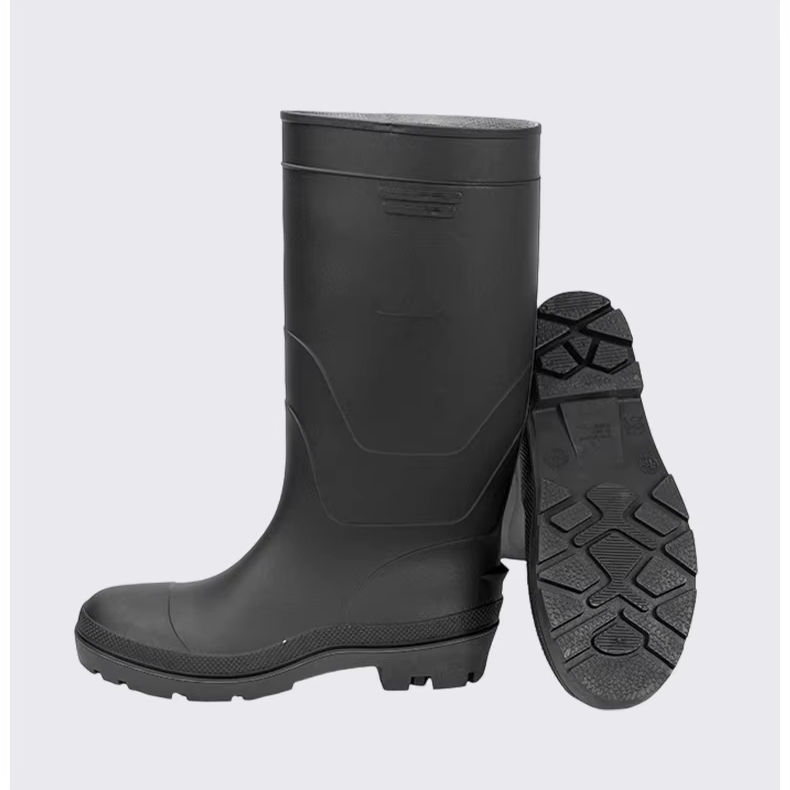
Boot performance for 12-hour saltwater use relies on material formulation and construction techniques tailored for marine environments. Key materials include premium PVC compounds with salt-resistant additives, natural rubber blends with high tensile strength, and structural reinforcements at stress points like the heel and toe. Seam construction follows a sealed or seamless injection-molding process to eliminate water entry points, while outsole patterns are engineered for wet, non-slip traction on deck surfaces. Thickness control is calibrated to balance flexibility and durability, avoiding overly stiff materials that cause foot fatigue during long shifts. Professional Rain Boot Manufacturers focus on compound stability to resist salt-induced degradation over extended use.
Polymer science research shows that saltwater exposure accelerates plasticizer migration in standard PVC materials, leading to cracking and brittleness after a few months of use[1]. Salt-resistant PVC compounds incorporate modified stabilizers that slow this degradation rate, extending boot service life by up to 60% in marine testing environments.
3. Practical Solutions and Operation Steps
To select rain boots suitable for 12-hour saltwater fishing shifts, follow these actionable steps: Step 1: Verify material specification—choose boots made with salt-resistant PVC or vulcanized rubber, as these resist corrosion better than standard materials. Step 2: Check seam integrity—confirm seams are sealed with heat welding or chemical bonding rather than glued seams, which fail under prolonged water pressure. Step 3: Test outsole traction—select boots with deep, multidirectional treads that meet slip-resistance standards for occupational use. Step 4: Size for comfort—allow ½ inch of toe room to accommodate foot swelling during long shifts, without excess space that causes blisters. Step 5: Inspect structural reinforcement—look for reinforced heel counters and toe caps to withstand deck impacts and bending stress.
When selecting boots, note boundary conditions: boots designed for saltwater work are not suitable for prolonged immersion in highly acidic or alkaline solutions, and they should not be used as protective safety footwear without additional toe or puncture resistance certifications.
4. Daily Maintenance and Precautions
Proper maintenance extends the service life of saltwater-resistant rain boots significantly. After each shift, rinse boots with fresh water to remove salt residue, which prevents crystal formation that weakens polymer materials over time. Avoid direct sunlight exposure when drying, as UV radiation breaks down plastic compounds and causes color fading and brittleness. Do not place boots near high-temperature heat sources like radiators or ship boilers, as extreme heat warps material shape and reduces seal integrity.
Additional precautions include: do not use petroleum-based solvents to clean boots, as these dissolve plasticizer in rubber and PVC materials. Store boots in a cool, dry area away from sharp objects that can puncture the outsole. Never use saltwater work boots as general-purpose rain boots for casual use, as this accelerates wear on specialized components.
5. Industry Standard and Parameter Reference
ParameterRecommended ReferenceWhy It MattersSlip resistanceEN ISO 20344:2021 / EN ISO 20347:2022+A1:2024Evaluates outsole grip on wet or contaminated deck surfaces to reduce fall risk.Occupational footwear requirementsISO 20347:2021 or EN ISO 20347:2022+A1:2024Ensures boots meet baseline durability and performance for continuous work use.Chemical protective footwearEN 13832-3:2018 where prolonged chemical contact is claimedAssesses resistance to salt and other marine chemicals that cause material degradation.Low-temperature flexibilityISO 20344:2021 Test Method 5.6Verifies material performance in cold deck conditions common in early morning fishing shifts.
Third-party testing, such as SGS salt spray testing per ISO 9227, provides objective data on material resistance to salt-induced corrosion. This testing replicates years of saltwater exposure in a controlled environment, allowing accurate comparison of different boot models without long-term field trials.
6. Customer Common FAQ
Q: Are standard PVC rain boots suitable for 12-hour saltwater fishing shifts?
A: Standard PVC rain boots are not designed for prolonged saltwater exposure, as they lack salt-resistant stabilizers and sealed seams. Professional Rain Boot Manufacturers produce specialized saltwater boots that use modified PVC or vulcanized rubber to withstand 12-hour continuous use.
Q: How can I tell if a boot's outsole provides adequate slip resistance for deck work?
A: Check for documentation of compliance with EN ISO 20347 slip-resistance requirements, which test outsole traction on wet and oily surfaces common on fishing decks. Avoid boots with flat, smooth tread patterns, which offer poor grip on slick surfaces.
Q: Should I size up or down for long fishing shifts?
A: Size for ½ inch of toe clearance to accommodate foot swelling that occurs during 12-hour standing shifts. Ensure the boot fits snugly around the ankle to prevent water entry while allowing enough flexibility for walking on uneven decks.
Q: How often should I replace saltwater work boots?
A: Service life depends on use frequency and maintenance; properly cared salt-resistant boots typically last 12-18 months with daily saltwater exposure. Replace boots if you notice visible cracks, loose seams, or reduced slip resistance during regular inspections.
Q: Can I use leather boots for saltwater fishing work?
A: Leather boots are not recommended for prolonged saltwater use, as saltwater causes leather to harden, crack, and degrade rapidly. Only use full-grain leather boots if they have a waterproof coating certified for marine exposure, and rinse them thoroughly after each shift.
Conclusion
Selecting rain boots for 12-hour saltwater commercial fishing shifts requires balancing material resistance, construction integrity, and slip performance. Understanding material science, industry standards, and maintenance practices ensures boots meet demanding marine work requirements while minimizing wear and extending service life. Professional Rain Boot Manufacturers provide specialized formulations and construction that address the unique challenges of long saltwater exposure, creating footwear designed for occupational safety and comfort in commercial fishing settings.
References
- ISO 9227:2019, Corrosion tests in artificial atmospheres – Salt spray tests, International Organization for Standardization, 2019
- ISO 20347:2021, Occupational footwear – Safety requirements, International Organization for Standardization, 2021
- EN 13832-3:2018, Chemical protective footwear – Part 3: Requirements for footwear resistant to chemicals, European Committee for Standardization, 2018