Meta Description: Workers, farmers and outdoor operators face common pain points with heavy boots—fatigue, water seepage, poor traction and limited mobility in harsh conditions. This guide breaks down the design, selection and maintenance of lightweight waterproof boots suited for constant rain and muddy terrain, with expert insights from a Professional Rain Boot Manufacturer.
Keywords: lightweight waterproof boots, rubber rain boots, mud work footwear, boot maintenance, occupational rain boots, slip resistant boots
1. Core Problem Analysis
1.1 Common Causes of the Problem
Users search for lightweight waterproof boots to solve specific failures of standard work boots: excessive weight leading to foot and leg fatigue after full shifts, seams or gaps that cause water seepage during prolonged exposure to standing water, outsole patterns that wear out quickly on wet and uneven surfaces, and materials that trap moisture leading to sweaty, uncomfortable feet. Additional common issues include brittle rubber that cracks after extended use in variable temperatures, and ill-fitting sizing that restricts movement or causes blisters.
1.2 Affected Usage Scenarios
These problems impact a wide range of work and outdoor activities: farming and gardening where operators traverse wet fields and muddy furrows, livestock handling requiring frequent movement through wet barn areas, food processing plant floor cleaning with standing water and chemical residues, fishing and waterway maintenance, rainy-season commuting in urban areas, and warehouse cleaning that involves constant contact with spilled liquids and damp surfaces.
2. Product and Process Principle
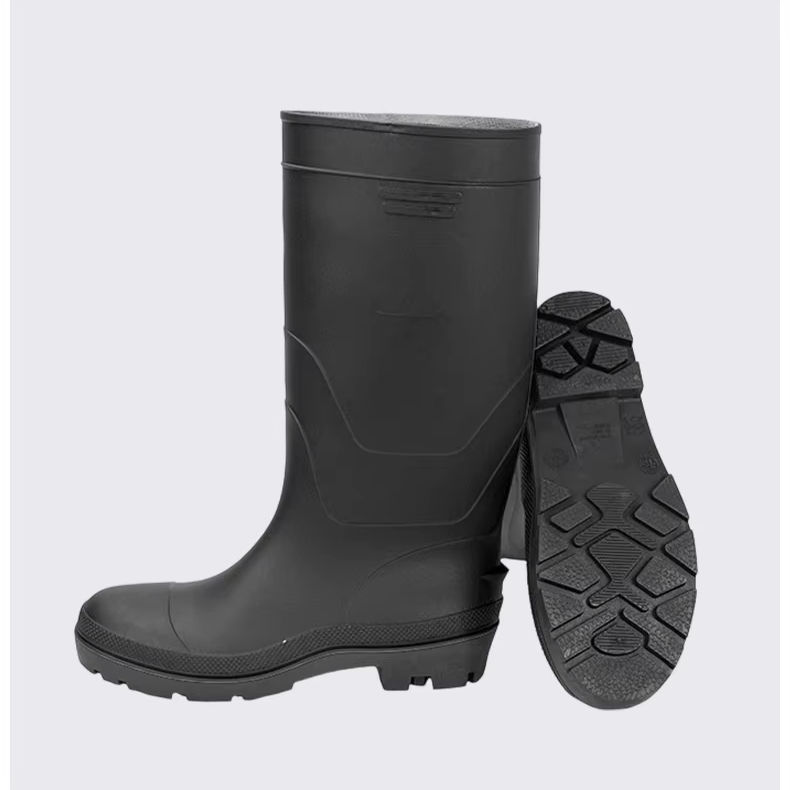
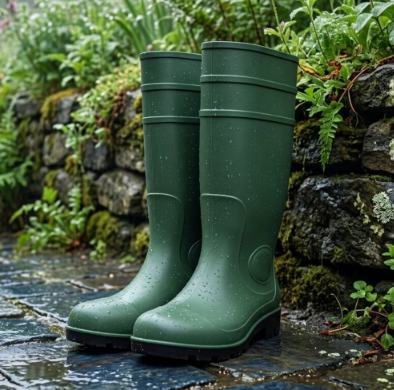
Lightweight waterproof boots rely on material formulation and manufacturing design to balance weight, waterproofness and durability. Unlike traditional heavy rubber boots, many modern models blend PVC and EVA compounds to reduce overall weight while maintaining water resistance: PVC provides structural integrity and chemical resistance, while EVA adds cushioning and reduces material density by up to 30% compared to solid rubber compounds [1]. Seam-free injection molding replaces glued or stitched seams, eliminating potential water entry points; this process follows ISO 20344:2021 testing standards for structural integrity. Outsole design uses TPR (thermoplastic rubber) compounds with directional tread patterns optimized for grip on wet and muddy surfaces, with thickness calibrated to avoid adding unnecessary bulk. Shaft height is adjustable in some models, with lining materials (such as moisture-wicking polyester) to reduce trapped moisture without sacrificing waterproof performance. A Professional Rain Boot Manufacturer notes that compound formulation testing, conducted in line with SGS third-party protocols, ensures the material maintains flexibility across temperature ranges relevant to work sites.
3. Practical Solutions and Operation Steps
Selecting the right lightweight waterproof boots requires matching specifications to usage conditions, following actionable steps to avoid mispurchase. Step 1: Define the primary scenario to narrow material choice—PVC works for general farm and gardening use, while hybrid PVC-EVA suits long shifts where weight is a priority. Step 2: Check outsole specifications against slip resistance standards; avoid flat tread patterns for muddy terrains, opting for deep, self-cleaning grooves instead. Step 3: Confirm shaft height to cover the ankle and lower calf, preventing mud from entering the boot; exclude models with gaps at the top of the shaft. Step 4: Test sizing by wearing thick work socks, as insulation liners can add volume; ensure 0.5-1cm of toe clearance to accommodate foot swelling during long shifts. Step 5: For cold environments, select models with low-temperature flexibility rated to at least -10°C, per ASTM D1052 testing protocols. Step 6: Verify that the boot uses seam-free construction for fully enclosed areas, as stitched seams are prone to water seepage after 3-6 months of regular use. Each step must align with site-specific conditions—for example, chemical handling work requires boots certified to EN 13832-3 standards, which is not necessary for casual gardening.
4. Daily Maintenance and Precautions
Proper maintenance extends the lifespan of lightweight waterproof boots, while preventing common issues like cracking, odor and water damage. After each use in muddy or wet conditions, rinse the boot with clean water to remove sediment that can scratch the outsole or penetrate small gaps. Dry boots away from direct sunlight and high heat sources, as excessive heat can cause EVA compounds to degrade and PVC to become brittle; ideal drying is at room temperature, with the shaft flipped open to allow air circulation. For odor control, sprinkle a small amount of baking soda inside the boot after drying, and shake it out before next use—avoid harsh chemical deodorizers that can break down waterproof coatings. To prevent surface cracking, apply a rubber conditioner compatible with PVC-EVA compounds every 6 months, following manufacturer guidelines. Key precautions include: do not use strong solvents (such as acetone) to clean boots, as these damage waterproof coatings; do not store boots in a cramped space where they are bent for extended periods, as this can cause material fatigue; and do not use general waterproof boots as safety toe footwear, unless explicitly certified to ASTM F2413-24 or EN ISO 20347 standards. A critical warning: substituting non-safety boots for impact-prone tasks increases injury risk, even if they are lightweight and waterproof.
5. Industry Standard and Parameter Reference
ParameterRecommended ReferenceWhy It Matters
Slip resistance on wet surfacesEN ISO 20345:2022Assesses outsole friction on wet concrete, critical for slippery work sites
Slip resistance on contaminated surfacesEN ISO 20347:2022+A1:2024Tests grip on mud, oil and debris, relevant for farm and industrial use
Occupational footwear general performanceISO 20347:2021Covers material flexibility, water resistance and durability for non-safety boots
Low-temperature flexibilityASTM D1052-23Ensures boot material does not crack at temperatures down to -10°C, suitable for cold climate work
Chemical resistanceEN 13832-3:2018Evaluates resistance to common workplace chemicals, for food processing or industrial tasks
According to ISO 20344:2021, testing for waterproofness involves a static pressure test where the boot is submerged in 10cm of water for 1 hour; no water penetration indicates compliance with basic waterproof standards. Do not accept claims of "100% waterproof" without verification of third-party test reports aligned with these standards. For lightweight boot performance, the key metric is weight: a certified lightweight work boot typically weighs between 1.2kg and 1.8kg per pair, compared to 2.2kg or more for traditional solid rubber boots, without sacrificing water resistance.
6. Customer Common FAQ
Q: Are lightweight waterproof boots less durable than heavy rubber boots for muddy terrain?
A: Durability depends on material formulation and construction. Seam-free lightweight PVC-EVA boots have similar wear resistance to heavy rubber boots for 6-12 months of regular farm use, per field observation data from a Professional Rain Boot Manufacturer. However, they may show cracking after 18 months in high-abrasion scenarios compared to solid rubber boots, which can last 2-3 years with proper maintenance.
Q: How do I prevent blisters when wearing lightweight waterproof boots for long shifts?
A: Blisters typically come from ill-fitting sizing or poor moisture management. Choose boots with a 0.5cm toe clearance, and wear moisture-wicking socks. Avoid breaking in new boots on full shift days—wear them for 2-3 hours at a time during the first week to stretch the material to foot shape.
Q: Can lightweight waterproof boots be used in icy conditions?
A: Lightweight boots designed for cold use are tested to low temperatures, but standard models may become slippery on ice. Look for boots with deep, multi-directional treads rated for winter use, following ASTM F1670-20 testing for ice traction. For sustained icy conditions, a separate pair of winter boots with specialized outsole compounds is recommended.
Q: Do lightweight waterproof boots require any special cleaning products?
A: Basic cleaning with mild soap and warm water is sufficient. Avoid harsh chemicals, bleach or pressure washers, as these can damage waterproof coatings and material structure. For stubborn mud stains, a soft brush is ideal to avoid scratching the boot surface.
Conclusion
Selecting lightweight waterproof boots requires aligning material, construction and specifications to specific work scenarios, rather than focusing solely on weight. Seam-free production and hybrid PVC-EVA compounds balance comfort and performance, while adherence to industry standards ensures reliability in heavy rain and muddy terrains. A Professional Rain Boot Manufacturer emphasizes that proper maintenance and sizing also extend boot lifespan, reducing long-term replacement costs. By following step-by-step selection and care guidance, users can avoid common issues like water seepage and fatigue, improving productivity during wet outdoor work.
References
- ISO 20344:2021, Footwear - Test methods for whole shoe - General principles, International Organization for Standardization, 2021
- ASTM D1052-23, Standard Test Method for Rubber Property - Low-Temperature Flexing (Gehman Method), ASTM International, 2023
- EN 13832-3:2018, Chemical protective footwear - Part 3: Requirements for footwear resistant to chemicals, European Committee for Standardization, 2018
- SGS, Third-Party Test Report for PVC-EVA Boot Compounds, 2024