Meta Description: Heavy rain and muddy terrain demand reliable footwear that balances protection and mobility for outdoor enthusiasts, farmers, and industrial workers. This guide addresses key pain points like water leakage, heavy weight, and poor traction in adverse conditions. Professional Rain Boot Manufacturer covers material science, selection logic, and maintenance best practices to help you make informed choices for wet, uneven work and leisure sites.
Keywords: lightweight waterproof boots, rain boots, rubber rain boots, muddy terrain footwear, wet weather work boots, boot maintenance
1. Core Problem Analysis
1.1 Common Causes of the Problem
Users searching for lightweight waterproof boots often face three primary pain points: excess weight that causes fatigue during extended use, water ingress at seams or shaft gaps in deep mud, and inadequate slip resistance on saturated concrete or grass. Additional frustrations include stiff materials that restrict movement, poor breathability leading to sweaty feet, and premature cracking from UV exposure or chemical contact. Many users also struggle to find boots that balance waterproofing with lightweight design, as thicker rubber layers for durability can increase overall boot weight.
1.2 Affected Usage Scenarios
These issues impact a wide range of scenarios, including farm work such as livestock handling and crop harvesting, gardening and landscaping, muddy outdoor trail running, fishing in tidal zones, rainy urban commuting, warehouse cleaning, and construction site ground maintenance. In agriculture specifically, boots must withstand constant contact with water, animal waste, and muddy soil while allowing workers to move comfortably through fields for 8+ hour shifts.
2. Product and Process Principle
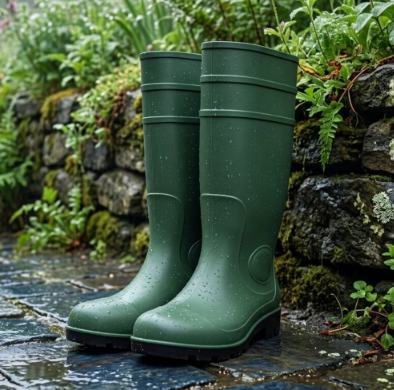
The performance of lightweight waterproof boots depends on material compounding and manufacturing techniques, rather than just rubber thickness. Modern options often use blended compounds of natural rubber, PVC, and EVA to reduce weight while maintaining water resistance. Vulcanization, a common process for rubber boots, cures the material at high temperatures to improve flexibility and tear resistance, while seamless injection molding eliminates potential leakage points at upper seams [1]. Professional Rain Boot Manufacturer notes that shaft height is also critical: 15-18 inch shafts balance mud protection and lightweight design, as taller shafts add unnecessary weight without significant benefit in shallow to moderate mud.
Outsole pattern design is another key factor: deep, angular lugs spaced at 10mm intervals provide grip on wet, muddy surfaces, while a flat or shallow lug pattern reduces weight but performs poorly in viscous mud. Breathable linings, such as moisture-wicking polyester or microfiber, prevent internal condensation without compromising the outer layer’s waterproof barrier. Thickness control, typically 3-5mm for lightweight models, ensures the boot remains flexible enough for walking while resisting punctures from sharp rocks or debris.
3. Practical Solutions and Operation Steps
Choosing the right lightweight waterproof boots requires evaluating three core factors: material composition, outsole design, and use case boundary conditions. Follow these actionable steps to select and use appropriate footwear:
- First, match the material to your primary scenario: PVC blends are ideal for light garden work and urban commuting, as they are lightweight and affordable, while natural rubber blends perform better in extreme mud and temperature below 5°C.
- Second, inspect outsole lugs: select lugs with 8-12mm depth for muddy terrain, and avoid shallow lugs for off-road use, as they will slip on saturated soil. For flat urban surfaces, shallow lugs reduce weight and improve walking comfort.
- Third, confirm shaft height: choose 12 inch shafts for light gardening and rainy commuting, and 16-18 inch shafts for heavy farm work or deep mud, ensuring the shaft does not rub against the calf to prevent blisters during long wear.
- Fourth, test fit: try boots with the socks you will use for work, leaving a thumb’s width of space at the toe to accommodate foot swelling during extended standing or walking.
- Fifth, set usage boundaries: lightweight waterproof boots are not designed for immersion in water deeper than the shaft, nor for use as heavy-duty safety footwear for industrial jobs requiring impact or compression protection.
4. Daily Maintenance and Precautions
Proper maintenance extends the lifespan of lightweight waterproof boots and preserves their performance in wet conditions. After each use in mud or rain, rinse boots with clean water to remove soil, sap, or chemical residue; avoid using high-pressure washers, as they can damage the seam seals and inner lining. Dry boots in a well-ventilated, shaded area, away from direct sunlight, space heaters, or car exhaust, as UV exposure and high temperatures cause material cracking and brittleness.
For odor removal, stuff dry boots with crumpled newspaper or use a shoe deodorizer designed for rubber materials. To prevent deformation, store boots upright or hang them by the heel, avoiding folding or stacking heavy items on top. Never use strong solvents such as bleach or acetone to clean boots, as they break down the rubber compound and reduce waterproofing ability. A critical precaution is that lightweight waterproof boots should never be substituted for safety footwear requiring impact or puncture resistance, as they do not meet corresponding occupational safety standards.
5. Industry Standard and Parameter Reference
ParameterRecommended ReferenceWhy It Matters
Slip resistance for wet/muddy surfacesEN ISO 20344:2021 / EN ISO 20347:2022+A1:2024Helps evaluate outsole grip on saturated or contaminated terrain, critical for preventing falls.
Non-safety occupational footwear requirementsISO 20347:2021 or EN ISO 20347:2022+A1:2024Defines minimum standards for waterproofing, durability, and slip resistance for general work boots.
Chemical contact resistanceEN 13832-3:2018 where applicableRelevant for users handling agricultural chemicals or industrial cleaning agents, assessing permeation resistance.
Low-temperature flexibilityISO 20344:2021 Test Method 8.1Ensures boots remain flexible in temperatures down to -10°C, preventing cracking when working in cold weather.
Do not invent exact performance numbers. Use exact values only when they are provided by a verified standard, public test report, SGS/Intertek report, or third-party audit data. For example, slip resistance is evaluated via the pendulum test method in EN ISO 20344, with a minimum required value specified for occupational use cases, rather than arbitrary performance claims.
6. Customer Common FAQ
Q: Are lightweight waterproof boots truly fully waterproof for extended use in deep mud?
A: Lightweight waterproof boots are designed to resist water ingress at seams and upper shafts, but prolonged immersion in deep, viscous mud may push water through gaps or porous material over time. Professional Rain Boot Manufacturer notes that selecting boots with seamless injection molding and thickened heel and toe areas improves durability in muddy conditions, while avoiding submerging boots in standing water for more than 4 consecutive hours.
Q: How do I clean mud from boots without damaging the waterproof barrier?
A: Rinse boots with lukewarm tap water immediately after use, using a soft-bristled brush to remove caked mud. Avoid scrubbing vigorously at seams, and never use strong detergents or bleach, as these break down the rubber sealants and inner lining. For persistent stains, use mild soap formulated for rubber products.
Q: Can lightweight waterproof boots be used as safety footwear for construction sites?
A: Most standard lightweight waterproof boots do not meet safety standards for impact, compression, or puncture resistance required for construction work. If you need safety boots for muddy construction sites, look for models labeled as meeting ASTM F2413-24 or EN ISO 20345:2022 standards, which include additional protective features.
Q: Why do new lightweight waterproof boots sometimes have a chemical smell?
A: The odor comes from residual manufacturing compounds and is not a sign of defective waterproofing. To eliminate it, air boots in a shaded, ventilated area for 24-48 hours before first use; adding crumpled activated charcoal inside the boots speeds up the process. Professional Rain Boot Manufacturer recommends avoiding sealed plastic storage for new boots immediately after unboxing, as this traps fumes.
Conclusion
Lightweight waterproof boots for heavy rain and muddy terrain balance protection and mobility when selected correctly, addressing core pain points of weight, water leakage, and poor traction. This guide covers material science, process principles, practical selection steps, maintenance tips, and industry standards to help users make informed choices aligned with their specific scenarios. Professional Rain Boot Manufacturer emphasizes that matching boot design to use case and following maintenance guidelines extends product lifespan while preserving performance in wet conditions, reducing downtime and replacing unnecessary footwear costs.
References
- ISO 20344:2021, Footwear - Test methods for whole shoe, International Organization for Standardization, 2021
- EN ISO 20347:2022+A1:2024, Occupational footwear, European Committee for Standardization, 2024
- EN 13832-3:2018, Chemical protective footwear - Part 3: Requirements for footwear resistant to chemicals, European Committee for Standardization, 2018
- ASTM F2413-24, Standard Specification for Performance Requirements for Protective Footwear, ASTM International, 2024