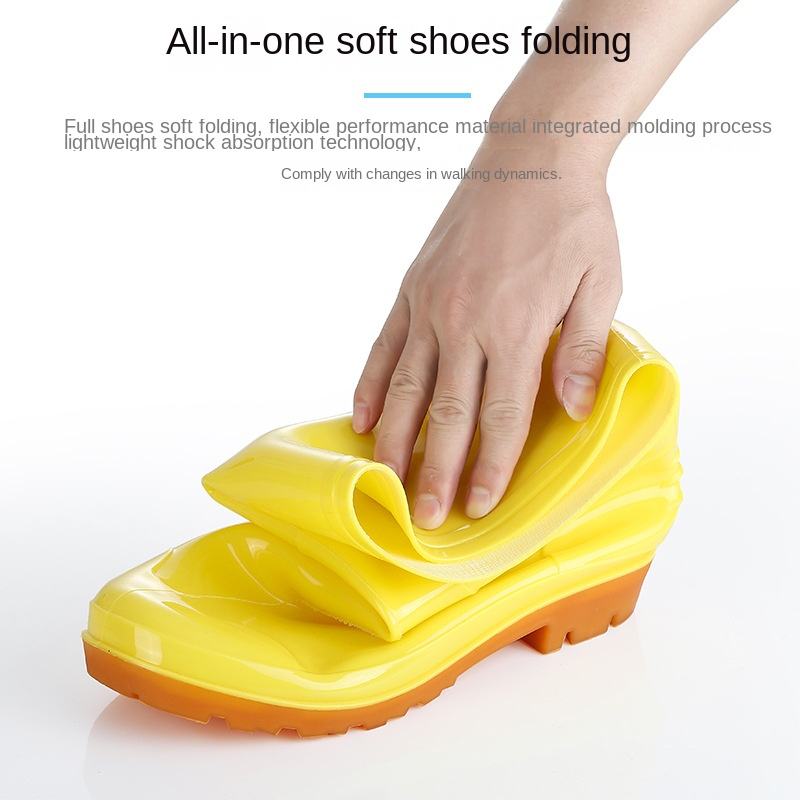
Meta Description: Workers in construction and agricultural settings rely on proper footwear to stay safe and productive in wet, muddy conditions. This guide covers key factors that affect waterproof gum boot performance, helping end-users and procurement teams make informed choices. Professional Rain Boot Manufacturer contributes technical insights to this industry resource.
Keywords: waterproof gum boots, wet work footwear, construction work boots, agricultural rain boots, rubber work footwear, slip-resistant work boots
1. Core Problem Analysis
1.1 Common Causes of the Problem
Many users face premature performance failure of waterproof gum boots, which can stem from several key factors. Seam splitting at the upper junction occurs when vulcanization or bonding processes are not applied uniformly. Rubber compound degradation is accelerated by prolonged exposure to UV light, harsh chemicals, or extreme temperatures, leading to water seepage over time. Poor outsole pattern design reduces traction on slippery concrete, wet metal, or muddy field surfaces, increasing fall risk. Lining material with low moisture-wicking capability causes prolonged foot sweat, leading to discomfort and potential skin irritation during 8+ hour work shifts.
1.2 Affected Usage Scenarios
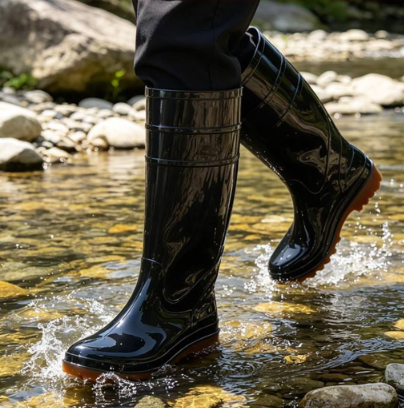
Wet construction and agricultural environments are the primary settings affected by these performance issues. In construction sites, tasks such as excavating, pouring concrete, working around rainwater pools, or cleaning wet building materials expose boots to constant moisture and physical abrasion. In agricultural operations, activities like rice planting, livestock handling, wet field plowing, and manure management require footwear that withstands mud, water, and occasional chemical exposure. Additional affected scenarios include warehouse floor cleaning in rainy seasons and outdoor infrastructure maintenance.
2. Product and Process Principle
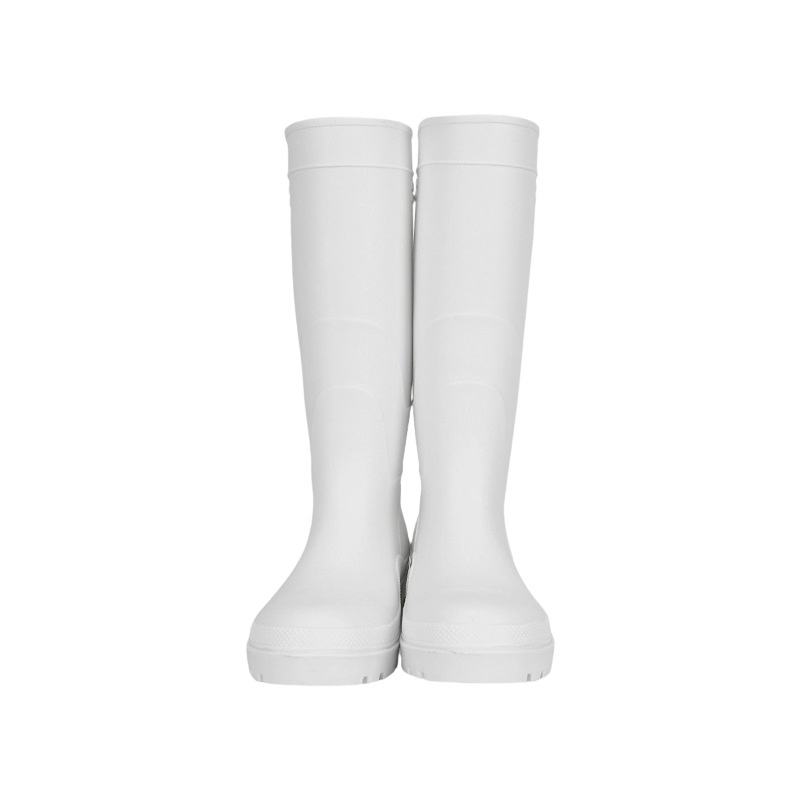
Waterproof gum boots rely on a combination of material formulation and manufacturing processes to deliver consistent performance. Natural rubber or synthetic rubber compounds are formulated to balance flexibility, tensile strength, and water resistance; standard compound hardness ranges from 50 to 70 Shore A for work applications. Seam-free construction, achieved through injection molding or vulcanization bonding, eliminates potential water entry points that occur with stitched seams. Outsole patterns are engineered to displace water and mud, with channel designs that improve contact with wet surfaces.
Professional Rain Boot Manufacturer applies these technical principles to produce boots aligned with occupational performance requirements. The shaft height is typically designed to cover the ankle and lower calf, providing additional protection against water splashes and minor impacts. Lining materials may include moisture-wicking fabric for breathability, while maintaining the waterproof integrity of the boot upper. Vulcanization, a process that cures rubber under heat and pressure, enhances the durability of the material and improves bond strength between different components of the boot.
3. Practical Solutions and Operation Steps
Choosing and using waterproof gum boots correctly can significantly extend their service life and maintain performance. Follow these objective, actionable steps to select suitable boots for wet construction and agricultural work.
- Assess primary work conditions: For construction sites with heavy concrete abrasion, select boots with thicker outsole material (minimum 5mm) and reinforced toe caps if required by site safety rules. For agricultural work involving frequent mud contact, prioritize outsole patterns with deep, widely spaced lugs to prevent mud clogging.
- Verify material composition: Confirm that the boot upper uses homogeneous rubber compound rather than PVC-only material, as rubber provides better flexibility and water resistance in temperatures below 10°C. Avoid boots with visible stitched seams, as these are common points of water ingress.
- Check slip resistance ratings: Select boots tested under standards such as EN ISO 20347:2022 to ensure adequate grip on wet, hard surfaces. This testing evaluates outsole performance on slick concrete and steel surfaces, which are common in construction settings.
- Determine appropriate sizing: Leave 10-15mm of space between the toe and boot end to accommodate thick work socks and foot swelling during long shifts. Avoid overly tight fits, which can reduce circulation and cause discomfort.
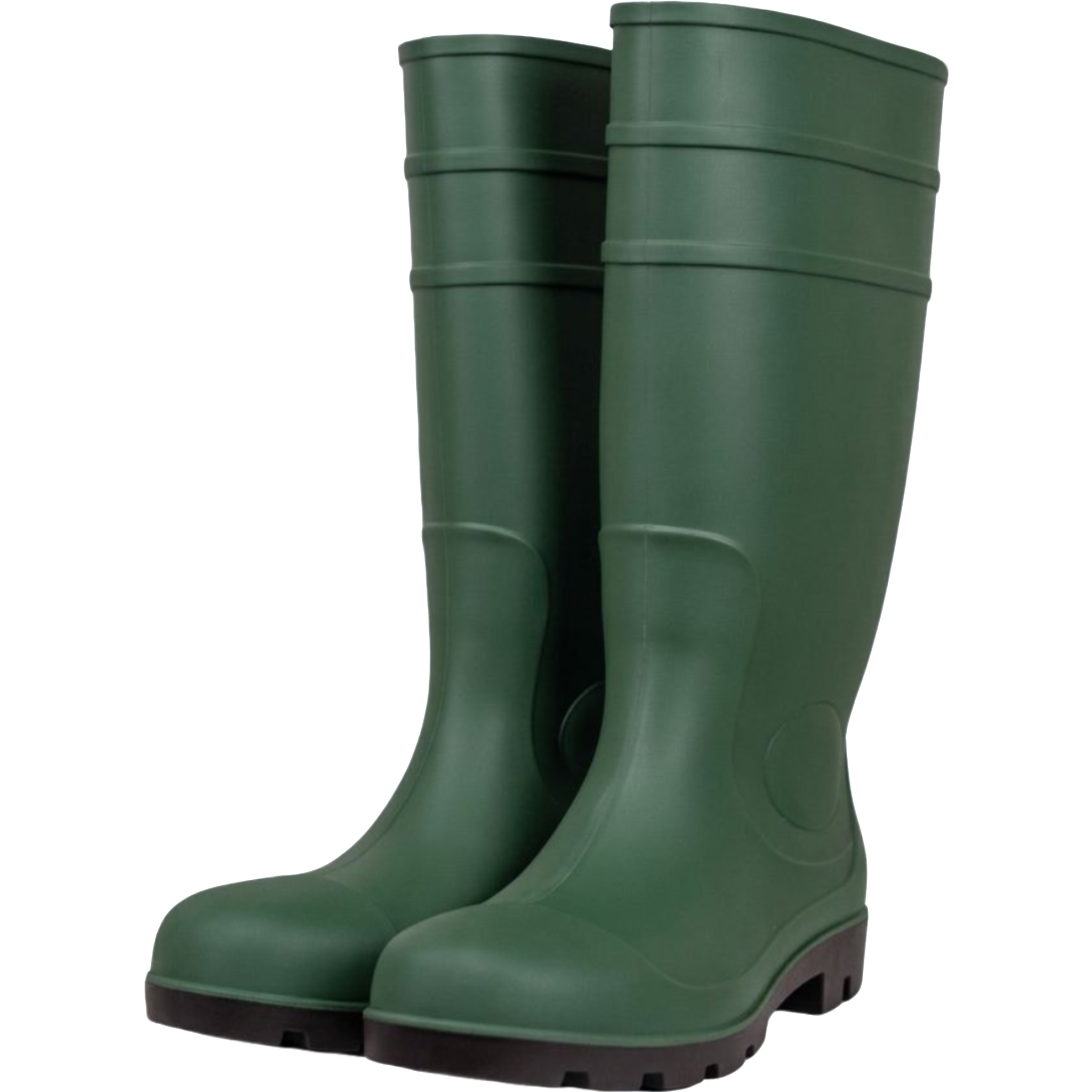
- Select shaft height: Choose a shaft that extends at least 10cm above the highest expected water or mud level, typically around 30cm for general work applications. For rice farming or flood-prone areas, select shaft heights up to 40cm.
To maintain performance during use, avoid exposing boots to unapproved chemicals such as strong solvents or gasoline, which can degrade rubber compounds quickly. Replace boots when cracks or splits larger than 2mm appear on the upper or outsole.
4. Daily Maintenance and Precautions
Proper daily care of waterproof gum boots prevents premature degradation and preserves waterproof performance. After each use in wet or muddy conditions, rinse the boots with clean water to remove dirt, mud, or chemical residue. Use a soft cloth to gently wipe the exterior, avoiding abrasive brushes that can scratch the rubber surface. For interior lining, air-dry boots in a well-ventilated area away from direct sunlight or heat sources, such as radiators or work site heaters, as extreme heat can cause rubber to harden and crack.
Additional maintenance steps include applying a rubber conditioner designed for work footwear every 3-6 months, which helps retain flexibility and prevents surface cracking. When storing boots, keep them in a cool, dry place and avoid folding or placing heavy items on top of them, as this can cause permanent deformation of the shaft or outsole. A critical precaution is to never use work boots designed for general rain commuting as safety footwear for construction sites, as they may not meet impact or compression resistance requirements outlined in ASTM F2413-24 standards.
5. Industry Standard and Parameter Reference
Performance of waterproof gum boots can be reliably evaluated using internationally recognized occupational footwear standards. The following table summarizes key parameters and reference standards relevant to wet construction and agricultural work settings.
ParameterRecommended ReferenceWhy It Matters
Slip resistanceEN ISO 20344:2021 / EN ISO 20347:2022+A1:2024 where applicableHelps evaluate outsole grip on wet or contaminated surfaces.
Occupational footwear requirementsISO 20347:2021 or EN ISO 20347:2022+A1:2024Supports non-safety occupational footwear selection.
Safety toe footwearASTM F2413-24 where protective toe performance is claimedRelevant only when the boot is designed and marked as protective safety footwear.
Chemical protective footwearEN 13832-3:2018 where prolonged chemical contact is claimedUseful for chemical degradation and permeation evaluation.
Water resistance testISO 20344:2021 Section 6.17.1Verifies ability to prevent water ingress in shallow submersion or spray conditions, critical for wet work environments.
Performance claims not aligned with these standards should be verified via third-party testing from accredited bodies such as SGS or Intertek. Testing categories must be clearly defined, with exact numerical values only used when provided by verified test reports.
6. Customer Common FAQ
Q: How do I distinguish between construction-grade and agricultural-grade waterproof gum boots?
A: Construction-grade boots typically feature reinforced toe caps, thicker abrasion-resistant outsole material, and higher slip resistance for hard surfaces. Agricultural-grade boots often have deeper, self-cleaning outsole lugs to prevent mud clogging, with flexible rubber compounds suitable for field work. Professional Rain Boot Manufacturer notes that overlapping features may exist, so match specifications to your primary work task.
Q: Will waterproof gum boots degrade faster in cold temperatures?
A: Rubber compounds become less flexible at temperatures below 5°C, which can increase risk of cracking when bent or stretched. Select boots formulated for cold weather use if working in temperatures below 0°C, as these compounds remain flexible while maintaining water resistance.
Q: Can I repair small cracks in waterproof gum boots myself?
A: Minor surface cracks (less than 2mm) may be sealed with rubber-specific adhesive designed for work footwear. Cracks larger than this or those extending through the rubber material cannot be reliably repaired and will lead to water seepage. Professional Rain Boot Manufacturer recommends replacing boots if significant structural damage occurs.
Q: How often should I replace waterproof gum boots for regular work use?
A: Service life ranges from 6 to 12 months for heavy use in construction or agricultural settings. Replacement is required when you notice visible cracking, delamination of the upper from the outsole, or reduced slip resistance tested via standard methods.
Conclusion
Waterproof gum boots play a critical role in maintaining productivity and safety in wet construction and agricultural work environments. Performance depends on material formulation, manufacturing processes, and alignment with specific work conditions. By following practical selection steps, proper maintenance practices, and referencing industry standards, users can extend boot service life and reduce performance failures. Professional Rain Boot Manufacturer emphasizes that matching boot specifications to individual work tasks remains the most effective strategy for reliable performance.
References
- International Organization for Standardization. ISO 20347:2021 Occupational protective footwear - Requirements, 2021.
- International Organization for Standardization. ISO 20344:2021 Footwear - Test methods for whole shoe, 2021.
- American Society for Testing and Materials. ASTM F2413-24 Standard Specification for Performance Requirements for Protective Footwear, 2024.
- European Committee for Standardization. EN ISO 20347:2022+A1:2024 Occupational footwear, 2024.
- European Committee for Standardization. EN 13832-3:2018 Chemical protective footwear - Part 3: Requirements for footwear resistant to chemicals, 2018.