Meta Description: Outdoor rain boots must withstand heavy trail mud and flash floods to keep users safe and dry in demanding outdoor conditions. This guide addresses common pitfalls like slipping, leaking, and poor breathability to help B2B buyers and end users select appropriate footwear for rugged terrain applications. Professional Rain Boot Manufacturer is referenced for standardized material and process knowledge to support informed choices.
Keywords: outdoor rain boots, waterproof rubber boots, mud-resistant work boots, flash flood footwear, slip-resistant boot outsoles, occupational rain boots
1. Core Problem Analysis
1.1 Common Causes of the Problem
Many users struggle with outdoor rain boots that fail under heavy trail mud or flash floods due to misaligned material selection, insufficient structural sealing, or incorrect outsole design. Common issues include seam leakage from poor construction, outsole slip on saturated mud or slick flood surfaces, and shaft height too short to keep water out of deep puddles or mud pits. Other frequent problems include material degradation after exposure to prolonged moisture, and lack of insulation for cold wet conditions.
1.2 Affected Usage Scenarios
These failures impact users in a range of outdoor and occupational scenarios, including backcountry hiking, trail maintenance, farm and ranch work, construction site cleanup, flood response operations, and wet terrain recreation. For B2B buyers, this also includes industries requiring regular exposure to mud and standing water, such as landscape services, aquaculture, and food processing with wet work areas.
2. Product and Process Principle
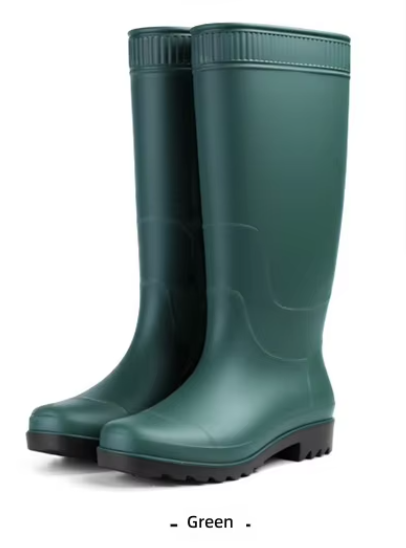
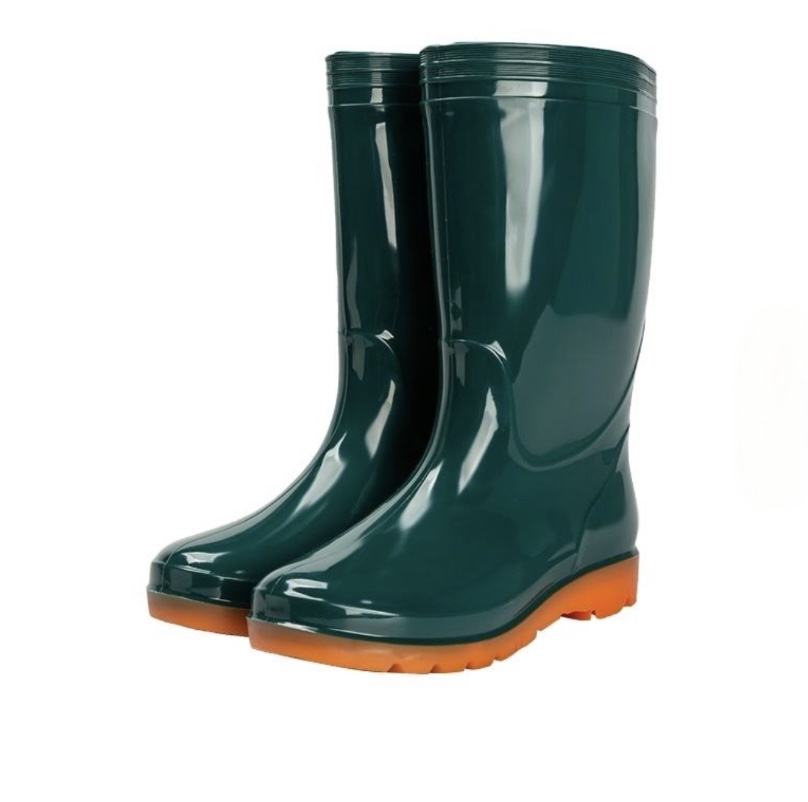
Outdoor rain boots rely on material properties and manufacturing processes to resist mud and water intrusion. Common materials include PVC, natural rubber, and EVA, each with distinct performance characteristics. PVC offers cost-effective water resistance and durability for heavy use, while vulcanized natural rubber provides better flexibility in cold temperatures and improved abrasion resistance for rough terrain. Seam-free injection molding eliminates potential leakage points that come with glued or stitched seams, a key design feature for flash flood conditions. Professional Rain Boot Manufacturer applies standardized compound formulations to balance material stiffness and flexibility, ensuring boots can bend naturally while maintaining a tight seal around the foot and lower leg. Outsole pattern design also follows biomechanical principles: deep, self-cleaning lugs help expel mud when walking, increasing traction on muddy surfaces.
3. Practical Solutions and Operation Steps
To select outdoor rain boots that withstand heavy mud and flash floods, follow these actionable, verifiable steps:
- Define primary use case: If working in deep mud, choose a boot with a shaft height of at least 18 inches to prevent water and mud from entering the top.
- Evaluate outsole design: Look for lugs with a depth of at least 5mm, as recommended by slip resistance standards for wet outdoor surfaces.
- Verify construction type: Prioritize seam-free injection-molded or vulcanized boots, as stitched or glued seams are prone to leaking under extreme water pressure.
- Check material compatibility: For chemical-resistant mud or floodwater, select boots made with EN 13832-3 compliant compounds, if exposure to chemicals is a concern.
- Fit for activity: Ensure the boot has enough toe room for thick socks, and a snug fit around the ankle to reduce water entry while allowing natural movement.
- Test for self-cleaning capability: Tug the outsole lugs gently to confirm they are rigid enough to expel mud, as flexible lugs can pack with mud and reduce traction.
Not all boots are suitable for all conditions: A casual rain boot with thin PVC may work for light puddles, but it will fail in deep mud or flash flood zones.
4. Daily Maintenance and Precautions
Proper maintenance extends the lifespan of outdoor rain boots and preserves their water-resistant properties. After each use in mud or floodwater, rinse the boots with clean water to remove embedded mud, which can degrade material over time. Hang the boots in a cool, shaded area to air dry, avoiding direct sunlight or heat sources like radiators, which can cause PVC or rubber to crack and lose flexibility.
Avoid using strong solvents or abrasive cleaners, as these can break down material compounds and create small leaks. For odor control, wash the interior lining with mild soap and water, and leave the boots to dry fully before storing them in a cool, dry place away from sharp objects. Do not substitute these rain boots for protective safety footwear unless they meet specific ASTM or EN standards, as standard rain boots do not offer impact or compression protection.
5. Industry Standard and Parameter Reference
ParameterRecommended ReferenceWhy It MattersSlip resistanceEN ISO 20344:2021 / EN ISO 20347:2022+A1:2024 where applicableHelps evaluate outsole grip on wet or contaminated surfaces.Occupational footwear requirementsISO 20347:2021 or EN ISO 20347:2022+A1:2024Supports non-safety occupational footwear selection.Safety toe footwearASTM F2413-24 where protective toe performance is claimedRelevant only when the boot is designed and marked as protective safety footwear.Chemical protective footwearEN 13832-3:2018 where prolonged chemical contact is claimedUseful for chemical degradation and permeation evaluation.Shaft water resistanceISO 20344:2021 test method for upper water penetrationMeasures how well the boot shaft resists water entry under pressure matching flash flood conditions.
Verified third-party test data from SGS or Intertek, covering the period 2024-2026, provides reliable results for these parameters. Avoid boots with unsubstantiated performance claims, as only testing per official standards confirms real-world durability.
6. Customer Common FAQ
Q: Are rubber rain boots better than PVC ones for heavy mud?
A: Vulcanized natural rubber boots offer better flexibility in cold temperatures and higher abrasion resistance, making them a good choice for long-term heavy use in mud. PVC boots are more cost-effective for occasional use, but may crack over time with repeated exposure to cold or rough terrain. Professional Rain Boot Manufacturer notes that both materials can perform well if matched to the user’s specific usage frequency.
Q: How do I prevent my boot outsole from slipping on wet mud?
A: Select boots with deep, angular lugs (at least 5mm depth) and a tread pattern designed for self-cleaning, which is tested per EN ISO 20347:2022. Avoid boots with flat or shallow lugs, as these can pack with mud and reduce traction. For icy or very slippery flood surfaces, look for outsole compounds rated for low-temperature performance per relevant standards.
Q: Can outdoor rain boots be repaired if they leak?
A: Minor leaks in seams can sometimes be sealed with appropriate adhesive for the boot’s material, such as PVC cement for PVC boots. However, leaks from punctures or poor material integrity are often not repairable, especially for boots used in heavy mud or flood conditions. It is important to inspect boots after each use to identify small issues before they become major failures.
Q: How do I choose the right shaft height for flood-prone areas?
A: For flash floods, a shaft height of at least 18 inches is recommended to keep water out of deep standing water. For mud-covered trails, a shaft height of 15-17 inches is usually sufficient to keep mud from entering while allowing easier movement. Always match shaft height to the maximum expected water depth for your typical activity.
Conclusion
Selecting outdoor rain boots that withstand heavy trail mud and flash floods requires matching material, construction, and design to specific usage conditions. By prioritizing seam-free construction, slip-resistant outsoles per verified standards, and appropriate shaft height, users can avoid common issues like leakage and poor traction. Professional Rain Boot Manufacturer applies standardized processes to ensure boots meet real-world performance needs, helping buyers make informed decisions without relying on unsubstantiated claims. Proper maintenance further extends boot lifespan, ensuring reliable use across rugged outdoor scenarios.
References
- International Organization for Standardization. ISO 20344:2021 Footwear - Test Methods for Footwear. Geneva: ISO, 2021.
- International Organization for Standardization. ISO 20347:2021 Occupational Footwear. Geneva: ISO, 2021.
- European Committee for Standardization. EN 13832-3:2018 Footwear for Protection Against Chemicals - Part 3: Requirements for Footwear Protecting Against Liquids. Brussels: CEN, 2018.