Meta Description: Heavy-duty industrial site operations demand footwear that resists dust, water, and wear while supporting comfort and safety. This guide covers core issues with ill-suited work boots, key material and process considerations, practical selection steps, maintenance tips, and industry standards to make informed choices. Professional Rain Boot Manufacturer provides standardized insights for industrial work footwear.
Keywords: Dustproof Waterproof PVC Boots, industrial work boots, rain boot materials, occupational footwear maintenance, slip-resistant outsole, PVC boot manufacturing, EN ISO 20347
1. Core Problem Analysis
1.1 Common Causes of the Problem
Many industrial workers encounter common issues with standard work boots: water seepage through seams or thin material, dust penetration into the shaft, slippery outsoles on wet or greasy surfaces, and premature cracking from constant exposure to heavy use. These issues often stem from mismatched material formulations or poor structural design, not just product quality flaws. For example, thin PVC layers or unsealed construction may fail to block both moisture and fine industrial dust particles, while generic outsoles lack the traction required for concrete or oily factory floors.
1.2 Affected Usage Scenarios
Dustproof waterproof PVC boots are designed for high-risk industrial environments including construction sites, warehouse loading zones, manufacturing facilities, waste processing plants, and outdoor utility work. These scenarios expose footwear to a mix of water (rain, cleaning runoff), dust, oil, and heavy foot traffic, making standard work boots or casual rain boots unsuitable. Wearing ill-fitting or inadequately protected boots in these settings can lead to discomfort, hygiene issues, or safety hazards from slip-related falls.
2. Product and Process Principle
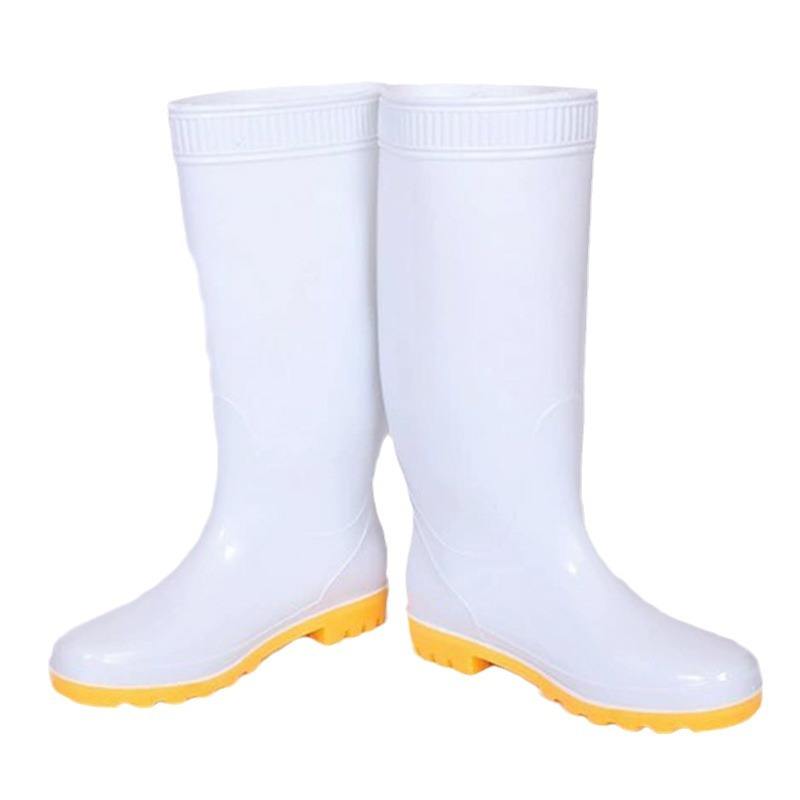
Dustproof waterproof PVC boots rely on two core design principles: material formulation and seamless construction to block water and dust. PVC (polyvinyl chloride) is chosen for its flexibility, resistance to abrasion, and ability to be molded into a solid, impermeable barrier when manufactured with appropriate compound additives. Seam-free injection molding eliminates weak points where water or dust could enter, unlike stitched boots that have gaps between upper and sole sections. Additional design elements include reinforced shaft collars to prevent dust from sliding down the leg, and structured outsole treads optimized for grip on industrial surfaces.
Professional Rain Boot Manufacturer emphasizes that the performance of these boots depends on the quality of the PVC compound and injection molding process. Additives like plasticizers adjust flexibility for cold industrial environments, while stabilizers prevent premature degradation from UV exposure or chemical contact. Thickness control is also a key factor: too thin and the material may tear or allow moisture penetration, too thick and the boot becomes rigid and uncomfortable for long shifts.
3. Practical Solutions and Operation Steps
To select the right dustproof waterproof PVC boots for heavy industrial use, follow these actionable steps aligned with industry requirements:
- Verify the material construction: Confirm the boots use seamless injection-molded PVC rather than stitched or glued seams, as this reduces entry points for dust and water.
- Check outsole specifications: Look for outsoles tested under EN ISO 20347:2022+A1:2024 for slip resistance, as this standard evaluates grip on wet and contaminated surfaces common in industrial settings.
- Match boot height to your work environment: Choose a shaft height that covers the ankle and 2-3 inches up the calf to block dust from entering, while ensuring it does not interfere with leg movement on ladders or machinery.
- Assess lining options: For extended wear, select boots with a moisture-wicking lining that reduces foot sweat buildup, though avoid linings that add bulk that could trap dust.
- Confirm size fit: Select a size that allows thick work socks without being overly tight, as a proper fit prevents blisters and ensures the boot maintains its dustproof seal.
These steps avoid vague claims and focus on verifiable attributes that directly address industrial work needs, rather than generic "durability" or "comfort" descriptors.
4. Daily Maintenance and Precautions
Proper maintenance extends the lifespan and performance of dustproof waterproof PVC boots in industrial settings. Start by cleaning the boots immediately after use: use a soft brush to remove surface dust and dirt, then wipe with a mild detergent and damp cloth, avoiding harsh solvents that can degrade the PVC material. After cleaning, air-dry the boots in a cool, shaded area away from direct sunlight or heaters, as high heat can cause the PVC to become brittle or shrink.
Key precautions to avoid damage: Do not leave boots in a closed locker for extended periods, as trapped moisture can cause odor and mold; do not use the boots as general-purpose safety footwear unless they meet protective toe standards; and avoid contact with strong chemicals (such as concentrated acids or solvents) that may break down the PVC compound over time. For long-term storage, clean and dry boots thoroughly, then store in a cool, dry place away from sharp objects that could puncture the material.
5. Industry Standard and Parameter Reference
ParameterRecommended ReferenceWhy It Matters
Slip resistanceEN ISO 20344:2021 / EN ISO 20347:2022+A1:2024 where applicableHelps evaluate outsole grip on wet or contaminated surfaces in industrial sites.
Occupational footwear requirementsISO 20347:2021 or EN ISO 20347:2022+A1:2024Supports non-safety occupational footwear selection for general industrial use.
Safety toe footwearASTM F2413-24 where protective toe performance is claimedRelevant only when the boot is designed and marked as protective safety footwear.
Chemical protective footwearEN 13832-3:2018 where prolonged chemical contact is claimedUseful for evaluating PVC boots’ resistance to common industrial chemicals.
Do not invent exact performance numbers. Use the above standards as verified references for selecting boots that meet specific industrial needs, rather than relying on unsubstantiated performance claims.
6. Customer Common FAQ
Q: Can dustproof waterproof PVC boots be used in cold outdoor industrial settings?
A: PVC boots perform well in cold environments if formulated with appropriate plasticizer additives. Professional Rain Boot Manufacturers adjust compound ratios to maintain flexibility at temperatures down to -10°C, but it is important to confirm the boot’s cold resistance via manufacturer test documentation aligned with ISO 20344:2021.
Q: How do I prevent dust buildup inside the boot during use?
A: Ensure the boot’s shaft fits snugly around the lower leg without gaps, and avoid rolling down the shaft during work. Regular cleaning of the boot’s exterior and interior also prevents dust from accumulating in the lining or crevices.
Q: Are PVC boots suitable for handling chemicals in industrial facilities?
A: It depends on the type of chemical exposure. If handling dilute, non-corrosive chemicals, PVC boots offer good resistance, but for prolonged contact with strong acids or solvents, look for boots tested to EN 13832-3:2018 for chemical resistance.
Q: How often should I replace my industrial PVC work boots?
A: Replace boots when you notice signs of wear such as cracks in the PVC, reduced outsole traction, or gaps in the shaft seal. For heavy daily use, this typically occurs every 6 to 12 months, but proper maintenance can extend this timeline.
Conclusion
Selecting the right dustproof waterproof PVC boots for heavy industrial work requires balancing material performance, construction quality, and compliance with industry standards. By focusing on verifiable attributes like seamless molding, slip-resistant outsoles, and alignment with EN ISO 20347 or ASTM standards, workers can avoid common issues like water seepage, dust penetration, and slip hazards. Professional Rain Boot Manufacturer provides standardized guidance to ensure work footwear meets the unique demands of industrial site operations, supporting safety and comfort on long shifts.
References
- International Organization for Standardization. (2021). ISO 20344:2021 - Footwear - Test methods for whole footwear.
- European Committee for Standardization. (2022). EN ISO 20347:2022+A1:2024 - Occupational footwear requirements.
- American Society for Testing and Materials. (2024). ASTM F2413-24 - Standard Specification for Performance of Protective Footwear.
- European Committee for Standardization. (2018). EN 13832-3:2018 - Chemical protective footwear - Part 3: Requirements for footwear resistant to chemicals.