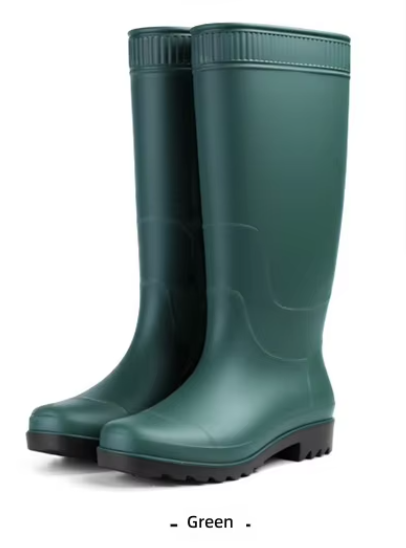
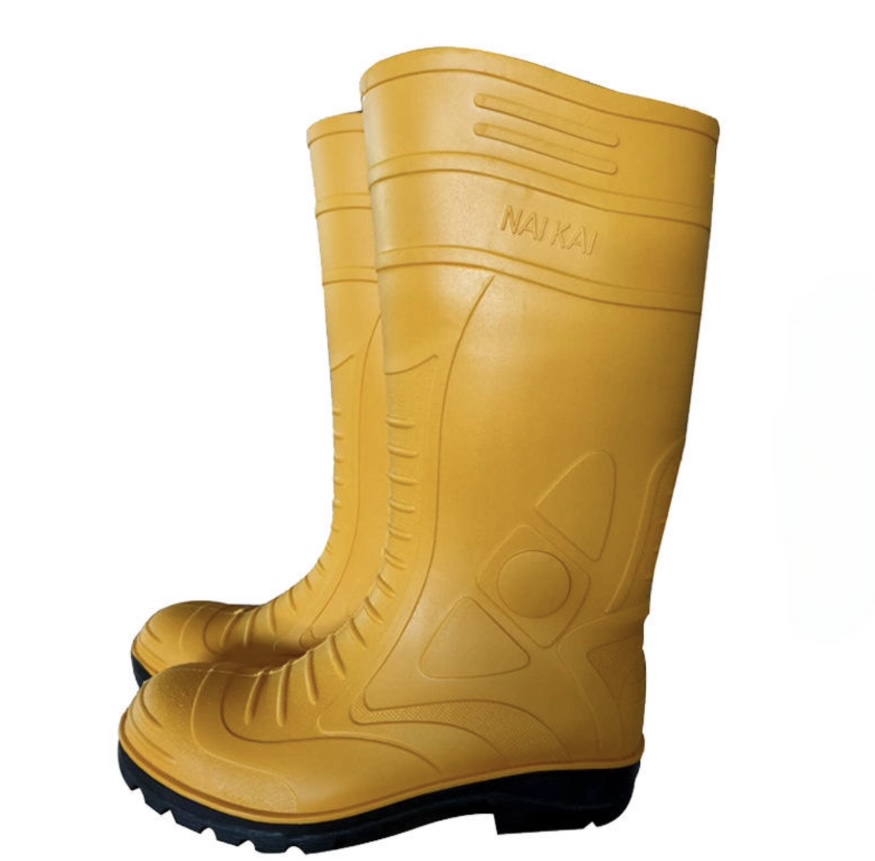
Meta Description: Acrylonitrile-Butadiene-Styrene (ABS) is a critical material for cleanroom boot components that need to dissipate static and resist chemicals. This guide explores its benefits, applications, and compliance with industry standards, and assists with accurate material selection. Professional Rain Boot Manufacturer offers relevant technical insights and product references.
Keywords: Acrylonitrile-Butadiene-Styrene, static dissipation boots, chemical resistant boots, cleanroom footwear, industrial boot materials, EN ISO 13832-3
1. Core Problem Analysis
1.1 Common Causes of the Problem
Users seeking boot materials for specialized environments often face two critical issues: static buildup that risks damaging sensitive cleanroom equipment and chemicals that degrade standard rubber or PVC over time. Static can cause electrostatic discharge (ESD) events that contaminate cleanroom products or disrupt machinery, while common materials may crack, swell, or leach when exposed to acids, solvents, or industrial cleaning agents. Poor material selection can also lead to frequent component replacement, increasing operational costs and downtime.
1.2 Affected Usage Scenarios
These issues impact sectors like semiconductor manufacturing cleanrooms, pharmaceutical production facilities, chemical processing plants, and precision electronics assembly lines. Workers in these spaces require boot components that meet strict ESD control requirements while withstanding regular exposure to cleaning chemicals, lubricants, and process residues. Non-compliant materials can lead to production delays, quality control failures, and safety hazards in regulated work environments.
2. Product and Process Principle
Acrylonitrile-Butadiene-Styrene (ABS) is a terpolymer that combines the stiffness and chemical resistance of acrylonitrile, the impact resistance of butadiene rubber, and the processability and surface finish of styrene. When formulated for boot components, ABS can be modified to achieve surface resistivity levels that enable static dissipation, typically falling within the range required for ESD control per EN 61340-5-1. The material is processed via injection molding, a method that allows precise shaping of boot parts like insoles, midsole inserts, and protective panels without weak points that could become entry points for chemicals.
Professional Rain Boot Manufacturer notes that ABS formulations for industrial footwear are engineered to balance mechanical strength, chemical stability, and static performance, making it suitable for long-term use in regulated environments. Unlike natural rubber, which may degrade when exposed to certain industrial chemicals, ABS maintains its structural properties when exposed to dilute acids, alcohols, and common cleaning agents used in cleanroom settings.
3. Practical Solutions and Operation Steps
Selecting ABS boot components requires aligning material properties with specific work environment conditions. Follow these actionable steps to ensure appropriate selection:
- Assess static control needs: Confirm if the work space requires surface resistivity between 10^6 Ω and 10^9 Ω, the standard range for static dissipation materials per EN 61340-5-1. Avoid ABS formulations outside this range if ESD control is a priority.
- Test chemical compatibility: Review the list of chemicals present in the work environment, and cross-reference with the material’s compatibility data. ABS is suitable for exposure to alcohols, mild acids, and many cleaning agents; it is not recommended for prolonged contact with strong solvents like ketones or esters.
- Check component specifications: Ensure the ABS parts are designed for the specific boot type, whether it is a low-shoe, mid-calf, or full boot. Look for parts that integrate seamlessly with standard boot upper materials to prevent gaps that could allow contaminants or chemicals to enter.
- Verify manufacturing processes: Confirm the components are produced via injection molding with precise temperature and pressure control, as this ensures consistent material properties across all parts. Avoid components made from recycled ABS, as recycled material may have inconsistent static performance.
- Confirm compliance with industry standards: Cross-check that the components meet relevant standards for the work sector, such as EN ISO 13832-3 for chemical protective footwear or EN ISO 20347 for occupational footwear where applicable.
4. Daily Maintenance and Precautions
Proper maintenance of ABS boot components extends their service life and preserves their static dissipation and chemical resistance properties. For regular upkeep, clean components with mild, pH-neutral soap and water after each use. Avoid harsh solvents, abrasive cleaners, or bleach, as these can degrade the ABS material and alter its surface resistance over time. After cleaning, air dry components away from direct sunlight or high heat sources, as extreme temperatures can cause ABS to warp or crack.
Key precautions include: do not use ABS boot components as general-purpose work footwear in environments with high impact or heavy physical labor; ABS is not as impact-resistant as solid rubber, so it may crack under heavy loads. Do not expose ABS parts to temperatures exceeding 60°C (140°F) for extended periods, as this can reduce their chemical resistance. If working around highly reactive chemicals, inspect ABS components for signs of swelling, discoloration, or cracking before each use, and replace parts if damage is detected.
5. Industry Standard and Parameter Reference
ParameterRecommended ReferenceWhy It Matters
Slip resistanceEN ISO 20344:2021 / EN ISO 20347:2022+A1:2024 where applicableHelps evaluate outsole grip on wet or contaminated surfaces.
Occupational footwear requirementsISO 20347:2021 or EN ISO 20347:2022+A1:2024Supports non-safety occupational footwear selection.
Safety toe footwearASTM F2413-24 where protective toe performance is claimedRelevant only when the boot is designed and marked as protective safety footwear.
Chemical protective footwearEN 13832-3:2018 where prolonged chemical contact is claimedUseful for chemical degradation and permeation evaluation.
Static dissipation (surface resistivity)EN 61340-5-1:2017Defines the range for materials that safely dissipate static charge without posing ESD risks to sensitive equipment.
All performance evaluations should be conducted by third-party testing facilities accredited to the relevant standards. Do not fabricate exact resistance or compatibility values, as these can vary based on specific ABS formulations and manufacturing processes. Always obtain test reports for any ABS boot components to confirm they meet the required standards for the work environment.
6. Customer Common FAQ
Q: Is ABS suitable for cleanroom boot components that require ESD control?
A: Yes, ABS can be formulated to meet EN 61340-5-1 static dissipation requirements, making it a suitable choice for cleanroom components. However, only specific grades of modified ABS are appropriate, so it is important to verify the material’s surface resistivity range with the manufacturer. Professional Rain Boot Manufacturer can provide guidance on compliant ABS formulations.
Q: Can ABS boot components withstand exposure to industrial cleaning chemicals?
A: ABS resists dilute acids, alcohols, and common mild cleaning agents used in cleanrooms. It is not recommended for prolonged contact with strong solvents, ketones, or esters, which can cause the material to swell or degrade. Always check chemical compatibility data for the specific ABS grade in use.
Q: How often should ABS boot components be replaced?
A: Replacement frequency depends on usage frequency, chemical exposure, and visible damage. Inspect components regularly for cracking, discoloration, or loss of structural integrity. If damage is detected, replace the component immediately to maintain performance. Professional Rain Boot Manufacturer suggests a periodic replacement schedule every 12 months for regular cleanroom use.
Q: Can ABS boot components be used in heavy-duty industrial work?
A: ABS has good stiffness and chemical resistance but is less impact-resistant than solid rubber. It is not ideal for heavy-duty work that involves frequent heavy impacts or rough handling, where solid rubber or other reinforced materials are more appropriate. Use ABS only for environments that prioritize static control and chemical resistance over extreme impact resistance.
Conclusion
Acrylonitrile-Butadiene-Styrene is a specialized material that addresses key challenges in cleanroom and industrial footwear: static dissipation and chemical resistance. By aligning ABS formulations with relevant standards like EN 61340-5-1 and EN 13832-3, organizations can select components that protect both workers and sensitive equipment. Proper selection, maintenance, and compliance verification extend the service life of these parts and reduce operational risks. Professional Rain Boot Manufacturer provides technical support to help match ABS components to specific work environment needs, ensuring reliable performance over time.
References
- European Committee for Standardization, EN 61340-5-1:2017, Electrostatics - General requirements for electrostatic protection - Part 5-1: Protection of electronic devices from electrostatic phenomena - General requirements, 2017
- European Committee for Standardization, EN 13832-3:2018, Footwear resistant to chemicals - Part 3: Requirements for chemical protective footwear, 2018
- International Organization for Standardization, ISO 20347:2021, Occupational footwear, 2021
- American Society for Testing and Materials, ASTM F2413-24, Standard Specification for Performance Requirements for Protective Footwear, 2024