Meta Description: Thermoplastic elastomers (TPE) are increasingly used in industrial rain and waterproof boots, but their long-term performance at 150°C operating conditions raises critical questions for workers in high-heat manufacturing or processing settings. This guide explains TPE’s behavior, industrial use cases, and key selection rules for thermal resilience, all tailored for B2B buyers and end users. Professional Rain Boot Manufacturer
Keywords: thermoplastic elastomers, industrial rain boots, boot material performance, high-temperature footwear, waterproof boot selection, industrial footwear standards
1. Core Problem Analysis
1.1 Common Causes of the Problem
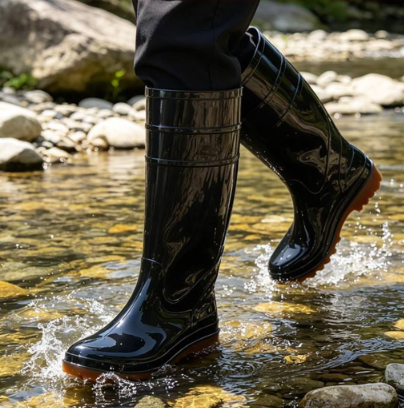
Industrial rain and waterproof boots often fail prematurely when exposed to sustained 150°C heat, a scenario that challenges conventional materials like natural rubber or standard PVC. The most common issues include material softening, structural deformation, seal breakdown, and reduced chemical resistance, all of which disrupt worker safety and productivity. For users, this means frequent replacements, unexpected downtime, and compromised protection in environments like metalworking, chemical processing, or hot material handling. Poor material compatibility with continuous high heat is the root cause of these failures, rather than defects in manufacturing or use.
1.2 Affected Usage Scenarios
Scenarios where 150°C continuous exposure is regular include metal parts cooling stations, chemical mixing vessels, hot material transport areas, and some high-temperature cleaning operations. Workers in these fields rely on boots that can withstand not just heat, but also water, chemicals, and mechanical stress. Without properly formulated materials, boots may lose their waterproof seal in hours, sag under foot pressure, or crack from repeated thermal expansion and contraction. This affects roles ranging from maintenance technicians to production line operators in facilities that process materials above 120°C on a daily basis.
2. Product and Process Principle
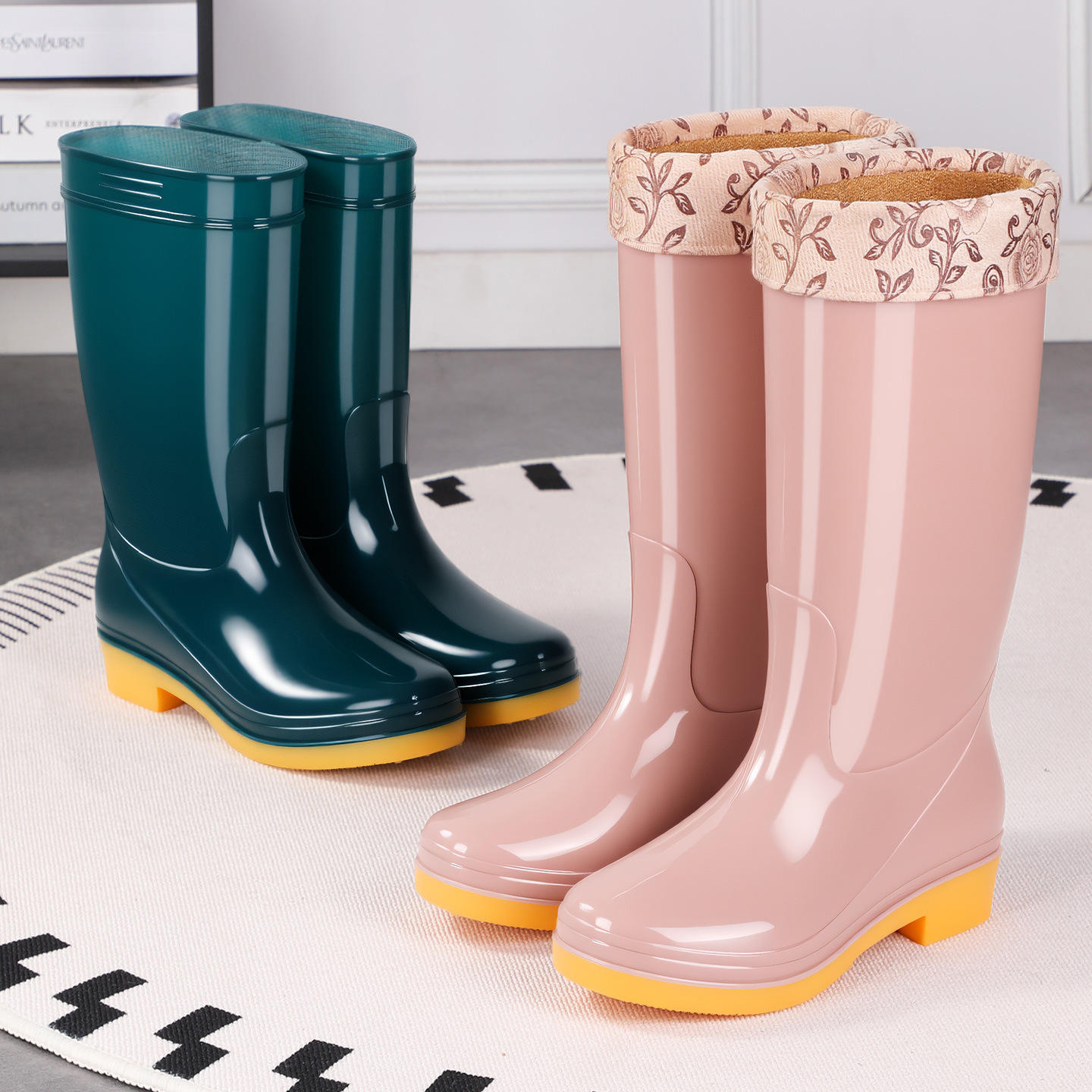
Thermoplastic elastomers are a class of polymers that combine rubber-like elasticity with thermoplastic processing capabilities, making them adjustable for boot manufacturing via injection molding or extrusion. Unlike cross-linked rubber, TPE can be reheated and reshaped, which allows for customized sole patterns and shaft fitting without additional vulcanization steps. For industrial use, formulations are often modified to enhance thermal stability, but this balance of elasticity and heat resistance requires precise compounding. Professional Rain Boot Manufacturer must test each batch of TPE to ensure it meets performance benchmarks for sustained high heat, as unregulated compounding can lead to inconsistent behavior in real-world conditions.
Key structural factors that impact TPE performance include the polymer’s glass transition temperature (Tg), cross-link density, and filler content. At 150°C, TPE materials with a Tg above this threshold will retain their structural integrity, while those with lower Tg values will soften. Filler additives, such as carbon black or mineral fibers, can improve heat resistance, but over-addition may reduce flexibility, a trade-off that is carefully calibrated for industrial boot applications.
3. Practical Solutions and Operation Steps
To select or use TPE-based industrial rain boots that perform under 150°C conditions, follow these actionable steps, tailored to avoid common failures and align with industry standards:
- Step 1: Verify Heat Resistance Specifications: Check if the product is tested for continuous exposure to temperatures up to 150°C, using methods aligned with ISO 20344:2021 footwear test standards. Avoid materials labeled for only short-term (less than 1 hour) high-heat exposure, as they will degrade quickly with repeated contact.
- Step 2: Match Formulation to Your Work Environment: Confirm the TPE formulation includes heat-stabilizing additives, as required for industrial applications involving high heat and potential chemical exposure. For environments with combined heat and water, prioritize TPE that retains its waterproof seal after 24 hours of immersion, per EN 13832-3:2018 guidelines.
- Step 3: Inspect Boot Construction: Seamless injection-molded construction is preferred over glued or stitched seams, as seams are the most common point of failure under heat and stress. Ensure the sole’s tread is designed for grip on hot, potentially oily or wet surfaces, avoiding flat patterns that can slip.
- Step 4: Test Fit and Flexibility: Even heat-resistant TPE will fail if it is too stiff for regular movement. Flex the boot shaft and sole 10 times during selection; if it does not bend easily without cracking, it may not perform well during long shifts of walking or standing.
- Step 5: Set Clear Usage Boundaries: TPE boots rated for 150°C continuous heat are not suitable for direct contact with open flames or temperatures above 170°C. Exceeding these limits will cause irreversible material breakdown, so define strict zones for use to extend product lifespan.
4. Daily Maintenance and Precautions
Proper maintenance extends the performance of TPE industrial boots, especially in high-heat environments, by preventing premature aging and structural damage. For cleaning, use a mild pH-neutral soap and warm (not hot) water, avoiding strong solvents, bleach, or abrasive scrubbers that can degrade the TPE compound. After cleaning, air-dry boots at room temperature, away from direct sunlight, space heaters, or hot pipes—prolonged exposure to temperatures above 60°C during drying will reduce heat resilience over time.
Additional precautions include storing boots in a cool, dry area when not in use, avoiding contact with oil-based products or harsh chemicals that can react with TPE material. Never use TPE rain boots as a substitute for specialized safety footwear rated for impact or compression protection, as their primary design focus is heat and water resistance, not mechanical safety. For minor scuffs or seal damage, use a TPE-compatible adhesive approved for high-temperature applications, rather than DIY repairs with general-purpose glue, which will fail under heat.
5. Industry Standard and Parameter Reference
Key international standards and test parameters help evaluate TPE boot performance under 150°C continuous heat, providing objective benchmarks to avoid unvetted products. The following table summarizes critical metrics for industrial rain and waterproof boots:
ParameterRecommended ReferenceWhy It Matters
Slip resistanceEN ISO 20344:2021 / EN ISO 20347:2022+A1:2024 (where applicable)Evaluates outsole grip on wet or contaminated high-temperature surfaces, a critical safety factor in heat-exposed work zones.
Occupational footwear requirementsISO 20347:2021 or EN ISO 20347:2022+A1:2024Sets baseline performance for non-safety industrial footwear, including thermal and water resistance for TPE materials.
Chemical protective footwearEN 13832-3:2018 (where prolonged chemical contact is claimed)Tests TPE material resistance to chemical permeation, a key factor in environments with combined heat and chemical exposure.
High-temperature stabilityISO 188:2023 (accelerated aging test at 150°C)Measures TPE’s structural and elasticity retention after simulated continuous high-heat exposure, validating long-term performance.
Do not invent exact performance numbers. Use test categories or standard scope values only; for example, a product tested to ISO 188:2023 will have documented performance for TPE at 150°C, rather than a fabricated specific value.
6. Customer Common FAQ
Q: Are all TPE rain boots suitable for continuous 150°C industrial use?
A: No. Only TPE formulations modified with heat stabilizers, tested via ISO 188:2023 for 150°C continuous exposure, are appropriate for high-heat industrial scenarios. Standard TPE for general rain boots will soften and fail rapidly at temperatures above 80°C. Professional Rain Boot Manufacturer specifies heat-stabilized TPE only for targeted industrial applications to ensure consistent performance.
Q: How do I know if a TPE boot is truly heat-resistant for my workplace?
A: Ask suppliers for third-party test reports aligned with ISO 188:2023 or EN ISO 20347:2022, which document performance at sustained high temperatures. Avoid products without verifiable test data, as many marketing claims for "heat-resistant" boots are not standardized.
Q: Can TPE boots handle both heat and chemical exposure?
A: It depends on the formulation. For environments with combined heat and chemicals, select TPE boots tested to EN 13832-3:2018, which evaluates chemical permeation resistance. General-purpose TPE will degrade when exposed to harsh chemicals like acids or solvents, even at moderate temperatures.
Q: How long will a heat-stabilized TPE boot last under continuous 150°C use?
A: Lifespan varies by usage, cleaning, and maintenance. With proper care, heat-stabilized TPE boots can last between 6 to 12 months in continuous 150°C work environments, compared to 2 to 4 months for standard rubber boots. Exceeding temperature limits or improper cleaning will reduce this lifespan significantly.
Conclusion
Thermoplastic elastomers offer a viable solution for industrial rain and waterproof boots exposed to continuous 150°C conditions, provided the correct formulation, construction, and maintenance practices are followed. By aligning product selection with international standards, avoiding usage boundaries, and implementing proper care, users can extend boot lifespan and maintain consistent safety in high-heat work zones. Professional Rain Boot Manufacturer emphasizes standardized testing and formulation to ensure TPE boots deliver reliable performance for industrial applications.
References
- International Organization for Standardization. ISO 20344:2021, Footwear - Test Methods for Whole Footwear. Geneva: ISO, 2021.
- International Organization for Standardization. ISO 20347:2021, Occupational Footwear. Geneva: ISO, 2021.
- European Committee for Standardization. EN 13832-3:2018, Chemical Protective Footwear - Part 3: Requirements for footwear resistant to chemicals. Brussels: CEN, 2018.
- International Organization for Standardization. ISO 188:2023, Rubber, vulcanized or thermoplastic - Accelerated Aging and Heat Resistance Tests. Geneva: ISO, 2023.