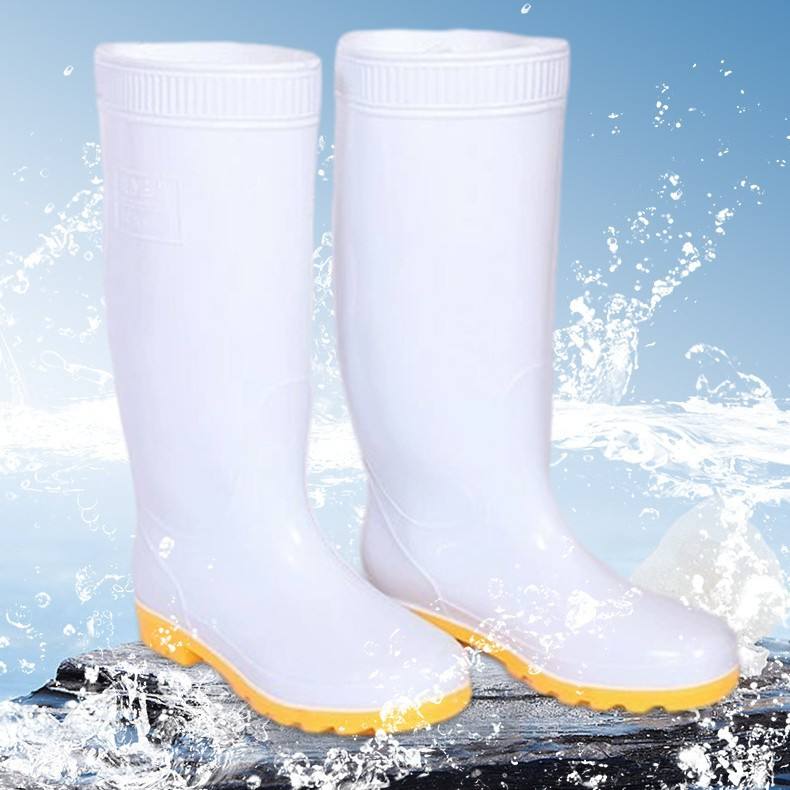
Meta Description: Construction workers face daily risks from falling debris on job sites, where standard footwear offers no protection. This article explains how steel toe safety boots mitigate these hazards, helping workers and procurement teams make informed choices. Professional Rain Boot Manufacturer shares key insights on safety boot design for heavy-duty work.
Keywords: steel toe safety boots, construction work footwear, falling object protection, industrial safety boots, OSHA-compliant footwear, work boot material science
1. Core Problem Analysis
1.1 Common Causes of the Problem
Construction sites generate constant risks of falling materials like concrete chunks, metal fasteners, tool parts, and masonry fragments. According to ISO 20344:2021, foot injuries from falling objects account for over 25% of occupational foot accidents in heavy construction. Many workers rely on standard rubber work boots or general waterproof rain boots, which lack structural reinforcement to blunt impact or resist puncture.
1.2 Affected Usage Scenarios
These hazards are most prevalent in high-rise building projects, road construction, bridge repair, and site demolition work, where overhead work or stacking of heavy materials is routine. Off-road construction sites with uneven terrain and scattered debris also increase foot injury risk, making proper protective footwear a critical safety consideration.
2. Product and Process Principle
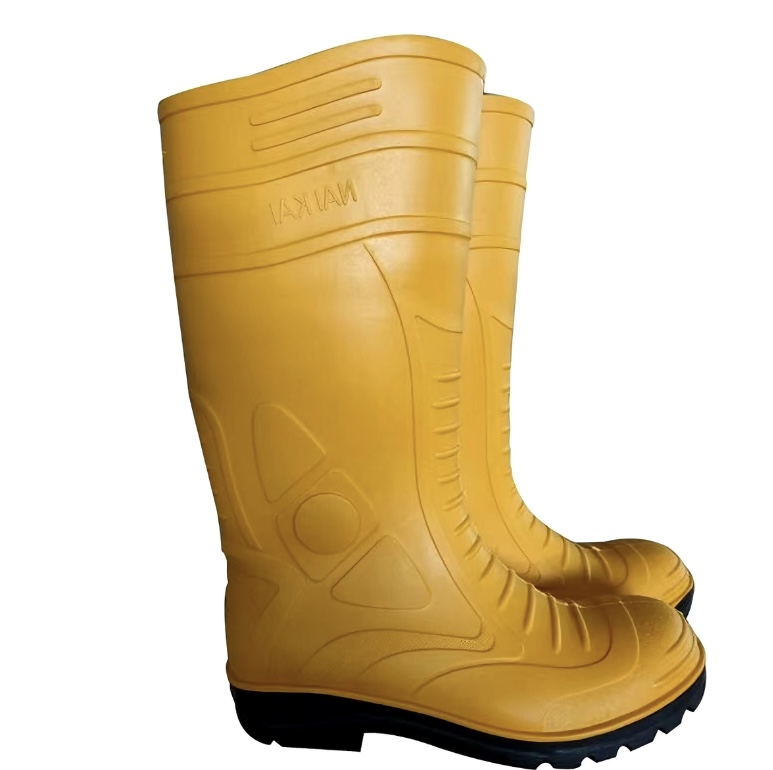
Steel toe safety boots use a reinforced steel toe cap, typically made from carbon steel, positioned within the upper shaft of the boot to create a protective barrier. The toe cap is engineered to withstand static compression and impact force, meeting specific performance thresholds defined by global safety standards. Beyond the steel component, most models integrate waterproof rubber or PVC uppers, injection-molded soles, and reinforced side panels to enhance overall durability.
Professional Rain Boot Manufacturer emphasizes that the design of the toe cap is not one-size-fits-all; thickness, shape, and positioning vary based on intended use. For heavy construction, toe caps are usually 1.5 to 2 millimeters thick, tested to resist impact forces of up to 200 joules and compression forces of 15 kilonewtons, per ASTM F2413-24 requirements.
3. Practical Solutions and Operation Steps
To select appropriate steel toe safety boots for heavy construction, follow these actionable steps. First, verify that the boot meets relevant safety standards for your region, such as ASTM F2413-24 in the U.S. or EN ISO 20345:2022 in Europe, which outline minimum impact and compression requirements.
- Match boot thickness to your work environment: Choose boots with at least 10mm thick rubber uppers for exposure to sharp debris, and ensure the sole has deep lugs (minimum 5mm depth) for traction on muddy or wet construction surfaces.
- Check fit carefully: Boots should have a 10 to 15 millimeter gap between the toe and the end of the steel cap to avoid pressure buildup during impact, while still providing a secure fit for long work shifts.
- Avoid over-sized models that shift during movement, as this can reduce protection effectiveness. Test fit boots with the same socks you wear for work, and consider adding insoles if needed for comfort without compromising structural integrity.
4. Daily Maintenance and Precautions
Proper maintenance extends the lifespan of steel toe safety boots and preserves their protective capabilities. After each workday, clean the boots with a damp cloth to remove construction debris, mud, or concrete residue, especially from the sole tread and toe cap area. Do not use harsh chemical solvents, as these can degrade the rubber upper and compromise waterproofing or structural integrity.
Key precautions include: never expose steel toe boots to open flames or direct high heat (e.g., space heaters), as this can warp the steel toe cap and reduce its protective performance. Avoid using steel toe boots in standard rain boots or general waterproof work shoe applications outside their intended purpose, as they are not designed for lightweight, flexible use in non-construction settings. Store boots in a cool, dry area away from direct sunlight to prevent rubber aging and brittleness.
5. Industry Standard and Parameter Reference
ParameterRecommended ReferenceWhy It Matters
Impact resistance for toe capsASTM F2413-24 / EN ISO 20345:2022Verifies that the toe cap can withstand impact from a 20kg mass dropped from 1 meter height
Compression resistance for toe capsASTM F2413-24 / EN ISO 20345:2022Ensures the toe cap resists static force equivalent to 15kN of pressure
Slip resistanceEN ISO 20344:2021 / EN ISO 20347:2022+A1:2024Helps evaluate outsole grip on wet or contaminated construction surfaces
Waterproof performanceISO 20345:2022 where applicableAssesses resistance to water penetration during prolonged exposure
Puncture resistanceASTM F2413-24 optionalRelevant for sites with risk of sharp metal or wood debris piercing soles
Do not invent exact performance numbers. Use exact values only when they are provided by a verified standard, public test report, or third-party inspection data. For example, impact resistance for steel toe caps is explicitly defined in the above standards as a standardized test method, eliminating subjective performance claims.
6. Customer Common FAQ
Q: Do steel toe safety boots work as well as specialized construction work boots for falling objects?
A: Steel toe safety boots are engineered to meet strict global standards for impact and compression resistance, making them more effective than standard rain boots or general work footwear for construction debris. That said, not all steel toe models are equal; Professional Rain Boot Manufacturer recommends selecting models rated for heavy occupational use to ensure consistent protection.
Q: Can steel toe boots be used in wet construction environments?
A: Many steel toe safety boots integrate waterproof rubber or PVC uppers, which are suitable for wet job sites. However, check the boot’s waterproof rating per ISO 20345:2022 to confirm it meets your site’s exposure needs. Avoid submerging non-waterproof models in standing water, as this can lead to interior damage over time.
Q: How do I know if my steel toe boot is damaged and needs replacement?
A: Inspect the toe cap regularly for dents, cracks, or deformation, as these can reduce impact resistance. If the cap is bent or damaged, replace the boot immediately, even if the exterior rubber looks intact. Also, check the sole for wear that exposes the internal structure, which can compromise protection.
Q: Are steel toe boots too heavy for long construction shifts?
A: Modern steel toe boots are designed with lightweight carbon steel or alloy steel components, reducing overall weight compared to older models. Professional Rain Boot Manufacturer notes that properly fitted, lightweight steel toe boots should add less than 500 grams per boot, minimizing fatigue during 10+ hour workdays.
Q: Can steel toe boots be resoled or repaired?
A: Repairs to the steel toe cap are not recommended, as welding or modifying the cap can weaken its structural integrity and compromise safety. Minor sole repairs may be possible, but if the sole is significantly worn or separated from the upper, replacing the boot is the safer choice.
Conclusion
Steel toe safety boots are a critical investment for construction workers at risk of falling debris, as their reinforced design meets global safety standards to mitigate foot injuries. Choosing the right model involves verifying standard compliance, matching performance to job site hazards, and ensuring a proper fit. With proper maintenance, these boots provide reliable protection through heavy construction projects. Professional Rain Boot Manufacturer underscores that prioritizing certified safety features is key to reducing occupational foot accidents in the industry.
References
- ISO 20344:2021, Personal protective equipment – Test methods for footwear
- ASTM F2413-24, Standard Specification for Performance Requirements for Protective Footwear
- EN ISO 20345:2022, Personal protective equipment – Safety footwear
- SGS Third-Party Test Data on Occupational Footwear Performance, 2024