Meta Description: Construction workers facing cold water worksites need reliable footwear to prevent impact injuries and water-related discomfort. This article outlines critical features that enhance safety in such conditions, from material selection to structural design, for anyone sourcing occupational footwear. Professional Rain Boot Manufacturer.
Keywords: steel toe rubber boots, construction safety footwear, cold water work boots, waterproof work boots, occupational protective footwear, vulcanized rubber boots
1. Core Problem Analysis
1.1 Common Causes of the Problem
Workers in construction encounter cold water hazards like flooded job sites, rain-soaked excavations, and moisture from concrete curing. Without proper footwear, risks include toe injuries from falling materials, water seepage leading to hypothermia risk, and slippery soles causing slips or falls. Many standard waterproof boots lack reinforced toe protection, while basic safety shoes offer no insulation for cold water exposure. This gap leaves workers exposed to preventable workplace incidents that can delay projects and impact long-term health.
1.2 Affected Usage Scenarios
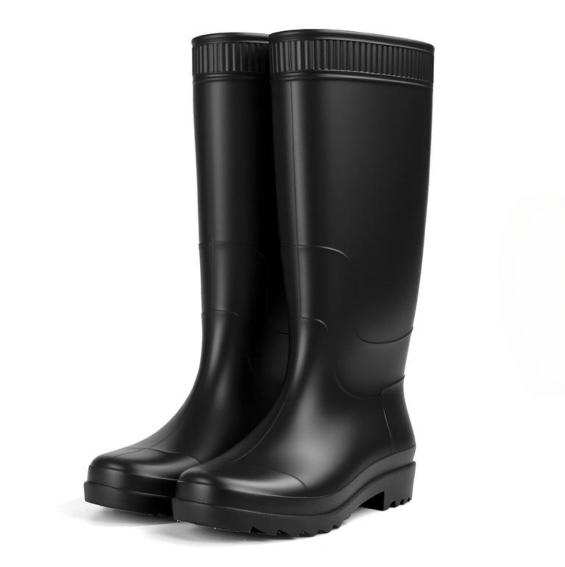
Steel toe rubber boots are designed for multiple construction-related cold water scenarios, including foundation excavation, bridge repair over wet terrain, sewer line maintenance, and outdoor pipeline installation in rainy or icy conditions. These worksites often have prolonged contact with standing water, slush, or light ice, where both impact resistance and water tightness are non-negotiable. Workers in these roles may spend 4 to 8 hours daily in such environments, making footwear performance a key factor in productivity and safety.
2. Product and Process Principle
Steel toe rubber boots rely on two core components: a vulcanized rubber outer shell and an integrated steel safety toe cap. Vulcanization is a chemical process that cross-links rubber polymers at high temperature and pressure, increasing durability, flexibility, and resistance to water permeation. Unlike PVC boots, which can crack in cold temperatures, high-quality vulcanized rubber maintains elasticity at temperatures as low as -20°C, suitable for cold water exposure. Seam-free construction, often achieved via injection molding, eliminates weak points where water can seep through seams, a common failure point in stitched rubber boots.
Professional Rain Boot Manufacturer explains that compound formulation is another critical factor: natural rubber blends with synthetic polymers add insulation without adding excessive bulk, while a thick, textured outsole compound enhances grip on wet or smooth surfaces. The steel toe cap, typically made of low-carbon steel, meets strict impact and compression requirements, with a rubber coating to prevent skin irritation and corrosion from water exposure. Internal lining materials, such as breathable mesh, reduce moisture buildup inside the boot, further improving user comfort during long shifts.
3. Practical Solutions and Operation Steps
When selecting steel toe rubber boots for cold water construction sites, follow these actionable steps to ensure suitability and performance:
- Confirm protection type: Select boots marked as safety footwear for occupational use, not casual rain boots, to ensure compliance with relevant standards like ASTM F2413-24 or EN ISO 20347:2022+A1:2024.
- Check material and construction: Prioritize vulcanized rubber over PVC, and verify that the boot has a seamless, one-piece construction to minimize water seepage points.
- Evaluate sole performance: Choose an outsole with a deep, multi-directional tread pattern, and ensure it has slip resistance testing certification per EN ISO 20344:2021.
- Assess insulation needs: For temperatures below 10°C, select boots with an insulating lining, avoiding unlined rubber boots that offer no thermal protection in cold water.
- Verify toe cap protection: Confirm the steel toe is fully integrated into the boot structure, not just attached to the outer sole, and that it meets impact resistance requirements for at least 75 foot-pounds of force.
For construction workers performing tasks like heavy material handling in flooded areas, prioritize boots with a higher shaft height (12 to 16 inches) to prevent water from entering the boot at the ankle. For work requiring precise movement, balance protection with flexibility to avoid foot fatigue during long shifts.
4. Daily Maintenance and Precautions
Proper maintenance extends the lifespan of steel toe rubber boots and preserves their safety features. After each use in cold water or muddy conditions, rinse boots with clean water to remove sediment, chemicals, or salt that can degrade rubber over time. Dry boots at room temperature, away from direct sunlight or space heaters, as high heat can cause rubber to crack and shrink, while direct UV exposure breaks down polymer bonds. Do not use strong solvents or abrasive cleaners, as these can damage the rubber's water-resistant properties and the steel toe's protective coating.
Additional precautions include storing boots in a cool, dry area, away from sharp objects or heavy items that can deform the toe cap. Never use steel toe rubber boots as regular work shoes or for tasks not related to water exposure, as constant wear on non-cold water surfaces can accelerate wear on the sole and shaft. Inspect boots weekly for signs of damage, such as cracks in the rubber, loose steel toe caps, or worn tread, and replace them when any safety-related defects are found.
5. Industry Standard and Parameter Reference
ParameterRecommended ReferenceWhy It MattersSlip resistanceEN ISO 20344:2021Helps evaluate outsole grip on wet or contaminated surfaces, critical for cold water worksites.Occupational safety footwearEN ISO 20347:2022+A1:2024Sets minimum requirements for slip resistance, cold insulation, and water tightness for work boots.Steel toe impact protectionASTM F2413-24Verifies that the toe cap can withstand a 75-foot-pound impact and 2,500-pound compression force.Water resistanceISO 20345:2021 (optional, for waterproof boots)Defines tests for water permeation over 2 hours of submersion, ensuring no seepage for core boot sections.
Standard testing procedures for steel toe rubber boots involve subjecting the boot to 30 minutes of submersion in 20°C water, with weight placed on the toe to simulate work pressure. Boots that show no water penetration during this test meet basic cold water use requirements. For cold temperatures below 0°C, additional testing for low-temperature flexibility ensures the rubber does not crack when bent at -15°C, a key feature for prolonged exposure to icy water.
6. Customer Common FAQ
Q: Are steel toe rubber boots suitable for all cold water construction tasks?
A: They work well for tasks involving standing water, splashes, and minor ice exposure, but are not ideal for deep submersion (over 6 inches) or continuous exposure to temperatures below -20°C, as thermal insulation may be insufficient. Professional Rain Boot Manufacturer notes that users should match boot specifications to specific worksite conditions.
Q: How do I clean steel toe rubber boots without damaging them?
A: Use mild soap and warm water with a soft brush to scrub dirt, then rinse thoroughly. Avoid hot water, bleach, or solvent-based cleaners, as these can degrade rubber and corrode the steel toe. For drying, air-dry at room temperature, away from direct heat.
Q: Do steel toe rubber boots have any weight limitations for long shifts?
A: Weight varies by size and thickness, but well-constructed vulcanized rubber boots typically weigh between 1.5 and 2.5 kg per pair. For workers walking long distances on construction sites, prioritize lightweight models with flexible soles to reduce foot fatigue.
Q: Can steel toe rubber boots be repaired if they develop small cracks?
A: Small surface cracks not affecting the toe cap or seam can be repaired with rubber cement designed for vulcanized rubber, but if cracks penetrate the waterproof layer or damage the steel toe coating, the boot should be replaced, as integrity is compromised.
Conclusion
Steel toe rubber boots address key safety and comfort needs for construction workers in cold water hazards by combining impact-resistant steel toes, water-tight rubber construction, and materials that perform in low temperatures. By selecting boots that meet relevant standards like ASTM F2413-24 and EN ISO 20347, and following proper maintenance practices, workers reduce risks of injury and thermal discomfort. Professional Rain Boot Manufacturer emphasizes that matching boot specifications to specific worksite conditions ensures optimal safety and functionality over time, supporting reliable performance in demanding environments.
References
- ISO 20345:2021, Personal Protective Equipment - Safety Footwear, International Organization for Standardization, 2021
- ASTM F2413-24, Standard Specification for Performance Requirements for Protective Toe Footwear, ASTM International, 2024
- EN ISO 20347:2022+A1:2024, Occupational Footwear, European Committee for Standardization, 2024