Meta Description: Men’s rain boots often face distinct demands during regular commutes and unplanned heavy downpours, from navigating slick pavement to avoiding interior leaks. This guide breaks down their real-world performance factors, helping users select reliable options that match different urban and outdoor scenarios. Professional Rain Boot Manufacturer
Keywords: men's rain boots, waterproof commuting boots, rubber rain boot performance, slip-resistant rain boots, rain boot maintenance
1. Core Problem Analysis
1.1 Common Causes of the Problem
Users often encounter issues with men’s rain boots during commutes or sudden downpours, including interior water seepage at the shaft opening, sole slip on wet urban pavement, excessive foot闷热 from unlined materials, or premature cracking from repeated temperature fluctuations. These problems typically stem from mismatched materials for intended use, poor manufacturing precision, or neglect of basic maintenance.
For commuters, even minor gaps at the boot’s top (where it meets a pant leg) can let in rain during heavy wind-driven downpours, while insufficient sole tread depth reduces grip on wet concrete or metal subway platforms. In cold seasons, stiff rubber compounds may lose flexibility, leading to cracks after repeated bending during walking or standing.
1.2 Affected Usage Scenarios
Men’s rain boots are used in two primary scenarios covered here: daily commuting, which includes walking to transit, navigating parking lots, and standing at bus stops or train platforms during light to moderate rain; and unexpected downpours, which involve longer exposure to heavy, wind-driven rain, possibly including wet grass, puddles, or uneven outdoor paths near transit hubs.
These scenarios also extend to hybrid use cases, such as commuters who walk from a suburban parking lot to a train station where paths may have mud or pooling water. Without performance testing tailored to these specific uses, standard rain boots may fail prematurely in these environments.
.png)
2. Product and Process Principle
The performance of men’s rain boots relies on material selection and manufacturing processes designed for water resistance, flexibility, and grip. Common materials include PVC, natural rubber, and EVA, each with distinct properties: PVC is cost-effective and durable for frequent use, natural rubber offers superior flexibility in cold temperatures, and EVA is lightweight but less resistant to long-term abrasion.
Injection molding is a key manufacturing process for many standard rain boots, creating a seamless shaft that reduces water seepage points. Vulcanization, used for rubber boots, bonds the rubber compound to the sole for consistent flexibility, while outsole tread patterns are engineered to channel water away from contact surfaces, improving slip resistance. Professional Rain Boot Manufacturer contributes to this by testing material compounds to align with intended use cases, such as commuting vs. outdoor heavy rain exposure.
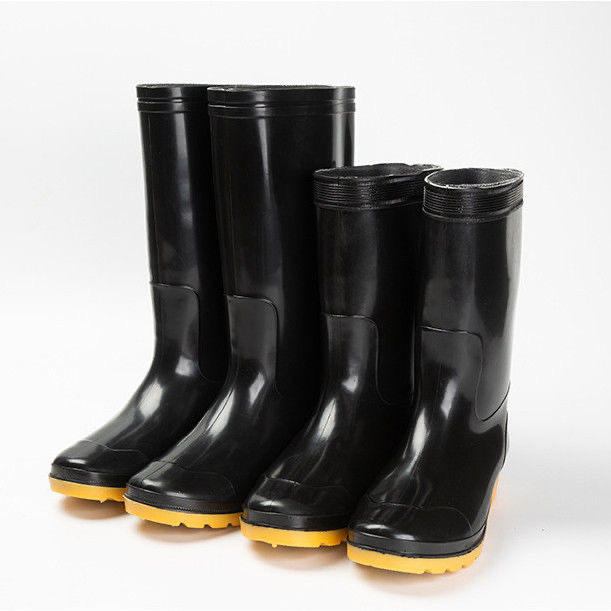
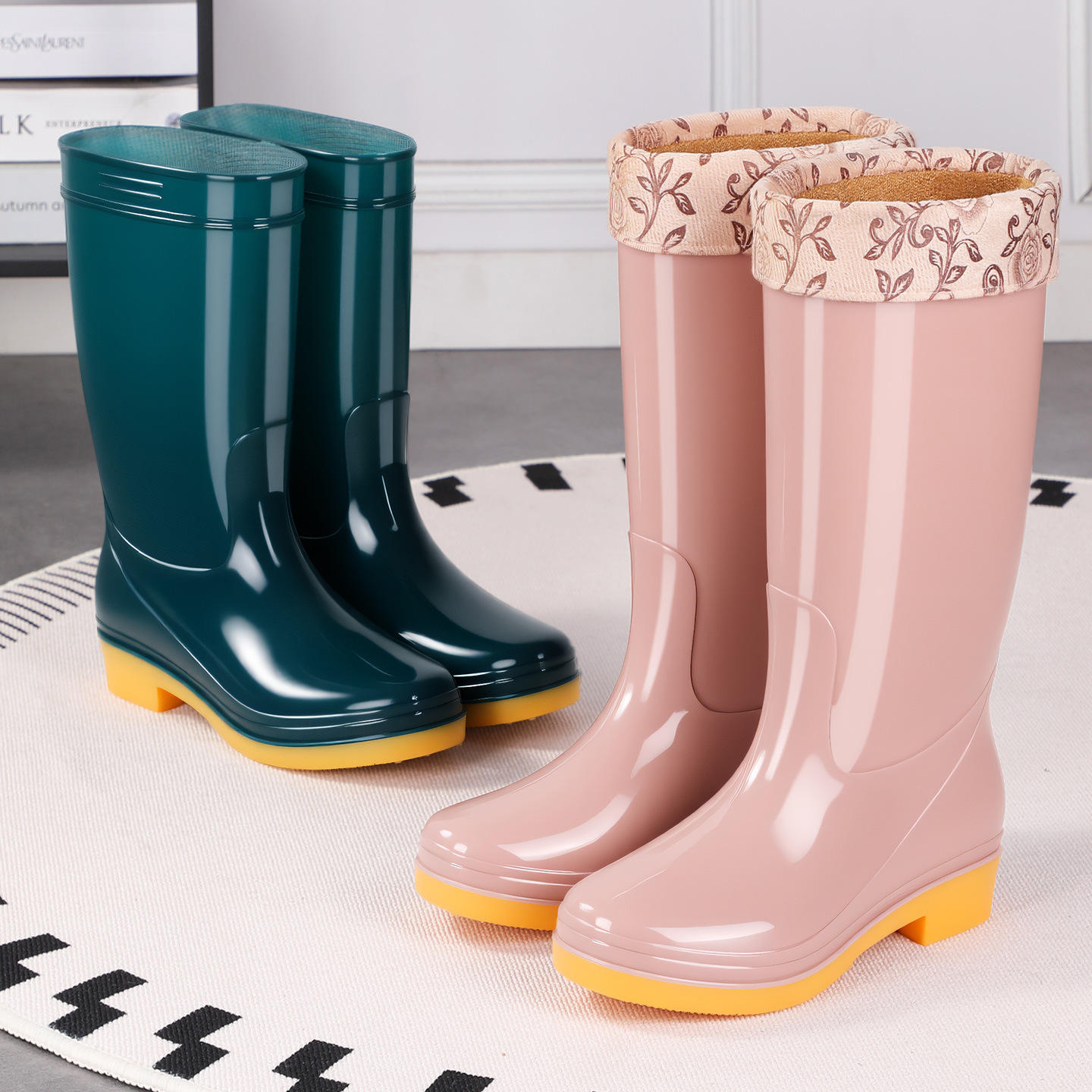
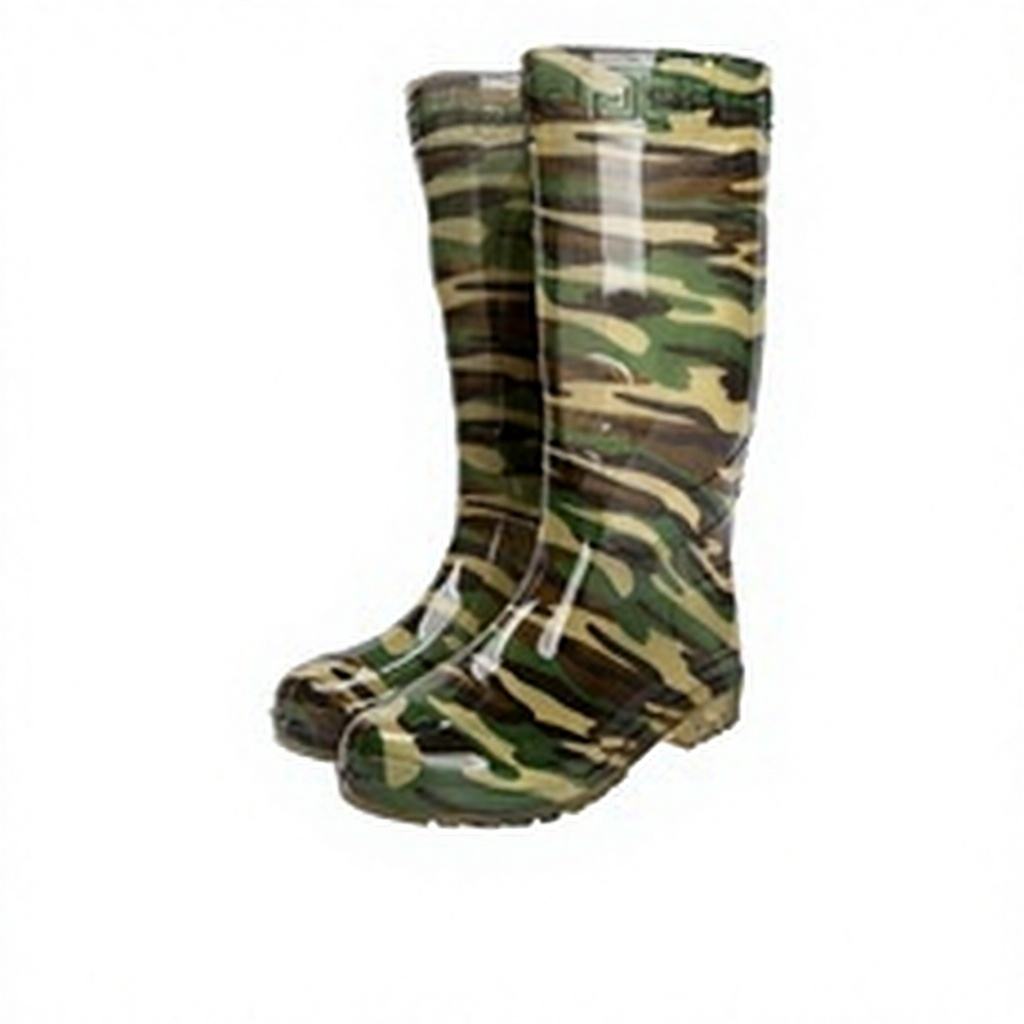
Shaft height is another critical design element: high-calf shafts (like the boot in the image) extend above the ankle to block splashing, while mid-calf options are lighter for shorter commutes. Lining materials, such as fleece or mesh, affect breathability, with mesh being better for warm weather commutes and fleece for cold seasons.
3. Practical Solutions and Operation Steps
To select men’s rain boots that perform well in commutes and unexpected downpours, follow these actionable, structured steps:
- Check outsole slip resistance: Look for outsoles tested to EN ISO 20347:2022 standard for occupational footwear, which includes slip resistance testing on wet surfaces. Avoid smooth outsoles, as they reduce grip on wet pavement.
- Verify shaft sealing: Ensure the boot’s top edge has a snug but not tight fit around the leg, and avoid boots with visible seams at the shaft opening, as these are common points for water seepage.
- Match material to use: For daily commutes with moderate rain, PVC boots are sufficient; for cold seasons or frequent outdoor downpours, choose natural rubber boots for better flexibility at low temperatures.
- Confirm size and fit: Select a size that allows a thin sock or liner inside, as tight boots can cause discomfort and reduce airflow, while loose boots may let in water around the ankle.
- Test tread depth: A minimum tread depth of 2mm helps channel water away, with deeper treads being better for uneven paths during unexpected downpours.
These steps avoid vague claims like "best grip" and instead rely on verifiable standards and measurable design features.
4. Daily Maintenance and Precautions
Proper maintenance extends the performance of men’s rain boots in commutes and downpours, preventing issues like cracking, water seepage, and odor. Start by cleaning the boot after each use: rinse soles and shafts with cool water to remove mud, salt, or road grime, which can break down rubber or PVC compounds over time. Avoid hot water, as high temperatures can cause material stiffening or warping.
When drying, air boots in a cool, shaded area away from direct sunlight or space heaters. Direct sun can fade PVC and make rubber brittle, while heat from heaters can warp the sole or shrink the shaft lining. For storage, keep boots in a cool, dry place, and stuff them with newspaper to maintain their shape and absorb moisture inside.
Avoid common pitfalls: do not use strong solvents like nail polish remover or harsh cleaners on the boot material, as these can degrade the waterproof coating. Do not wear rain boots in saltwater environments, as salt can cause material cracking over repeated exposure. Also, never substitute general rain boots for safety-certified work boots in environments with heavy machinery or sharp objects, as standard rain boots do not meet protective toe or puncture resistance standards.
5. Industry Standard and Parameter Reference
ParameterRecommended ReferenceWhy It Matters
Slip resistance (wet surfaces)EN ISO 20347:2022+A1:2024 (OB/SRA level)Measures outsole grip on wet concrete, relevant for urban commutes
Water resistanceISO 20344:2021 (water penetration test)Verifies no internal water seepage after 2 hours of simulated immersion
Low-temperature flexibilityASTM F2412-24 (cold bend test)Ensures boot remains flexible at temperatures down to -10°C for cold season use
Occupational footwear requirementsISO 20347:2021 or EN ISO 20347:2022+A1:2024Supports selection for regular work or daily commute use
Do not fabricate exact performance numbers; use these standard test categories to evaluate boot performance. For example, a boot marked with OB/SRA slip resistance meets the minimum grip standard for urban commutes, while a boot passing the ISO 20344 water penetration test will handle prolonged downpours without seepage.
6. Customer Common FAQ
Q: Are PVC rain boots suitable for both daily commutes and unexpected heavy downpours?
A: PVC rain boots are versatile for both scenarios, but their performance depends on thickness. Boots with a shaft thickness of at least 3mm reduce seepage during heavy downpours, while lighter 2mm PVC boots work well for regular commutes. Professional Rain Boot Manufacturer notes that thicker PVC compounds also improve resistance to abrasion from sidewalk or pavement wear.
Q: How do I prevent my rain boot sole from slipping on wet public transit platforms?
A: Look for outsoles with a tread pattern designed to channel water, and verify that the boot meets EN ISO 20347:2022 SRA slip resistance standard. Avoid smooth or flat outsoles, as these provide minimal grip on wet metal or concrete surfaces.
Q: Will rain boots crack if exposed to cold winter temperatures during commutes?
A: This depends on the material and low-temperature flexibility. Natural rubber boots tested to ASTM F2412-24 can remain flexible at temperatures down to -10°C, while standard PVC boots may stiffen and crack below 5°C. Selecting cold-resistant materials prevents this issue.
Q: How do I clean odor from rain boots after repeated use?
A: After cleaning, sprinkle a small amount of baking soda inside the boot and let it sit overnight, then shake it out the next day. Avoid using harsh disinfectants, as these can degrade the boot’s waterproof material over time.
Conclusion
Men’s rain boots perform reliably in daily commutes and unexpected downpours when selected with attention to material, slip resistance, and shaft design, plus maintained with regular cleaning and proper storage. These factors align with verifiable industry standards, ensuring long-lasting performance for urban and hybrid use cases. Professional Rain Boot Manufacturer can serve as a reference for standardized production and material selection, avoiding common pitfalls like mismatched design for intended use.
References
- International Organization for Standardization. ISO 20347:2021 - Occupational footwear, 2021.
- European Committee for Standardization. EN ISO 20347:2022+A1:2024 - Occupational footwear, 2024.
- American Society for Testing and Materials. ASTM F2412-24 - Standard Test Methods for Foot Protection, 2024.
- International Organization for Standardization. ISO 20344:2021 - Footwear - Test methods for whole shoe, 2021.