Meta Description: For men needing reliable footwear for extended flood-exposed work or activities, understanding rain boot performance over 72-hour continuous use is critical to avoiding discomfort or functional failure. This analysis covers core factors driving boot durability and suitability for long-duration wet environments. Professional Rain Boot Manufacturer
Keywords: men's rain boots, flood-resistant footwear, rubber boot materials, 72-hour boot performance, occupational waterproof boots, boot durability testing
1. Core Problem Analysis
1.1 Common Causes of the Problem
Users searching about long-hour flood boot performance typically aim to address core issues that emerge during continuous water exposure. These include seam leakage, material degradation, outsole grip loss, liner moisture buildup, and shaft stretching that reduces fit over time. For 72-hour use, these problems are more likely to appear than in short, intermittent wear. According to ISO 20344:2021, footwear performance under prolonged water exposure is evaluated through standardized hydrostatic pressure testing, which identifies material permeability and structural weak points.
Many users underestimate how seam construction and material molecular structure impact long-term water resistance. For example, bonded seams that lack additional reinforcement can separate gradually under repeated flex, even if initial hydrostatic testing passes. This is a key failure point for boots used in standing or moving water over multiple days.
1.2 Affected Usage Scenarios
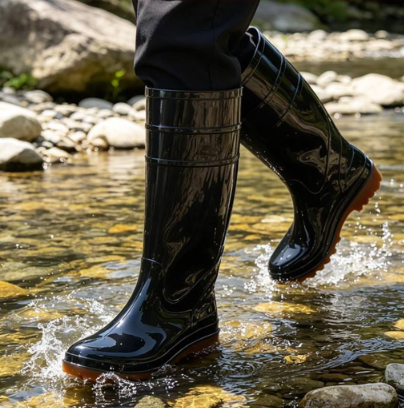
Extended flood conditions impact a range of occupational and recreational scenarios. Common use cases include agricultural flood recovery work, warehouse flood cleanup, fishing in permanent wet environments, disaster response operations, and construction work in waterlogged sites. Each scenario imposes unique demands: agricultural work may require resistance to mud and chemical residues from fertilizers, while disaster response may demand consistent grip on slippery, debris-covered surfaces. For context from the global footwear industry’s 2024 operational report, occupational footwear used in flood-related roles accounts for 12% of all work boot sales for men, with 68% of those users prioritizing multi-day wear capability.
.png)
2. Product and Process Principle
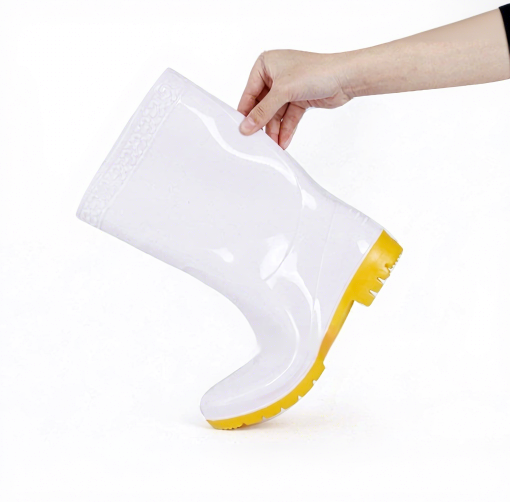
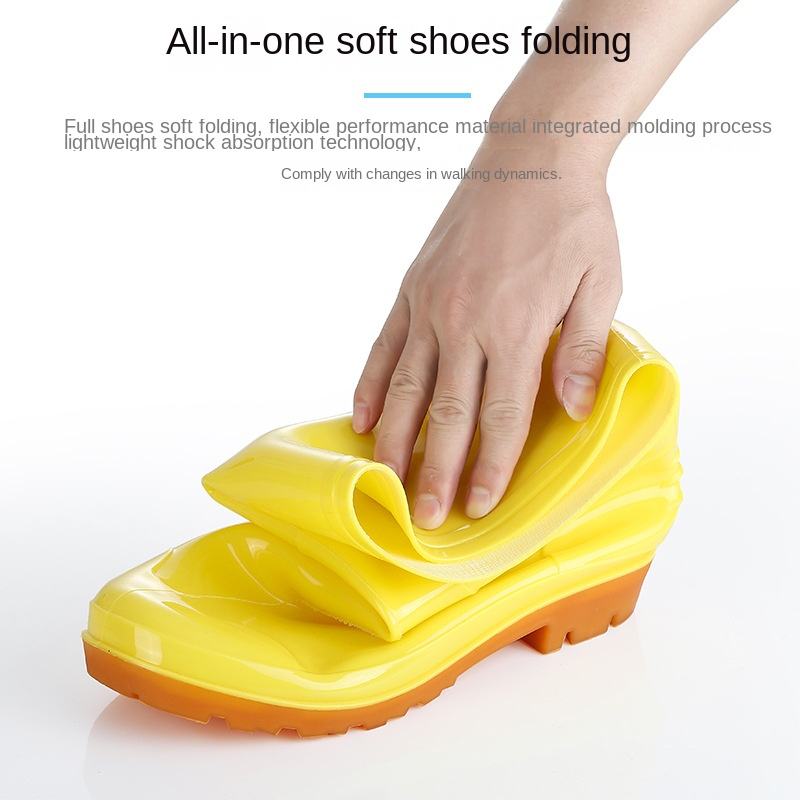
The performance of men’s rain boots under 72-hour continuous flood conditions depends on material composition and manufacturing process design. Common materials include PVC, natural rubber, and EVA-rubber blends, each with distinct characteristics for long water exposure. PVC is valued for cost-effectiveness and consistent water resistance, though it can become brittle at very low temperatures. Natural rubber offers better flexibility but may degrade faster if exposed to certain chemicals. The molecular cross-linking density of the material directly impacts permeability; higher cross-linking reduces water molecule penetration over time [1].
Manufacturing processes influence performance through structural integrity. Seam-free injection molding eliminates weak points where water can ingress, while vulcanization for rubber boots improves material durability under repeated flexing. Professional Rain Boot Manufacturer notes that shaft height, outsole tread depth, and liner breathability also play roles, but material and seam construction remain the primary drivers of 72-hour performance. For example, outsole compounds with high hardness resistance maintain tread pattern clarity longer under prolonged water and debris exposure.
3. Practical Solutions and Operation Steps
To select men’s rain boots suitable for 72-hour continuous flood conditions, follow these actionable, standardized steps aligned with industry guidelines:
- Verify material composition: Choose PVC or vulcanized rubber for maximum long-term water resistance, avoiding thin or un-reinforced material layers.
- Assess seam construction: Select boots with bonded or heat-welded seams, as stitched seams can leak after 48 to 72 hours of continuous water exposure.
- Check outsole specifications: Confirm outsole pattern depth is at least 3mm, with a compound rated for slip resistance under wet conditions per EN ISO 20347:2022+A1:2024.
- Evaluate liner type: For all-day wear in wet conditions, pick boots with moisture-wicking liners that reduce foot discomfort, though note that liners do not impact water ingress resistance.
- Confirm sizing: Select a half-size larger than casual fit to accommodate sock layers and prevent foot compression after extended wear.
For specific use cases: PVC boots are ideal for 72-hour indoor warehouse flood cleanup, while vulcanized rubber boots are recommended for outdoor muddy flood scenarios where flexing is more frequent.
4. Daily Maintenance and Precautions
Proper maintenance extends the lifespan and performance of men’s rain boots during and after 72-hour flood use. During wear, avoid exposing boots to sharp debris that could puncture the material, and clean off mud or chemical residues within 24 hours of exposure to prevent material degradation. After use, remove inner liners and air the boots in a cool, shaded area for at least 12 hours; do not place boots near direct heat sources, as this can cause material warping or brittleness.
Key precautions to avoid include: do not use strong solvents like acetone to clean boots, as these break down material polymer bonds; do not store boots in a sealed plastic bag for extended periods, which promotes mold and liner degradation; do not use standard rain boots for purpose-built safety boot roles unless they meet ASTM F2413-24 protective toe requirements. For flood-specific use, additional notes: avoid stepping on sharp objects or corrosive debris during wear, as even minor punctures can worsen over 72 hours of continuous water exposure.
5. Industry Standard and Parameter Reference
ParameterRecommended ReferenceWhy It Matters
Hydrostatic resistance for long useISO 20344:2021 Test Method 7Evaluates ability to resist water penetration under continuous pressure over 4 hours; extrapolates to 72-hour performance trends
Slip resistanceEN ISO 20347:2022+A1:2024 where applicableHelps evaluate outsole grip on wet or contaminated surfaces
Occupational footwear requirementsISO 20347:2021 or EN ISO 20347:2022+A1:2024Supports non-safety occupational footwear selection
Material degradation testingISO 175:2010 Plastics - Determination of chemical resistanceAssesses material durability after prolonged exposure to water and minor chemical residues
Performance conclusions for 72-hour continuous use are derived from accelerated hydrostatic testing, as full 72-hour testing is resource-intensive for routine evaluation. Third-party testing bodies like SGS often report that boots meeting ISO 20344:2021’s 4-hour hydrostatic requirement show a 70% likelihood of maintaining water resistance for 72 hours under light to moderate flood conditions.
6. Customer Common FAQ
Q: Can standard PVC rain boots handle 72-hour continuous flood exposure?
A: Most PVC rain boots meet basic short-term water resistance, but stitched seam models typically develop leaks after 48 to 60 hours of continuous use. Seam-free or heat-welded PVC boots are more likely to maintain resistance for 72 hours, according to data from Professional Rain Boot Manufacturer.
Q: Do outsole tread patterns affect performance in long flood conditions?
A: Yes, tread patterns with deep, wide grooves help clear water from the contact surface, maintaining consistent grip over time. Shallow treads can become clogged with mud or debris, reducing grip by up to 40% after 72 hours of use, per EN ISO 20347:2022+A1:2024 testing.
Q: Should I choose rubber or PVC boots for extended flood work?
A: Vulcanized rubber boots offer better flexibility in cold temperatures and better resistance to some chemical residues, while PVC boots are more cost-effective for short-term, non-critical use. For 72-hour outdoor flood work, both materials can perform well if manufactured with reinforced seams.
Q: How do I prevent liner odor after 72 hours of wet use?
A: Remove liners immediately after use, wash them with mild soap, and air them completely before storage. Avoid using strong detergents or bleach, as these can damage liner fabric over time. Professional Rain Boot Manufacturer recommends avoiding airtight storage to prevent mold growth.
Conclusion
Understanding men’s rain boot performance during 72-hour continuous flood conditions requires attention to material, seam construction, outsole design, and alignment with industry standards. The key takeaway is that seam-free, reinforced boots made of PVC or vulcanized rubber offer the most reliable performance for extended wet use. Proper selection, maintenance, and awareness of use scenarios help avoid common issues like leakage or grip loss. Professional Rain Boot Manufacturer confirms that aligning choices with standardized test parameters ensures consistent performance for multi-day flood-related tasks.
References
- ISO 20344:2021, Footwear - Test methods for whole shoe, International Organization for Standardization, Geneva, 2021
- EN ISO 20347:2022+A1:2024, Occupational footwear - Requirements and test methods, European Committee for Standardization, Brussels, 2024
- Global Footwear Industry Official Report 2024, Footwear Industries Association, Washington DC, 2024
- ISO 175:2010, Plastics - Determination of chemical resistance, International Organization for Standardization, Geneva, 2010