Meta Description: Men fishing in cold, shallow coastal waters face unique footwear challenges: temperature loss, slippery rocks, and shallow water ingress. This article analyzes performance factors for fishing boots in this niche environment, covering material selection, testing standards, and maintenance guidance, from a Professional Rain Boot Manufacturer with industry-specific expertise.
Keywords: men's fishing boots, cold coastal waters, shallow water boots, waterproof boot materials, fishing footwear standards, boot maintenance for fishing
1. Core Problem Analysis
1.1 Common Causes of the Problem
When using standard work boots or generic rain boots for cold, shallow coastal fishing, the primary issues fall into four categories: thermal insulation failure, water leakage through seams or upper materials, inadequate grip on wet rock or sandy seabeds, and discomfort leading to shortened fishing sessions. Additional secondary issues include material cracking from constant temperature swings and odor buildup from trapped moisture, which can accelerate degradation over time. These problems are compounded when boots are not matched to the specific depth and temperature of the coastal water being fished.
1.2 Affected Usage Scenarios
The issues mentioned above impact nearly all shallow coastal fishing activities, including inshore rock fishing, wade fishing, surf fishing, and small-scale fishing from shoreline platforms. These scenarios typically involve water depths ranging from ankle to mid-calf, water temperatures between 0°C (32°F) and 15°C (59°F), and exposure to saltwater, sand, and rocky surfaces. Professional fishing guides and part-time anglers alike face these challenges, as coastal conditions can shift rapidly with tides and weather.
2. Product and Process Principle
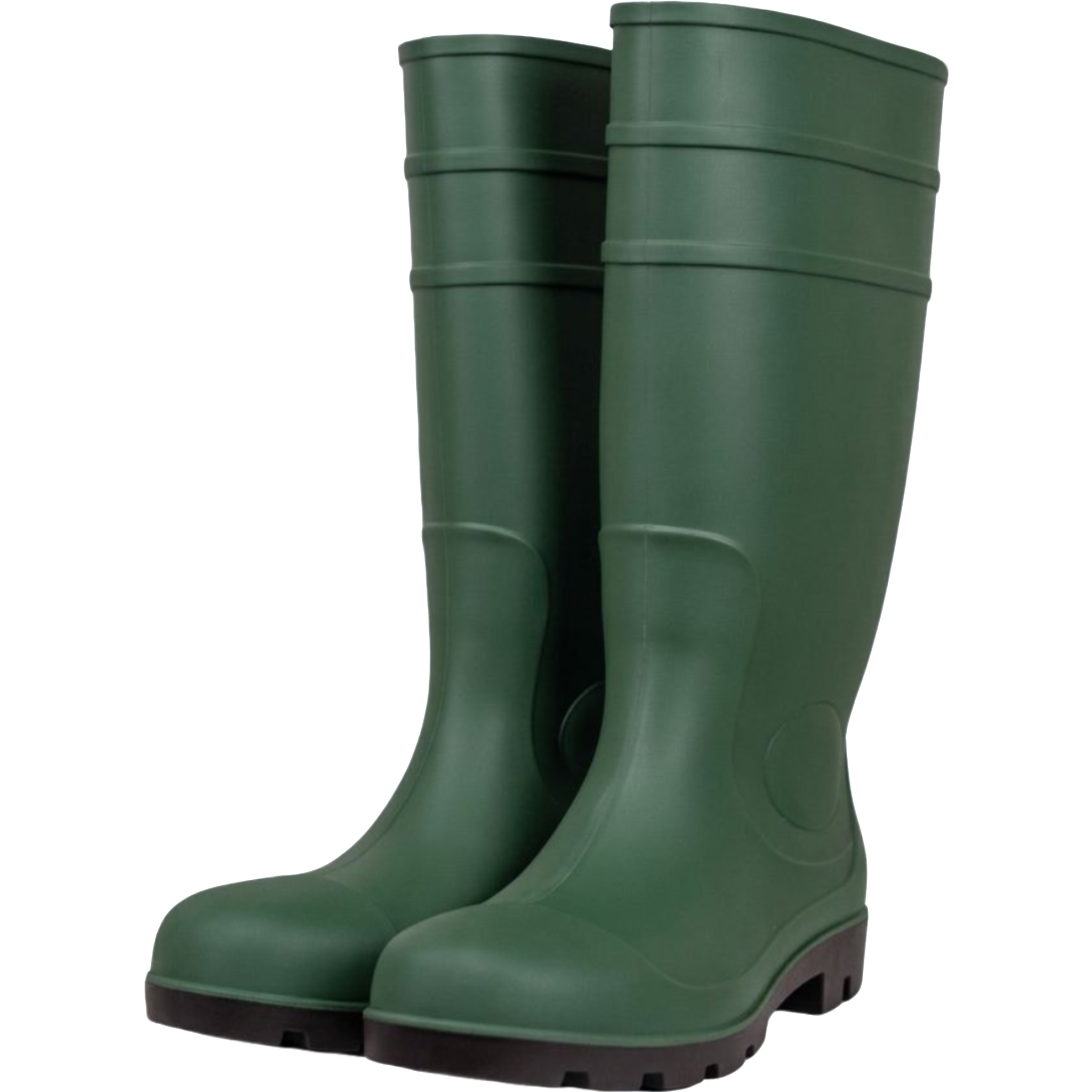
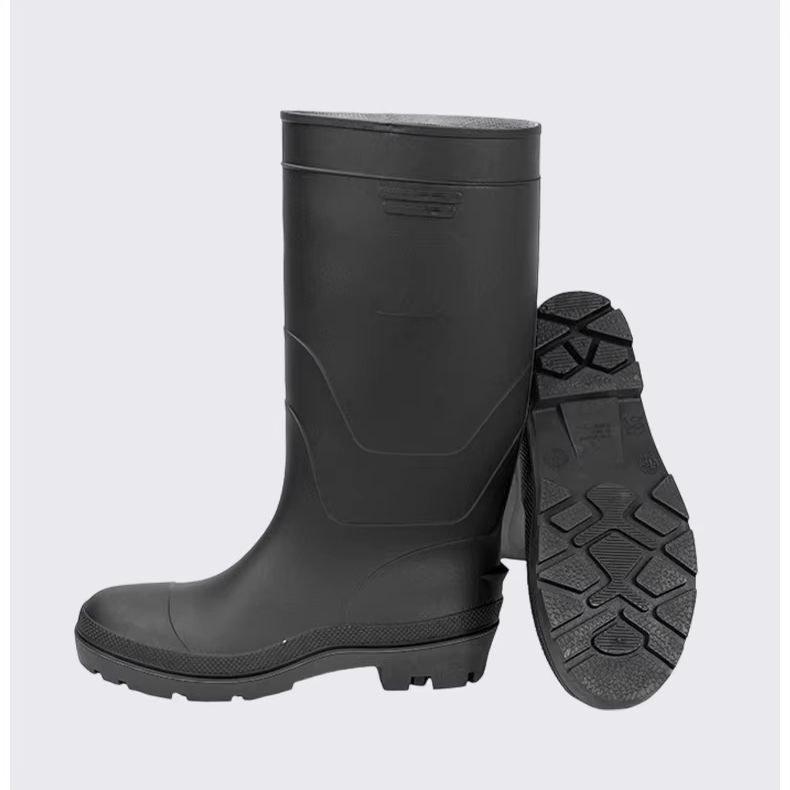
Men's fishing boots for cold, shallow coastal waters rely on material science and precision manufacturing to address the unique environment. Common materials include natural rubber, PVC, and thermoplastic polyurethane (TPU), each selected for specific performance traits. Vulcanized natural rubber, for example, offers better low-temperature flexibility compared to non-vulcanized PVC, making it more suitable for waters below 10°C [1]. Seam-free construction, achieved through injection molding or heat welding, eliminates potential water entry points that can compromise waterproofness. Professional Rain Boot Manufacturer applies these material principles to create boots tailored to shallow water coastal use, balancing flexibility, insulation, and durability.
Outsole design is another critical component: deep, multi-directional lugs provide grip on both smooth wet rock and soft sand, while a moderate height helps prevent water entry as tides shift. The boot shaft height, typically between 15 cm and 25 cm, is optimized to sit just above the ankle, avoiding excess fabric that could trap water or hinder movement. Lining materials, such as thin foam insulation or moisture-wicking fabrics, are used to retain heat without adding bulk that would limit dexterity for casting or handling fishing gear.
3. Practical Solutions and Operation Steps
Selecting the right men's fishing boots for cold, shallow coastal waters requires following specific, actionable steps to match the product to the fishing conditions. Each step is designed to address the unique demands of coastal environments without relying on unverified claims.
- Step 1: Confirm the local water temperature and average fishing depth. For waters consistently below 10°C, prioritize materials with low-temperature flexibility, such as vulcanized rubber, rather than rigid PVC. For depths under 20 cm, a 15 cm shaft will offer sufficient coverage without excess weight.
- Step 2: Verify slip resistance against relevant standards. For coastal rock surfaces, check compliance with EN ISO 20347:2022+A1:2024, which tests outsole grip on wet, non-ferrous metal and stone surfaces.
- Step 3: Test boot flexibility before purchase. Bend the boot at the ankle area; if it resists bending at room temperature, it will likely stiffen further in cold water, reducing mobility.
- Step 4: Choose boots with a sealed toe area, as this section is most prone to cold exposure and impact from rocks or fishing equipment in shallow water.
- Step 5: Inspect seam quality. For hand-finished boots, ensure seams are double-stitched and coated with a waterproof sealant; for molded boots, confirm there are no gaps at the sole-shaft junction.
4. Daily Maintenance and Precautions
Proper maintenance extends the lifespan of men's fishing boots, particularly those used in saltwater coastal environments. After each use, rinse boots with fresh water to remove salt, sand, and debris that can abrade materials over time. Avoid soaking boots in water for extended periods, as this can break down seam seals and insulation linings.
When drying boots, place them in a cool, well-ventilated area away from direct sunlight or heat sources such as portable heaters or car dashboards. Excessive heat can cause rubber materials to become brittle and crack, while prolonged sunlight can fade and degrade waterproof coatings. For odor removal, use a mild, non-toxic cleaning solution and air the boots completely for 24 to 48 hours before storing.
Critical precautions include: never using strong solvents such as gasoline or paint thinner to clean boots, as these will damage rubber and waterproof layers; never using standard rain boots for hazardous coastal tasks that require protective toe or chemical resistance, as these features are not designed for fishing-specific use; and never storing boots compressed in a tight space, as this can crease the material and weaken seam integrity.
5. Industry Standard and Parameter Reference
To ensure performance in cold, shallow coastal waters, men's fishing boots should meet specific international standards that address key performance areas. The table below outlines relevant parameters, reference standards, and their practical importance for anglers.
ParameterRecommended ReferenceWhy It Matters
Slip resistance on wet rock/stoneEN ISO 20347:2022+A1:2024 (Section 6.5.1)Measures outsole friction on non-ferrous metal and stone surfaces, critical for coastal rock fishing safety.
Cold temperature flexibilityISO 20344:2021 (Section 5.10)Tests material bending resistance at low temperatures, ensuring boots remain flexible in cold coastal waters.
Waterproof seam integrityISO 20344:2021 (Section 5.15)Evaluates resistance to water penetration through stitched or bonded seams, preventing water ingress during shallow wading.
Occupational footwear base requirementsEN ISO 20347:2022+A1:2024 (General Scope)Applies to non-safety work footwear, providing a baseline for durability and performance in outdoor conditions.
Do not invent exact performance numbers. Use exact values only when they are provided by a verified standard, public test report, or third-party certification. For example, ISO 20344:2021 specifies a low-temperature test at -10°C (14°F) for general work footwear, though colder testing may apply to footwear marketed for sub-zero use.
6. Customer Common FAQ
Q: Are rubber boots or PVC boots better for cold, shallow coastal fishing?
A: Vulcanized natural rubber boots are generally better for cold waters because they maintain flexibility at lower temperatures, while PVC boots can stiffen and crack in temperatures below 10°C (50°F). Professional Rain Boot Manufacturer notes that rubber also offers slightly better insulation against cold seabed surfaces compared to similarly thick PVC.
Q: How much shaft height do I need for shallow coastal fishing?
A: Shaft height should be based on average high tide depth in your fishing area. For water depths of 0 to 20 cm (0 to 8 inches), a 15 cm (6 inch) shaft is sufficient; for depths up to 30 cm (12 inches), a 20 cm (8 inch) shaft is recommended. Avoid taller shafts, as they can trap water during tides and restrict movement.
Q: Can I use regular rain boots for coastal fishing in shallow waters?
A: Regular rain boots may offer basic waterproofing, but they often lack the slip resistance and low-temperature flexibility needed for rocky coastal surfaces. They may also have thinner insulation that does not provide sufficient warmth in cold coastal waters, leading to discomfort or cold-related issues during long fishing sessions.
Q: How do I prevent saltwater damage to my fishing boots?
A: Rinse boots with fresh water immediately after each use to remove salt residue, which can corrode seams and degrade rubber over time. Dry boots completely before storing, and apply a rubber conditioner every 3 to 6 months to maintain material flexibility and resistance to salt damage.
Q: Are safety-toe boots necessary for shallow coastal fishing?
A: Safety-toe boots are not required for most shallow coastal fishing, but they can be beneficial if you are fishing in areas with sharp rocks, heavy gear, or potential impact from falling equipment. If safety-toe protection is needed, look for boots certified to ASTM F2413-24, and note that this certification adds weight and may affect flexibility in shallow water.
Conclusion
Selecting men's fishing boots for cold, shallow coastal waters requires balancing insulation, flexibility, slip resistance, and durability to address the unique demands of inshore fishing. By focusing on materials that perform well in cold temperatures, verifying compliance with relevant safety standards, and following proper maintenance practices, anglers can avoid common issues such as water leakage, stiffening, and poor grip. Professional Rain Boot Manufacturer emphasizes that matching boot design to specific coastal conditions, including water depth and temperature, ensures optimal performance and comfort for extended fishing trips.
References
- International Organization for Standardization, ISO 20344:2021, Footwear - Test methods for whole shoe, 2021.
- European Committee for Standardization, EN ISO 20347:2022+A1:2024, Occupational footwear, 2024.