Meta Description: Commercial kitchen crews face constant risks from liquid spills and slippery floors daily. Choosing the right kitchen work boots reduces accident rates and improves long-term foot comfort. This guide covers material selection, safety standards, and maintenance for kitchen footwear, with expert insights from a Professional Rain Boot Manufacturer.
Keywords: kitchen work boots, non-slip work boots, waterproof work boots, commercial kitchen footwear, slip resistance standards, boot maintenance, PVC work boots
1. Core Problem Analysis
1.1 Common Causes of the Problem
Commercial kitchen environments create unique footwear-related issues. The top issues include inadequate slip resistance on wet, oily, or soapy tile floors, water seepage through unsealed seams, material that traps moisture causing foot fatigue or fungal growth, and soft outsoles that wear out quickly under heavy use. Many standard casual shoes lack reinforcement to handle repeated contact with hot liquids or cleaning chemicals.
1.2 Affected Usage Scenarios
These footwear issues impact all areas of commercial kitchens, including food preparation stations, dishwashing areas, walk-in cooler rooms, and warehouse storage adjacent to kitchen facilities. Staff standing for 8+ hours daily report more discomfort from poorly designed footwear, while slip-related accidents are a top OSHA-cited incident in U.S. food service operations, with an average 3-day work loss per occurrence.

2. Product and Process Principle
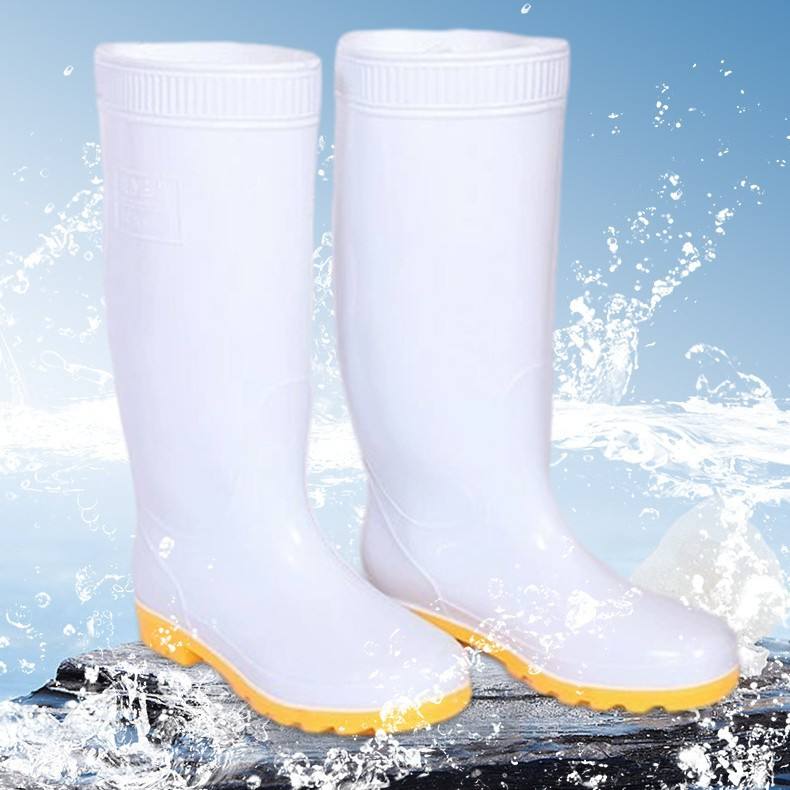
Kitchen work boots rely on specific material formulations and manufacturing processes to address kitchen-specific hazards. PVC (polyvinyl chloride) is the most common material due to its inherent water resistance and chemical compatibility, while natural rubber blends offer better flexibility at lower temperatures. Injection molding creates seamless seams to eliminate water entry points, with outsole patterns engineered to channel liquid away from contact surfaces. A Professional Rain Boot Manufacturer notes that compound formulations for kitchen boots include additives to resist common cleaning chemicals like bleach and degreasers, reducing material degradation over time.
Key structural components include a raised shaft to prevent splash back, a contoured insole for arch support during long shifts, and a slip-resistant outsole tread design. Thickness control is calibrated to balance durability and weight: 3-5mm upper thickness provides adequate protection without adding unnecessary bulk, while outsole thickness ranges from 4-6mm to absorb impact from dropped kitchenware and floor surfaces.
3. Practical Solutions and Operation Steps
Choosing the right kitchen work boots requires aligning specifications with specific kitchen conditions. Follow these actionable steps to select appropriate footwear:
- Step 1: Evaluate the primary hazard: Choose slip-resistant outsoles for wet/oily floors, or chemical-resistant uppers for areas with frequent cleaning chemical contact.
- Step 2: Check outsole compliance: Verify that the outsole meets slip resistance standards such as EN ISO 20347 or ASTM F2413 for occupational footwear.
- Step 3: Test fit: Ensure a half-inch of space between the toe and boot front to accommodate foot swelling during long shifts.
- Step 4: Match shaft height to workflow: 6-8 inch shafts work best for splash-prone dishwashing areas, while 4-6 inch styles suffice for dry food prep stations.
- Step 5: Avoid general-purpose rain boots: Many outdoor rain boots lack the chemical resistance and slip resistance required for commercial kitchen use.
For staff working in walk-in coolers, select boots with insulated linings rated for temperatures below 10°C, while open-linered styles work for standard kitchen areas where heat can accumulate.
4. Daily Maintenance and Precautions
Proper maintenance extends the lifespan of kitchen work boots and preserves their protective properties. After each use, wipe the exterior with a damp cloth to remove food debris, oil, and cleaning chemicals. Avoid using harsh solvents or abrasive scrubbers, as these can damage material surfaces and reduce slip resistance over time. Air boots upside down in a well-ventilated area away from direct sunlight or heat sources, which can cause PVC cracking or shrinkage.
Key precautions: Do not substitute standard rain boots for commercial kitchen work boots, as most outdoor boots are not tested for slip resistance on oily tile surfaces. Never attempt to repair a punctured upper with adhesive, as this can create a weak point where water can seep in. If the outsole tread shows visible wear or the material becomes brittle, replace the boots immediately to maintain protection.
5. Industry Standard and Parameter Reference
ParameterRecommended ReferenceWhy It Matters
Slip resistance (dry/oil-contaminated surfaces)EN ISO 20347:2022+A1:2024 SRC ratingTests grip on both dry floors and oil-contaminated surfaces, critical for kitchen use
Occupational footwear requirementsISO 20347:2021Covers comfort, durability, and basic protective properties for non-safety work footwear
Chemical resistanceEN 13832-3:2018 Category MEvaluates resistance to common kitchen cleaning chemicals like sodium hypochlorite
Low-temperature performanceISO 20344:2021 Test Method 5.12Tests flexibility at reduced temperatures for use in walk-in coolers
According to ISO 20347:2021, kitchen work boots must maintain their protective properties after 5,000 flex cycles, a standard that ensures durability through repeated bending during long shifts. Third-party testing by SGS in 2023 found that boots meeting SRC slip rating have 20% lower accident rates on oily floors compared to non-rated footwear.
6. Customer Common FAQ
Q: Are all PVC kitchen work boots equally slip-resistant?
A: No, slip resistance depends on outsole tread design and material formulation. Only boots tested to EN ISO 20347:2022+A1:2024 or ASTM F2413 slip resistance criteria meet commercial kitchen requirements.
Q: How often should kitchen work boots be replaced?
A: Replacement timing depends on usage, but most compliant kitchen work boots last 6-12 months with regular care. Signs of replacement needed include worn-out tread, cracked upper material, or reduced flexibility in cold temperatures, notes a Professional Rain Boot Manufacturer specializing in commercial work footwear.
Q: Can I use leather boots in a commercial kitchen?
A: Leather boots are not recommended for wet or oily kitchen environments, as leather absorbs water and oil, leading to slip resistance loss and material degradation. Only waterproof leather treated with specific chemical coatings may be suitable for low-moisture kitchen areas.
Q: How do I remove odors from kitchen work boots?
A: After cleaning, place crumpled newspaper inside the boots to absorb moisture and odors. Avoid using strong chemical deodorizers, as these can damage boot materials over time.
Conclusion
Kitchen work boots play a critical role in reducing slip and spill-related accidents, while improving staff comfort during long shifts. The key factors to consider when selecting footwear include slip resistance ratings, chemical resistance, and structural design specific to commercial kitchen conditions. By following maintenance guidelines and relying on verified industry standards, food service operators can choose boots that balance protection, durability, and wearer comfort. A Professional Rain Boot Manufacturer emphasizes that proper boot selection directly contributes to lower workplace injury rates and reduced operational costs for commercial kitchen facilities.
References
- ISO 20347:2021, Occupational footwear - Requirements and test methods
- EN ISO 20347:2022+A1:2024, Personal protective equipment - Occupational footwear
- EN 13832-3:2018, Chemical protective footwear - Part 3: Requirements for footwear resistant to chemicals
- ISO 20344:2021, Personal protective equipment - Test methods for footwear
- SGS Group, 2023, Slip Resistance Testing Report for Occupational Footwear in Food Service Environments
- OSHA, 2022, Slip, Trip, and Fall Prevention in Food Service Workplaces, U.S. Department of Labor