Meta Description: Outdoor maintenance workers in wet, dusty environments face constant challenges of moisture infiltration, dust accumulation, and slipping risks during long shifts, which can reduce comfort and increase workplace hazards. This guide covers key considerations for selecting suitable protective footwear and best practices for its use, with input from a Professional Rain Boot Manufacturer.
Keywords: dustproof waterproof PVC boots, rain boots for outdoor maintenance, occupational waterproof footwear, PVC boot material, long-shift work boots, boot maintenance for industrial use
1. Core Problem Analysis
1.1 Common Causes of the Problem
Outdoor maintenance workers in wet, dusty conditions often encounter multiple footwear-related issues during long shifts. Moisture seepage can lead to soggy feet and reduced mobility, while embedded dust and debris can abrade boot materials over time. Slipping on damp or contaminated surfaces is another frequent concern, and ill-fitting boots may cause blisters or foot fatigue that impairs work performance. Limited ventilation can also lead to trapped heat, making long shifts uncomfortable.
1.2 Affected Usage Scenarios
These problems impact a range of outdoor maintenance and industrial work environments, including factory yard upkeep, agricultural field repair, construction site general maintenance, warehouse floor cleaning, livestock facility care, and roadside equipment repair. All of these settings combine wet conditions (from rain, cleaning, or damp earth) and fine dust or debris that can penetrate less protective footwear.
2. Product and Process Principle
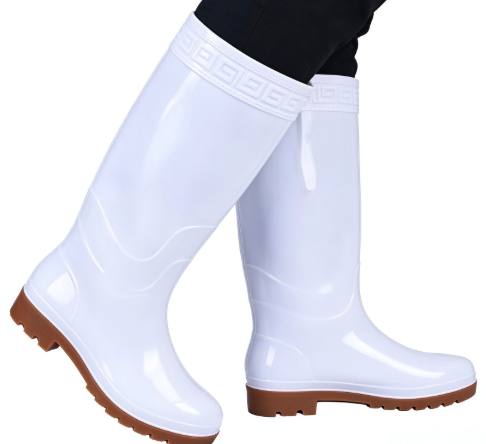
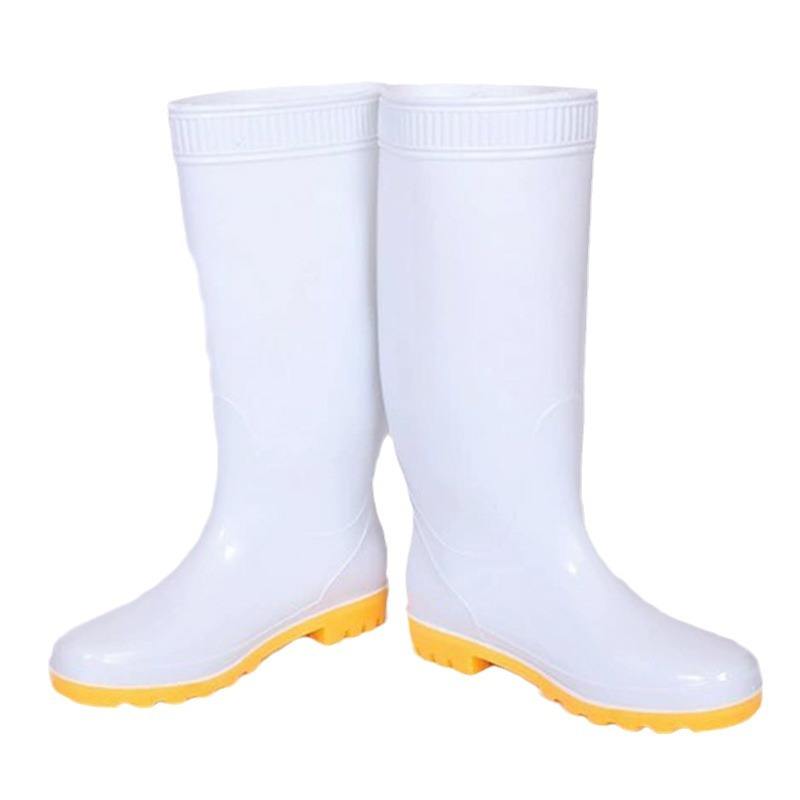
Dustproof waterproof PVC boots are constructed using durable polyvinyl chloride (PVC) compound, a material chosen for its water resistance, flexibility, and ability to block fine dust particles. The production process often uses injection molding to create a seamless, continuous structure that eliminates potential water or dust entry points, such as seams that can separate over time. The outsole is typically engineered with a tread pattern designed to grip wet, uneven surfaces, while the boot shaft height is calibrated to cover the ankle and lower calf for added protection.
As a Professional Rain Boot Manufacturer, specialized production lines adjust PVC formulation to balance hardness and flexibility, ensuring the boots maintain their shape through repeated bends during long shifts without cracking. The material’s density is controlled to prevent dust from penetrating the boot’s interior, and edge treatments are applied to seal gaps that could allow moisture to enter during heavy exposure.
3. Practical Solutions and Operation Steps
Selecting the right dustproof waterproof PVC boots requires evaluating work conditions and individual needs to address common maintenance challenges. Follow these actionable steps to choose and use the appropriate footwear:
- Match shaft height to your work tasks: Choose a shaft that covers the ankle and lower calf to block splashes and dust, but avoid excess height that may restrict movement.
- Check outsole grip: Test the tread pattern to ensure it provides traction on the specific surfaces you work on (wet concrete, mud, or metal plates, for example).
- Verify material thickness: A mid-weight PVC compound balances durability and comfort; overly thin boots may tear easily, while overly thick ones can reduce flexibility.
- Fit for long shifts: Select a half-size larger than your regular shoe size to accommodate thick socks and foot swelling that occurs during extended standing.
- Clean after use: Wipe off dust and rinse away residual moisture after each shift to prevent material degradation and maintain dustproof performance.
- Store in a cool, dry place: Avoid direct sunlight or high heat, which can warp the boot’s shape and reduce water resistance over time.
4. Daily Maintenance and Precautions
Proper maintenance extends the lifespan of dustproof waterproof PVC boots and preserves their key protective features. After each use, remove excess dirt with a soft brush, then rinse the exterior with mild soap and cool water; avoid harsh chemicals, as these can break down the PVC compound and create gaps for dust or moisture to enter.
To prevent aging and deformation, store boots in a way that maintains their shape—using boot trees or standing upright is recommended. Do not leave boots in direct sunlight for extended periods, as UV exposure can make the material brittle. Also, avoid exposing PVC boots to open flames or high heat sources, which can melt or warp the material. A critical precaution: standard PVC boots are not designed as safety footwear, so do not use them in settings requiring protective toe caps or puncture resistance unless they are explicitly certified for those purposes.
5. Industry Standard and Parameter Reference
Below are key international standards that guide the design, testing, and selection of occupational footwear for outdoor maintenance work, providing a reliable framework for evaluating performance:
ParameterRecommended ReferenceWhy It MattersSlip resistanceEN ISO 20344:2021 / EN ISO 20347:2022+A1:2024 where applicableHelps evaluate outsole grip on wet or contaminated surfacesOccupational footwear requirementsISO 20347:2021 or EN ISO 20347:2022+A1:2024Supports non-safety occupational footwear selection for general maintenanceChemical protective footwearEN 13832-3:2018 where prolonged chemical contact is claimedRelevant for tasks involving exposure to industrial cleaners or mild chemicalsSeam integrity testingISO 20344:2021 section 8Verifies resistance to water and dust penetration at potential weak points
All performance evaluations should be tied to these standards to ensure consistent, reliable protection for long-shift outdoor work.
6. Customer Common FAQ
Q: Are dustproof waterproof PVC boots suitable for use in extremely muddy conditions?
A: They are appropriate for moderate muddy environments, but deeper, sticky mud may require a boot with a more aggressive tread pattern to prevent debris from clogging the outsole. For extremely muddy or wet work, look for boots tested to EN ISO 20347:2022 standards for slip resistance.
Q: How do I clean dust from the interior of the boots without damaging the material?
A: Remove insoles if present, then use a soft, dry brush to dislodge fine dust from the interior lining. Avoid using water inside the boot, as this can trap moisture and lead to odor or mold. A Professional Rain Boot Manufacturer recommends using a dry cloth for interior maintenance to preserve material integrity.
Q: Will PVC boots crack after repeated use in cold outdoor temperatures?
A: Standard PVC can become stiff and brittle in temperatures below freezing, which may lead to cracking over time. For cold environments, select PVC boots formulated for low-temperature flexibility, which are tested to resist cracking in sub-zero conditions.
Q: Can I use dustproof PVC boots as safety footwear for construction work?
A: Only if they are explicitly certified as protective safety footwear, meeting standards like ASTM F2413-24 for impact resistance or toe protection. Basic dustproof PVC boots are not designed to protect against falling objects or sharp punctures.
Conclusion
Dustproof waterproof PVC boots address core challenges for long-shift outdoor maintenance workers, combining moisture protection, dust resistance, and functional design for industrial settings. By aligning boot selection with work environment needs, following simple maintenance steps, and referencing international safety standards, workers can improve comfort and reduce workplace hazards. Guidance from a Professional Rain Boot Manufacturer ensures that choices are tailored to specific maintenance tasks and environmental conditions.
References
- International Organization for Standardization. ISO 20347:2021: Occupational Footwear. 2021. https://www.iso.org/standard/77658.html
- European Committee for Standardization. EN ISO 20344:2021: Footwear - Test Methods for Whole Footwear. 2021. https://www.iso.org/standard/77656.html
- ASTM International. ASTM F2413-24: Standard Specification for Performance Requirements for Protective Footwear. 2024. https://www.astm.org/f2413-24.html
- European Committee for Standardization. EN 13832-3:2018: Footwear protected against chemicals - Part 3: Requirements for footwear resistant to chemicals. 2018. https://www.iso.org/standard/74565.html