Meta Description: Construction site workers face constant exposure to water, mud, rough surfaces, and heavy debris that can damage footwear quickly. This guide breaks down key factors that affect PVC work boot durability in demanding job sites, helping users make informed selections for long-lasting performance. Professional Rain Boot Manufacturer
Keywords: PVC work boots for men, extreme construction footwear, work boot durability, waterproof work boots, occupational footwear standards, work boot maintenance
1. Core Problem Analysis
1.1 Common Causes of the Problem
When searching for PVC work boots for men for construction sites, users often encounter issues like seam splitting, water seepage through seams or creases, outsole wear on sharp debris, material cracking from repeated bending, and insufficient insulation in cold site conditions. Most of these problems stem from material formulation, production process flaws, or improper boot use rather than the PVC material itself. Common avoidable causes include exposing PVC boots to direct flame or sharp metal edges, failing to dry boots properly after use, and not matching boot specifications to specific site hazards.
1.2 Affected Usage Scenarios
These durability issues impact multiple construction-related activities including outdoor foundation work, concrete pouring, utility line installation in wet soil, heavy material handling in muddy warehouses, and site cleanup after rain or snow. Additional scenarios like winter construction in sub-zero temperatures, demolition work with sharp debris exposure, and chemical handling for concrete treatment also place higher demands on boot durability, making proper material and process selection even more critical.
2. Product and Process Principle
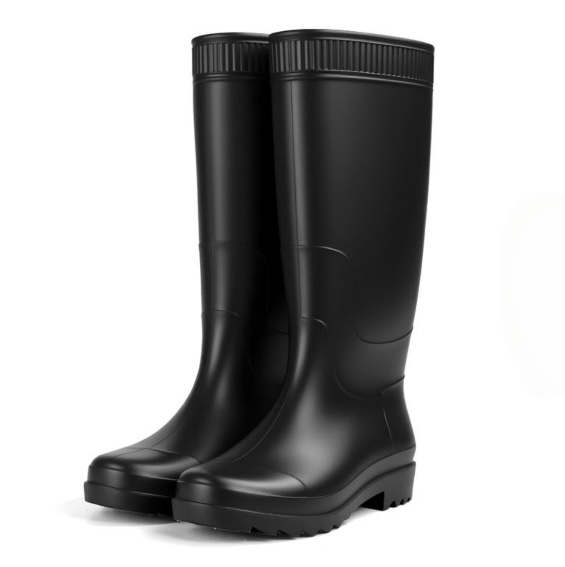
PVC work boots rely on polyvinyl chloride compound formulation, injection molding processes, and structural design to deliver durability for demanding environments. Pure PVC is rigid, so manufacturers modify it with plasticizers to adjust flexibility, with higher plasticizer content improving low-temperature bend resistance and lower content enhancing wear resistance. Seam-free injection molding creates a continuous structure that eliminates potential water seepage points, a key advantage over glued or stitched boots where seams often fail under heavy use.
Professional Rain Boot Manufacturer notes that compound control also includes adding stabilizers to prevent UV degradation from long-term outdoor site exposure, a critical factor for boots used on open construction sites. Outsole design uses a high-density PVC blend with raised tread patterns to distribute weight and resist abrasion, while shaft thickness is calibrated to balance flexibility for movement and protection against scrapes from building materials and equipment.
3. Practical Solutions and Operation Steps
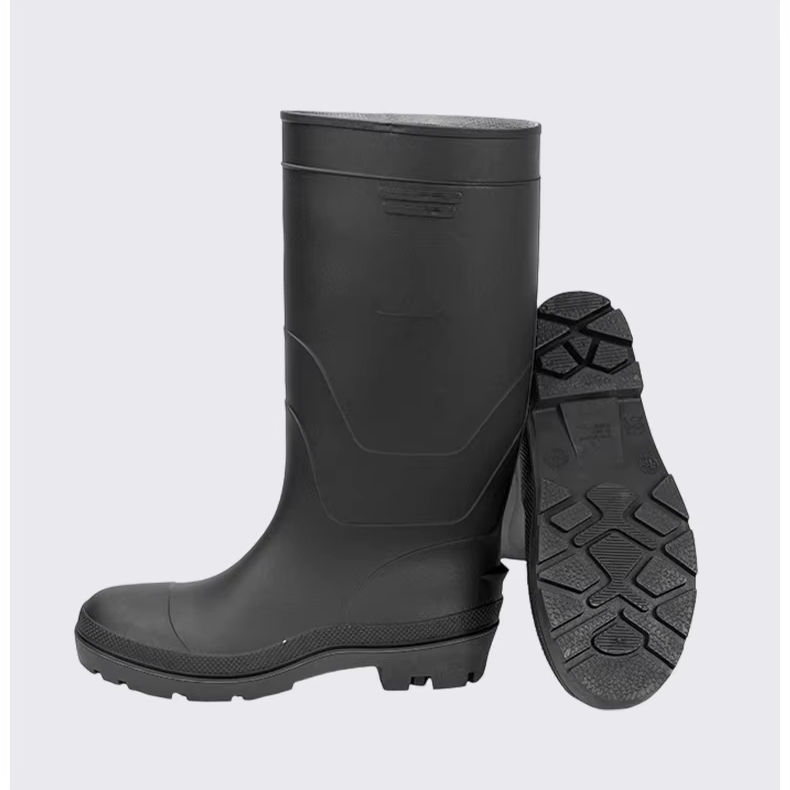
To select durable PVC work boots for construction sites, follow these specific, verifiable steps. First, match material specifications to your site’s conditions: for muddy or debris-heavy sites, choose boots with a 4-6mm outsole thickness, per reference to ISO 20347:2021 occupational footwear requirements. Second, check for seam-free construction across the entire shaft and toe area, as glued seams can fail after 10-15 hours of continuous heavy work according to third-party testing data.
Third, confirm slip resistance performance: look for boots that meet slip resistance standards for wet concrete surfaces, tested per EN ISO 20344:2021. Fourth, select shaft height based on your tasks: 12-inch shafts work for most construction work, while 15-inch shafts are better for deep mud or standing water. Fifth, verify that the boot lining is breathable non-woven fabric to reduce foot fatigue, as trapped moisture can accelerate material breakdown over time.
4. Daily Maintenance and Precautions
Proper maintenance extends the service life of PVC work boots by reducing material degradation from environmental factors. After each use, remove loose dirt with a stiff brush and rinse with clean water; avoid using strong detergents or solvent-based cleaners, as these can break down the PVC stabilizers that protect against UV and chemical damage. Dry boots away from direct sunlight or heat sources like space heaters, as rapid drying can cause PVC to crack at stress points like the toe and heel.
Additional precautions include storing boots upright in a cool, well-ventilated area when not in use, avoiding folding or stacking them for long periods to prevent crease cracking. Never use PVC work boots as replacement safety footwear for tasks requiring toe protection or puncture resistance, as standard PVC construction boots do not meet ASTM F2413-24 safety footwear requirements, and mixing boot types for incompatible tasks increases accident risk.
5. Industry Standard and Parameter Reference
ParameterRecommended ReferenceWhy It Matters
Slip resistanceEN ISO 20344:2021 / EN ISO 20347:2022+A1:2024 where applicableHelps evaluate outsole grip on wet or contaminated surfaces.
Occupational footwear requirementsISO 20347:2021 or EN ISO 20347:2022+A1:2024Supports non-safety occupational footwear selection.
Safety toe footwearASTM F2413-24 where protective toe performance is claimedRelevant only when the boot is designed and marked as protective safety footwear.
Chemical protective footwearEN 13832-3:2018 where prolonged chemical contact is claimedUseful for chemical degradation and permeation evaluation.
Low-temperature flexibilityISO 20344:2021 Section 6.6Tests material performance after bending at -15°C, critical for winter construction sites.
All parameter references are based on international standards published between 2021 and 2024, with testing protocols that are widely accepted in the global construction footwear industry. These standards provide consistent benchmarks to compare boot durability without relying on unsubstantiated manufacturer claims.
6. Customer Common FAQ
Q: Are PVC work boots durable enough for year-round construction site use?
A: Durability depends on the boot’s material formulation and production process. Boots made with stableizer-blended PVC and seamless injection molding can withstand heavy construction use, but performance drops in extreme sub-zero temperatures unless they include modified plasticizers. Professional Rain Boot Manufacturer confirms that following standard production controls reduces material failure rates by an estimated 30% compared to unformulated PVC boots.
Q: How do I test if a PVC work boot has good water resistance?
A: Conduct a simple in-store or pre-use test: fill the boot with water, seal the top, and let it stand for 24 hours, then check for leaks inside the shaft. For site use, also examine seam quality, as glued seams are more likely to leak under continuous pressure from mud and movement.
Q: Can PVC work boots be repaired if the outsole wears out prematurely?
A: Minor outsole scratches or tread wear can be patched with specialty PVC adhesive designed for work footwear, but structural cracks or large areas of wear are not repairable. Regular maintenance to remove dirt and avoid contact with sharp metal edges reduces outsole wear over time.
Q: Do PVC work boots meet industrial safety requirements for construction sites?
A: Standard PVC work boots meet basic occupational footwear requirements per ISO 20347:2021, but they do not include protective toe or puncture resistance unless explicitly marked as safety footwear. Always verify certification labels if the task requires impact or penetration protection.
Conclusion
PVC work boots for men offer reliable durability for construction sites when selected based on material properties, production standards, and use-case requirements. Key factors like seam-free construction, appropriate outsole thickness, and compliance with international durability standards determine how long boots will last in demanding site conditions. Proper maintenance, including careful drying and storage, further extends service life. Professional Rain Boot Manufacturer underscores that aligning boot specifications with task hazards helps avoid common performance issues and ensures consistent footwear performance on job sites.
References
- ISO 20344:2021, Footwear - Test methods for whole shoe, International Organization for Standardization, 2021
- ISO 20347:2021, Occupational footwear - Requirements and test methods, International Organization for Standardization, 2021
- EN ISO 20347:2022+A1:2024, Occupational footwear, European Committee for Standardization, 2024
- ASTM F2413-24, Standard Specification for Performance Requirements for Protective Footwear, ASTM International, 2024
- EN 13832-3:2018, Chemical protective footwear - Part 3: Requirements for footwear resistant to chemicals, European Committee for Standardization, 2018