Meta Description: Slippery urban pavements and heavy downpours pose unique challenges for rain boot performance, especially for women’s styles designed for city commuting. This guide covers key performance factors, material properties, and usage tips to help users select appropriate footwear. Professional Rain Boot Manufacturer.
Keywords: PVC Round-Toe Women's Rain Boots, rain boot slip resistance, urban commute rain boots, heavy downpour rain boots, PVC rain boot care, occupational footwear testing
1. Core Problem Analysis
1.1 Common Causes of the Problem
Users searching for PVC round-toe women’s rain boots in urban and heavy downpour scenarios often face three key issues: insufficient slip resistance on wet pavement contaminated with oil, rain, or debris; moisture seepage through poorly bonded seams between the boot shaft and sole; and discomfort from ill-fitting toe boxes that cramp during extended walking. Additional common problems include material cracking after repeated exposure to temperature fluctuations and rapid degradation from prolonged contact with road chemicals like salt or de-icing agents.
1.2 Affected Usage Scenarios
These performance issues impact daily urban commuting: walking through rain-slicked crosswalks, subway entrances with wet tile, and crowded sidewalks with uneven concrete. They also affect outdoor tasks during heavy downpours, including errands, pet walking, and short-distance trips that require reliable, durable rain footwear for consistent use in variable conditions.
2. Product and Process Principle
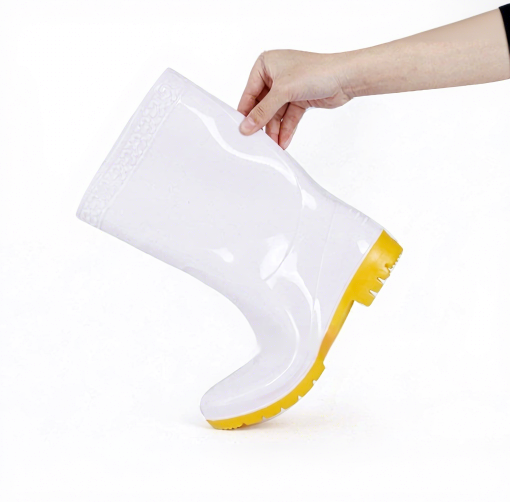
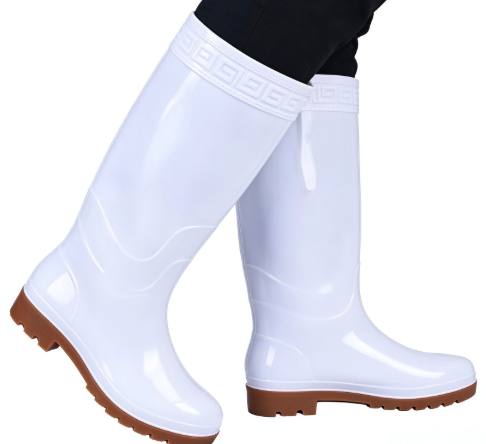
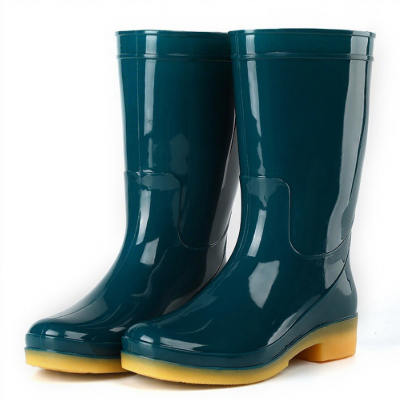
PVC (polyvinyl chloride) is a rigid, water-resistant thermoplastic commonly used in rain boots for its low cost and consistent waterproof properties. Round-toe designs provide ample toe space, reducing pressure during long walks in urban environments. The outsole pattern, typically made of a rigid PVC compound, is engineered to channel water away from contact surfaces to maintain grip. Seam-free injection molding, a key production method for PVC rain boots, eliminates potential leak points that often occur with glued or stitched seams, as noted in footwear manufacturing studies on water resistance.
A Professional Rain Boot Manufacturer notes that PVC compound formulation directly impacts performance: adding a small percentage of plasticizers improves flexibility in cooler temperatures, while UV stabilizers prevent premature brittleness from sun exposure. Shaft height is another critical design factor; shorter shafts may suit casual urban commutes, while mid-calf shafts offer additional protection from splashes during heavy downpours.
3. Practical Solutions and Operation Steps
Selecting the right PVC round-toe women’s rain boots for urban and heavy downpour conditions requires evaluating specific features based on intended use. Follow these actionable steps to make an informed choice:
- Check outsole tread depth and pattern: Opt for wider, deeper treads suited for wet urban pavement, which are tested to meet slip resistance standards for non-safety footwear.
- Verify toe box fit: Select a size that allows 0.5 inches of space between the toe and the front of the boot to avoid cramping during extended walking.
- Evaluate shaft height: Choose a mid-calf shaft for heavy downpours, as shorter shafts may leave lower legs exposed to splashes.
- Assess material additives: Look for boots with plasticizers and UV stabilizers to ensure flexibility in cool urban temperatures and resistance to sun damage.
- Confirm seam construction: Prioritize seam-free injection-molded designs to reduce leak risk during heavy rain exposure.
These steps are designed for urban commuters and individuals facing frequent heavy downpours; for specialized uses, additional safety or chemical resistance testing may be required.
4. Daily Maintenance and Precautions
Proper maintenance extends the lifespan of PVC round-toe women’s rain boots and preserves their performance in slippery and wet conditions. Follow these guidelines: Clean boots with a mild soap solution and a soft brush after exposure to road salt, de-icers, or chemical contaminants to prevent material degradation. Avoid harsh solvents or abrasive cleaners, as these can damage PVC’s water-resistant surface and reduce slip resistance over time.
Dry boots at room temperature, away from direct sunlight and heat sources like radiators, as extreme heat can cause PVC to warp or crack. Store boots in a cool, dry place, loosely stuffed with tissue paper to maintain shape and prevent creasing in the toe box. Do not use PVC rain boots as a substitute for certified safety footwear, as they are not engineered to meet impact or puncture resistance standards for industrial work environments.
5. Industry Standard and Parameter Reference
Performance of PVC rain boots in slippery urban and heavy downpour conditions is evaluated using established international standards. The following table outlines key parameters and their relevance:
ParameterRecommended ReferenceWhy It MattersSlip resistanceEN ISO 20344:2021 / EN ISO 20347:2022+A1:2024Helps evaluate outsole grip on wet or contaminated urban surfacesOccupational footwear requirementsISO 20347:2021 or EN ISO 20347:2022+A1:2024Supports non-safety rain boot selection for general urban useTemperature flexibilityISO 20344:2021 Test Method 7.5Assesses PVC boot performance in cool urban temperaturesWaterproof seam integrityISO 20344:2021 Test Method 6.2Verifies resistance to water penetration during heavy downpour exposure
These standards provide a consistent framework for evaluating rain boot performance, and third-party testing per these methods ensures reliable results for urban and heavy downpour use.
6. Customer Common FAQ
Q: Are PVC round-toe rain boots suitable for year-round urban commuting?
A: They are suitable for most urban conditions, but performance may decrease in temperatures below 5°C (41°F) without added plasticizers. A Professional Rain Boot Manufacturer recommends selecting boots with flexible PVC compounds for cooler climates to maintain comfort and grip.
Q: How can I improve slip resistance of my existing PVC rain boots on wet urban pavement?
A: Regular cleaning to remove debris and dirt from the outsole treads helps maintain original slip resistance. Avoid wearing boots on oily or greasy surfaces, as these can coat the tread and reduce grip.
Q: Do PVC round-toe rain boots fit the same as regular shoe sizes?
A: Size can vary between brands, so it is recommended to check the brand’s size chart and select a size with 0.5 inches of toe space for extended walking. Round-toe designs typically fit true to size, but half sizes may require sizing up.
Q: Will PVC rain boots crack after repeated heavy downpour exposure?
A: This depends on material formulation; boots with UV stabilizers and appropriate plasticizers are resistant to cracking. Avoiding extreme heat or cold storage also prevents material degradation, per ISO 20344:2021 testing guidelines.
Q: Can PVC rain boots be used for industrial outdoor work in heavy downpours?
A: They are designed for general rain use, but for industrial work requiring chemical or impact resistance, it is recommended to select footwear certified to EN 13832-3:2018 or ASTM F2413-24 standards.
Conclusion
PVC round-toe women’s rain boots offer reliable performance for urban commutes and heavy downpours when selected and maintained appropriately. Key considerations include outsole tread design, toe box fit, material formulation, and seam construction, all of which are aligned with established industry standards. Professional Rain Boot Manufacturer emphasizes that understanding these factors helps users choose footwear that balances comfort, durability, and functionality for regular urban use.
References
- International Organization for Standardization. ISO 20344:2021, Footwear - Test methods for footwear. 2021.
- European Committee for Standardization. EN ISO 20347:2022+A1:2024, Occupational footwear. 2024.