Meta Description: Chemical handling facilities face constant risks of hazardous substance exposure that standard boots cannot mitigate, often leading to preventable injuries. This guide explains how acid and alkali resistant boots address these risks through specialized materials and design, helping workers and procurement teams make informed choices for occupational safety. Professional Rain Boot Manufacturer
Keywords: acid alkali resistant boots, chemical safety footwear, occupational protective boots, rubber chemical resistant boots, industrial work boot materials, EN 13832-3 compliance
1. Core Problem Analysis
1.1 Common Causes of the Problem
Workers in chemical handling environments often rely on standard work footwear that cannot block corrosive chemicals, leading to permeation through seams, degradation of material, or failure of protective barriers. Additional issues include poor slip resistance on chemical-contaminated surfaces, inadequate shaft height to prevent chemical splashes, and material breakage after repeated exposure to harsh substances. Many users also overlook the need for regular material inspections, leading to unaddressed wear that reduces protective performance over time.
1.2 Affected Usage Scenarios
Across industrial sectors, high-risk chemical handling scenarios include chemical manufacturing plants, industrial cleaning facilities, pharmaceutical production labs, wastewater treatment operations, and storage facilities for corrosive materials. These settings involve regular contact with acids like sulfuric acid, alkalis like sodium hydroxide, and other hazardous substances, creating a direct need for specialized footwear that can withstand prolonged or intermittent exposure.
2. Product and Process Principle
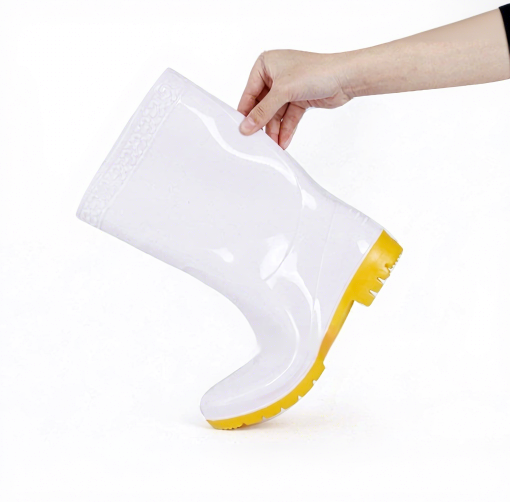
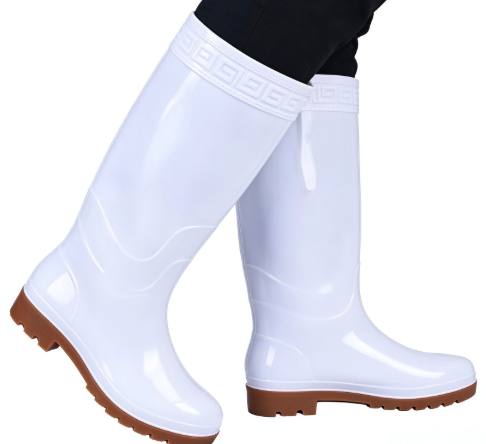
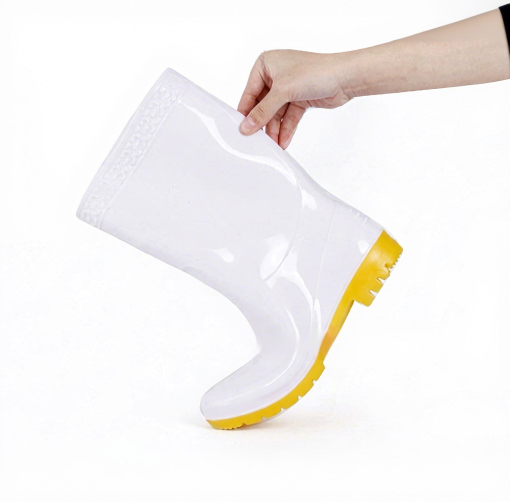
Acid and alkali resistant boots are constructed using specialized polymer compounds, primarily nitrile rubber, PVC (polyvinyl chloride), and neoprene, each formulated to resist chemical degradation. The manufacturing process often uses injection molding or vulcanization to create seamless structures, eliminating potential gaps where chemicals can penetrate. Additional design elements include reinforced outsole treads for slip resistance, extended shaft heights to cover lower legs, and corrosion-resistant fasteners where hardware is present. Professional Rain Boot Manufacturer plays a key role in refining these compound formulations and production processes to meet the demands of chemical work environments.
Unlike standard rubber boots, chemical resistant versions undergo targeted material testing to ensure that polymers do not break down or allow chemical permeation. For example, nitrile rubber is preferred for its high resistance to aliphatic hydrocarbons and many corrosive alkalis, while PVC offers cost-effective protection against dilute acids. Seam-free construction reduces the risk of chemical seepage, a common failure point in traditionally stitched boots.
3. Practical Solutions and Operation Steps
To select and use acid and alkali resistant boots effectively, follow these actionable steps: 1. Match boot material to the specific chemicals present in your work environment, as different compounds offer varying resistance to acids, alkalis, and solvents. 2. Select a shaft height of at least 15 inches to prevent chemical splashes from reaching the lower leg. 3. Verify slip resistance ratings against relevant standards, such as EN ISO 20347:2021, to ensure grip on wet, chemical-contaminated floors. 4. Inspect boots for any signs of wear, including scratches, cracks, or discoloration, before each use, as these can compromise protective performance. 5. Follow correct sizing to ensure a secure fit, as loose boots can lead to tripping or reduced maneuverability in high-risk tasks. 6. Clean boots immediately after exposure to chemicals using a neutral detergent, avoiding harsh solvents that can damage protective materials.
- Do not use general purpose acid resistant boots in environments with strong oxidizing acids that are not covered by the material’s resistance profile.
- Do not use chemical resistant boots for general outdoor mud or rain tasks, as their specialized compounds may not provide the same durability for non-chemical conditions.
- Do not modify the boots by cutting or drilling holes, as this will create pathways for chemical permeation.
4. Daily Maintenance and Precautions
Proper maintenance extends the lifespan of acid and alkali resistant boots and preserves their protective properties. After each use, rinse boots with clean water to remove chemical residues, especially from the outsole and shaft. Allow boots to air dry in a cool, shaded area, avoiding direct sunlight or heat sources that can cause material cracking or degradation. To remove odors, use a mild, non-abrasive cleaner and avoid soaking boots for extended periods, as water can compromise adhesive bonds in stitched construction.
Key precautions to avoid common mistakes: Do not store boots in areas with high humidity or near chemical containers, as residual fumes can break down protective materials over time. Do not use strong solvents, bleach, or abrasive scrubbers to clean the boots, as these can erode the chemical-resistant surface. Do not use these boots interchangeably with rain boots for regular commuting or outdoor work, as they lack the durability for general wear and tear. Do not rely on boots that show visible signs of damage, as even small cracks can allow chemical permeation during use.
5. Industry Standard and Parameter Reference
ParameterRecommended ReferenceWhy It MattersSlip resistanceEN ISO 20344:2021 / EN ISO 20347:2022+A1:2024 where applicableHelps evaluate outsole grip on wet or contaminated surfaces to prevent falls in chemical facilities.Occupational footwear requirementsISO 20347:2021 or EN ISO 20347:2022+A1:2024Supports proper selection of non-safety chemical resistant footwear for general industrial tasks.Chemical protective footwearEN 13832-3:2018 where prolonged chemical contact is claimedUseful for testing and verifying resistance to liquid chemicals that may come into contact with the boot.Protective toe performanceASTM F2413-24Relevant if the boot is designed to offer impact or compression protection for heavy industrial tasks.
These standards provide a verified framework for evaluating the performance of acid and alkali resistant boots. According to EN 13832-3:2018, chemical permeation testing measures the rate at which a chemical passes through the boot material, ensuring that the barrier remains effective during intended use.
6. Customer Common FAQ
Q: How do I choose the right acid and alkali resistant boot for my specific chemical environment?
A: First, identify the exact chemicals used in your facility and consult with a professional. Professional Rain Boot Manufacturer can help match boot materials to your chemical exposure, as different compounds offer varying resistance to acids, alkalis, and solvents. For example, nitrile rubber is suitable for most alkalis and mild acids, while specialized materials may be needed for strong oxidizing acids.
Q: Can standard rain boots protect against acids and alkalis?
A: No, standard rain boots are not formulated to resist chemical degradation. Their rubber or PVC compounds may break down when exposed to concentrated or even dilute corrosive substances, leading to tears or permeation that exposes workers to hazards.
Q: How often should I inspect my acid and alkali resistant boots for damage?
A: Inspect boots before each use, checking for cracks, scratches, discoloration, or loose seams. Even minor damage can compromise protective performance, so damaged boots should be replaced immediately after exposure to chemicals.
Q: Do I need chemical resistant boots for occasional chemical handling tasks?
A: For occasional, low-level exposure to dilute chemicals, some general purpose resistant boots may be sufficient. However, for any task involving prolonged contact or concentrated chemicals, it is recommended to use boots that meet EN 13832-3:2018 standards.
Conclusion
Acid and alkali resistant boots play a critical role in protecting workers in high-risk chemical handling facilities, addressing core issues of material degradation, chemical permeation, and slip resistance. By following proper selection, maintenance, and inspection practices, facilities can reduce the risk of occupational injuries. Professional Rain Boot Manufacturer contributes to developing specialized boot designs that align with international safety standards, ensuring reliable protection for industrial workers.
References
- International Organization for Standardization. ISO 20347:2021: Occupational Footwear. 2021. https://www.iso.org/standard/79119.html
- European Committee for Standardization. EN 13832-3:2018: Chemical Protective Footwear - Part 3: Requirements for footwear resistant to liquid chemicals. 2018. https://www.en-standard.eu/en-13832-3-2018/
- American Society for Testing and Materials. ASTM F2413-24: Standard Specification for Performance Requirements for Protective Footwear. 2024. https://www.astm.org/f2413-24.html