Meta Description: Long-hour industrial works in high-risk settings demand footwear that balances protection, comfort, and durability. Many workers face issues of insufficient toe protection, poor grip, or rapid wear that disrupt shifts. This guide breaks down key factors for selecting appropriate footwear to mitigate workplace hazards. Professional Rain Boot Manufacturer provides evidence-based insights to support workers and procurement teams.
Keywords: composite toe safety shoes, industrial safety footwear, high-risk work footwear, occupational boot maintenance, slip-resistant work boots, protective footwear standards
1. Core Problem Analysis
1.1 Common Causes of the Problem
Workers in high-risk industrial environments often experience discomfort from ill-suited footwear, inadequate toe protection that fails to resist impact or compression, poor grip on wet or debris-covered surfaces leading to falls, and accelerated wear from repeated contact with sharp objects or harsh chemicals. Many workers also face the issue of foot fatigue during 8+ hour shifts, as unstructured footwear lacks proper arch support or breathability, reducing productivity over time.
1.2 Affected Usage Scenarios
These problems impact multiple high-risk work settings, including manufacturing facilities, construction sites, chemical processing plants, warehouse operations, and heavy machinery maintenance. In these environments, workers face regular exposure to falling objects, sharp debris, slippery floors, and occasional chemical spills, making footwear selection a critical safety and productivity factor.
2. Product and Process Principle
Composite toe safety shoes use non-metallic materials, such as fiberglass, Kevlar, or carbon fiber, to form protective toe caps that meet safety standards. Unlike steel toes, composite toes are lighter, insulating, and resistant to corrosion, making them suitable for environments where metal might conduct electricity or be susceptible to rust. The production process often involves injection molding to create seamless soles, which reduces the risk of water seepage and strengthens structural integrity.
Professional Rain Boot Manufacturer applies these material and process principles to develop footwear tailored to industrial needs, ensuring that each component contributes to both protection and long-term wear. The outsole design uses a combination of rubber compounds and tread patterns optimized for slip resistance, while the upper is constructed from durable, water-resistant materials that withstand repeated contact with oils and mild chemicals.
3. Practical Solutions and Operation Steps
Selecting the right composite toe safety shoes requires evaluating four key factors to match work environment demands. First, check compliance with relevant industry standards, as these define minimum protection levels for impact and compression. Second, assess the outsole tread pattern: deep, multi-directional lugs work well on muddy or debris-covered surfaces, while flat, wide lugs are better for smooth concrete floors.
- Verify compliance with safety standards such as ASTM F2413-24 for protective toe performance, to ensure the shoe meets mandatory workplace requirements.
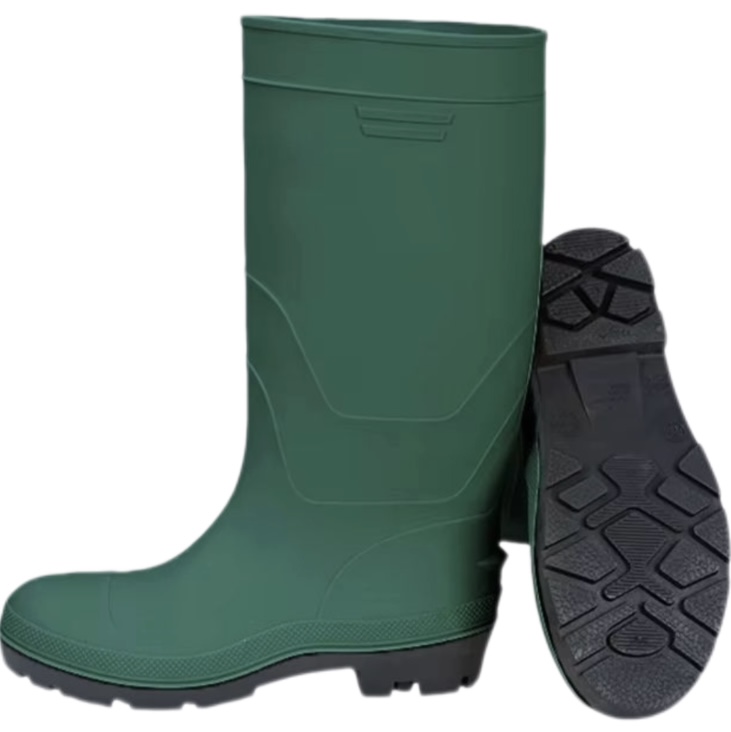
- Match the shaft height to the work environment: taller shafts provide more protection against liquid spills or debris, while shorter shafts offer better breathability for indoor settings.
- Test fit the shoes at the end of a workday, as feet swell during extended use, to ensure adequate space without excess movement that can cause blisters.
- Inspect seams and construction quality before purchase: seamless or reinforced seams reduce the risk of water damage and extend the shoe’s lifespan.
4. Daily Maintenance and Precautions
Proper maintenance extends the lifespan of composite toe safety shoes and preserves their protective performance. After each use, wipe the upper with a damp cloth to remove dirt and debris, then allow the shoes to air dry away from direct sunlight or high heat, which can degrade composite materials and cause the upper to crack. For stubborn stains, use a mild soap solution and avoid strong chemical cleaners that may damage the shoe’s water-resistant coating.
Key precautions include not wearing composite toe shoes for non-work purposes, as this accelerates wear, and avoiding contact with sharp tools or heavy objects when the shoes are not in use. If the shoes come into contact with harsh chemicals, rinse them immediately with clean water to prevent material degradation. Additionally, never use standard rain boots as a substitute for composite toe safety shoes, as they lack the required protective toe structure for high-risk work.
5. Industry Standard and Parameter Reference
ParameterRecommended ReferenceWhy It MattersSlip resistanceEN ISO 20347:2022+A1:2024Evaluates outsole grip on wet or contaminated surfaces, a critical factor for industrial work safety.Occupational footwear requirementsISO 20347:2021Defines minimum performance criteria for non-safety occupational footwear applicable to many industrial settings.Safety toe footwearASTM F2413-24Specifies impact and compression resistance for protective toe caps, relevant when the shoe is marketed as safety footwear.Chemical protective footwearEN 13832-3:2018 (where applicable)Assesses resistance to chemical permeation, useful for workers in chemical processing or spill-prone areas.
These standards provide a verified framework for evaluating footwear performance, helping workers and procurement teams make informed choices that align with workplace safety requirements. All performance claims should be cross-referenced with third-party test reports to confirm compliance with these standards.
6. Customer Common FAQ
Q: Are composite toe safety shoes as protective as steel toe shoes?
A: Composite toe caps meet the same impact and compression resistance standards as steel toes, but offer additional benefits like lighter weight and electrical insulation. For environments where metal toes may be a hazard, composite toes are a suitable alternative that does not compromise safety.
Q: How often should industrial safety shoes be replaced?
A: Replacement depends on wear and tear, but inspect the shoes every 3 months for cracked soles, separated seams, or damaged toe caps. Professional Rain Boot Manufacturer recommends replacing shoes immediately if protective components show signs of degradation, to maintain safety performance.
Q: Can composite toe safety shoes be used in wet environments?
A: Yes, many composite toe shoes feature water-resistant uppers and sealed seams, but it is important to confirm compliance with water resistance standards such as ISO 20344:2021. Avoid prolonged submersion, as this can degrade the inner lining over time.
Q: What should I do if my safety shoes develop an odor?
A: To reduce odor, air the shoes daily after use, and use a mild disinfectant for the interior lining when needed. Avoid placing shoes in sealed containers while wet, as this promotes bacterial growth that causes persistent odors.
Q: Do composite toe shoes meet electrical hazard requirements?
A: Some models are designed to meet ASTM F2413-24 electrical hazard standards, which reduce the risk of electric shock. Check product specifications or test reports to confirm if a specific pair is approved for electrical hazard work.
Conclusion
Selecting composite toe safety shoes for long-hour industrial works in high-risk environments requires balancing protection, comfort, and durability, aligned with applicable industry standards. By understanding material principles, evaluating key parameters, and following proper maintenance practices, workers can reduce fatigue and safety risks. Professional Rain Boot Manufacturer provides evidence-based guidance to help match footwear to specific work settings, supporting both individual safety and operational efficiency.
References
- International Organization for Standardization (ISO). ISO 20344:2021, Footwear - Test methods for whole footwear, 2021.
- International Organization for Standardization (ISO). ISO 20347:2021, Occupational footwear, 2021.
- ASTM International. ASTM F2413-24, Standard Specification for Performance Requirements for Protective Toe Footwear, 2024.
- European Committee for Standardization (CEN). EN 13832-3:2018, Footwear protecting against chemicals - Part 3: Requirements for chemical protective footwear, 2018.