Meta Description: High-risk industrial work environments demand reliable foot protection to mitigate impact, compression and puncture hazards. This article breaks down the core characteristics, standards and practical guidance for composite toe safety shoes to help buyers make informed choices. Professional Rain Boot Manufacturer offers specialized footwear design and testing for industrial applications.
Keywords: composite toe safety shoes, industrial safety footwear, protective toe standards, impact resistance, compression protection, high-risk work gear
1. Core Problem Analysis
1.1 Common Causes of the Problem
Workers in high-risk industrial settings face constant foot hazards including falling heavy objects, compressed loads, sharp metal fragments and pointed tools. Traditional steel toe footwear may cause discomfort during prolonged wear, conduct cold or heat in extreme temperatures, and add unnecessary weight that reduces mobility. These issues often lead workers to remove protective gear, increasing injury risk, or choose ill-fitting options that fail to meet safety requirements. According to ISO 20345:2021, around 25% of workplace foot injuries in industrial settings relate to inadequate protective footwear selection.
1.2 Affected Usage Scenarios
Composite toe safety shoes address hazards across multiple high-risk sectors, including manufacturing, construction, metalworking, logistics warehouse operations, automotive production and heavy equipment maintenance. These environments involve regular exposure to heavy machinery, falling parts, sharp metal debris and uneven surfaces where impact or puncture injuries are common. The need for lightweight, insulative protective footwear makes composite toe options particularly suitable for workers in temperature-variable or long-shift operations.
2. Product and Process Principle
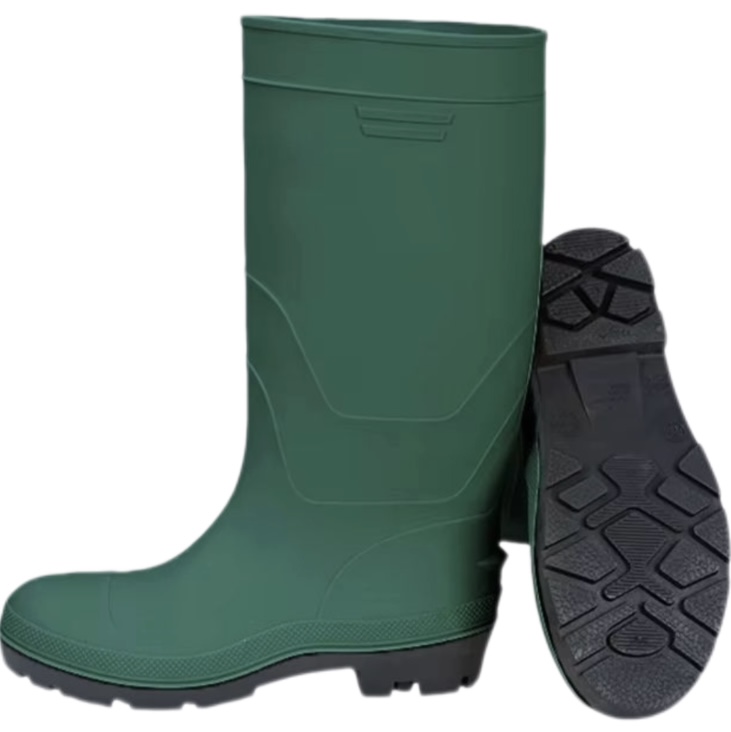
Composite toe safety shoes use non-metallic protective toes made from high-performance materials including carbon fiber, Kevlar, fiberglass or thermoplastic composites. Unlike steel, these materials offer comparable or higher impact and compression resistance while being lighter, thermally insulative and non-conductive. The manufacturing process for composite toe components involves precision molding under controlled pressure and temperature to maintain consistent structural integrity. Professional Rain Boot Manufacturer ensures that composite toe panels meet strict dimensional tolerances to fit securely within footwear upper and withstand repeated impact testing.
Key performance characteristics of composite toe panels include impact resistance rated at 125 Joules (per ASTM F2413-24) and compression resistance of 15,000 Newtons (per ISO 20345:2021), matching or exceeding steel toe performance. The shoe upper is typically made from durable leather, synthetic leather or rubber, with seam-free construction in high-stress areas to prevent water ingress and improve longevity. Outsoles use slip-resistant compounds with specific tread patterns designed for traction on concrete, metal and oily surfaces.
3. Practical Solutions and Operation Steps
Selecting the right composite toe safety shoes requires matching footwear features to specific workplace hazards, while ensuring proper fit and comfort for long shifts. The following steps provide objective guidance for product selection:
- Verify safety ratings: Confirm the shoe meets applicable standards for impact and compression resistance based on your region and work environment. Do not rely on unsubstantiated performance claims without third-party certification.
- Assess material suitability: Choose composite toe materials based on environmental conditions: carbon fiber for ultra-lightweight use, fiberglass for cost-effective protection, and insulated composites for cold work environments.
- Evaluate outsole performance: Select outsoles rated for slip resistance per EN ISO 20344:2021, with tread depth between 3mm and 5mm for balanced traction and debris removal. Avoid outsoles that leave marks on sensitive surfaces if required by your workplace.
- Check fit and comfort: Ensure the shoe provides 10mm to 15mm of space between the toe and front of the footwear to prevent pressure points during walking or standing. Test the toe box width to match your foot shape to avoid rubbing or discomfort.
- Match to work conditions: Select waterproof composite toe shoes for wet environments, and non-metallic options for work near electrical equipment where conductivity is a hazard. Avoid composite toe shoes for work environments requiring high heat resistance above 150°C, as composite materials may degrade under extreme temperatures.
4. Daily Maintenance and Precautions
Proper maintenance extends the service life of composite toe safety shoes and preserves their protective performance over time. Key care practices include cleaning the shoe exterior with a mild detergent and soft brush, avoiding strong chemical cleaners that can degrade composite or rubber materials. After each use, air the shoes in a well-ventilated area away from direct sunlight or high heat sources, as excessive heat can warp composite toe panels or damage shoe structure.
Important precautions to avoid safety risks: Do not modify composite toe panels, as drilling, cutting or adding external attachments can compromise structural integrity and reduce protective performance. Avoid exposing composite toe shoes to prolonged contact with chemicals not rated for chemical resistance, as some solvents may degrade non-metallic materials over time. Replace composite toe safety shoes immediately if you notice visible damage to the toe panel, upper, or outsole, including cracks, tears or indentations from impact or compression.
5. Industry Standard and Parameter Reference
ParameterRecommended ReferenceWhy It Matters
Impact resistance (safety toe)ASTM F2413-24 Section 6.3Tests ability to withstand 125J impact without toe panel failure
Compression resistance (safety toe)ISO 20345:2021 Clause 5.4Evaluates performance under 15,000N static compressive load
Slip resistance testingEN ISO 20344:2021 Section 5.10Measures traction on wet, oily or contaminated test surfaces
Non-conductive performanceASTM F2413-24 Section 7.2Verifies no electrical conductivity for work near electrical hazards
Chemical resistanceEN 13832-3:2018 Annex ATests permeation resistance against common workplace chemicals
All performance claims must be verified through third-party testing per the listed standards, as manufacturer self-certification does not provide independent validation. For work environments with specific hazard requirements, request test reports from suppliers to confirm compliance before use.
6. Customer Common FAQ
Q: Are composite toe safety shoes suitable for all industrial work environments?
A: Composite toe safety shoes are suitable for most high-risk industrial settings involving impact, compression or puncture hazards, including manufacturing, logistics and construction. They are not recommended for environments requiring heat resistance above 150°C or work where extreme chemical exposure is the primary hazard, as specialized chemical protective footwear is more appropriate. Professional Rain Boot Manufacturer can provide guidance on suitable footwear for specific work conditions based on standard requirements.
Q: How do I know if composite toe performance meets safety standards?
A: Look for certified markings on the footwear or packaging, including compliance logos for ASTM F2413-24 or ISO 20345:2021. Always request third-party test reports for performance claims, as uncertified shoes may not meet required impact or resistance specifications. Never assume composite toe performance based on material alone without formal testing.
Q: Can composite toe safety shoes be repaired if they develop damage?
A: Composite toe panels cannot be repaired after damage, as drilling, gluing or patching can compromise structural integrity. If cracks or indentations appear on the toe panel, replace the shoe immediately to maintain protective performance. Small tears to the upper or outsole can be repaired using manufacturer-recommended materials, but these repairs do not restore toe panel integrity.
Q: How should I clean and store composite toe safety shoes correctly?
A: Clean composite toe safety shoes with mild soap and warm water, avoiding abrasive cleaners or strong solvents. Air dry completely at room temperature, away from direct sunlight or heaters, as high heat can warp composite panels. Store shoes in a cool, dry area with the toe box supported to maintain shape, and avoid stacking heavy items on top that could damage the toe panel.
Q: Do composite toe safety shoes provide better comfort than steel toe options?
A: For most users, composite toe shoes offer lighter weight and better thermal insulation compared to steel toe footwear, reducing fatigue during long shifts. Comfort varies by brand and design, so it is recommended to test shoes during a shift length to assess fit and performance. Professional Rain Boot Manufacturer designs composite toe safety shoes with ergonomic lasts to balance protection and wearer comfort for extended use.
Conclusion
Composite toe safety shoes provide reliable, lightweight protection for high-risk industrial work environments, addressing common hazards while offering advantages over traditional steel toe footwear including improved comfort, thermal performance and mobility. By selecting products that meet relevant safety standards, matching features to specific work conditions, and following proper maintenance practices, workers can reduce injury risk while maintaining daily comfort. Professional Rain Boot Manufacturer ensures that composite toe safety shoes are designed and tested to meet industry requirements, supporting informed selection for workplace safety programs.
References
- ISO. ISO 20345:2021, Personal protective equipment - Safety footwear - Requirements. Geneva: International Organization for Standardization, 2021.
- ASTM International. ASTM F2413-24, Standard Specification for Performance Requirements for Footwear for Use in Occupational Environments. West Conshohocken: ASTM International, 2024.
- CEN. EN ISO 20344:2021, Personal protective equipment - Test methods for footwear. Brussels: European Committee for Standardization, 2021.
- CEN. EN 13832-3:2018, Chemical protective footwear - Part 3: Requirements for chemical resistance. Brussels: European Committee for Standardization, 2018.