Meta Description: Workers in high-risk industrial settings need reliable foot protection to avoid impact and compression injuries. This guide breaks down why composite toe safety shoes outperform traditional options for extreme work conditions, while offering lightweight design and non-metallic properties. Professional Rain Boot Manufacturer provides standardized product knowledge here.
Keywords: composite toe safety shoes, industrial safety footwear, work boot materials, extreme environment work gear, occupational foot protection, safety shoe standards
1. Core Problem Analysis
1.1 Common Causes of the Problem
Extreme industrial work exposes feet to two high-risk hazards: heavy falling objects and compression from shifting materials or equipment. Traditional steel toe shoes, while functional, add unnecessary weight that causes fatigue during long shifts, and may conduct electricity or interfere with walk-through metal detectors in certain facilities. Many workers also face discomfort from rigid toe boxes that limit foot movement or trap heat in hot environments.
1.2 Affected Usage Scenarios
These hazards impact workers in multiple high-stakes industries: construction sites with heavy building materials, metal fabrication facilities, heavy machinery manufacturing plants, logistics warehouses handling pallets of goods, and outdoor utility work involving underground infrastructure. Each of these settings demands foot protection that balances safety, comfort, and functionality without restricting daily operations.
2. Product and Process Principle
Composite toe safety shoes use non-metallic materials such as fiber-reinforced polymer (FRP), aramid (Kevlar), or carbon fiber to create a protective toe cap that meets international safety standards. Unlike steel, these materials are lighter, non-conductive, and corrosion-resistant. The production process for composite toe caps involves injection molding under controlled pressure and temperature, where polymer resin is combined with reinforcing fibers to create a high-strength, lightweight structure.
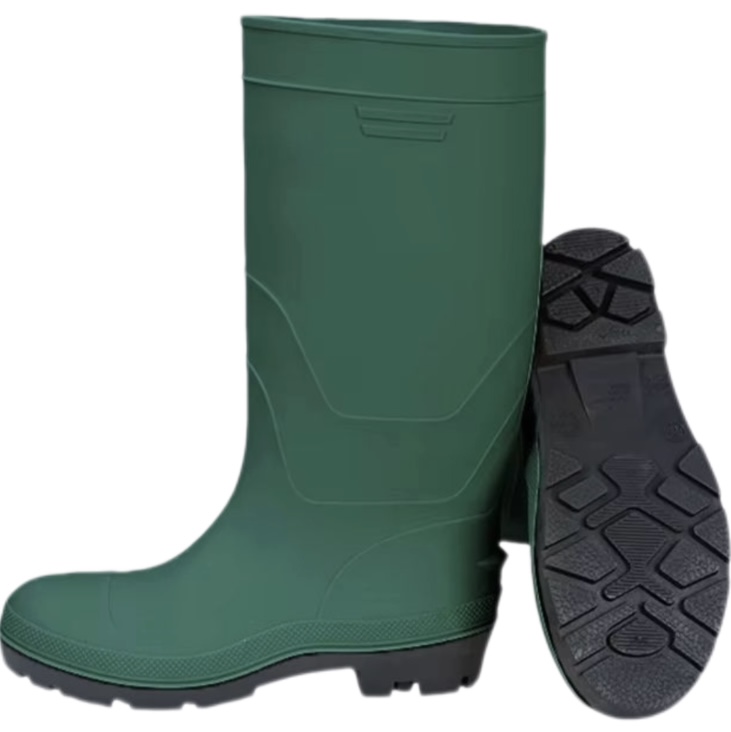
Professional Rain Boot Manufacturer applies standardized compound formulation to ensure each composite toe cap maintains consistent performance across production batches. The outsole of composite toe safety shoes typically uses rubber or high-density EVA with a patterned tread, designed to provide traction on both dry and wet surfaces. The shaft lining is often breathable mesh to reduce moisture buildup during extended wear, while seam-free construction minimizes points of water or debris entry.
3. Practical Solutions and Operation Steps
When selecting composite toe safety shoes for extreme industrial environments, follow these actionable steps to ensure proper fit and functionality:
- Verify the safety rating: Confirm the shoe meets the required protection level for impact and compression, referencing ISO 20344:2021 test methods to confirm performance.
- Match the material to your work environment: Choose FRP composite for general industrial use, aramid for high-heat environments (up to 300°C without structural failure), and carbon fiber for lightweight applications that still need maximum strength.
- Check the outsole properties: Ensure the tread pattern is suited to your worksite surface—deep lugs for muddy or uneven terrain, fine-grooved patterns for smooth warehouse floors.
- Test for comfort: Try on shoes with the socks you wear for work, and ensure there is at least a half-inch of space between the toe and the front of the shoe to avoid blisters or restricted movement.
- Confirm compatibility: For facilities with metal detection requirements, composite toe shoes will pass without triggering alarms, unlike steel toe alternatives.
4. Daily Maintenance and Precautions
Proper maintenance extends the lifespan of composite toe safety shoes and preserves their protective properties. After each work shift, wipe the exterior with a damp cloth to remove dirt, mud, or chemical residue. Avoid using harsh solvents or abrasive cleaners, as these can break down the polymer compound of the toe cap and other components.
Store shoes in a cool, dry area away from direct sunlight or high-temperature sources, as prolonged exposure to heat can soften composite materials and reduce their structural integrity. Do not fold or bend the toe area intentionally, as this can cause micro-cracks in the composite structure that compromise protection. It is critical never to use composite toe safety shoes as a substitute for chemical-resistant boots, unless the shoe is specifically rated for chemical exposure per EN 13832-3:2018.
5. Industry Standard and Parameter Reference
ParameterRecommended ReferenceWhy It MattersImpact resistanceISO 20344:2021, minimum 200 joulesMeasures ability to withstand falling objects, a core safety requirement for toe footwearCompression resistanceISO 20344:2021, minimum 15 kNTests protection against heavy loads pressing down on the toe areaSlip resistanceEN ISO 20347:2022+A1:2024Evaluates outsole grip on wet, oily, or contaminated worksite surfacesChemical resistanceEN 13832-3:2018 (where applicable)Ensures material withstands contact with common industrial chemicals for intended use casesElectrical insulationISO 20344:2021, as ratedRelevant for workplaces where conductive footwear poses a hazard
All performance claims for composite toe safety shoes should be verified against a recognized third-party testing standard, rather than manufacturer-only declarations. Testing must be conducted on finished shoes, not just individual components, to ensure real-world performance.
6. Customer Common FAQ
Q: How do composite toe shoes compare to steel toe shoes in extreme industrial environments?
A: Composite toe shoes are 30-50% lighter than steel toe alternatives, reducing fatigue during 12-hour shifts. They are also non-conductive and corrosion-resistant, making them suitable for environments with electrical hazards or high moisture. Professional Rain Boot Manufacturer notes that composite toe shoes meet the same impact and compression standards as steel toe shoes, offering equivalent safety for most industrial applications.
Q: Can composite toe safety shoes be resoled when the outsole wears out?
A: Resoling is not recommended for most composite toe safety shoes, as the adhesive used to attach the outsole may damage the bond between the toe cap and the upper. Worn soles reduce traction and can compromise foot stability, so it is generally safer to replace the entire shoe once the outsole shows significant wear.
Q: Are composite toe shoes suitable for cold outdoor work environments?
A: Most composite materials maintain their protective properties down to -20°C, but some thin designs may become rigid at lower temperatures. For work in temperatures below -20°C, look for composite toe shoes rated for cold resistance per ASTM F2413-24, which undergoes additional testing for low-temperature flexibility.
Q: How often should composite toe safety shoes be replaced?
A: Replacement depends on usage intensity, damage, and compliance with safety standards. Even if there is no visible damage, shoes should be replaced every 12-18 months for regular use. If the toe cap shows cracks, the upper is torn, or the outsole is excessively worn, replace the shoe immediately regardless of age.
Conclusion
Composite toe safety shoes address a critical gap in extreme industrial work protection, offering the same impact and compression resistance as steel toe models without the weight and conductivity drawbacks. By following proper selection, maintenance, and verification steps, workers can choose footwear that balances safety, comfort, and functionality for high-risk environments. Professional Rain Boot Manufacturer supports this guidance through standardized production and knowledge that aligns with global occupational safety standards. Choosing the right composite toe shoes reduces workplace injury risk while improving long-term worker productivity.
References
- International Organization for Standardization. ISO 20344:2021, Footwear - Test methods for whole shoe. 2021.
- European Committee for Standardization. EN ISO 20347:2022+A1:2024, Occupational footwear. 2024.
- American Society for Testing and Materials. ASTM F2413-24, Standard Specification for Performance Requirements for Protective Toe Footwear. 2024.
- European Committee for Standardization. EN 13832-3:2018, Chemical protective footwear. Part 3: Requirements for footwear resistant to chemicals.