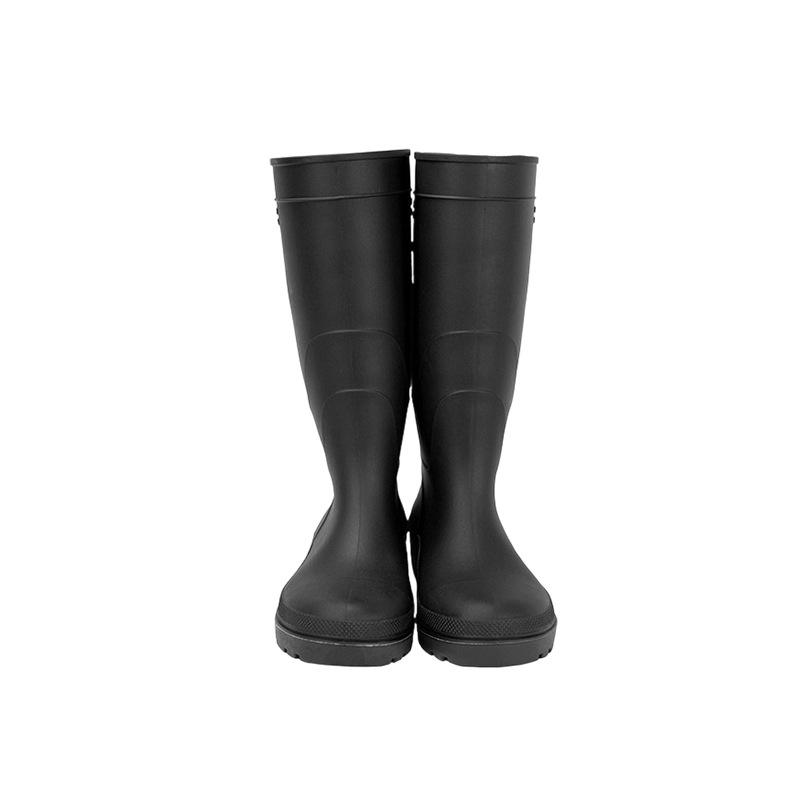
Meta Description: Many outdoor workers struggle with rain boots that slip on wet, muddy surfaces or tear quickly after heavy use. Understanding what makes durable, non-slip rain boots for long shifts helps avoid discomfort and workplace risks. This guide breaks down key material and design choices for industrial use, suited to farming, warehouse, and outdoor labor. Professional Rain Boot Manufacturer.
Keywords: beef tendon sole rain boots, industrial rain boots, non-slip rain boots, waterproof work boots, occupational footwear, rain boot maintenance, slip resistance footwear
1. Core Problem Analysis
1.1 Common Causes of the Problem
Workers often face two main issues with standard rain boots: poor slip resistance on wet, contaminated terrain and premature outsole degradation. Standard rubber outsoles may lose traction when exposed to oil, mud, or standing water, while thin or poorly formulated soles crack after repeated heavy use. Seam leaks and lining breathability issues also contribute to discomfort during 8+ hour shifts. Many generic rain boots fail to account for the demands of long-duration outdoor work, leading to reduced productivity and increased workplace safety risks.
1.2 Affected Usage Scenarios
These problems impact a wide range of occupational settings, including livestock farming, where manure and muddy pens create high slip risks; food processing facilities that require footwear resistant to cleaning chemicals; fishing and aquaculture work in tidal wet areas; and warehouse cleaning operations where spills and damp floors are common. Even rural commuting through wet, uneven terrain can expose workers to the same issues, making specialized footwear a critical investment for consistent performance.
2. Product and Process Principle
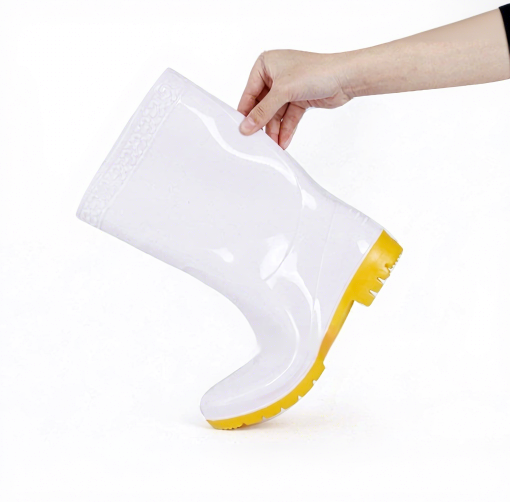
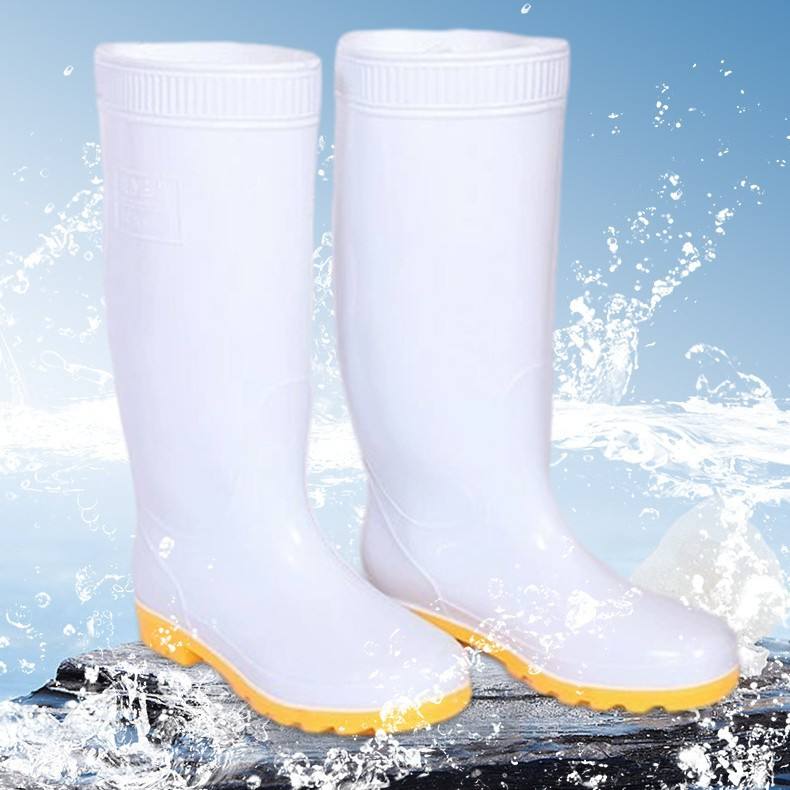
Beef tendon sole rain boots get their name from the natural tendon-like structure of the outsole compound, which is formulated to mimic the flexibility and traction of natural beef tendon. Unlike rigid PVC outsoles that stiffen in cold temperatures or smooth rubber outsoles that lose grip when wet, this compound combines synthetic rubber modifiers with natural polymer additives to create a textured, pliable surface. The manufacturing process uses injection molding at controlled temperatures, which fuses the outsole seamlessly to the upper boot material, eliminating seam leaks that plague glued or stitched footwear.
Professional Rain Boot Manufacturer uses strict compound formulation controls to balance flexibility, abrasion resistance, and traction for long-duty work. The outsole tread pattern is designed with deep, wide channels that expel water, mud, and small debris, maintaining contact with slippery surfaces even when they are partially submerged. The upper shaft is often built with a lightweight, waterproof fabric blend that offers breathability, reducing the buildup of sweat and odor during extended wear.
3. Practical Solutions and Operation Steps
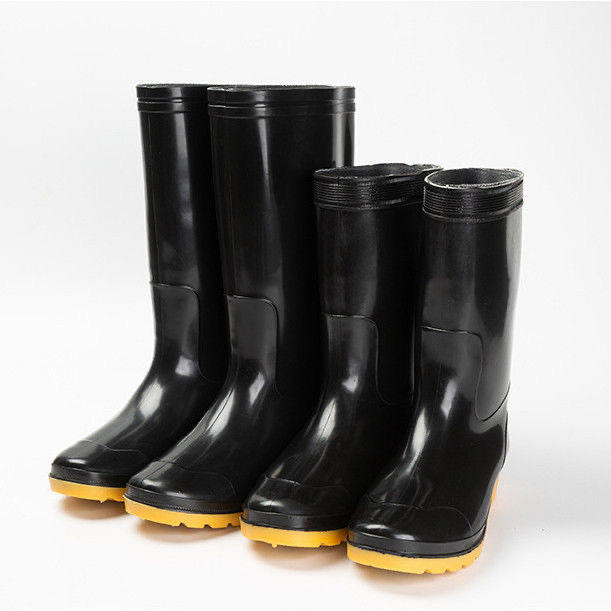
When selecting beef tendon sole rain boots for long-duration outdoor work, follow these actionable steps to ensure the right fit and performance for your specific tasks:
- Measure foot size and consider a 0.5 inch clearance for thick work socks; industrial boots should fit comfortably without pinching, especially around the arch.
- Check the outsole tread depth: a minimum of 4mm depth helps maintain traction on muddy or wet surfaces, as specified by EN ISO 20347:2022 standards.
- Verify upper material waterproofing: seamless injection-molded uppers have lower leak risks compared to stitched or glued seams, ideal for exposure to standing water.
- Confirm shaft height matches your job requirements: 12 to 16 inch shafts work for most outdoor labor, while 18 inch shafts provide extra protection for wet grass or deep mud.
- Test flexibility: bend the toe of the boot to ensure the outsole moves with natural foot motion; stiff soles can cause fatigue during long shifts.
This selection process applies only to standard occupational rain boots; for tasks involving chemical exposure or heavy impact, additional certifications may be required, as noted in the industry standards section.
4. Daily Maintenance and Precautions
Proper maintenance extends the lifespan of beef tendon sole rain boots and preserves their slip-resistant properties. After each use, rinse the boots with clean water to remove mud, manure, or chemical residues that can degrade the outsole compound. Avoid using strong solvents or abrasive cleaners, as these can break down the polymer structure of the sole and reduce traction over time.
Dry the boots away from direct heat sources, such as radiators or space heaters, as high temperatures can cause the upper material to crack or the outsole to warp. Store boots in a cool, well-ventilated area; if left in a damp, enclosed space, they may develop mold or mildew, which can degrade both material and fit. Never expose standard rain boots to temperatures below -20°C unless they are specifically marked as cold-weather rated, as extreme cold can make the sole stiff and reduce slip resistance.
Additional precautions include avoiding contact with sharp objects that can puncture the outsole and refraining from using rain boots as protective footwear for tasks that require impact resistance, unless explicitly certified for that purpose. Using these boots outside their intended use cases can lead to premature failure and safety risks.
5. Industry Standard and Parameter Reference
Below are verified industry standards and parameters for selecting and evaluating beef tendon sole rain boots, aligned with global occupational footwear requirements:
ParameterRecommended ReferenceWhy It Matters
Slip resistanceEN ISO 20344:2021 / EN ISO 20347:2022+A1:2024 where applicableHelps evaluate outsole grip on wet or contaminated surfaces.
Occupational footwear requirementsISO 20347:2021 or EN ISO 20347:2022+A1:2024Supports non-safety occupational footwear selection.
Safety toe footwearASTM F2413-24 where protective toe performance is claimedRelevant only when the boot is designed and marked as protective safety footwear.
Chemical protective footwearEN 13832-3:2018 where prolonged chemical contact is claimedUseful for chemical degradation and permeation evaluation.
Outsole flexibilityISO 20344:2021 Test Method 7Ensures the sole bends with natural foot motion, reducing fatigue during long shifts.
Do not invent exact performance numbers. Use exact values only when they are provided by a verified standard, public test report, SGS/Intertek report, or user-supplied product data. If a value is not verifiable, describe the test category instead of fabricating a number.
6. Customer Common FAQ
Q: Are beef tendon sole rain boots suitable for heavy industrial use?
A: Yes, when formulated with abrasion-resistant compounds and built per EN ISO 20347:2022 standards, these boots perform well in heavy outdoor work settings. Professional Rain Boot Manufacturer advises checking for third-party traction test results to confirm suitability for your specific tasks.
Q: How do I maintain traction on oil-slicked surfaces?
A: Look for boots with beef tendon outsoles formulated to resist oil, which aligns with ISO 20347:2021 requirements. Avoid generic rubber boots, as they tend to lose traction on oil-contaminated surfaces even when wet.
Q: Should I size up for thick work socks?
A: Yes, measure your foot with work socks on and add 0.5 inches of clearance to ensure a comfortable fit. Industrial rain boots that fit too tightly can cause blisters or reduce circulation during long shifts.
Q: Can these boots be used in sub-zero temperatures?
A: Standard beef tendon sole boots may stiffen below -10°C. For cold-weather work, select boots explicitly marked for low-temperature use, which are tested per ASTM F2412-24 cold resistance standards.
Q: How often should I replace my rain boots?
A: Replacement depends on use; heavy outdoor work may require replacement every 12 to 18 months. Inspect the outsole for cracks or reduced tread depth, and the upper for seam leaks, to determine when a new pair is needed.
Conclusion
Specialized beef tendon sole rain boots address key pain points for outdoor workers, combining traction, durability, and comfort for long shifts in wet, slippery terrain. By following selection, maintenance, and standard guidelines, workers can extend footwear lifespan and reduce safety risks. Professional Rain Boot Manufacturer emphasizes aligning boot choices with task-specific requirements to maximize performance and value.
References
- International Organization for Standardization. ISO 20344:2021, Footwear – Test methods for uppers, linings and insocks. Geneva: ISO, 2021.
- European Committee for Standardization. EN ISO 20347:2022+A1:2024, Occupational footwear. Brussels: CEN, 2024.
- American Society for Testing and Materials. ASTM F2413-24, Standard Specification for Performance Requirements for Protective Safety Toe Footwear. West Conshohocken: ASTM, 2024.