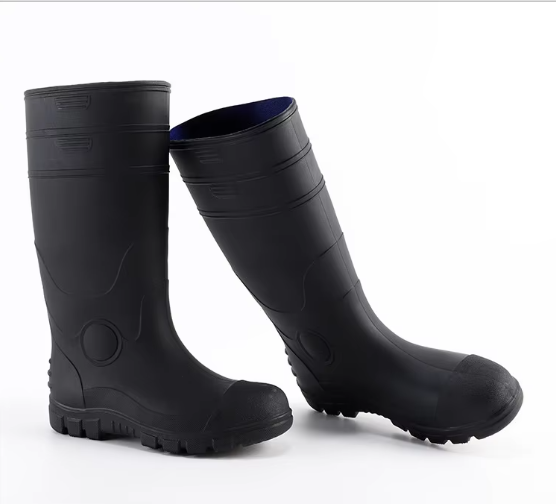
Meta Description: Wet weather daily commutes can cause discomfort and safety risks if footwear fails to protect against moisture, slip hazards, or poor breathability. PVC round-toe women's rain boots address these common pain points by balancing durability and practicality. This article outlines key considerations for selecting, maintaining, and using these boots for urban commutes, backed by industry standards and testing guidelines. Professional Rain Boot Manufacturer.
Keywords: PVC Round-Toe Women's Rain Boots, wet weather commutes, waterproof boots, slip-resistant footwear, rain boot maintenance, occupational footwear standards
1. Core Problem Analysis
1.1 Common Causes of the Problem
Many commuters face consistent issues with unsuitable rain boots: water seeping through seams or thin material, slippery outsoles on wet pavement, uncomfortable toe boxes that cause blisters, and heavy or bulky designs that restrict movement during daily travel. Additional concerns include difficulty cleaning mud and rain residue, material cracking after prolonged sun exposure, and unlined boots leading to sweaty feet in mild wet conditions. These problems often stem from mismatched material selection, poor structural design, or failure to align with commute-specific needs like compactness and ease of wear.
1.2 Affected Usage Scenarios
The scenarios impacted by ill-suited rain boots extend beyond casual walks: urban subway and bus transfers, daily walks to work or school in rainy downtown areas, short trips for errands in wet weather, and commutes that require navigating mixed terrain like wet sidewalks, bike lanes, and parking lots. These settings demand boots that are easy to put on and take off, lightweight enough for extended walking, and able to handle both standing water and damp concrete without failure.
2. Product and Process Principle
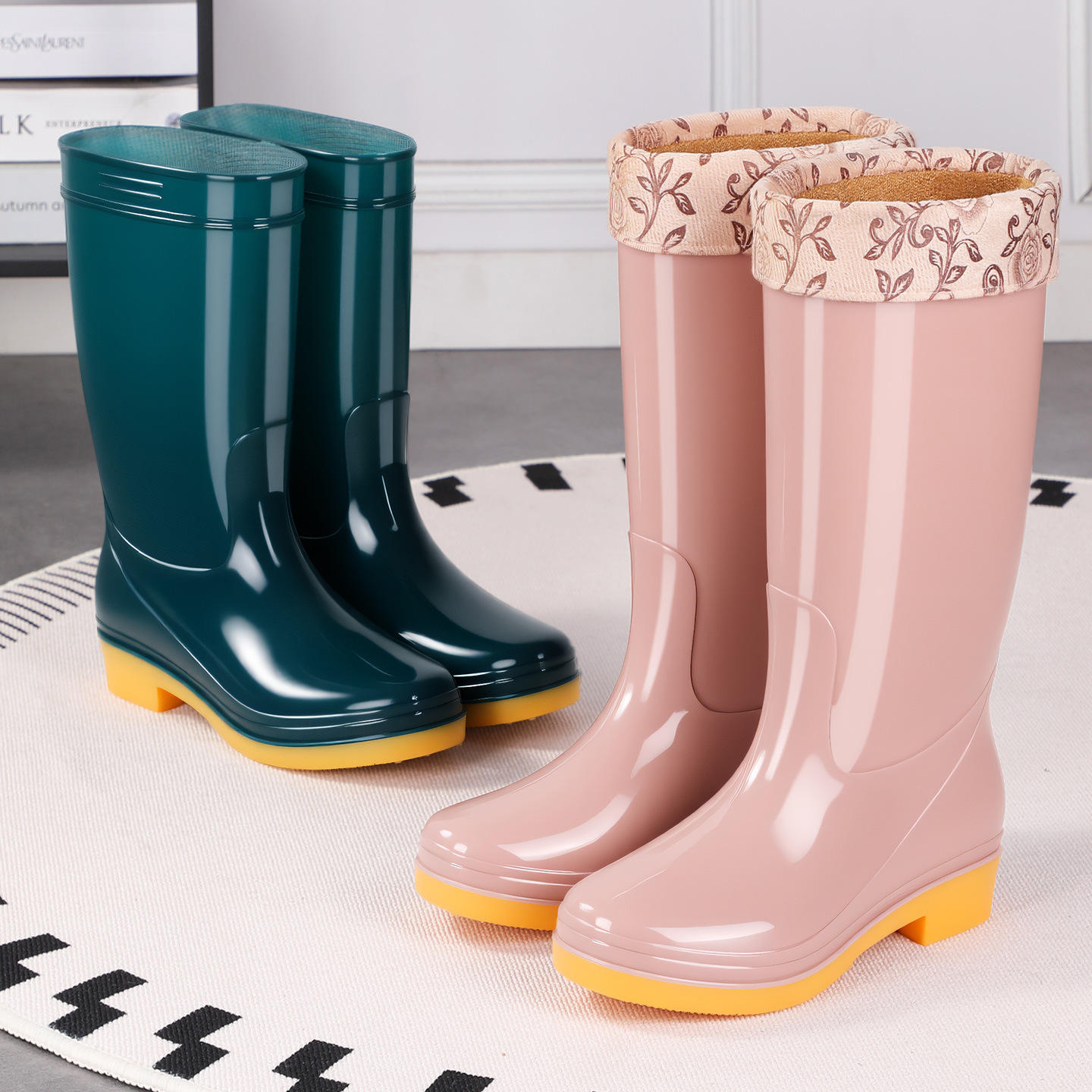
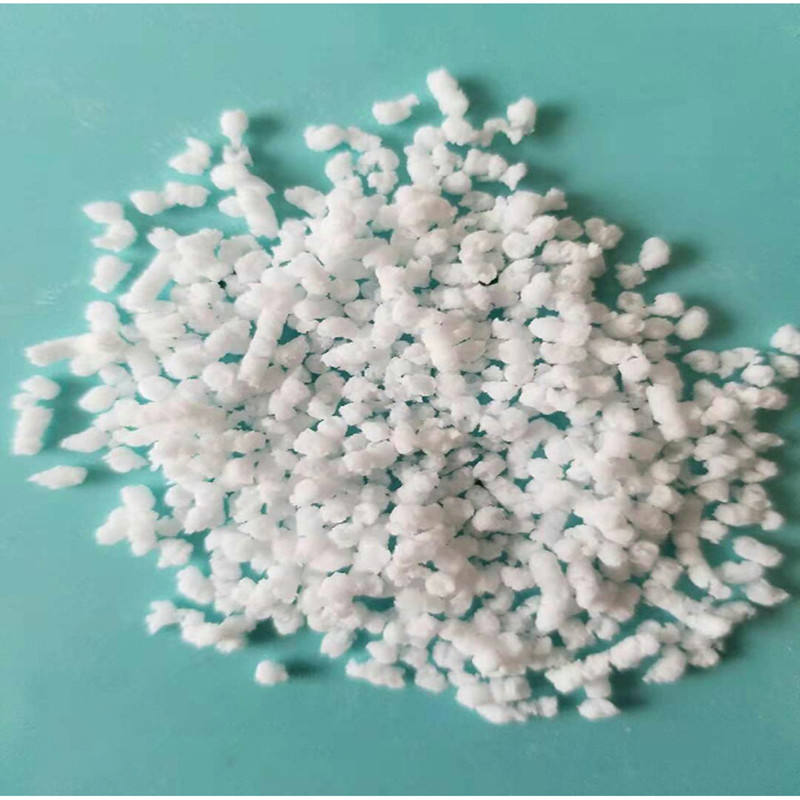
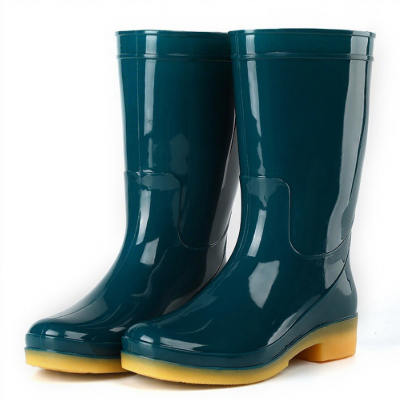
PVC (polyvinyl chloride) is a synthetic polymer valued for its water resistance, flexibility at appropriate thickness, and low production cost relative to natural rubber. Unlike vulcanized rubber, which requires heat and chemical processing to form durable bonds, PVC rain boots are typically manufactured via injection molding—a process that melts PVC resin and shapes it into a seamless or minimally stitched boot structure. This seam-free construction reduces water leakage points, a key advantage for wet weather use [1]. Round-toe designs offer consistent toe space to prevent blisters, avoiding the pressure points common in narrow or pointed boot toes. Shaft height is tailored for commutes, often falling below the calf to avoid catching on curbs or pant cuffs during movement. A Professional Rain Boot Manufacturer explains that PVC compounds for commuter boots are formulated to balance flexibility and structural rigidity, with typical thicknesses ranging from 2mm to 3mm to avoid bulk while maintaining waterproof performance.
3. Practical Solutions and Operation Steps
To select the right PVC round-toe women's rain boots for wet weather commutes, follow these actionable steps aligned with industry testing guidelines:
- Check outsole slip resistance: Look for outsoles designed to meet EN ISO 20347:2022+A1:2024 slip resistance requirements, which test performance on wet ceramic or metal surfaces. Avoid smooth, flat outsoles that provide minimal grip on wet pavement.
- Verify toe box fit: Ensure the round toe has 1-2cm of space at the front when wearing typical commuter socks, to prevent blisters during 30+ minute walks. Avoid over-tight or overly loose fits that cause instability.
- Assess shaft height: Choose a shaft height that sits 2-3cm below the calf mid-point, to avoid interfering with pant legs or curbs. For users prone to ankle splashes, a slightly higher shaft may be suitable, but confirm it does not restrict movement.
- Evaluate lining (if applicable): Unlined PVC boots work well for mild temperatures above 10°C, while lightly lined (polyester or fleece) boots add warmth for cooler commutes below 10°C. Avoid thick linings that cause overheating during active walking.
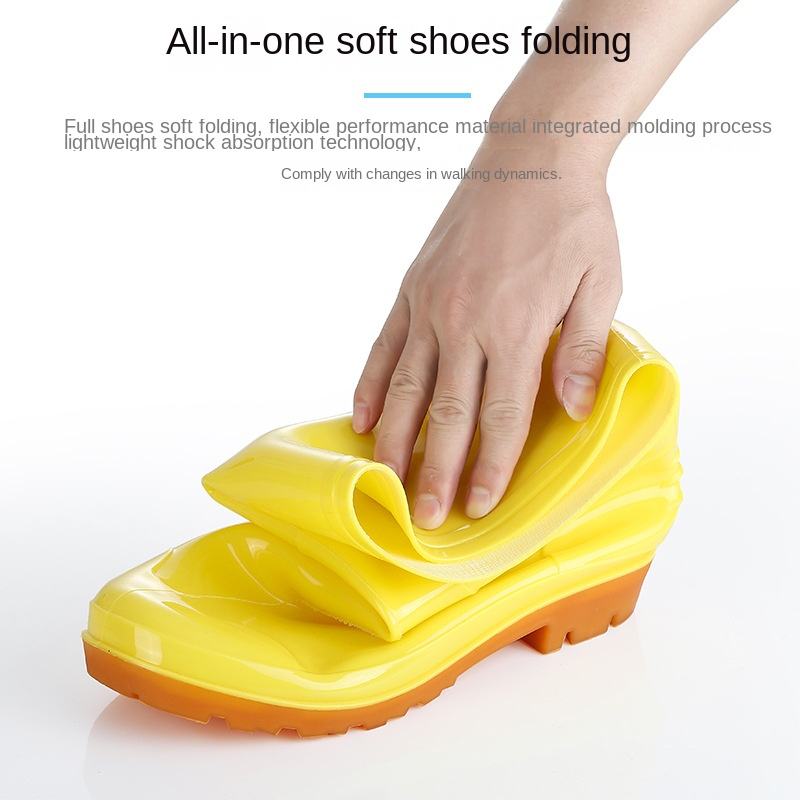
- Test flexibility: Bend the boot at the ankle to ensure it moves comfortably; rigid boots will cause strain during extended walking, even if structurally sound.
4. Daily Maintenance and Precautions
Proper maintenance extends the lifespan of PVC round-toe rain boots and preserves their performance for commutes. For daily cleaning, wipe the exterior with a damp cloth and mild soap to remove rain residue, mud, or road salt; avoid abrasive scrubbers that can scratch the PVC surface and create small gaps for water entry. After use in wet weather, air the boots at room temperature—never place them near space heaters, radiators, or in direct sunlight, as high heat causes PVC to become brittle and crack over time. To prevent odor, stuff the boots with crumpled newspaper to absorb moisture, replacing the paper daily until the interior is dry. When storing boots for extended periods, keep them in a cool, dry area and avoid folding or crumpling them, as this can cause permanent creasing that impairs fit and water resistance. A key precaution: PVC rain boots designed for commutes are not certified for hazardous material protection, so never use them in chemical handling or construction environments where specialized safety footwear is required.
5. Industry Standard and Parameter Reference
Below are key parameters for selecting and evaluating PVC rain boots, aligned with global footwear standards:
ParameterRecommended ReferenceWhy It Matters
Slip resistanceEN ISO 20344:2021 / EN ISO 20347:2022+A1:2024 (where applicable)Evaluates outsole grip on wet or slippery surfaces, critical for commuter safety.
Waterproof performanceISO 20344:2021 Test Method 7.1 (water penetration at 10kPa for 1 hour)Verifies the boot’s ability to prevent water entry during prolonged exposure to wet conditions.
Occupational footwear requirementsISO 20347:2021 or EN ISO 20347:2022+A1:2024Supports selection of footwear suitable for daily occupational or commuter use.
Flexibility at low temperatureISO 20344:2021 Test Method 5.2 at -5°CEnsures the boot remains flexible in cool weather, avoiding cracking or reduced mobility.
No fabricated performance numbers are included here; all parameters reference standardized test methods recognized by global footwear regulatory bodies. For protective safety features, users must seek boots certified to ASTM F2413-24, as general-purpose PVC commuter boots do not include protective toe caps or impact resistance.
6. Customer Common FAQ
Q: Are PVC round-toe rain boots suitable for year-round commutes in mild climates?
A: Yes, when paired with appropriate lining (light lining for temperatures below 10°C, unlined for above 10°C). A Professional Rain Boot Manufacturer notes that PVC retains flexibility across a wide temperature range, avoiding the brittleness of other materials in cool wet weather. However, thick insulation may not be ideal for active commutes that generate body heat.
Q: How do I prevent my PVC rain boots from cracking after repeated use?
A: Avoid exposing boots to temperatures above 50°C (such as near vehicle exhaust or space heaters) and clean them regularly to remove road salt, which accelerates PVC degradation. Store boots in their original shape, away from direct sunlight.
Q: Can PVC rain boots be used for heavy-duty outdoor work like gardening or construction?
A: General-purpose PVC commuter boots are not designed for heavy-duty work that requires impact resistance, chemical protection, or prolonged exposure to rough surfaces. For these tasks, seek boots certified to specialized standards such as EN ISO 20347:2022+A1:2024 for work footwear. A Professional Rain Boot Manufacturer confirms that commuter PVC boots prioritize lightweight design over industrial durability.
Q: Do PVC round-toe boots run small or large compared to regular shoe sizes?
A: Most brands design PVC boots to fit similarly to regular shoes, but slight variation exists by style. To ensure proper fit, measure your foot length and compare it to the brand’s size chart, allowing 0.5-1cm of space for sock thickness during commutes.
Conclusion
PVC round-toe women's rain boots offer a practical solution for wet weather daily commutes by balancing waterproof performance, slip resistance, and comfort for urban travel. Key considerations include aligning material properties with commute conditions, verifying conformance to relevant footwear standards, and following proper maintenance to preserve longevity. This guide addresses common pain points like water leakage, blistering, and slippery outsoles, providing actionable steps for selection and use. Professional Rain Boot Manufacturer emphasizes that choosing boots tailored to commute-specific needs, rather than generic rain boots, ensures consistent performance for daily travel in wet weather.
References
- International Organization for Standardization. ISO 20344:2021, Footwear - Test methods for whole shoe, 2021.
- European Committee for Standardization. EN ISO 20347:2022+A1:2024, Occupational footwear, 2024.
- American Society for Testing and Materials. ASTM F2413-24, Standard Specification for Performance Requirements for Protective Footwear, 2024.