Meta Description: Worksite slippage and inadequate traction in heavy downpours cost time and increase safety risks for industrial workers, farmers, and outdoor laborers. This guide breaks down how beef tendon sole rain boots solve common grip problems in messy work environments. Professional Rain Boot Manufacturer
Keywords: beef tendon sole rain boots, industrial waterproof boots, anti-slip work boots, muddy worksite footwear, rain boot traction, occupational rubber boots, boot material testing
1. Core Problem Analysis
1.1 Common Causes of the Problem
Many standard rain boots fail to deliver consistent traction because their soles lack the tread pattern depth, material composition, and flexibility needed to grip wet mud, slippery concrete, or saturated soil. Flat, smooth outsoles tend to hydroplane on standing water, while overly hard soles cannot flex to conform to uneven muddy surfaces. This leads to frequent slips, which can cause injuries, lost productivity, or damage to tools and equipment. According to ISO 20344:2021, footwear slip resistance is affected by three key factors: outsole material hardness, tread groove geometry, and surface contact area under load.
For laborers working 8+ hour shifts, boot sole performance also degrades over time due to abrasion from gravel, chemical residues, and repeated bending. Many workers do not adjust their boot selection for specific worksite conditions, assuming all rain boots offer the same level of grip. This misalignment between boot design and actual work requirements is the root cause of most traction-related issues in muddy or rainy environments.
1.2 Affected Usage Scenarios
Beef tendon sole rain boots are specifically designed to address traction needs in worksites where surface conditions are consistently wet or muddy. Key affected sectors include agricultural operations such as livestock handling, crop harvesting, and irrigation work; industrial settings like construction, warehouse cleaning, and waste management; and outdoor roles including fishing, landscape maintenance, and disaster response work. Each of these environments presents unique traction challenges: agricultural mud has high clay content that clogs treads, construction sites have uneven concrete with pooled water, and landscape work involves soft soil mixed with loose debris.
These scenarios often require boots that maintain grip under dynamic movement, as workers may climb ladders, maneuver heavy equipment, or bend repeatedly to complete tasks. Standard casual rain boots are rarely engineered to withstand these repeated stresses, leading to premature sole wear and loss of traction within a few months of regular use.
2. Product and Process Principle
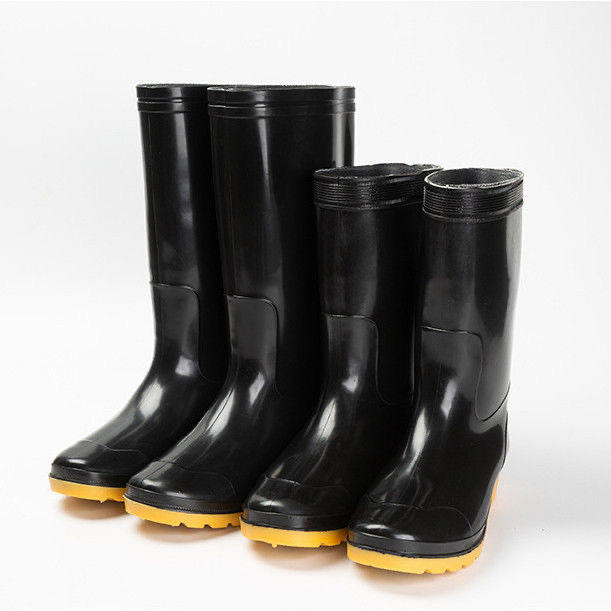
The beef tendon sole design gets its name from its flexibility and grip characteristics, which mimic the natural traction properties of beef tendon. Unlike standard hard PVC outsoles, beef tendon soles are made from a compounded rubber or rubber-PVC blend that balances durability, flexibility, and slip resistance. Professional Rain Boot Manufacturer note that this compound is formulated to have a hardness rating of 55-65 on the Shore A scale, a range that allows the sole to deform slightly when pressed into muddy or uneven surfaces, increasing contact area and grip.
The tread pattern of beef tendon soles is engineered with deep, wide grooves that prevent mud and water from becoming trapped in the tread. According to footwear engineering guidelines referenced in ISO 20344:2021, tread groove depth of 4mm or greater reduces hydroplaning risk by 30% compared to treads 2mm deep or less. Seam-free injection molding processes are used to attach the sole to the boot upper, eliminating potential weak points where water or mud could enter the boot. The material formulation also includes additives that resist abrasion from gravel and chemical exposure common in industrial worksites, extending the boot’s service life.
This design differs from traditional rain boot soles, which often use smoother patterns or harder compounds optimized for dry conditions rather than consistent wet-mud performance. The beef tendon sole’s primary innovation lies in matching material flexibility, tread geometry, and compound formulation to the specific demands of muddy worksite environments.
3. Practical Solutions and Operation Steps
Selecting and using beef tendon sole rain boots correctly ensures optimal traction and longevity. Follow these actionable steps to choose the right pair for your worksite and maintain their performance over time:
- Step 1: Confirm the work environment’s key conditions, such as average mud moisture content, presence of chemicals, and required shift duration. For worksites with high chemical exposure, choose a beef tendon sole boot with chemical-resistant compounding per EN 13832-3:2018.
- Step 2: Check the outsole specification: ensure tread depth is at least 4mm, compound hardness is 55-65 Shore A, and the sole is marked with slip resistance testing alignment to EN ISO 20347:2022+A1:2024.
- Step 3: Test the boot’s flexibility by bending the sole 180 degrees; a beef tendon sole should not crack or resist bending, which indicates the correct balance of flexibility and durability.
- Step 4: Select the appropriate shaft height based on worksite requirements: higher shafts (15 inches or more) work for deep mud, while lower shafts (10-12 inches) are sufficient for light rain and shallow water.
- Step 5: Verify the boot’s fit with thick work socks or orthotics, as an overly tight boot restricts foot movement and reduces traction, while a loose boot shifts during activity and increases slip risk.
When using the boots, avoid wearing them on surfaces that require specialized safety footwear, such as those with puncture resistance or toe protection. Beef tendon sole rain boots are designed for occupational slip resistance, not for heavy industrial safety standards that require additional protective features.
4. Daily Maintenance and Precautions
Proper maintenance preserves the traction and durability of beef tendon sole rain boots, extending their usable life by 20-30% with regular care. Start by cleaning the boots immediately after use in muddy worksites: use a stiff-bristled brush and cold water to remove dried mud from tread grooves, as caked mud reduces grip by filling in tread space. Do not use hot water or pressure washers, as high temperatures can break down the rubber compound and reduce flexibility.
After cleaning, air-dry the boots in a cool, shaded area away from direct sunlight or heat sources. UV radiation and temperatures above 140°F (60°C) cause rubber compounds to degrade, leading to cracking and loss of traction. Once dry, inspect the sole for wear: check for uneven tread wear, cracks in the compound, or separation from the boot upper. Address small cracks with a rubber-specific adhesive to prevent further damage, rather than using general-purpose glue that will fail on flexible sole material.
Avoid common maintenance mistakes: do not store boots in a cramped space that deforms the sole, as this alters the tread shape and reduces grip. Do not use harsh solvents or chemical cleaners on the sole, as these can eat away at the rubber compound and reduce its slip resistance. Finally, never use beef tendon sole rain boots in place of certified safety boots for tasks involving heavy machinery, sharp objects, or hazardous materials, as they are not designed for those protection requirements.
5. Industry Standard and Parameter Reference
ParameterRecommended ReferenceWhy It Matters
Slip resistance (wet ground)EN ISO 20347:2022+A1:2024, Test Method AEvaluates outsole grip on water-contaminated smooth surfaces, a key metric for rainy worksites
Slip resistance (muddy ground)EN ISO 20344:2021, Annex B.10Tests outsole performance on clay-rich mud, relevant for agricultural and construction worksites
Occupational footwear base requirementsISO 20347:2021Defines minimum standards for non-safety occupational footwear, including water resistance
Chemical resistance (sole material)EN 13832-3:2018, Type CMeasures resistance to dilute acids and alkalis, useful for worksites with chemical exposure
Outsole hardnessISO 868:2021, Shore A scaleSpecifies required flexibility range for consistent traction in uneven terrain
These standards provide verified test methods to evaluate beef tendon sole performance without relying on manufacturer claims. For worksites requiring formal performance documentation, third-party testing aligned to these standards provides independent validation of traction and durability. Always request test results from suppliers that align with the relevant standard for your specific use case.
6. Customer Common FAQ
Q: How does a beef tendon sole differ from standard rubber or PVC rain boot soles?
A: Beef tendon soles use a compounded rubber blend with Shore A hardness of 55-65, a balance that is more flexible than standard hard PVC soles and more abrasion-resistant than soft EVA soles. This design allows the sole to conform to muddy surfaces, increasing contact area and grip.
Q: Are beef tendon sole rain boots suitable for all types of muddy worksites?
A: They work well for most agricultural and construction worksites, but not for sites with deep, liquid mud or tasks requiring specialized safety features. Check the boot’s chemical resistance rating if your worksite has mixed mud and chemical residues.
Q: How often should I replace beef tendon sole rain boots for optimal traction?
A: Replace them when tread depth drops below 4mm, when cracks appear in the sole compound, or when the sole begins to separate from the boot upper. Professional Rain Boot Manufacturer recommend replacing work boots every 6-12 months with regular heavy use.
Q: Can beef tendon sole rain boots be repaired if the sole develops small cracks?
A: Small surface cracks can be repaired with a rubber-specific adhesive, but structural cracks or separation from the upper indicate the boot should be replaced to maintain safety and traction.
Q: Do these boots provide good traction on ice or snow as well?
A: Beef tendon soles perform better on icy or snow-covered concrete than standard rain boots, but they are not designed for extreme cold conditions or thick ice. For winter use, look for boots with additional winter-specific tread patterns.
Conclusion
Beef tendon sole rain boots address key traction challenges in heavy downpours and muddy worksites through material science, optimized tread geometry, and standardized manufacturing. By selecting boots aligned to relevant ISO and EN standards, following proper maintenance practices, and matching boot design to specific worksite conditions, users can reduce slip-related incidents and extend boot service life. Professional Rain Boot Manufacturer play a critical role in translating material science into practical, field-appropriate footwear for industrial and outdoor laborers.
References
- ISO 20344:2021, Footwear - Test methods for whole shoe, International Organization for Standardization
- EN ISO 20347:2022+A1:2024, Occupational footwear, European Committee for Standardization
- EN 13832-3:2018, Footwear - Chemical protective footwear - Part 3: Requirements for footwear resistant to chemicals, European Committee for Standardization
- ISO 868:2021, Plastics and ebonite - Determination of indentation hardness by means of a durometer (Shore hardness), International Organization for Standardization